
Campus apps by department
Admissions, orientation, student life, and more — one campus app that works across departments.

Campus apps by department
Admissions, orientation, student life, and more — one campus app that works across departments.
Build unlimited event apps on one license
One partnership for unlimited campus events — orientation, tours, student life, and everything in between.
Build unlimited event apps on one license
One partnership for unlimited campus events — orientation, tours, student life, and everything in between.
Compare event app platforms
See how Guidebook stacks up against other event app and registration platforms.
Compare event app platforms
See how Guidebook stacks up against other event app and registration platforms.
Event apps for nonprofit and community programs
Give members, volunteers, and donors one branded app for conferences, fundraisers, and year-round community.
Event apps for nonprofit and community programs
Give members, volunteers, and donors one branded app for conferences, fundraisers, and year-round community.
Campus integrations and an open API
Connect Guidebook with the campus systems, APIs, and tools your team already uses.
Campus integrations and an open API
Connect Guidebook with the campus systems, APIs, and tools your team already uses.
Event apps for corporate and enterprise teams
Internal meetings, offsites, and large-scale corporate events — with the branding and control enterprise teams need.
Event apps for corporate and enterprise teams
Internal meetings, offsites, and large-scale corporate events — with the branding and control enterprise teams need.
Create a branded event app with no coding
Put schedules, maps, resources, and updates in every attendee's pocket — built for campus events and programs.
Create a branded event app with no coding
Put schedules, maps, resources, and updates in every attendee's pocket — built for campus events and programs.
Launch a branded, white-label event app
A white-label event app with your branding, your content, and your attendee experience — no coding required.
Launch a branded, white-label event app
A white-label event app with your branding, your content, and your attendee experience — no coding required.
Everything in the Guidebook platform
Explore the features event teams use to engage attendees before, during, and after the event.
Everything in the Guidebook platform
Explore the features event teams use to engage attendees before, during, and after the event.
One app for in-person and virtual attendees
The same schedule, networking, and updates whether people are in the room or joining remotely.
One app for in-person and virtual attendees
The same schedule, networking, and updates whether people are in the room or joining remotely.
Event apps built for associations
Annual meetings, chapter events, and member engagement — without rebuilding a new app every year.
Event apps built for associations
Annual meetings, chapter events, and member engagement — without rebuilding a new app every year.
A branded event website that matches the app
Promote the event, collect interest, and keep branding consistent from the first click to check-in.
A branded event website that matches the app
Promote the event, collect interest, and keep branding consistent from the first click to check-in.
Plan, run, and measure events on one platform
App, registration, badges, and websites in one workflow — so planning isn't a pile of disconnected tools.
Plan, run, and measure events on one platform
App, registration, badges, and websites in one workflow — so planning isn't a pile of disconnected tools.
Keep members engaged between events
One branded app for the conference and everything that happens the other 51 weeks of the year.
Keep members engaged between events
One branded app for the conference and everything that happens the other 51 weeks of the year.
The conference app attendees actually use
Schedules, maps, networking, and live updates for annual meetings, summits, and multi-day conferences.
The conference app attendees actually use
Schedules, maps, networking, and live updates for annual meetings, summits, and multi-day conferences.
Registration that feeds your app and badges
Collect registrations, payments, and attendee data in the same platform as your event app.
Registration that feeds your app and badges
Collect registrations, payments, and attendee data in the same platform as your event app.
Design and print event badges in one place
Custom badges, QR check-in, and on-site printing — without a separate badge vendor.
Design and print event badges in one place
Custom badges, QR check-in, and on-site printing — without a separate badge vendor.
A Smaller School?
Deliver a polished, branded event experience without a large team or a big budget.
A Smaller School?
Deliver a polished, branded event experience without a large team or a big budget.
Running Family Programs?
Give families everything they need, from schedules and maps to real-time updates, all in one place.
Running Family Programs?
Give families everything they need, from schedules and maps to real-time updates, all in one place.
Coordinating Move-In Day?
Share updates, manage events, and keep students informed from move-in through the academic year.

Coordinating Move-In Day?
Share updates, manage events, and keep students informed from move-in through the academic year.
Offering Campus Tours?
Deliver branded, self-guided tour experiences with interactive maps and rich media, available 24/7.

Offering Campus Tours?
Deliver branded, self-guided tour experiences with interactive maps and rich media, available 24/7.
Organising a Career Fair?
Simplify logistics for students, employers, and Career Services staff with one easy-to-use app.
Organising a Career Fair?
Simplify logistics for students, employers, and Career Services staff with one easy-to-use app.
Managing Alumni Events?
Plan reunions, regional events, and fundraising campaigns with an app built for alumni engagement.
Managing Alumni Events?
Plan reunions, regional events, and fundraising campaigns with an app built for alumni engagement.
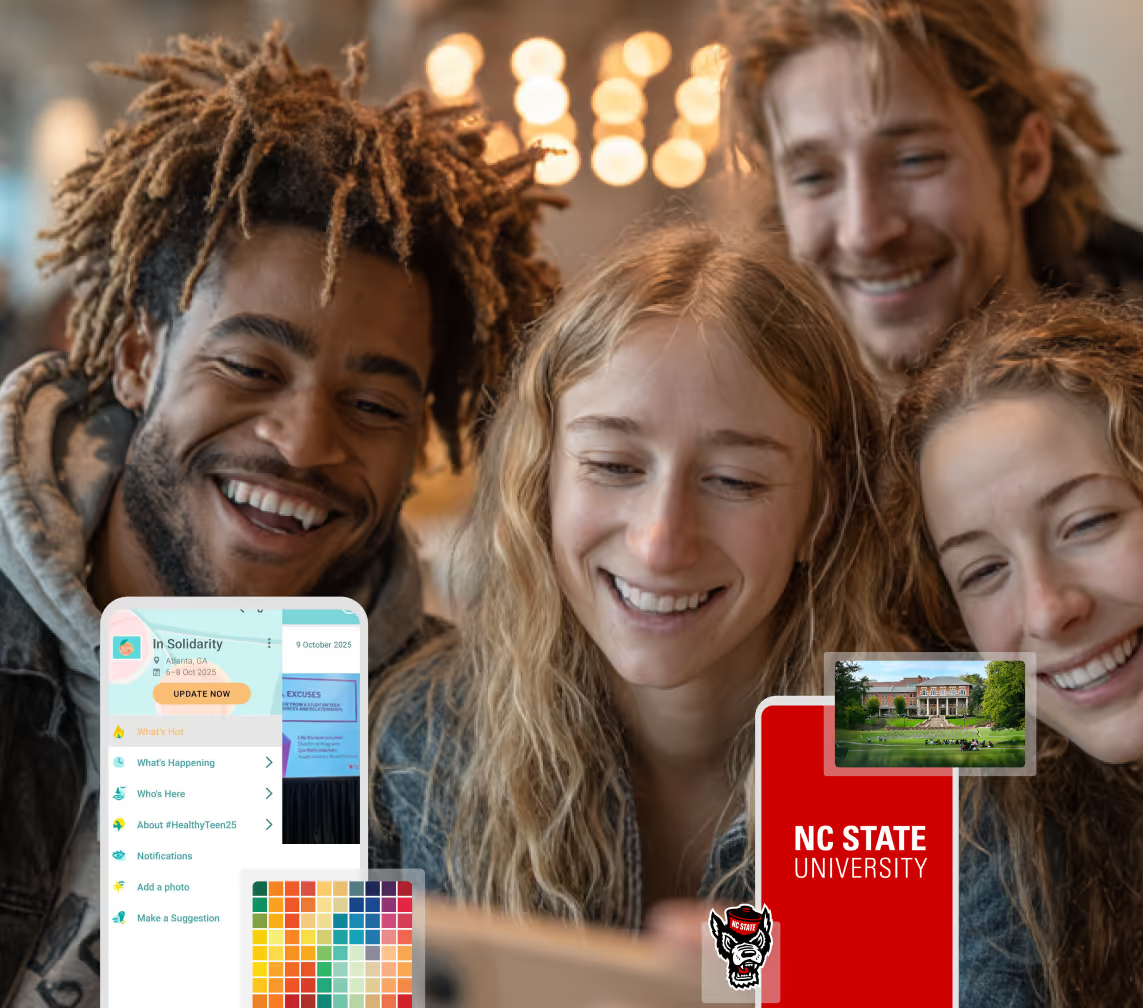
Boost Student Engagement
One hub for schedules, resources, and events that keeps students connected throughout the academic year.
Boost Student Engagement
One hub for schedules, resources, and events that keeps students connected throughout the academic year.
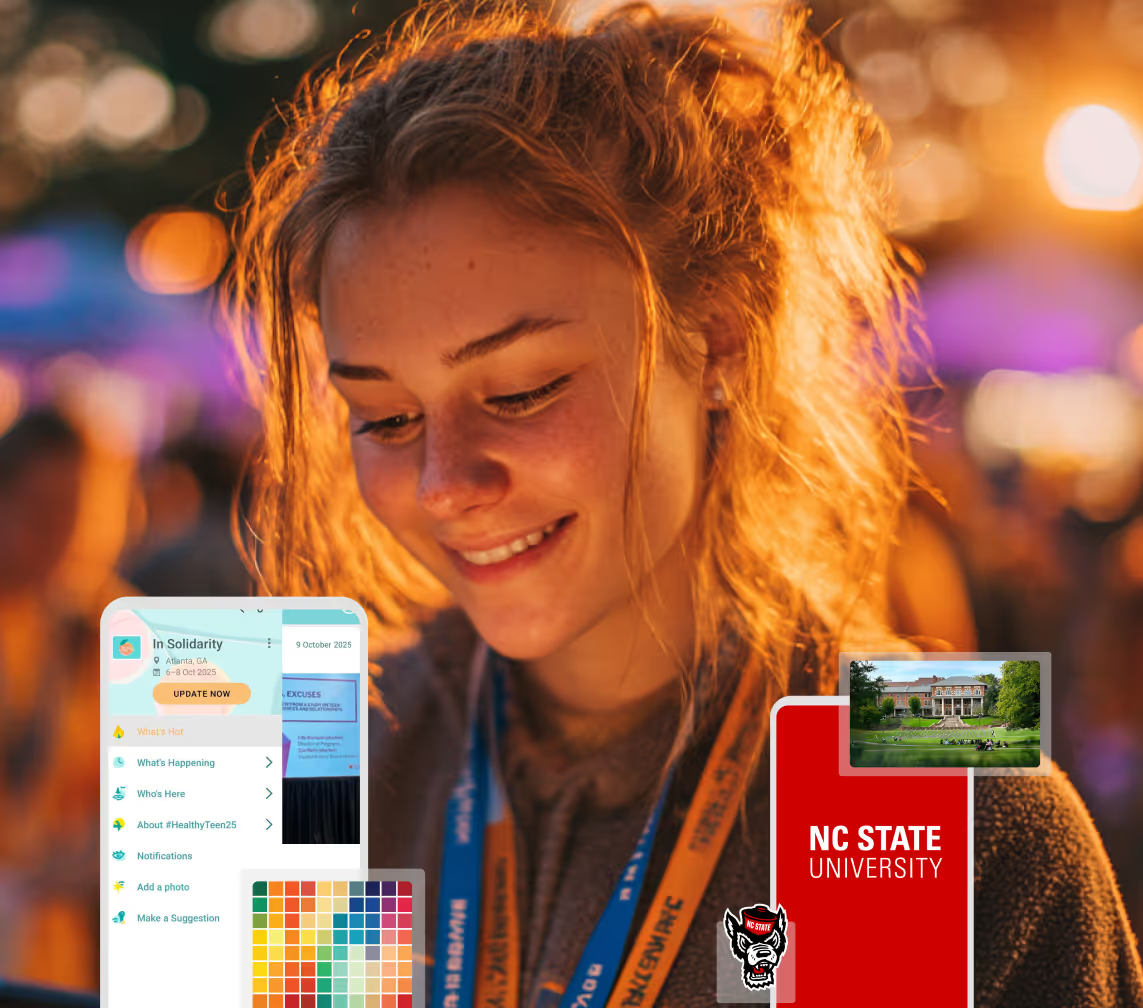
Planning Orientation?
Help new students feel prepared from day one with schedules, campus resources, and real-time updates in one app.
Planning Orientation?
Help new students feel prepared from day one with schedules, campus resources, and real-time updates in one app.
Running Admissions Events?
Manage open houses, tours, and yield events with a branded app that saves time and engages prospective students.

Running Admissions Events?
Manage open houses, tours, and yield events with a branded app that saves time and engages prospective students.
Get a custom Sponsorship Package Template
Stop starting from scratch. Grab free templates that helWe'll build a tailored sponsorship package with suggested pricing, tiers, and benefits..for your specific event.p you build professional sponsorship packages and close deals faster.
Get a custom Sponsorship Package Template
Stop starting from scratch. Grab free templates that helWe'll build a tailored sponsorship package with suggested pricing, tiers, and benefits..for your specific event.p you build professional sponsorship packages and close deals faster.
Plan Your Next Event Without Missing a Beat.
From venue selection to post-event wrap-up, this free checklist walks you through every step (so nothing falls through the cracks).
.avif)
Plan Your Next Event Without Missing a Beat.
From venue selection to post-event wrap-up, this free checklist walks you through every step (so nothing falls through the cracks).
Real Results From Real Events
100,000+ organizations trust Guidebook. See exactly how universities, associations, enterprises, and more put it to work.

Real Results From Real Events
100,000+ organizations trust Guidebook. See exactly how universities, associations, enterprises, and more put it to work.
Flexible pricing for every event size
Find the perfect plan for your needs, from intimate gatherings to large-scale conferences.
Flexible pricing for every event size
Find the perfect plan for your needs, from intimate gatherings to large-scale conferences.
Join our event experts
Watch on-demand webinars and join live sessions with industry leaders sharing best practices for event success.
.avif)
Join our event experts
Watch on-demand webinars and join live sessions with industry leaders sharing best practices for event success.
Guidebook in Action
Book a personalized walkthrough and discover how we help event teams create better attendee experiences.
Guidebook in Action
Book a personalized walkthrough and discover how we help event teams create better attendee experiences.

What are Event Badges?
Event badges are identification tools used at events to enhance security, networking, and attendee experience. Learn about types, design tips, printing options, and best practices.

Event Badges are the physical or digital credentials that identify attendees, staff, and speakers while enabling access control, networking, and brand visibility at events. They range from simple name tags to smart badges with NFC chips and QR codes. Done right, badges transform from basic identification into powerful engagement tools.
Here's the thing: event badges do far more than display names. They're your first touchpoint with attendees. They set the tone for the entire experience. A well-designed badge sparks conversations, streamlines check-in, and collects valuable data. A poorly designed one? It ends up in the trash before lunch.
Key Characteristics of Event Badges
- Identification Function: Badges display essential info like names, titles, and organizations. This helps attendees connect without awkward "remind me of your name" moments.
- Access Control: Color coding, QR codes, or RFID chips restrict entry to specific sessions, VIP areas, or exhibitor halls. No more gate-crashers at your keynote.
- Networking Enabler: Smart badges can store contact info and track interactions. Some even suggest connections based on shared interests.
- Brand Visibility: Your badge design reflects your event's personality. Sponsors love logo placement here—it's prime real estate attendees wear all day.
- Data Collection Tool: Digital badges track session attendance, booth visits, and engagement patterns. This data fuels your event ROI calculations.
- Sustainability Statement: Reusable badge holders and digital alternatives show your commitment to eco-friendly practices.
- Security Feature: Badges help staff quickly identify who belongs where. They're your first line of defense against unauthorized access.
Event Badges vs. Related Credentials
Event Badges
- Scope: Worn throughout the entire event duration
- Focus: Identification, access, and networking combined
- Timeline: Active from check-in to event close
- Channels: Physical badges, lanyards, or digital displays
- Goal: Enable seamless attendee experience and data capture
Event Wristbands
- Scope: Common at festivals, concerts, and multi-day events
- Focus: Access control and age verification
- Timeline: Often worn continuously, even overnight
- Channels: Fabric, silicone, or Tyvek materials
- Goal: Tamper-proof entry management
Event Tickets
- Scope: Used primarily at entry points
- Focus: Proof of purchase and admission
- Timeline: Scanned once at arrival
- Channels: Paper, mobile apps, or email confirmations
- Goal: Validate registration and track attendance
While tickets get you through the door and wristbands keep you in, badges work throughout your event. They're the credential that keeps on giving. Smart event planning often combines all three for maximum security and convenience.
Types of Event Badges
Traditional Printed Badges
These are your classic name tags. They're affordable, easy to produce, and work for events of any size. Most use cardstock inserted into plastic holders with lanyards or clips.
The downside? They can't be updated once printed. Misspell someone's name? You're reprinting. They also offer zero data collection beyond visual identification.
QR Code Badges
Add a QR code to any badge and you've unlocked a world of possibilities. Attendees scan each other's codes to exchange contact info instantly. Exhibitors scan to capture leads.
QR badges integrate beautifully with event check-in software. They speed up registration lines and eliminate manual data entry errors.
NFC and RFID Smart Badges
These high-tech options contain embedded chips. Attendees simply tap their badge to check into sessions, exchange info, or make purchases.
- Track real-time attendance patterns
- Enable cashless payments at food vendors
- Trigger personalized content on digital displays
- Measure booth dwell time for exhibitors
The investment is higher, but the data you collect is gold. Perfect for large conferences and interactive trade show booths.
Digital Badges on Mobile Apps
Why print anything when attendees carry smartphones? Digital badges live inside your event app. They display on-screen for visual ID and contain scannable codes for data exchange.
Platforms like Guidebook's event management platform make digital badges easy. Attendees love skipping the registration line entirely.
Eco-Friendly Badge Options
Sustainability matters to today's attendees. Consider these greener alternatives:
- Seed paper badges that can be planted after the event
- Recycled cardstock with soy-based inks
- Reusable badge holders collected at exit
- Fully digital badges with no physical component
The Badge Design Process
Plan Your Information Hierarchy
What info matters most? Names should be readable from 10 feet away. Job titles and companies come next. Everything else is secondary.
Don't cram too much onto one badge. Cluttered designs confuse people. Stick to essentials and let your event digital marketing handle the rest.
Choose Colors Strategically
Color coding is your secret weapon. Use different colors for:
- Attendee types (speakers, sponsors, general admission)
- Access levels (all-access, single-day, VIP)
- Tracks or interest areas
- First-timers vs. returning attendees
Staff can spot who belongs where at a glance. Attendees find their people faster.
Incorporate Branding Elements
Your badge is a mini billboard. Include your event logo, colors, and sponsor logos. Just don't let branding overwhelm the functional elements.
Pro tip: Place sponsor logos on the back or bottom. Attendee names always take priority.
Select the Right Materials
Badge durability matters more than you think. A three-day conference needs sturdier materials than a half-day workshop.
- Paper/cardstock: Budget-friendly, single-day events
- PVC plastic: Durable, professional look
- Fabric: Soft, comfortable for extended wear
- Wood or metal: Premium feel for executive events
Test Before You Print
Print samples before committing to thousands. Check readability, color accuracy, and how they look in badge holders. This small step prevents big headaches.
Why Event Badges Matter
For Event Success:
- Streamlined Check-In: Pre-printed or digital badges slash registration wait times from minutes to seconds.
- Enhanced Security: Visual identification keeps unauthorized people out of restricted areas.
- Better Networking: Name visibility removes social barriers and sparks conversations.
- Session Tracking: Smart badges capture attendance data automatically for post-event debriefs.
- Sponsor Value: Badge sponsorship offers premium visibility that justifies higher sponsorship packages.
For Business Objectives:
- Lead Generation: Scannable badges capture prospect data for sales follow-up.
- Engagement Metrics: Track which sessions and booths attract the most traffic.
- Personalization Data: Badge scans reveal attendee interests and behavior patterns.
- Brand Reinforcement: Every badge glance reinforces your event and sponsor brands.
- ROI Documentation: Concrete data proves event value to stakeholders and future sponsors.
Event Badge Best Practices
- Make Names Huge: Use the largest font size possible. If people squint to read names, your badges have failed their primary job.
- Print on Both Sides: Badges flip constantly. Double-sided printing ensures info is always visible.
- Use First Names Prominently: "Sarah" matters more than "Sarah Johnson, Senior Director of Marketing Operations." Lead with what people actually use.
- Add Conversation Starters: Include hometown, interests, or fun facts. These details spark connections beyond "what do you do?"
- Plan for On-Site Printing: Walk-ins happen. Last-minute registrations happen. Have equipment ready to print badges on demand.
- Choose Comfortable Lanyards: Attendees wear these all day. Soft, breakaway lanyards beat scratchy, cheap alternatives every time.
- Consider Badge Orientation: Horizontal badges work better for names. Vertical badges suit detailed schedules or maps.
- Include Emergency Info: Print WiFi passwords, emergency contacts, or venue maps on badge backs. Useful info attendees won't lose.
- Test Your Tech Early: If using QR or NFC badges, test scanning equipment days before the event. Tech failures at check-in are nightmares.
- Collect Badges at Exit: Reusable holders save money and reduce waste. Plus, it's one last touchpoint with departing attendees.
Common Event Badge Mistakes
Tiny, Unreadable Text: Designers love cramming information onto badges. Attendees hate squinting. Prioritize readability over completeness. If it's not readable from arm's length, it doesn't belong on the badge.
Ignoring Accessibility: Low contrast colors, fancy fonts, and small text exclude attendees with visual impairments. Use high-contrast combinations and clean, sans-serif fonts. Your event management tips should always include accessibility.
Forgetting Pronouns: Many attendees appreciate pronoun options on badges. Skipping this misses an easy opportunity to create inclusive environments. Make it optional, not mandatory.
Over-Relying on Technology: Smart badges are amazing—until the WiFi crashes. Always have backup identification methods. A dead NFC chip shouldn't strand attendees outside sessions.
Inconsistent Information: Badge says "John Smith" but the app says "Jonathan Smith, PhD." Sync your data sources before printing. Inconsistencies confuse everyone and look unprofessional.
Skipping Quality Control: One typo on 500 badges is 500 embarrassments. Build proofreading time into your event planning process. Have multiple people review before printing.
Underestimating Quantities: Running out of badge supplies mid-event is preventable. Order 10-15% extra materials. The cost is minimal compared to the chaos of shortages.
Final Thoughts
Event badges might seem like a small detail in your massive planning checklist. They're not. They're the first physical item attendees receive. They shape first impressions and enable every interaction that follows.
The badge industry continues evolving rapidly. Smart badges, sustainable materials, and digital alternatives offer more options than ever. Staying current with event trends helps you choose the right approach for your audience.
Think of badges as tiny ambassadors for your event. They introduce people, open doors, and collect stories. A thoughtful badge strategy shows attendees you've considered every detail of their experience.
Ready to level up your badge game? Guidebook's event management platform handles digital badges, check-in, and attendee engagement in one seamless system. Explore our templates or book a demo to see how easy badge management can be. Your attendees—and your registration team—will thank you.
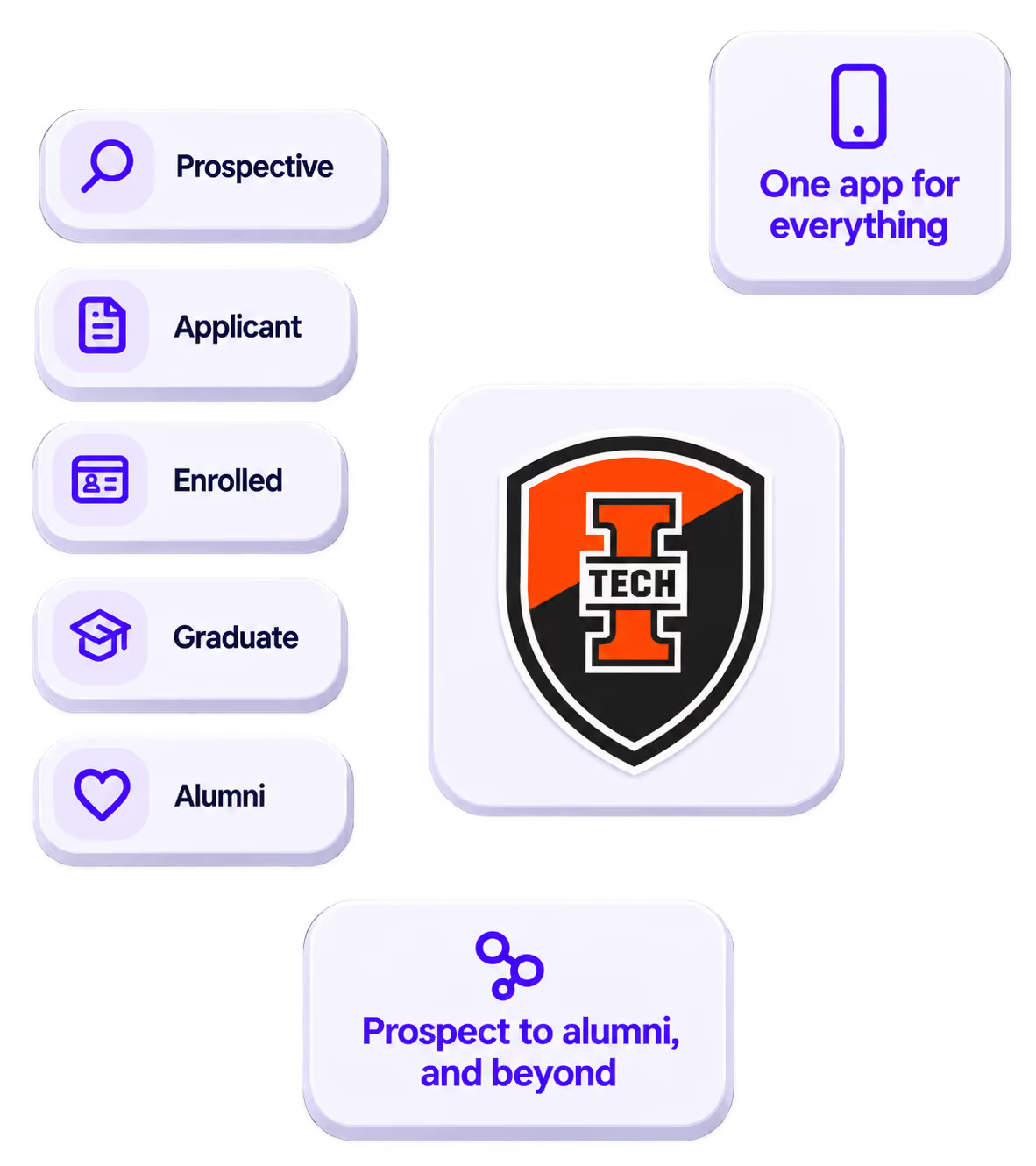
The power of your brand in your app, from first visit to alumni.
Build trust
Attendees download your app, not ours. Your name, colors, and crest in the stores.
.avif)
One place for the whole event
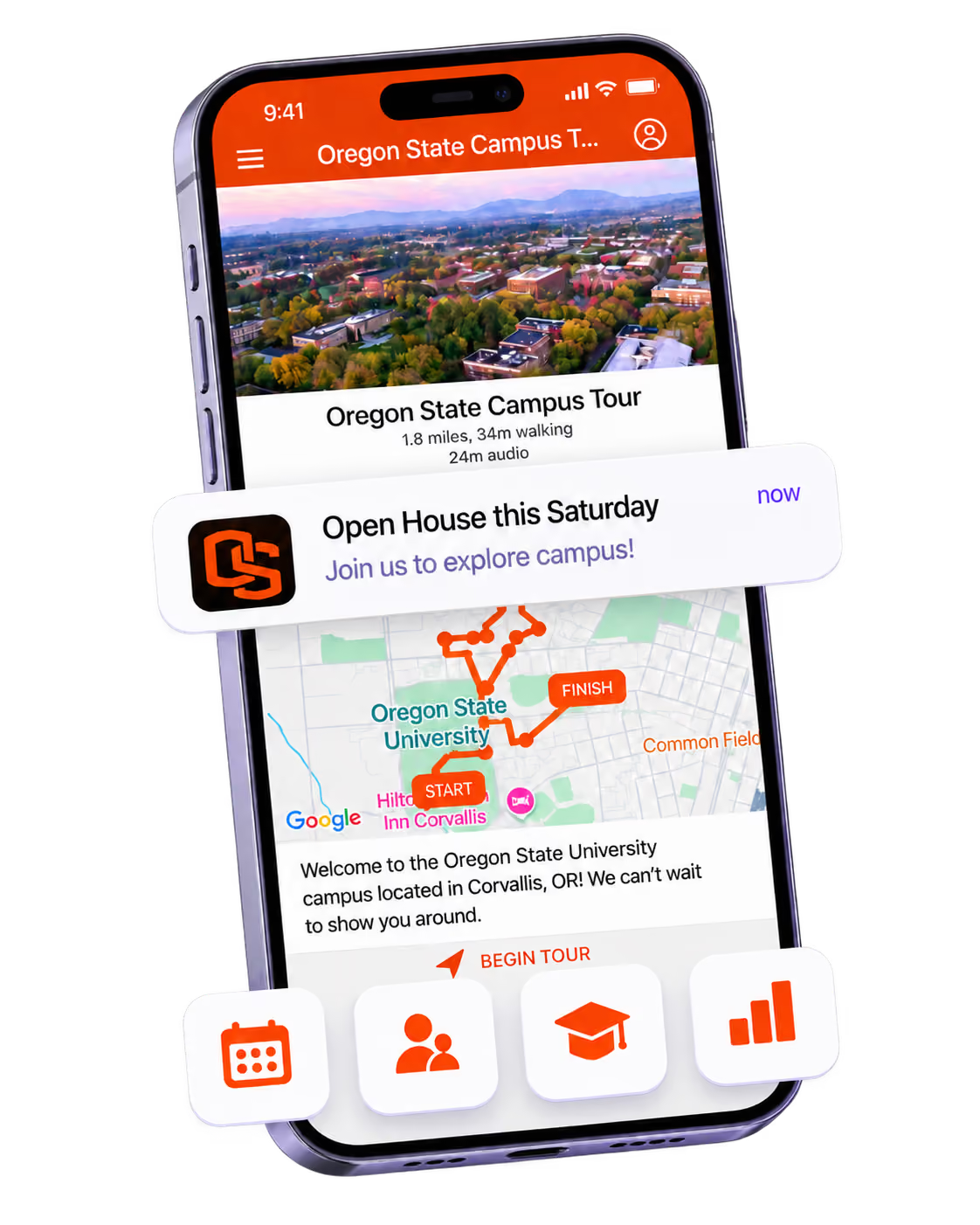
Schedules, maps, registration, and updates in one branded hub - not five tools.
Stand out
A branded app is what people keep on their phone after the printed program is in the recycling.

Get the Mobile App Playbook
A short guide to running the whole student journey in one app. No fluff, just what works.
for higher ed
Campus
Playbook
A practical guide to building a connected campus experience.
Free playbook
The Mobile App Playbook for Universities
Students decide if they belong long before they set foot on campus. This playbook shows how to win them over from the first visit through graduation.
- Grow enrollment and boost recruitment
- Increase belonging and retention
- Run every event from one branded app
By submitting, you agree to our Privacy Policy.
You're in.
.png)