
Campus apps by department
Admissions, orientation, student life, and more — one campus app that works across departments.

Campus apps by department
Admissions, orientation, student life, and more — one campus app that works across departments.
Build unlimited event apps on one license
One partnership for unlimited campus events — orientation, tours, student life, and everything in between.
Build unlimited event apps on one license
One partnership for unlimited campus events — orientation, tours, student life, and everything in between.
Compare event app platforms
See how Guidebook stacks up against other event app and registration platforms.
Compare event app platforms
See how Guidebook stacks up against other event app and registration platforms.
Event apps for nonprofit and community programs
Give members, volunteers, and donors one branded app for conferences, fundraisers, and year-round community.
Event apps for nonprofit and community programs
Give members, volunteers, and donors one branded app for conferences, fundraisers, and year-round community.
Campus integrations and an open API
Connect Guidebook with the campus systems, APIs, and tools your team already uses.
Campus integrations and an open API
Connect Guidebook with the campus systems, APIs, and tools your team already uses.
Event apps for corporate and enterprise teams
Internal meetings, offsites, and large-scale corporate events — with the branding and control enterprise teams need.
Event apps for corporate and enterprise teams
Internal meetings, offsites, and large-scale corporate events — with the branding and control enterprise teams need.
Create a branded event app with no coding
Put schedules, maps, resources, and updates in every attendee's pocket — built for campus events and programs.
Create a branded event app with no coding
Put schedules, maps, resources, and updates in every attendee's pocket — built for campus events and programs.
Launch a branded, white-label event app
A white-label event app with your branding, your content, and your attendee experience — no coding required.
Launch a branded, white-label event app
A white-label event app with your branding, your content, and your attendee experience — no coding required.
Everything in the Guidebook platform
Explore the features event teams use to engage attendees before, during, and after the event.
Everything in the Guidebook platform
Explore the features event teams use to engage attendees before, during, and after the event.
One app for in-person and virtual attendees
The same schedule, networking, and updates whether people are in the room or joining remotely.
One app for in-person and virtual attendees
The same schedule, networking, and updates whether people are in the room or joining remotely.
Event apps built for associations
Annual meetings, chapter events, and member engagement — without rebuilding a new app every year.
Event apps built for associations
Annual meetings, chapter events, and member engagement — without rebuilding a new app every year.
A branded event website that matches the app
Promote the event, collect interest, and keep branding consistent from the first click to check-in.
A branded event website that matches the app
Promote the event, collect interest, and keep branding consistent from the first click to check-in.
Plan, run, and measure events on one platform
App, registration, badges, and websites in one workflow — so planning isn't a pile of disconnected tools.
Plan, run, and measure events on one platform
App, registration, badges, and websites in one workflow — so planning isn't a pile of disconnected tools.
Keep members engaged between events
One branded app for the conference and everything that happens the other 51 weeks of the year.
Keep members engaged between events
One branded app for the conference and everything that happens the other 51 weeks of the year.
The conference app attendees actually use
Schedules, maps, networking, and live updates for annual meetings, summits, and multi-day conferences.
The conference app attendees actually use
Schedules, maps, networking, and live updates for annual meetings, summits, and multi-day conferences.
Registration that feeds your app and badges
Collect registrations, payments, and attendee data in the same platform as your event app.
Registration that feeds your app and badges
Collect registrations, payments, and attendee data in the same platform as your event app.
Design and print event badges in one place
Custom badges, QR check-in, and on-site printing — without a separate badge vendor.
Design and print event badges in one place
Custom badges, QR check-in, and on-site printing — without a separate badge vendor.
A Smaller School?
Deliver a polished, branded event experience without a large team or a big budget.
A Smaller School?
Deliver a polished, branded event experience without a large team or a big budget.
Running Family Programs?
Give families everything they need, from schedules and maps to real-time updates, all in one place.

Running Family Programs?
Give families everything they need, from schedules and maps to real-time updates, all in one place.
Coordinating Move-In Day?
Share updates, manage events, and keep students informed from move-in through the academic year.

Coordinating Move-In Day?
Share updates, manage events, and keep students informed from move-in through the academic year.
Offering Campus Tours?
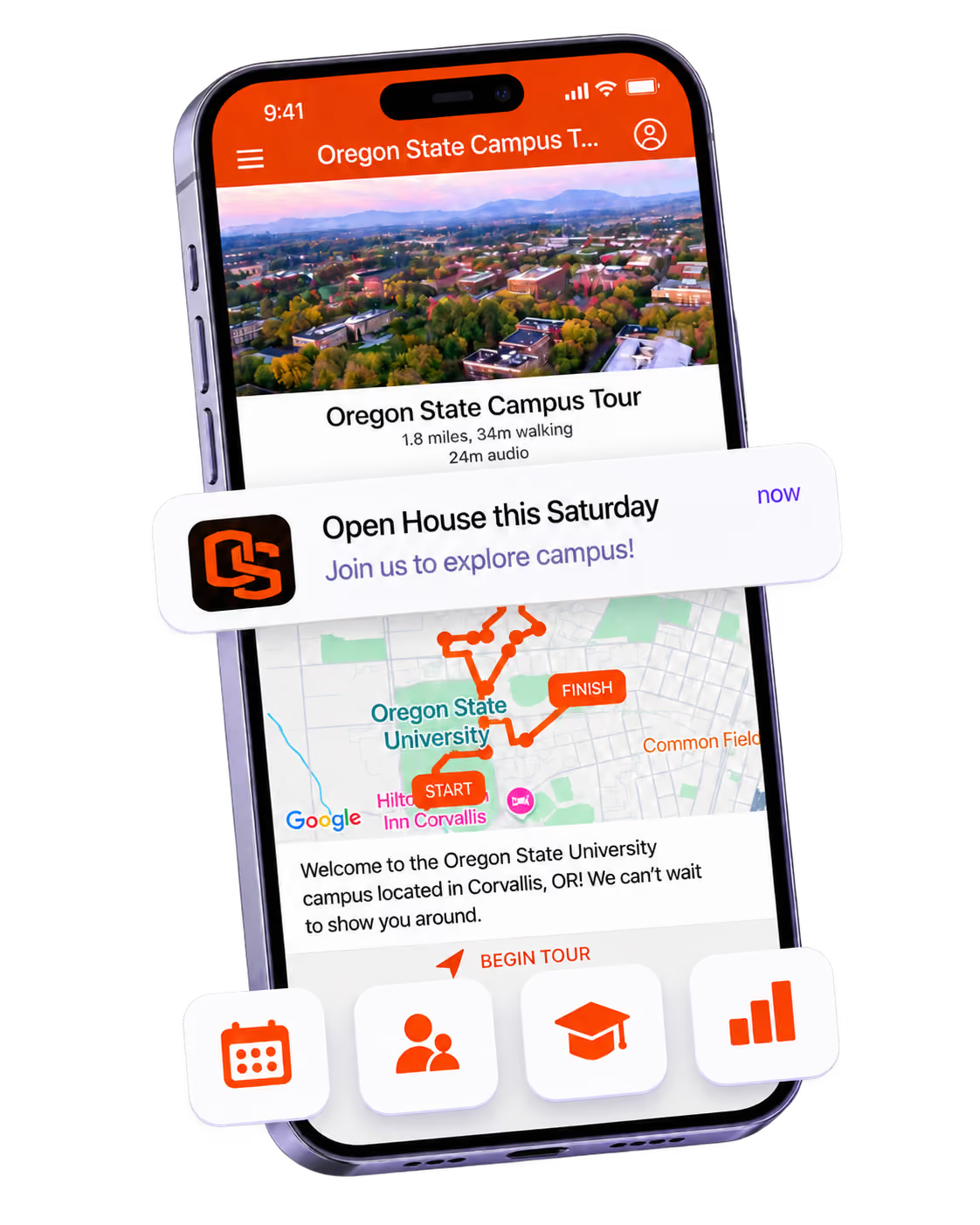
Deliver branded, self-guided tour experiences with interactive maps and rich media, available 24/7.

Offering Campus Tours?
Deliver branded, self-guided tour experiences with interactive maps and rich media, available 24/7.
Organising a Career Fair?
Simplify logistics for students, employers, and Career Services staff with one easy-to-use app.
Organising a Career Fair?
Simplify logistics for students, employers, and Career Services staff with one easy-to-use app.
Managing Alumni Events?
Plan reunions, regional events, and fundraising campaigns with an app built for alumni engagement.

Managing Alumni Events?
Plan reunions, regional events, and fundraising campaigns with an app built for alumni engagement.
Boost Student Engagement
One hub for schedules, resources, and events that keeps students connected throughout the academic year.

Boost Student Engagement
One hub for schedules, resources, and events that keeps students connected throughout the academic year.
Planning Orientation?
Help new students feel prepared from day one with schedules, campus resources, and real-time updates in one app.

Planning Orientation?
Help new students feel prepared from day one with schedules, campus resources, and real-time updates in one app.
Running Admissions Events?
Manage open houses, tours, and yield events with a branded app that saves time and engages prospective students.

Running Admissions Events?
Manage open houses, tours, and yield events with a branded app that saves time and engages prospective students.
Get a custom Sponsorship Package Template
Stop starting from scratch. Grab free templates that helWe'll build a tailored sponsorship package with suggested pricing, tiers, and benefits..for your specific event.p you build professional sponsorship packages and close deals faster.
Get a custom Sponsorship Package Template
Stop starting from scratch. Grab free templates that helWe'll build a tailored sponsorship package with suggested pricing, tiers, and benefits..for your specific event.p you build professional sponsorship packages and close deals faster.
Plan Your Next Event Without Missing a Beat.
From venue selection to post-event wrap-up, this free checklist walks you through every step (so nothing falls through the cracks).
.avif)
Plan Your Next Event Without Missing a Beat.
From venue selection to post-event wrap-up, this free checklist walks you through every step (so nothing falls through the cracks).
Real Results From Real Events
100,000+ organizations trust Guidebook. See exactly how universities, associations, enterprises, and more put it to work.

Real Results From Real Events
100,000+ organizations trust Guidebook. See exactly how universities, associations, enterprises, and more put it to work.
Flexible pricing for every event size
Find the perfect plan for your needs, from intimate gatherings to large-scale conferences.

Flexible pricing for every event size
Find the perfect plan for your needs, from intimate gatherings to large-scale conferences.
Join our event experts
Watch on-demand webinars and join live sessions with industry leaders sharing best practices for event success.
.avif)
Join our event experts
Watch on-demand webinars and join live sessions with industry leaders sharing best practices for event success.
Guidebook in Action
Book a personalized walkthrough and discover how we help event teams create better attendee experiences.
Guidebook in Action
Book a personalized walkthrough and discover how we help event teams create better attendee experiences.

How do you track orientation attendance digitally?
Track orientation attendance digitally with automated tools, real-time dashboards, and seamless integrations. Discover top platforms, setup guides, and reporting tips.

Digital orientation attendance tracking is the process of monitoring and recording participant presence at virtual or hybrid onboarding events using technology-based tools and platforms. It covers everything from initial check-ins to session-by-session engagement data. When done right, it transforms raw attendance numbers into actionable insights that improve student success.
Here's the thing: traditional sign-in sheets don't cut it anymore. Today's orientation programs span multiple days, dozens of sessions, and thousands of participants. Digital tracking captures who showed up, when they engaged, and which content resonated most. This data helps institutions prove program value and identify at-risk students early.
Key Characteristics of Digital Orientation Attendance Tracking
- Real-Time Data Capture: Attendance records update instantly as participants check in. No more waiting days to compile spreadsheets or chase down missing signatures.
- Multi-Session Monitoring: Track presence across dozens of concurrent sessions, workshops, and activities. Each touchpoint gets recorded automatically.
- Unique Identifier Integration: Systems link attendance to student IDs, email addresses, or QR codes. This creates accurate, duplicate-free records.
- Automated Reporting: Generate attendance summaries, participation rates, and trend analyses without manual data entry. Reports are ready when you need them.
- Cross-Platform Compatibility: Works across mobile apps, web browsers, and physical check-in stations. Participants can engage from anywhere.
- Compliance Documentation: Creates audit trails for accreditation, funding requirements, and institutional reporting. Every check-in is timestamped and stored.
- Engagement Scoring: Goes beyond simple attendance to measure active participation, session duration, and content interaction.
Digital Orientation Attendance Tracking vs. Related Terms
Event Check-In Software
- Scope: Single-event registration and entry management
- Focus: Confirming arrival at one specific event
- Timeline: Point-in-time capture at event start
- Channels: Typically badge scanning or name lookup
- Goal: Verify registration and manage capacity
Learning Management System (LMS) Tracking
- Scope: Course completion and module progress
- Focus: Academic content consumption
- Timeline: Semester-long or course-duration tracking
- Channels: Web-based learning platforms
- Goal: Measure educational outcomes and compliance
Student Engagement Analytics
- Scope: Holistic campus involvement measurement
- Focus: Overall student experience and belonging
- Timeline: Continuous throughout enrollment
- Channels: Multiple touchpoints across campus life
- Goal: Predict retention and support student success
Digital orientation attendance tracking sits at the intersection of these approaches. It combines the precision of event check-in software with the longitudinal view of engagement analytics. The result? A complete picture of how new students connect with your institution from day one.
Essential Components of Digital Orientation Attendance Tracking
Check-In Technology Options
Your check-in method sets the foundation for everything else. Choose based on your event format and audience size.
- QR code scanning via mobile apps
- NFC badge tapping at entry points
- Geofencing for automatic location-based check-ins
- Self-service kiosks with ID verification
- Virtual attendance through video platform integration
Data Collection Points
Don't just track who showed up. Capture meaningful engagement signals throughout the orientation experience.
Strong systems record session attendance, time spent in each activity, and interaction with digital content. They also note which resources students access and when they drop off.
Integration Capabilities
Your tracking system shouldn't live in isolation. It needs to talk to other campus tools.
- Student Information Systems (SIS) for demographic data
- CRM platforms for communication workflows
- Early alert systems for intervention triggers
- Assessment tools for outcome correlation
Reporting Dashboards
Raw data means nothing without clear visualization. Look for systems that offer real-time dashboards showing attendance trends, no-show rates, and session popularity.
The best platforms let you filter by student type, program track, or demographic group. This helps you spot patterns and adjust programming on the fly.
Privacy and Security Features
Student data requires serious protection. Your system must comply with FERPA and institutional data policies.
Look for role-based access controls, encrypted data storage, and clear retention policies. Students should know what's being tracked and why.
How Digital Orientation Attendance Tracking Works
Pre-Event Setup and Configuration
Success starts before orientation begins. Import your student roster and create unique identifiers for each participant. Build your session schedule with clear naming conventions.
Configure check-in methods for each session type. A large welcome assembly might use geofencing. Small breakout sessions could require QR scans. Virtual components need video platform integration.
Active Tracking During Orientation
Once orientation launches, the system works continuously. Students check in through their preferred method. Data flows to your central dashboard in real time.
- Monitor attendance rates as sessions begin
- Send automated reminders to no-shows
- Track movement between concurrent sessions
- Flag students who miss required activities
Post-Event Analysis and Action
The real value emerges after orientation ends. Analyze completion rates across different student populations. Identify which sessions drove the highest engagement.
Connect attendance data to downstream outcomes. Did students who attended financial aid sessions have fewer billing issues? Did those who skipped academic advising struggle with course selection? These insights shape next year's program.
Continuous Improvement Cycles
Use your data to make evidence-based changes. Cut sessions with low attendance. Expand popular offerings. Adjust scheduling based on participation patterns.
Share findings with stakeholders across campus. Attendance data can justify budget requests, demonstrate program impact, and build support for new student programs.
Why Digital Orientation Attendance Tracking Matters
For Event Success:
- Real-Time Visibility: Know exactly who's in each session without manual headcounts. Adjust room assignments or staffing on the spot.
- Improved Communication: Send targeted messages to students who missed specific sessions. Provide makeup options or alternative resources.
- Resource Optimization: Match staffing and supplies to actual attendance. Stop over-preparing for sessions that consistently run small.
- Enhanced Engagement: Gamify attendance with completion badges or team competitions. Students stay motivated when progress is visible.
- Seamless Experience: Eliminate long check-in lines and paper shuffling. Students spend time learning, not waiting.
For Business Objectives:
- Retention Correlation: Link orientation attendance to first-year persistence. Build the case for program investment with hard data.
- Compliance Documentation: Meet accreditation requirements with automated attendance records. Audits become simple when data is organized.
- Cost Justification: Calculate cost-per-engaged-student metrics. Show leadership exactly what orientation investment delivers.
- Early Intervention: Identify disengaged students before classes start. Connect them with support resources proactively.
- Continuous Improvement: Make data-driven decisions about program design. Stop guessing what works and start knowing.
Platforms like Guidebook's event management platform make this tracking seamless. With built-in attendance features, real-time analytics, and mobile-first design, you can capture every check-in without adding staff burden. Schools like Seattle University have transformed their orientation programs using these tools.
Digital Orientation Attendance Tracking Best Practices
- Start with Clear Goals: Define what you want to learn from attendance data before choosing tools. Are you proving program value? Identifying at-risk students? Both require different approaches.
- Make Check-In Frictionless: Every extra step reduces compliance. Use QR codes students can scan in seconds. Avoid systems requiring passwords or multiple taps.
- Communicate the Why: Tell students why you're tracking attendance. Frame it as support, not surveillance. "We want to make sure you don't miss important resources."
- Train Your Team Thoroughly: Staff should know how to troubleshoot common issues. A confused orientation leader creates bottlenecks and frustrated students.
- Build in Redundancy: Technology fails. Have backup check-in methods ready. A simple name lookup can save the day when WiFi drops.
- Monitor Data in Real Time: Don't wait until orientation ends to review attendance. Check dashboards throughout each day. Address problems immediately.
- Integrate with Your Tech Stack: Connect attendance data to your SIS and CRM. Manual data transfers create errors and delays.
- Respect Student Privacy: Collect only what you need. Be transparent about data use. Follow FERPA guidelines strictly.
- Close the Loop with Students: Share attendance summaries with participants. Let them see their own engagement. This builds accountability and ownership.
- Document Everything for Next Year: Create a post-orientation report with key metrics, lessons learned, and recommendations. Future you will be grateful.
Common Digital Orientation Attendance Tracking Mistakes
Tracking Without Purpose: Collecting data just because you can wastes everyone's time. If you're not going to act on attendance information, don't burden students with check-ins. Define specific questions your data will answer before implementation.
Choosing Complexity Over Simplicity: Fancy features mean nothing if students won't use them. A simple QR scan beats a sophisticated biometric system that creates lines. Prioritize ease of use above all else.
Ignoring the Hybrid Reality: Many orientations now blend in-person and virtual components. Systems that only track physical attendance miss half the picture. Ensure your tools work across all delivery formats.
Failing to Test Before Launch: Orientation day is not the time to discover your check-in system crashes under load. Run full simulations with realistic participant numbers. Fix problems before they affect real students.
Siloing Attendance Data: Attendance information locked in one system can't drive institutional action. Share relevant data with academic advisors, student success teams, and event planning staff. Break down barriers between departments.
Overlooking Accessibility: Not every student can scan a QR code easily. Ensure your system accommodates students with disabilities, those without smartphones, and international students with different devices.
Forgetting Staff Experience: Orientation leaders need tools that work for them too. If your system requires constant troubleshooting, staff frustration will show. Invest in training and support.
Final Thoughts
Digital orientation attendance tracking has evolved from a nice-to-have into a must-have for institutions serious about student success. The data you capture during those first critical days shapes interventions, justifies investments, and ultimately improves retention.
The higher education landscape demands accountability. Accreditors want evidence. Administrators want event ROI. Students want seamless experiences. Digital tracking delivers on all three fronts when implemented thoughtfully.
Think of attendance tracking as the foundation for a data-informed orientation strategy. It's not about surveillance or compliance checkboxes. It's about understanding how students engage so you can serve them better. The institutions that embrace this mindset will build stronger connections with incoming classes.
Ready to transform your orientation tracking? Guidebook's solutions for schools offer everything you need to capture attendance, analyze engagement, and create memorable experiences. From admissions events to housing programs, our platform scales with your needs. Book a demo to see how schools like Indiana Tech and American University have revolutionized their orientation programs. Your students deserve an orientation experience that sets them up for success—and you deserve the data to prove it works.
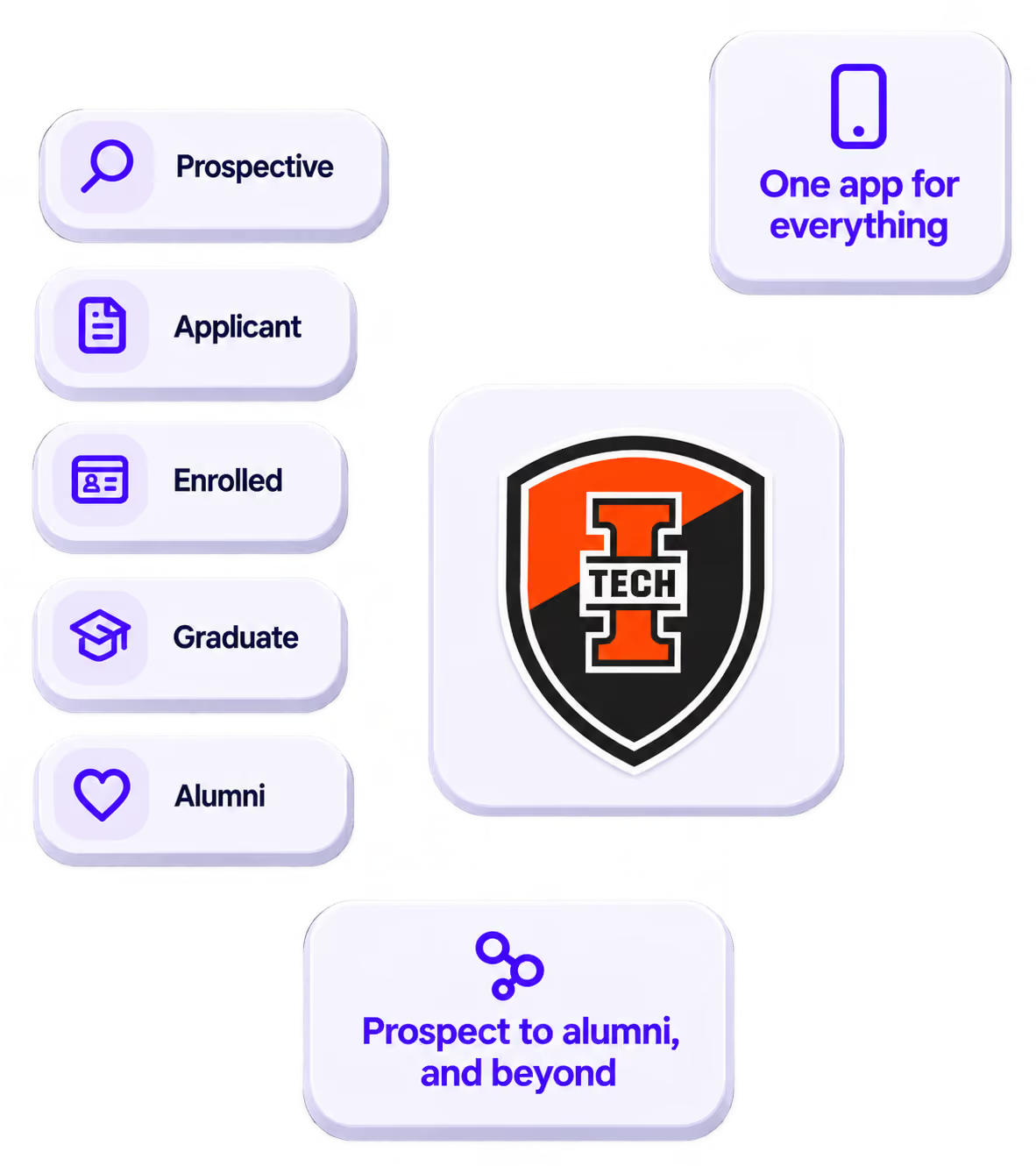
The power of your brand in your app, from first visit to alumni.
Build trust
Attendees download your app, not ours. Your name, colors, and crest in the stores.
.avif)
One place for the whole event
Schedules, maps, registration, and updates in one branded hub - not five tools.
Stand out
A branded app is what people keep on their phone after the printed program is in the recycling.

Get the Mobile App Playbook
A short guide to running the whole student journey in one app. No fluff, just what works.
for higher ed
Campus
Playbook
A practical guide to building a connected campus experience.
Free playbook
The Mobile App Playbook for Universities
Students decide if they belong long before they set foot on campus. This playbook shows how to win them over from the first visit through graduation.
- Grow enrollment and boost recruitment
- Increase belonging and retention
- Run every event from one branded app
By submitting, you agree to our Privacy Policy.
You're in.
.png)