
Campus apps by department
Admissions, orientation, student life, and more — one campus app that works across departments.

Campus apps by department
Admissions, orientation, student life, and more — one campus app that works across departments.
Build unlimited event apps on one license
One partnership for unlimited campus events — orientation, tours, student life, and everything in between.
Build unlimited event apps on one license
One partnership for unlimited campus events — orientation, tours, student life, and everything in between.
Compare event app platforms
See how Guidebook stacks up against other event app and registration platforms.
Compare event app platforms
See how Guidebook stacks up against other event app and registration platforms.
Event apps for nonprofit and community programs
Give members, volunteers, and donors one branded app for conferences, fundraisers, and year-round community.
Event apps for nonprofit and community programs
Give members, volunteers, and donors one branded app for conferences, fundraisers, and year-round community.
Campus integrations and an open API
Connect Guidebook with the campus systems, APIs, and tools your team already uses.
Campus integrations and an open API
Connect Guidebook with the campus systems, APIs, and tools your team already uses.
Event apps for corporate and enterprise teams
Internal meetings, offsites, and large-scale corporate events — with the branding and control enterprise teams need.
Event apps for corporate and enterprise teams
Internal meetings, offsites, and large-scale corporate events — with the branding and control enterprise teams need.
Create a branded event app with no coding
Put schedules, maps, resources, and updates in every attendee's pocket — built for campus events and programs.
Create a branded event app with no coding
Put schedules, maps, resources, and updates in every attendee's pocket — built for campus events and programs.
Launch a branded, white-label event app
A white-label event app with your branding, your content, and your attendee experience — no coding required.
Launch a branded, white-label event app
A white-label event app with your branding, your content, and your attendee experience — no coding required.
Everything in the Guidebook platform
Explore the features event teams use to engage attendees before, during, and after the event.
Everything in the Guidebook platform
Explore the features event teams use to engage attendees before, during, and after the event.
One app for in-person and virtual attendees
The same schedule, networking, and updates whether people are in the room or joining remotely.
One app for in-person and virtual attendees
The same schedule, networking, and updates whether people are in the room or joining remotely.
Event apps built for associations
Annual meetings, chapter events, and member engagement — without rebuilding a new app every year.
Event apps built for associations
Annual meetings, chapter events, and member engagement — without rebuilding a new app every year.
A branded event website that matches the app
Promote the event, collect interest, and keep branding consistent from the first click to check-in.
A branded event website that matches the app
Promote the event, collect interest, and keep branding consistent from the first click to check-in.
Plan, run, and measure events on one platform
App, registration, badges, and websites in one workflow — so planning isn't a pile of disconnected tools.
Plan, run, and measure events on one platform
App, registration, badges, and websites in one workflow — so planning isn't a pile of disconnected tools.
Keep members engaged between events
One branded app for the conference and everything that happens the other 51 weeks of the year.
Keep members engaged between events
One branded app for the conference and everything that happens the other 51 weeks of the year.
The conference app attendees actually use
Schedules, maps, networking, and live updates for annual meetings, summits, and multi-day conferences.
The conference app attendees actually use
Schedules, maps, networking, and live updates for annual meetings, summits, and multi-day conferences.
Registration that feeds your app and badges
Collect registrations, payments, and attendee data in the same platform as your event app.
Registration that feeds your app and badges
Collect registrations, payments, and attendee data in the same platform as your event app.
Design and print event badges in one place
Custom badges, QR check-in, and on-site printing — without a separate badge vendor.
Design and print event badges in one place
Custom badges, QR check-in, and on-site printing — without a separate badge vendor.
A Smaller School?
Deliver a polished, branded event experience without a large team or a big budget.
A Smaller School?
Deliver a polished, branded event experience without a large team or a big budget.
Running Family Programs?
Give families everything they need, from schedules and maps to real-time updates, all in one place.
Running Family Programs?
Give families everything they need, from schedules and maps to real-time updates, all in one place.
Coordinating Move-In Day?
Share updates, manage events, and keep students informed from move-in through the academic year.

Coordinating Move-In Day?
Share updates, manage events, and keep students informed from move-in through the academic year.
Offering Campus Tours?
Deliver branded, self-guided tour experiences with interactive maps and rich media, available 24/7.

Offering Campus Tours?
Deliver branded, self-guided tour experiences with interactive maps and rich media, available 24/7.
Organising a Career Fair?
Simplify logistics for students, employers, and Career Services staff with one easy-to-use app.
Organising a Career Fair?
Simplify logistics for students, employers, and Career Services staff with one easy-to-use app.
Managing Alumni Events?
Plan reunions, regional events, and fundraising campaigns with an app built for alumni engagement.
Managing Alumni Events?
Plan reunions, regional events, and fundraising campaigns with an app built for alumni engagement.
Boost Student Engagement
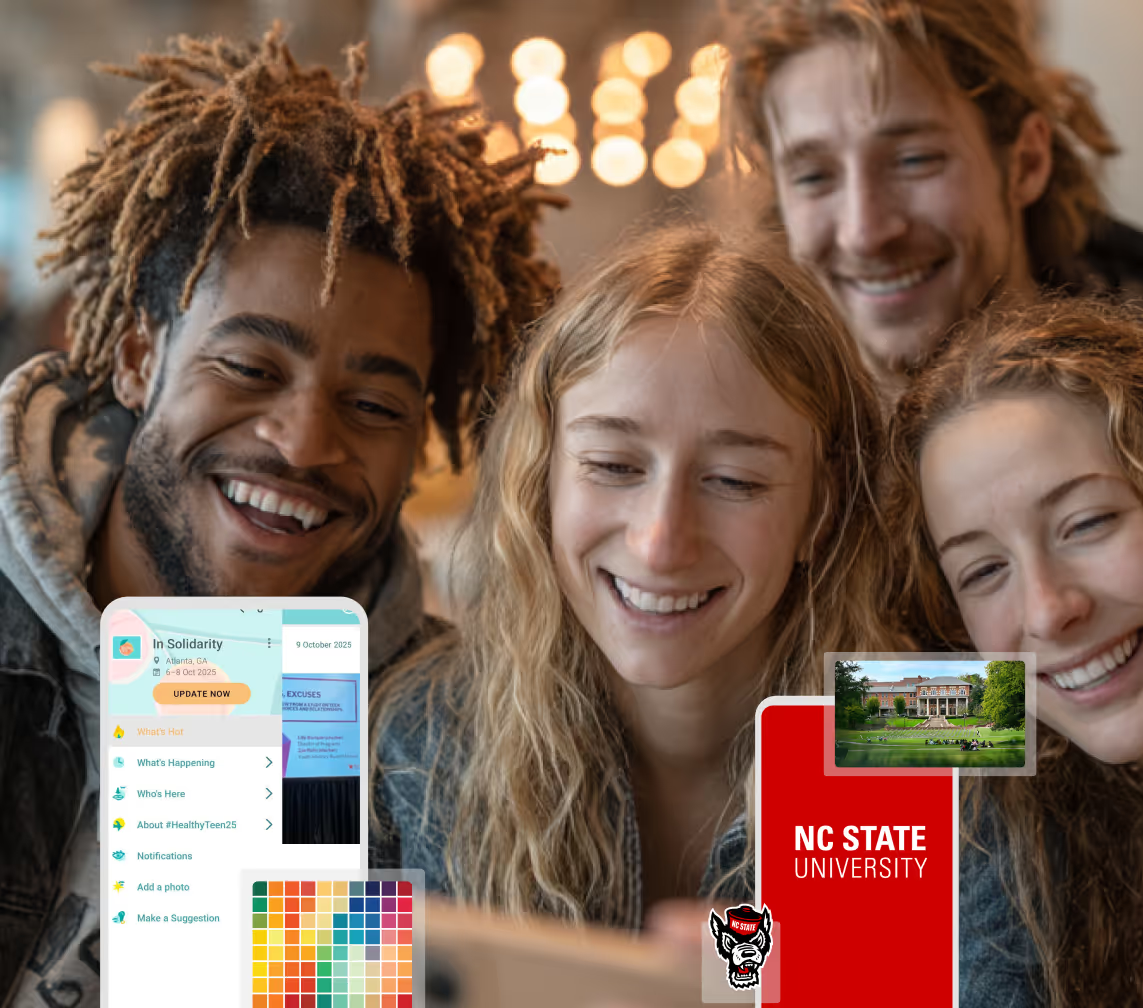
One hub for schedules, resources, and events that keeps students connected throughout the academic year.
Boost Student Engagement
One hub for schedules, resources, and events that keeps students connected throughout the academic year.
Planning Orientation?
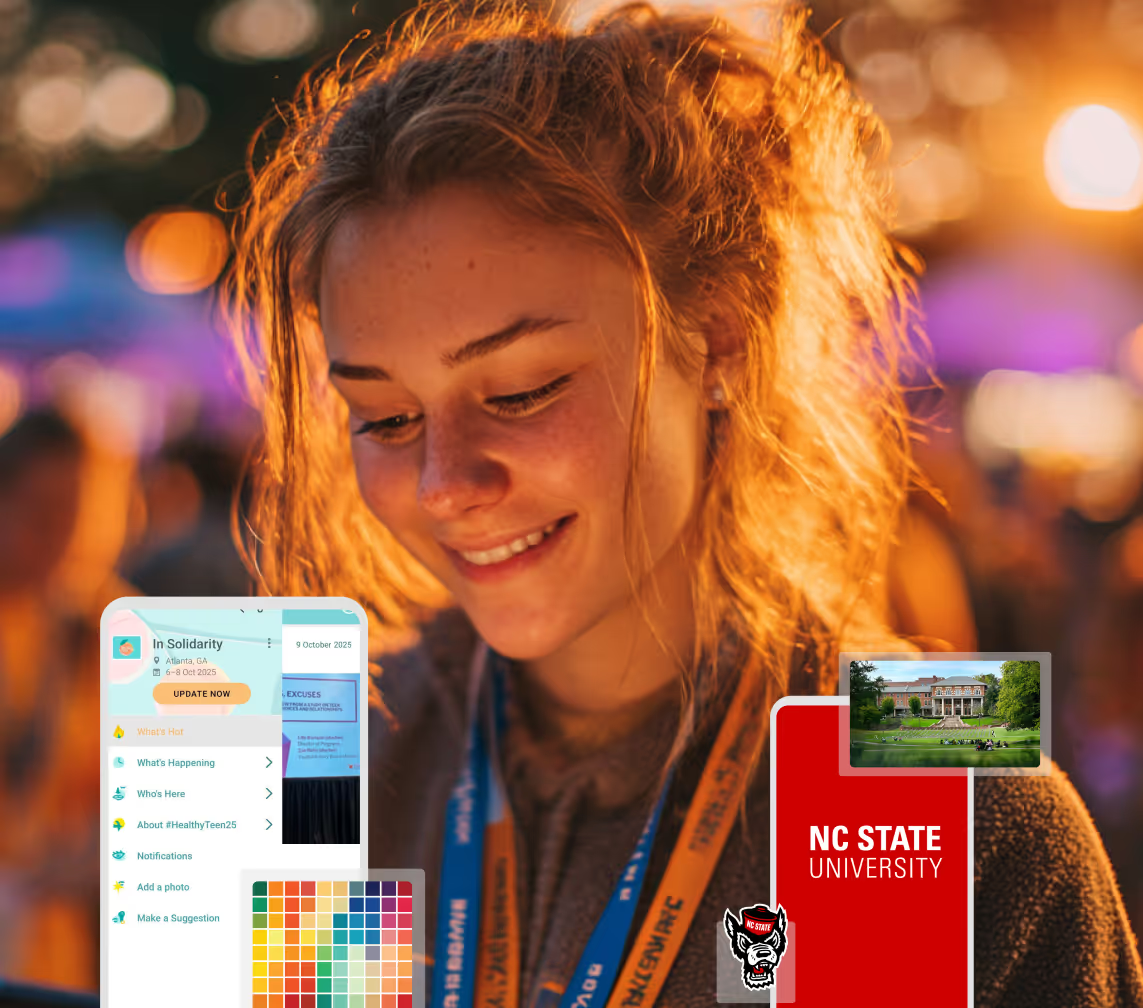
Help new students feel prepared from day one with schedules, campus resources, and real-time updates in one app.
Planning Orientation?
Help new students feel prepared from day one with schedules, campus resources, and real-time updates in one app.
Running Admissions Events?
Manage open houses, tours, and yield events with a branded app that saves time and engages prospective students.

Running Admissions Events?
Manage open houses, tours, and yield events with a branded app that saves time and engages prospective students.
Get a custom Sponsorship Package Template
Stop starting from scratch. Grab free templates that helWe'll build a tailored sponsorship package with suggested pricing, tiers, and benefits..for your specific event.p you build professional sponsorship packages and close deals faster.
Get a custom Sponsorship Package Template
Stop starting from scratch. Grab free templates that helWe'll build a tailored sponsorship package with suggested pricing, tiers, and benefits..for your specific event.p you build professional sponsorship packages and close deals faster.
Plan Your Next Event Without Missing a Beat.
From venue selection to post-event wrap-up, this free checklist walks you through every step (so nothing falls through the cracks).
.avif)
Plan Your Next Event Without Missing a Beat.
From venue selection to post-event wrap-up, this free checklist walks you through every step (so nothing falls through the cracks).
Real Results From Real Events
100,000+ organizations trust Guidebook. See exactly how universities, associations, enterprises, and more put it to work.

Real Results From Real Events
100,000+ organizations trust Guidebook. See exactly how universities, associations, enterprises, and more put it to work.
Flexible pricing for every event size
Find the perfect plan for your needs, from intimate gatherings to large-scale conferences.
Flexible pricing for every event size
Find the perfect plan for your needs, from intimate gatherings to large-scale conferences.
Join our event experts
Watch on-demand webinars and join live sessions with industry leaders sharing best practices for event success.
.avif)
Join our event experts
Watch on-demand webinars and join live sessions with industry leaders sharing best practices for event success.
Guidebook in Action
Book a personalized walkthrough and discover how we help event teams create better attendee experiences.
Guidebook in Action
Book a personalized walkthrough and discover how we help event teams create better attendee experiences.

Structured vs informal networking at events: what’s the distinction?
Structured vs informal networking at events: understand the key differences, benefits, and best practices for each approach to maximize your event connections.

Structured vs informal event networking is the strategic choice between organized, facilitated connection activities and organic, spontaneous attendee interactions that shapes how people build relationships at events. Both approaches serve different purposes and work best in different contexts. Getting this balance right can make or break your event's networking success.
Here's the thing: most events need both. Structured networking gives shy attendees a safety net. Informal networking lets natural connections flourish. The magic happens when you blend them thoughtfully based on your audience, goals, and event format.
Key Characteristics of Structured vs Informal Event Networking
- Format Differences: Structured networking follows set rules and timelines. Informal networking happens naturally without predetermined frameworks.
- Facilitation Level: Structured sessions need a host or moderator. Informal networking requires only the right environment and opportunity.
- Predictability: Structured formats guarantee everyone participates. Informal settings let attendees opt in or out freely.
- Time Investment: Structured activities have fixed durations. Informal conversations can last 30 seconds or 30 minutes.
- Comfort Zones: Structured networking helps introverts engage. Informal settings favor naturally outgoing personalities.
- Connection Depth: Structured formats create breadth (many brief connections). Informal settings often produce deeper, more meaningful exchanges.
- Planning Requirements: Structured networking needs advance preparation. Informal networking needs thoughtful space design and timing.
Structured Networking vs Informal Networking
Structured Networking
- Scope: Organized activities with clear rules and timeframes
- Focus: Ensuring all attendees make connections regardless of personality type
- Timeline: Scheduled sessions lasting 15-60 minutes
- Channels: Speed networking, roundtables, matchmaking apps, facilitated introductions
- Goal: Maximize connection quantity and guarantee participation
Informal Networking
- Scope: Spontaneous interactions without predetermined structure
- Focus: Creating environments where organic conversations happen naturally
- Timeline: Ongoing throughout event during breaks, meals, and social hours
- Channels: Coffee breaks, cocktail hours, lounge areas, hallway conversations
- Goal: Foster authentic relationships and serendipitous discoveries
Smart event planning incorporates both approaches. Use structured networking early to break the ice. Then let informal networking deepen those initial connections throughout your event.
Types of Structured Networking Activities
Speed Networking Sessions
Think speed dating, but for business. Attendees rotate through brief 3-5 minute conversations with multiple partners. A bell or timer signals when to switch.
This format works brilliantly for:
- Large conferences with 100+ attendees
- Industry mixers where breadth matters
- Events with diverse attendee backgrounds
Roundtable Discussions
Small groups gather around specific topics with a facilitator guiding conversation. Everyone gets airtime. Nobody dominates.
Roundtables shine when you want deeper exchanges than speed networking allows. They're perfect for team building events and professional development conferences.
Matchmaking and Appointment Setting
Technology does the heavy lifting here. Attendees complete profiles before the event. Algorithms suggest compatible connections. People schedule meetings in advance.
This approach requires an event management platform with matchmaking features. The payoff? Higher-quality connections based on shared interests and goals.
Facilitated Introductions
Event staff or volunteers actively introduce attendees who should meet. This personal touch adds warmth that technology can't replicate.
Train your team to spot connection opportunities. Give them conversation starters. Watch the magic happen.
Interactive Icebreakers
Games, challenges, and group activities get people talking without the pressure of "networking." Scavenger hunts, trivia contests, and collaborative puzzles work well.
These activities feel less transactional. People connect over shared experiences rather than business card exchanges.
Creating Spaces for Informal Networking
Design Conversation-Friendly Environments
Informal networking doesn't just happen. You design for it. Consider these elements:
- Comfortable seating arranged in small clusters
- Standing tables at the right height for conversation
- Quiet zones away from main event noise
- Good lighting that flatters and energizes
Build in Generous Break Times
Rushed schedules kill informal networking. People need time to grab coffee, find someone interesting, and actually talk.
The event planning process should include 15-20 minute breaks between sessions. Longer breaks (30-45 minutes) work even better for meals.
Create Natural Gathering Points
Coffee stations, charging lounges, and food areas become networking hubs. Place them strategically. Make them comfortable.
Pro tip: slightly undersized spaces create productive crowding. People bump into each other. Conversations start naturally.
Use Conversation Catalysts
Give people reasons to talk. Interactive displays, photo opportunities, and hands-on demos spark conversations between strangers.
Even simple touches help. Name badges with conversation starters. Themed drink stations. Interesting table centerpieces that prompt discussion.
Why Structured vs Informal Event Networking Matters
For Event Success:
- Higher Satisfaction Scores: Attendees rate events with good networking opportunities 40% higher than those without
- Increased Return Attendance: People come back to events where they made valuable connections
- Better Word-of-Mouth: Great networking experiences get shared and recommended
- Stronger Community Building: Connections made at events extend beyond the event itself
- Improved Event ROI: Networking value justifies ticket prices and sponsorship investments
For Business Objectives:
- Lead Generation: Both formats create opportunities for sales conversations
- Partnership Development: Strategic connections lead to collaborations and deals
- Knowledge Sharing: Informal conversations often surface insights formal sessions miss
- Talent Recruitment: Events become hiring opportunities when networking flows freely
- Brand Building: Positive networking experiences reflect well on event hosts
Guidebook's platform helps you deliver both structured and informal networking experiences. Features like attendee profiles, messaging, and schedule management make connections easier to facilitate and track.
Structured vs Informal Event Networking Best Practices
- Know Your Audience First: Survey attendees about networking preferences before designing your approach. Introverts and extroverts need different support.
- Start Structured, Then Open Up: Use facilitated activities early when people don't know each other. Shift to informal as comfort levels rise.
- Provide Clear Instructions: Structured networking only works when everyone understands the rules. Explain formats clearly and demonstrate if needed.
- Create Opt-Out Options: Not everyone wants to network intensively. Offer quiet spaces and solo-friendly activities for those who need breaks.
- Use Technology Wisely: Event check-in software and networking apps enhance both formats. Don't let tech replace human connection.
- Train Your Staff: Team members should know how to facilitate introductions, rescue awkward conversations, and spot wallflowers who need help.
- Schedule Strategically: Place structured networking when energy is high (mid-morning, early afternoon). Save informal time for meals and evening events.
- Gather Feedback Continuously: Ask attendees what's working during the event. Adjust your approach in real-time based on responses.
- Follow Up Post-Event: Help connections continue after your event ends. Share attendee lists (with permission) and create online community spaces.
- Measure What Matters: Track connections made, meetings scheduled, and follow-up actions. Use data to improve future events.
Common Structured vs Informal Event Networking Mistakes
Over-Scheduling Every Minute: Cramming the agenda leaves no room for spontaneous connections. Attendees feel rushed and stressed. The best conversations often happen in unplanned moments between sessions.
Ignoring Introvert Needs: Forcing everyone into high-energy networking activities alienates quieter attendees. They'll disengage or skip sessions entirely. Always offer lower-intensity alternatives.
Poor Space Design: Loud venues, uncomfortable furniture, and bad lighting kill conversations. People can't connect when they're shouting over music or standing awkwardly with nowhere to set their drinks.
Skipping the Warm-Up: Throwing strangers together without icebreakers creates awkward silence. Even brief warm-up activities dramatically improve networking quality.
Forgetting Virtual Attendees: Hybrid events often neglect virtual event networking. Remote participants need dedicated connection opportunities, not afterthoughts.
No Clear Purpose Communication: When attendees don't understand why they're networking or what outcomes to expect, they go through the motions without real engagement.
Failing to Facilitate Follow-Up: Connections made at events fade quickly without follow-up support. Provide tools and prompts to help attendees continue conversations afterward.
Final Thoughts
The structured vs informal networking debate isn't really a debate at all. Smart event planners use both approaches strategically. They read their audience, design appropriate experiences, and adjust based on what's working.
Industry trends point toward more personalized networking experiences. Attendees expect events to help them make meaningful connections, not just provide a room full of strangers. The latest event trends show growing investment in networking technology and facilitation.
Think of networking as the hidden curriculum of your event. The sessions and speakers matter. But the relationships people build often deliver the longest-lasting value. That's worth designing for intentionally.
Ready to level up your event networking? Guidebook's event management platform includes features for both structured and informal connection-building. From attendee profiles to in-app messaging to schedule management, we help you create networking experiences people actually enjoy. Book a demo to see how it works.
Because the best events don't just inform people. They connect them.
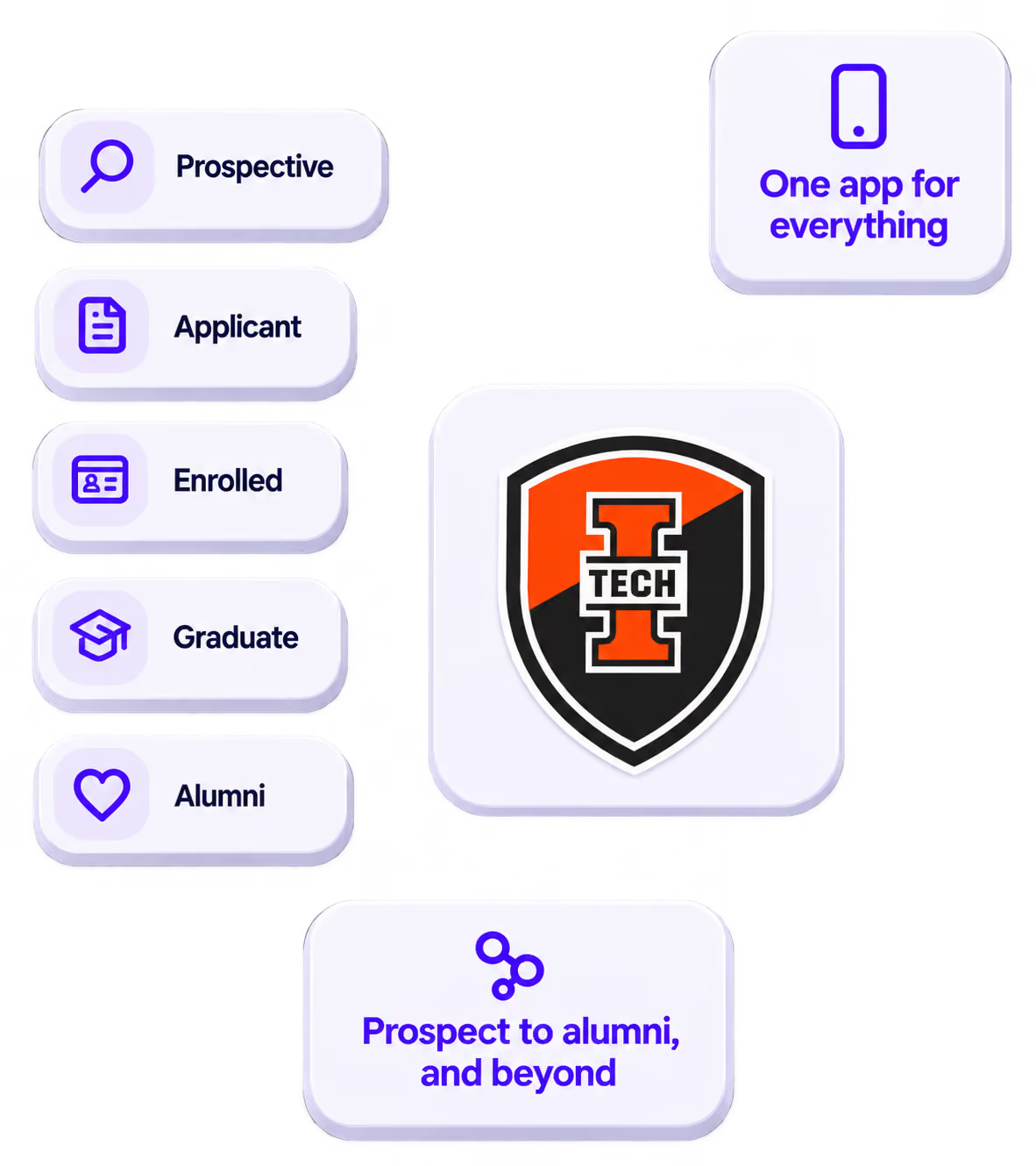
The power of your brand in your app, from first visit to alumni.
Build trust
Attendees download your app, not ours. Your name, colors, and crest in the stores.
.avif)
One place for the whole event
Schedules, maps, registration, and updates in one branded hub - not five tools.
Stand out
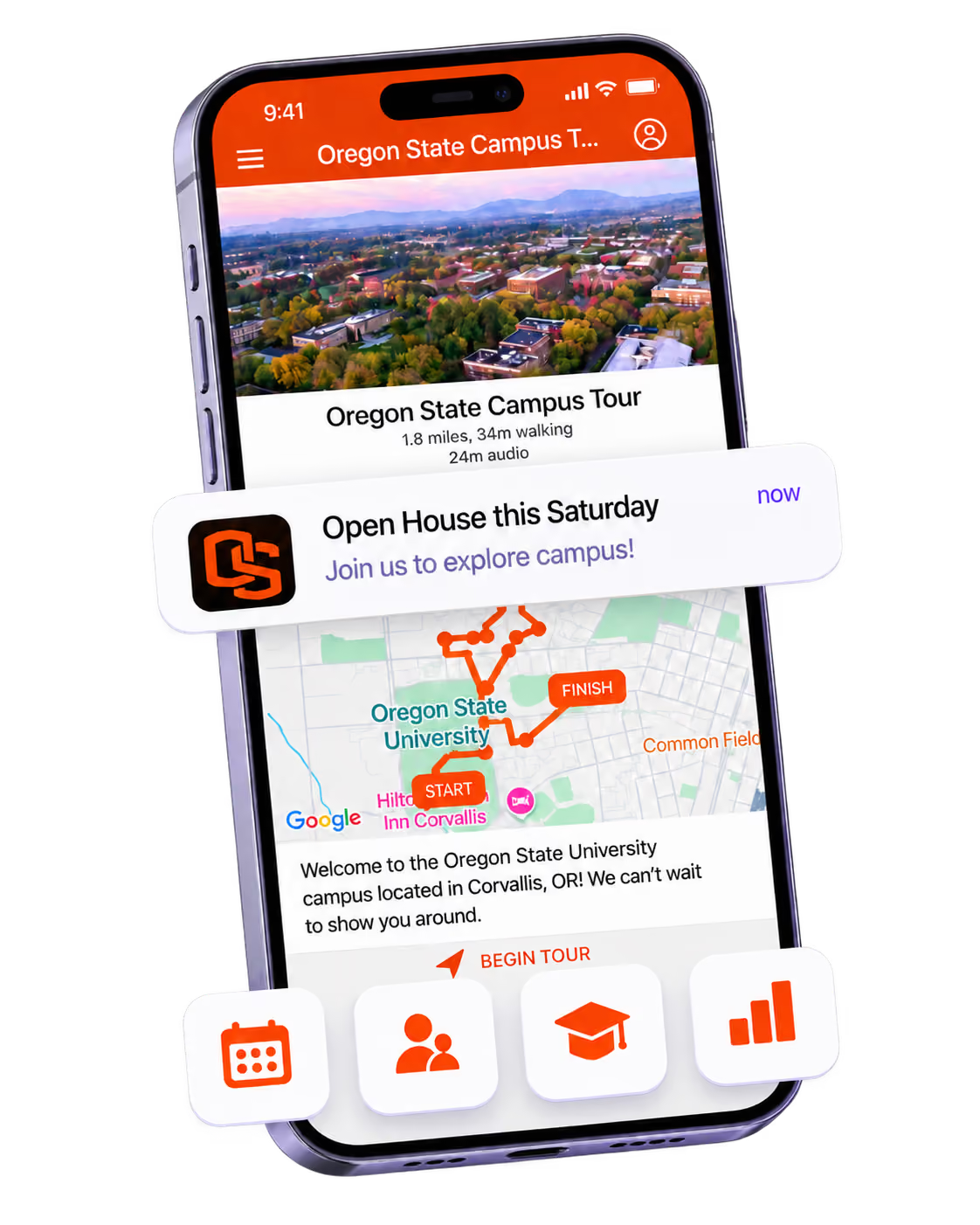
A branded app is what people keep on their phone after the printed program is in the recycling.

Get the Mobile App Playbook
A short guide to running the whole student journey in one app. No fluff, just what works.
for higher ed
Campus
Playbook
A practical guide to building a connected campus experience.
Free playbook
The Mobile App Playbook for Universities
Students decide if they belong long before they set foot on campus. This playbook shows how to win them over from the first visit through graduation.
- Grow enrollment and boost recruitment
- Increase belonging and retention
- Run every event from one branded app
By submitting, you agree to our Privacy Policy.
You're in.
.png)