
Campus apps by department
Admissions, orientation, student life, and more — one campus app that works across departments.

Campus apps by department
Admissions, orientation, student life, and more — one campus app that works across departments.
Build unlimited event apps on one license
One partnership for unlimited campus events — orientation, tours, student life, and everything in between.
Build unlimited event apps on one license
One partnership for unlimited campus events — orientation, tours, student life, and everything in between.
Compare event app platforms
See how Guidebook stacks up against other event app and registration platforms.
Compare event app platforms
See how Guidebook stacks up against other event app and registration platforms.
Event apps for nonprofit and community programs
Give members, volunteers, and donors one branded app for conferences, fundraisers, and year-round community.
Event apps for nonprofit and community programs
Give members, volunteers, and donors one branded app for conferences, fundraisers, and year-round community.
Campus integrations and an open API
Connect Guidebook with the campus systems, APIs, and tools your team already uses.
Campus integrations and an open API
Connect Guidebook with the campus systems, APIs, and tools your team already uses.
Event apps for corporate and enterprise teams
Internal meetings, offsites, and large-scale corporate events — with the branding and control enterprise teams need.
Event apps for corporate and enterprise teams
Internal meetings, offsites, and large-scale corporate events — with the branding and control enterprise teams need.
Create a branded event app with no coding
Put schedules, maps, resources, and updates in every attendee's pocket — built for campus events and programs.
Create a branded event app with no coding
Put schedules, maps, resources, and updates in every attendee's pocket — built for campus events and programs.
Launch a branded, white-label event app
A white-label event app with your branding, your content, and your attendee experience — no coding required.
Launch a branded, white-label event app
A white-label event app with your branding, your content, and your attendee experience — no coding required.
Everything in the Guidebook platform
Explore the features event teams use to engage attendees before, during, and after the event.
Everything in the Guidebook platform
Explore the features event teams use to engage attendees before, during, and after the event.
One app for in-person and virtual attendees
The same schedule, networking, and updates whether people are in the room or joining remotely.
One app for in-person and virtual attendees
The same schedule, networking, and updates whether people are in the room or joining remotely.
Event apps built for associations
Annual meetings, chapter events, and member engagement — without rebuilding a new app every year.
Event apps built for associations
Annual meetings, chapter events, and member engagement — without rebuilding a new app every year.
A branded event website that matches the app
Promote the event, collect interest, and keep branding consistent from the first click to check-in.
A branded event website that matches the app
Promote the event, collect interest, and keep branding consistent from the first click to check-in.
Plan, run, and measure events on one platform
App, registration, badges, and websites in one workflow — so planning isn't a pile of disconnected tools.
Plan, run, and measure events on one platform
App, registration, badges, and websites in one workflow — so planning isn't a pile of disconnected tools.
Keep members engaged between events
One branded app for the conference and everything that happens the other 51 weeks of the year.
Keep members engaged between events
One branded app for the conference and everything that happens the other 51 weeks of the year.
The conference app attendees actually use
Schedules, maps, networking, and live updates for annual meetings, summits, and multi-day conferences.
The conference app attendees actually use
Schedules, maps, networking, and live updates for annual meetings, summits, and multi-day conferences.
Registration that feeds your app and badges
Collect registrations, payments, and attendee data in the same platform as your event app.
Registration that feeds your app and badges
Collect registrations, payments, and attendee data in the same platform as your event app.
Design and print event badges in one place
Custom badges, QR check-in, and on-site printing — without a separate badge vendor.
Design and print event badges in one place
Custom badges, QR check-in, and on-site printing — without a separate badge vendor.
A Smaller School?
Deliver a polished, branded event experience without a large team or a big budget.

A Smaller School?
Deliver a polished, branded event experience without a large team or a big budget.
Running Family Programs?
Give families everything they need, from schedules and maps to real-time updates, all in one place.

Running Family Programs?
Give families everything they need, from schedules and maps to real-time updates, all in one place.
Coordinating Move-In Day?
Share updates, manage events, and keep students informed from move-in through the academic year.

Coordinating Move-In Day?
Share updates, manage events, and keep students informed from move-in through the academic year.
Offering Campus Tours?
Deliver branded, self-guided tour experiences with interactive maps and rich media, available 24/7.

Offering Campus Tours?
Deliver branded, self-guided tour experiences with interactive maps and rich media, available 24/7.
Organising a Career Fair?
Simplify logistics for students, employers, and Career Services staff with one easy-to-use app.
Organising a Career Fair?
Simplify logistics for students, employers, and Career Services staff with one easy-to-use app.
Managing Alumni Events?
Plan reunions, regional events, and fundraising campaigns with an app built for alumni engagement.
Managing Alumni Events?
Plan reunions, regional events, and fundraising campaigns with an app built for alumni engagement.
Boost Student Engagement
One hub for schedules, resources, and events that keeps students connected throughout the academic year.
Boost Student Engagement
One hub for schedules, resources, and events that keeps students connected throughout the academic year.
Planning Orientation?
Help new students feel prepared from day one with schedules, campus resources, and real-time updates in one app.

Planning Orientation?
Help new students feel prepared from day one with schedules, campus resources, and real-time updates in one app.
Running Admissions Events?
Manage open houses, tours, and yield events with a branded app that saves time and engages prospective students.

Running Admissions Events?
Manage open houses, tours, and yield events with a branded app that saves time and engages prospective students.
Get a custom Sponsorship Package Template
Stop starting from scratch. Grab free templates that helWe'll build a tailored sponsorship package with suggested pricing, tiers, and benefits..for your specific event.p you build professional sponsorship packages and close deals faster.
Get a custom Sponsorship Package Template
Stop starting from scratch. Grab free templates that helWe'll build a tailored sponsorship package with suggested pricing, tiers, and benefits..for your specific event.p you build professional sponsorship packages and close deals faster.
Plan Your Next Event Without Missing a Beat.
From venue selection to post-event wrap-up, this free checklist walks you through every step (so nothing falls through the cracks).
.avif)
Plan Your Next Event Without Missing a Beat.
From venue selection to post-event wrap-up, this free checklist walks you through every step (so nothing falls through the cracks).
Real Results From Real Events
100,000+ organizations trust Guidebook. See exactly how universities, associations, enterprises, and more put it to work.

Real Results From Real Events
100,000+ organizations trust Guidebook. See exactly how universities, associations, enterprises, and more put it to work.
Flexible pricing for every event size
Find the perfect plan for your needs, from intimate gatherings to large-scale conferences.

Flexible pricing for every event size
Find the perfect plan for your needs, from intimate gatherings to large-scale conferences.
Join our event experts
Watch on-demand webinars and join live sessions with industry leaders sharing best practices for event success.
.avif)
Join our event experts
Watch on-demand webinars and join live sessions with industry leaders sharing best practices for event success.
Guidebook in Action
Book a personalized walkthrough and discover how we help event teams create better attendee experiences.
Guidebook in Action
Book a personalized walkthrough and discover how we help event teams create better attendee experiences.

What is the Meaning of Meeting Minutes?
Meeting minutes capture the key points, decisions, and action items from meetings. Learn their purpose, essential elements, and best practices for effective documentation.

Meeting minutes are the official written record that captures key decisions, action items, and discussions from any meeting, turning conversations into accountability. They serve as the single source of truth for what happened, who's responsible, and what comes next. Without them, important details slip through the cracks.
Here's the thing: meeting minutes aren't just note-taking. They're a strategic tool that keeps teams aligned and projects moving forward. Good minutes transform a 60-minute discussion into a clear roadmap anyone can reference. They protect organizations legally and ensure no one leaves wondering, "Wait, what did we decide?"
Key Characteristics of Meeting Minutes
- Objective Documentation: Minutes record facts, not opinions. They capture what was said and decided without personal interpretation or bias.
- Action-Oriented Focus: Every minute document highlights who needs to do what by when. This transforms discussions into trackable tasks.
- Chronological Structure: Minutes follow the meeting's agenda order. This makes it easy to find specific topics later.
- Concise Language: Good minutes use clear, brief statements. They skip the small talk and capture only what matters.
- Official Status: Once approved, minutes become the legal record of what occurred. They can be referenced in disputes or audits.
- Accessibility: Minutes are shared with all attendees and relevant stakeholders. Everyone gets the same information.
- Timestamped Record: Each set of minutes includes the date, time, location, and attendees. This creates a clear historical trail.
Meeting Minutes vs. Related Documentation
Meeting Notes
- Scope: Informal personal reminders taken during discussions
- Focus: Individual understanding and memory aids
- Timeline: Created in real-time, rarely shared afterward
- Channels: Personal notebooks, apps, or scratch paper
- Goal: Help one person remember key points
Meeting Agenda
- Scope: Pre-meeting outline of topics to cover
- Focus: Planning and time management
- Timeline: Created and distributed before the meeting
- Channels: Email, calendar invites, or shared documents
- Goal: Keep discussions on track and productive
Meeting Summary
- Scope: Brief overview of outcomes and highlights
- Focus: Quick reference for busy stakeholders
- Timeline: Created after the meeting, often same day
- Channels: Email updates or team messaging platforms
- Goal: Inform those who couldn't attend
Think of it this way: the agenda tells you where you're going, notes help you personally remember the journey, minutes officially document what happened, and summaries give the highlights to those who missed it.
Essential Components of Meeting Minutes
Header Information That Sets Context
Every set of minutes starts with the basics. Include the meeting name, date, start and end times, and location (physical or virtual). List all attendees and note anyone absent.
This header creates a snapshot. Anyone reading the minutes months later can immediately understand the context.
Agenda Items and Discussion Points
Organize your minutes around the agenda topics. For each item, note:
- The topic discussed
- Key points raised by participants
- Any data or reports presented
- Questions that came up
Keep descriptions brief. You're creating a reference document, not a transcript.
Decisions and Voting Outcomes
This is the heart of your minutes. Clearly state every decision made. If there was a vote, record the results. Include who proposed motions and who seconded them.
Be specific. "The team decided to increase the budget" is vague. "The team approved a $5,000 budget increase for Q2 marketing" is actionable.
Action Items With Clear Ownership
Every action item needs three things:
- What needs to be done
- Who's responsible
- When it's due
Without all three, tasks fall through the cracks. This section turns your meeting into measurable progress.
Next Steps and Follow-Up Details
End with what happens next. Note the date of the next meeting if scheduled. List any items tabled for future discussion. Include deadlines for distributing the minutes themselves.
The Meeting Minutes Process
Prepare Before the Meeting Starts
Good minutes begin before anyone speaks. Review the agenda in advance. Set up your template with headers already filled in. Know who's expected to attend.
This prep work lets you focus on listening during the actual meeting. You're not scrambling to figure out what to write.
Capture Information in Real-Time
During the meeting, focus on decisions and actions. Don't try to write everything word-for-word. Use shorthand and abbreviations you'll understand later.
If something's unclear, ask for clarification right then. It's easier than guessing afterward.
Draft and Organize Immediately After
Strike while the iron's hot. Clean up your notes within 24 hours while details are fresh. Organize information under clear headings. Fill in any gaps from memory.
Waiting too long means forgetting important context. Your minutes lose accuracy with every passing day.
Review and Distribute for Approval
Share draft minutes with the meeting chair first. They can catch errors or missing information. Then distribute to all attendees for review.
Set a deadline for feedback. Once approved, minutes become the official record. Store them somewhere accessible for future reference.
Why Meeting Minutes Matter
For Event Success:
- Team Alignment: Minutes ensure everyone leaves with the same understanding of decisions and next steps.
- Accountability Tracking: Written action items with owners create clear responsibility. No more "I thought you were handling that."
- Institutional Memory: When team members change, minutes preserve knowledge. New hires can review past decisions quickly.
- Conflict Resolution: Disputes about what was decided? Minutes provide the definitive answer.
- Progress Measurement: Compare minutes over time to see how projects evolve. Track completed action items and ongoing discussions.
For Business Objectives:
- Legal Protection: Minutes serve as evidence of proper governance and decision-making processes.
- Compliance Documentation: Many industries require meeting records for regulatory purposes.
- Stakeholder Communication: Share minutes with board members, investors, or partners who couldn't attend.
- Strategic Planning: Review past minutes to inform future decisions and avoid repeating mistakes.
- Resource Allocation: Track how budget and staffing decisions were made and why.
For event planning teams, meeting minutes become especially valuable. They document vendor selections, timeline changes, and budget approvals. Platforms like Guidebook's event management platform can help teams stay organized and keep all documentation in one place.
Meeting Minutes Best Practices
- Use a Consistent Template: Create a standard format for all meetings. This speeds up writing and makes minutes easier to scan.
- Assign a Dedicated Note-Taker: Don't make the meeting leader take minutes. They need to focus on facilitating discussion.
- Record Decisions, Not Debates: Skip the back-and-forth discussion. Focus on what was ultimately decided.
- Include Specific Names and Dates: "Someone will follow up soon" helps no one. "Sarah will send the report by March 15" creates accountability.
- Keep Language Neutral and Professional: Avoid editorializing. "John made an excellent point" doesn't belong in minutes.
- Distribute Within 24-48 Hours: Fresh minutes are useful minutes. Waiting a week reduces their value significantly.
- Store Minutes in an Accessible Location: Use shared drives or event planning resources everyone can access. Lost minutes are useless minutes.
- Review Previous Minutes at Meeting Start: Begin each meeting by approving last meeting's minutes. This catches errors and reminds everyone of pending items.
- Highlight Action Items Visually: Use bold text, bullet points, or a separate section. Make tasks impossible to miss.
- Get Formal Approval When Required: For board meetings or official proceedings, minutes need formal adoption. Build this into your process.
Common Meeting Minutes Mistakes
Writing a Transcript Instead of Minutes: Capturing every word creates an unreadable document. No one will review 20 pages of dialogue. Focus on outcomes, not conversations.
Waiting Too Long to Write Them: Memory fades fast. Minutes written a week later miss crucial details. Your "I'll remember that" confidence is misplaced.
Skipping the Action Items Section: Minutes without clear next steps are just historical records. They don't drive progress or create accountability.
Using Vague Language: "The team discussed marketing" tells you nothing useful. "The team approved a $10,000 Facebook ad campaign launching April 1" tells you everything.
Forgetting to Note Attendees: Who was in the room matters. It affects decision validity and helps people know who to ask for context.
Not Following Up on Previous Action Items: Minutes should reference outstanding tasks from past meetings. Otherwise, items get forgotten and nothing gets done.
Making Minutes Hard to Find: Buried in email threads or random folders, minutes lose their value. Create a central, searchable repository everyone knows about.
Final Thoughts
Meeting minutes might seem like administrative busywork. They're not. They're the bridge between talking about things and actually doing them. Every productive team needs this documentation habit.
The event planning process involves countless meetings with vendors, stakeholders, and team members. Without solid minutes, details get lost. Decisions get questioned. Progress stalls. Good minutes keep everyone moving in the same direction.
Think of minutes as a gift to your future self. Six months from now, you won't remember why you chose that venue or approved that budget change. Your minutes will. They're the organizational memory that keeps teams smart and accountable.
Ready to level up your event documentation? Explore event debrief templates to capture post-event insights, or check out event management tips for more ways to stay organized. Book a demo with Guidebook to see how the right tools can transform your team's productivity.
Because the best meetings aren't just the ones with great discussions. They're the ones where everyone knows exactly what happens next.
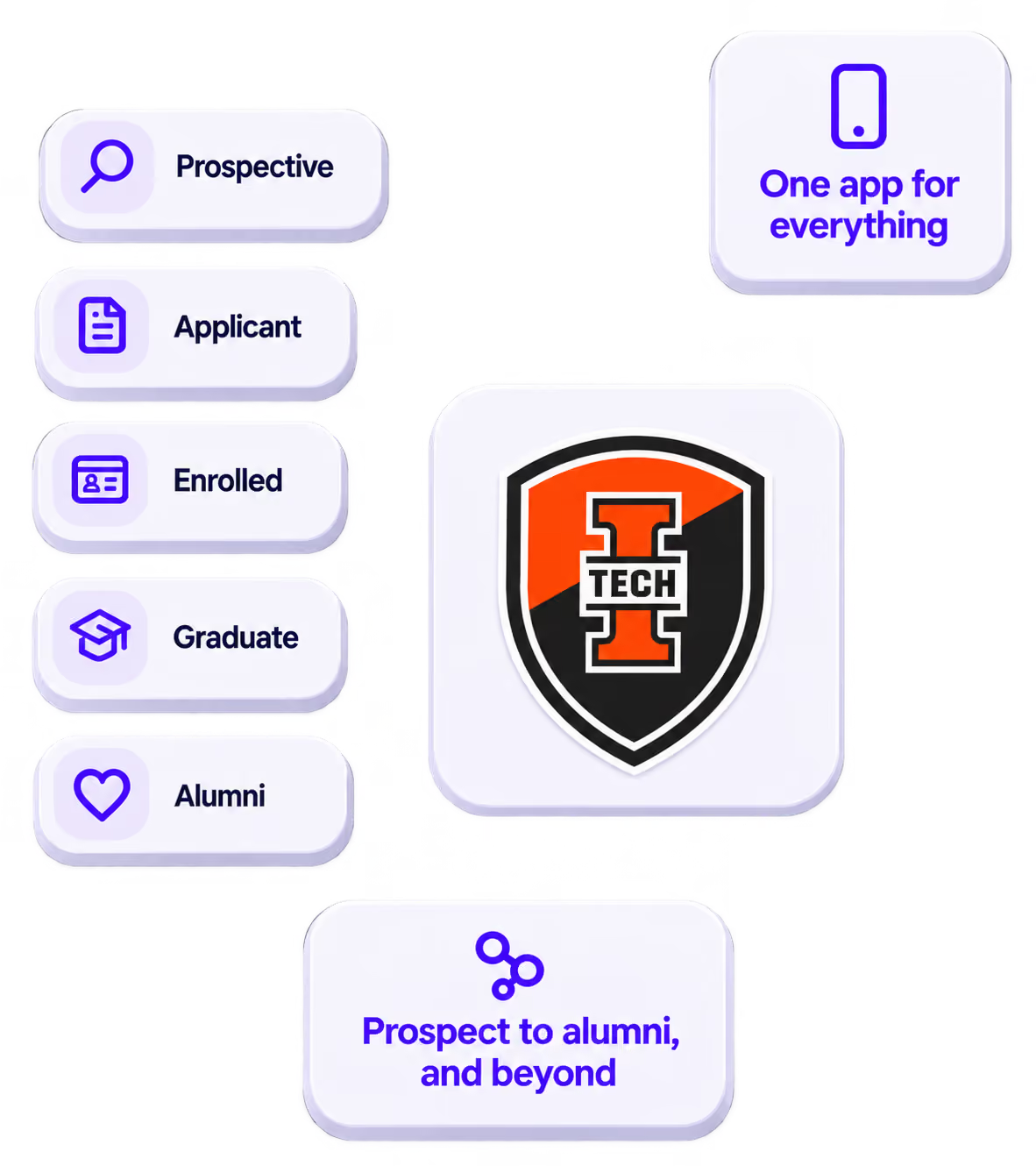
The power of your brand in your app, from first visit to alumni.
Build trust
Attendees download your app, not ours. Your name, colors, and crest in the stores.
.avif)
One place for the whole event
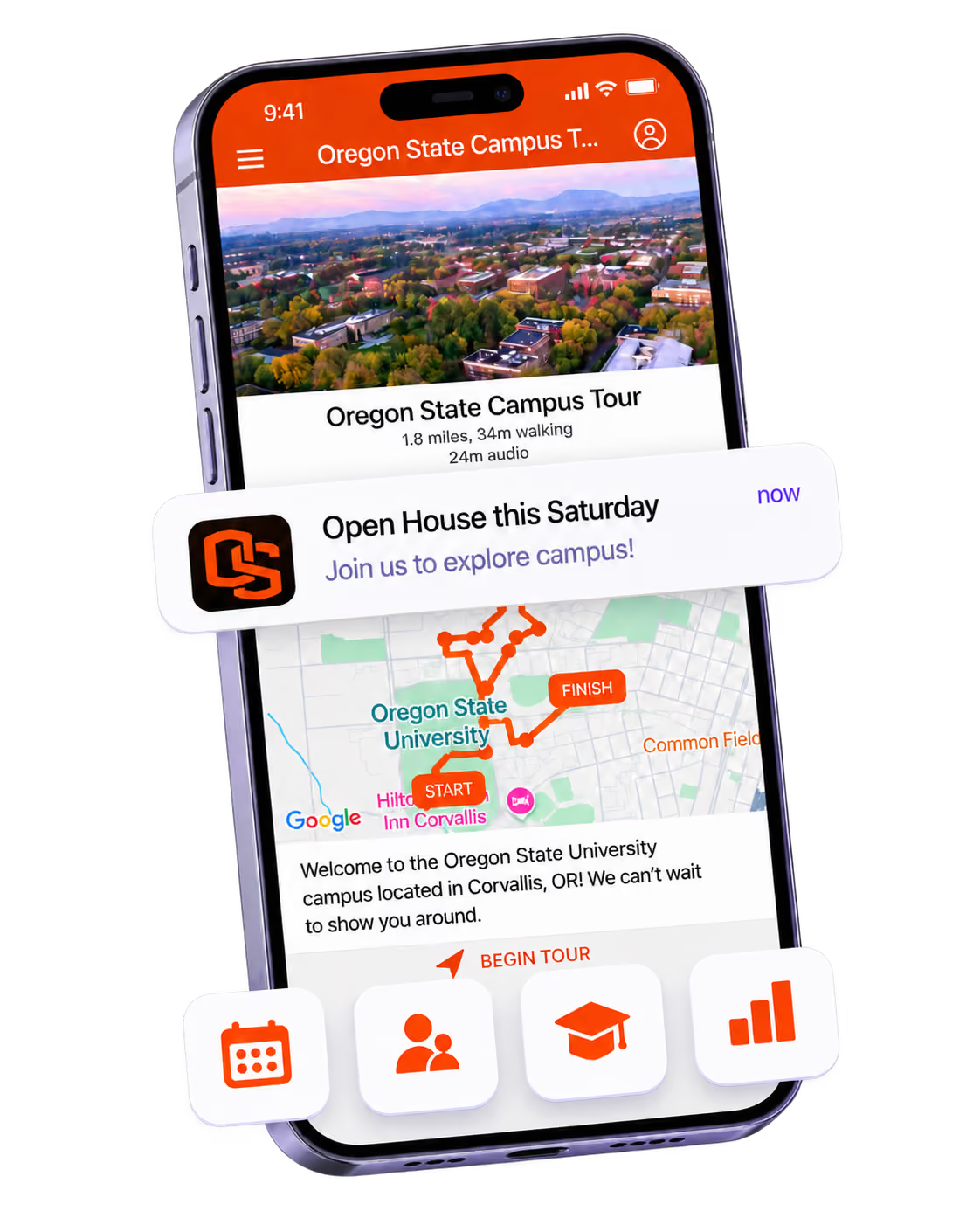
Schedules, maps, registration, and updates in one branded hub - not five tools.
Stand out
A branded app is what people keep on their phone after the printed program is in the recycling.

Get the Mobile App Playbook
A short guide to running the whole student journey in one app. No fluff, just what works.
for higher ed
Campus
Playbook
A practical guide to building a connected campus experience.
Free playbook
The Mobile App Playbook for Universities
Students decide if they belong long before they set foot on campus. This playbook shows how to win them over from the first visit through graduation.
- Grow enrollment and boost recruitment
- Increase belonging and retention
- Run every event from one branded app
By submitting, you agree to our Privacy Policy.
You're in.
.png)