
Campus apps by department
Admissions, orientation, student life, and more — one campus app that works across departments.

Campus apps by department
Admissions, orientation, student life, and more — one campus app that works across departments.
Build unlimited event apps on one license
One partnership for unlimited campus events — orientation, tours, student life, and everything in between.
Build unlimited event apps on one license
One partnership for unlimited campus events — orientation, tours, student life, and everything in between.
Compare event app platforms
See how Guidebook stacks up against other event app and registration platforms.
Compare event app platforms
See how Guidebook stacks up against other event app and registration platforms.
Event apps for nonprofit and community programs
Give members, volunteers, and donors one branded app for conferences, fundraisers, and year-round community.
Event apps for nonprofit and community programs
Give members, volunteers, and donors one branded app for conferences, fundraisers, and year-round community.
Campus integrations and an open API
Connect Guidebook with the campus systems, APIs, and tools your team already uses.
Campus integrations and an open API
Connect Guidebook with the campus systems, APIs, and tools your team already uses.
Event apps for corporate and enterprise teams
Internal meetings, offsites, and large-scale corporate events — with the branding and control enterprise teams need.
Event apps for corporate and enterprise teams
Internal meetings, offsites, and large-scale corporate events — with the branding and control enterprise teams need.
Create a branded event app with no coding
Put schedules, maps, resources, and updates in every attendee's pocket — built for campus events and programs.
Create a branded event app with no coding
Put schedules, maps, resources, and updates in every attendee's pocket — built for campus events and programs.
Launch a branded, white-label event app
A white-label event app with your branding, your content, and your attendee experience — no coding required.
Launch a branded, white-label event app
A white-label event app with your branding, your content, and your attendee experience — no coding required.
Everything in the Guidebook platform
Explore the features event teams use to engage attendees before, during, and after the event.
Everything in the Guidebook platform
Explore the features event teams use to engage attendees before, during, and after the event.
One app for in-person and virtual attendees
The same schedule, networking, and updates whether people are in the room or joining remotely.
One app for in-person and virtual attendees
The same schedule, networking, and updates whether people are in the room or joining remotely.
Event apps built for associations
Annual meetings, chapter events, and member engagement — without rebuilding a new app every year.
Event apps built for associations
Annual meetings, chapter events, and member engagement — without rebuilding a new app every year.
A branded event website that matches the app
Promote the event, collect interest, and keep branding consistent from the first click to check-in.
A branded event website that matches the app
Promote the event, collect interest, and keep branding consistent from the first click to check-in.
Plan, run, and measure events on one platform
App, registration, badges, and websites in one workflow — so planning isn't a pile of disconnected tools.
Plan, run, and measure events on one platform
App, registration, badges, and websites in one workflow — so planning isn't a pile of disconnected tools.
Keep members engaged between events
One branded app for the conference and everything that happens the other 51 weeks of the year.
Keep members engaged between events
One branded app for the conference and everything that happens the other 51 weeks of the year.
The conference app attendees actually use
Schedules, maps, networking, and live updates for annual meetings, summits, and multi-day conferences.
The conference app attendees actually use
Schedules, maps, networking, and live updates for annual meetings, summits, and multi-day conferences.
Registration that feeds your app and badges
Collect registrations, payments, and attendee data in the same platform as your event app.
Registration that feeds your app and badges
Collect registrations, payments, and attendee data in the same platform as your event app.
Design and print event badges in one place
Custom badges, QR check-in, and on-site printing — without a separate badge vendor.
Design and print event badges in one place
Custom badges, QR check-in, and on-site printing — without a separate badge vendor.
A Smaller School?
Deliver a polished, branded event experience without a large team or a big budget.
A Smaller School?
Deliver a polished, branded event experience without a large team or a big budget.
Running Family Programs?
Give families everything they need, from schedules and maps to real-time updates, all in one place.
Running Family Programs?
Give families everything they need, from schedules and maps to real-time updates, all in one place.
Coordinating Move-In Day?
Share updates, manage events, and keep students informed from move-in through the academic year.

Coordinating Move-In Day?
Share updates, manage events, and keep students informed from move-in through the academic year.
Offering Campus Tours?
Deliver branded, self-guided tour experiences with interactive maps and rich media, available 24/7.

Offering Campus Tours?
Deliver branded, self-guided tour experiences with interactive maps and rich media, available 24/7.
Organising a Career Fair?
Simplify logistics for students, employers, and Career Services staff with one easy-to-use app.
Organising a Career Fair?
Simplify logistics for students, employers, and Career Services staff with one easy-to-use app.
Managing Alumni Events?
Plan reunions, regional events, and fundraising campaigns with an app built for alumni engagement.
Managing Alumni Events?
Plan reunions, regional events, and fundraising campaigns with an app built for alumni engagement.
Boost Student Engagement
One hub for schedules, resources, and events that keeps students connected throughout the academic year.
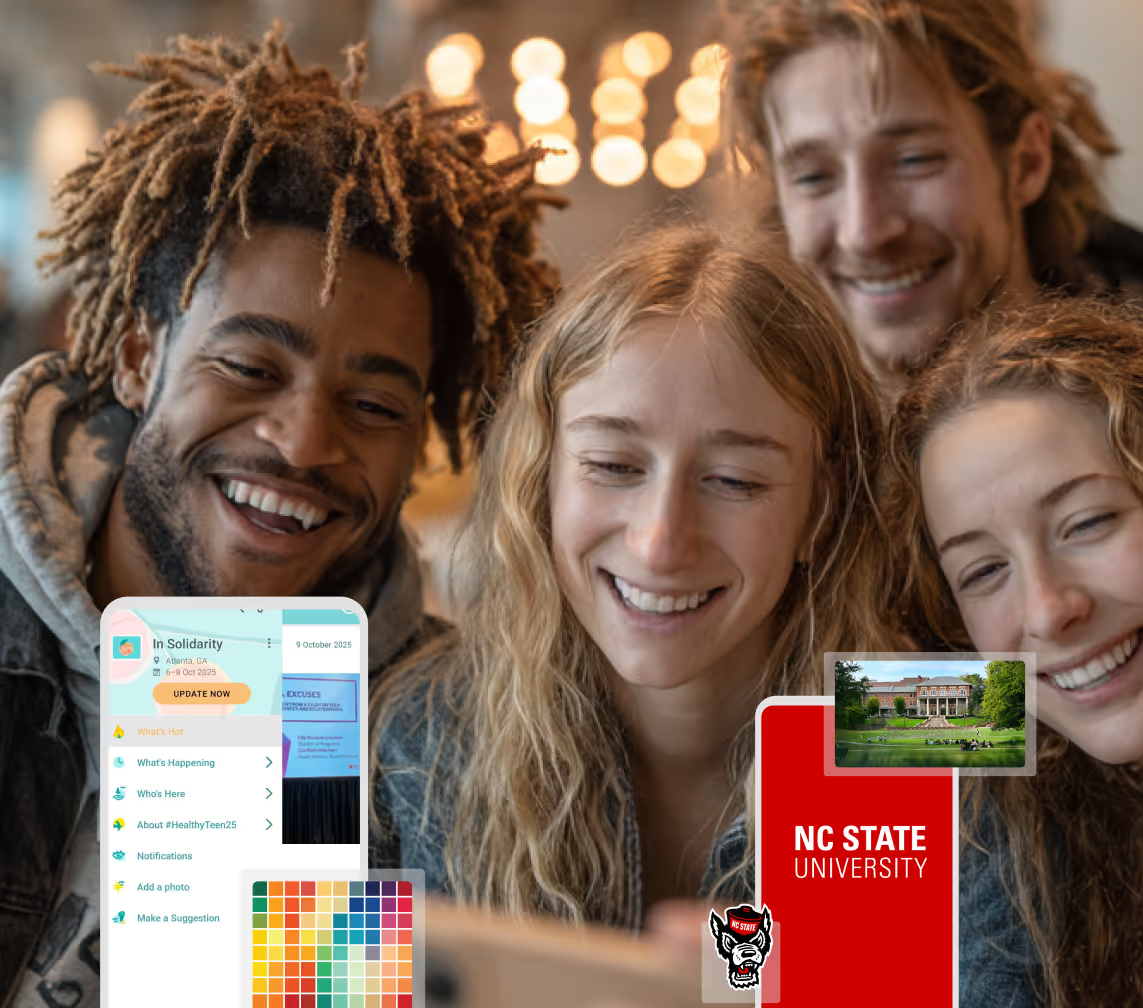
Boost Student Engagement
One hub for schedules, resources, and events that keeps students connected throughout the academic year.
Planning Orientation?
Help new students feel prepared from day one with schedules, campus resources, and real-time updates in one app.
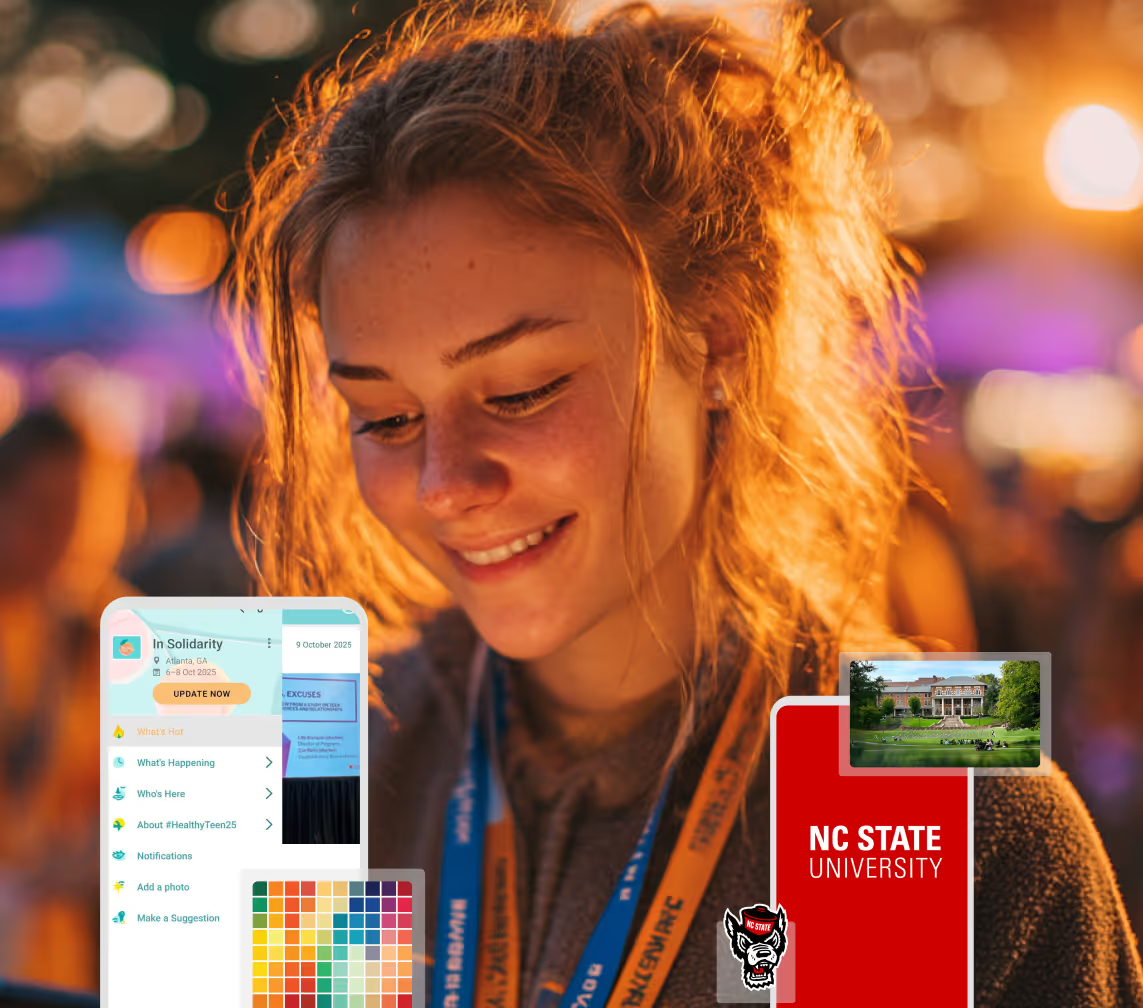
Planning Orientation?
Help new students feel prepared from day one with schedules, campus resources, and real-time updates in one app.
Running Admissions Events?
Manage open houses, tours, and yield events with a branded app that saves time and engages prospective students.

Running Admissions Events?
Manage open houses, tours, and yield events with a branded app that saves time and engages prospective students.
Get a custom Sponsorship Package Template
Stop starting from scratch. Grab free templates that helWe'll build a tailored sponsorship package with suggested pricing, tiers, and benefits..for your specific event.p you build professional sponsorship packages and close deals faster.
Get a custom Sponsorship Package Template
Stop starting from scratch. Grab free templates that helWe'll build a tailored sponsorship package with suggested pricing, tiers, and benefits..for your specific event.p you build professional sponsorship packages and close deals faster.
Plan Your Next Event Without Missing a Beat.
From venue selection to post-event wrap-up, this free checklist walks you through every step (so nothing falls through the cracks).
.avif)
Plan Your Next Event Without Missing a Beat.
From venue selection to post-event wrap-up, this free checklist walks you through every step (so nothing falls through the cracks).
Real Results From Real Events
100,000+ organizations trust Guidebook. See exactly how universities, associations, enterprises, and more put it to work.

Real Results From Real Events
100,000+ organizations trust Guidebook. See exactly how universities, associations, enterprises, and more put it to work.
Flexible pricing for every event size
Find the perfect plan for your needs, from intimate gatherings to large-scale conferences.

Flexible pricing for every event size
Find the perfect plan for your needs, from intimate gatherings to large-scale conferences.
Join our event experts
Watch on-demand webinars and join live sessions with industry leaders sharing best practices for event success.
.avif)
Join our event experts
Watch on-demand webinars and join live sessions with industry leaders sharing best practices for event success.
Guidebook in Action
Book a personalized walkthrough and discover how we help event teams create better attendee experiences.
Guidebook in Action
Book a personalized walkthrough and discover how we help event teams create better attendee experiences.

What is an Event Itinerary?
An event itinerary outlines the schedule, activities, and key details for an event. Discover templates, planning tips, and best practices for creating effective itineraries.

An Event Itinerary is the detailed, time-based schedule that guides attendees through every moment of your event, from arrival to departure. It covers sessions, breaks, locations, and logistics in one clear document. A well-crafted itinerary transforms chaos into confidence for everyone involved.
Here's the thing: an event itinerary isn't just a schedule. It's your attendees' roadmap to success. Without it, people miss sessions, show up late, and leave frustrated. With it, they feel prepared, engaged, and in control of their experience.
Key Characteristics of an Event Itinerary
- Time-Specific Structure: Every activity includes exact start and end times. This eliminates guesswork and keeps your event running smoothly.
- Location Details: Each session lists its venue, room number, or virtual link. Attendees never waste time searching for where to go next.
- Logical Flow: Activities build on each other in a sensible order. Breaks appear when energy dips, and high-impact sessions land at peak attention times.
- Attendee-Focused Language: The itinerary speaks directly to participants. It tells them what they'll do, learn, or experience—not just what's happening.
- Flexibility Built In: Buffer time between sessions accounts for transitions. This prevents the dreaded domino effect when one thing runs long.
- Easy Accessibility: Great itineraries live where attendees can find them. That means mobile apps, printed handouts, or digital displays—not buried in email chains.
Event Itinerary vs. Related Planning Documents
Event Agenda
- Scope: High-level overview of main topics and themes
- Focus: What will be discussed or covered
- Timeline: General time blocks, less precise
- Audience: Often used for marketing and promotion
- Goal: Generate interest and set expectations
Event Schedule
- Scope: Complete list of all sessions and activities
- Focus: When things happen
- Timeline: Specific times for each item
- Audience: Internal teams and attendees
- Goal: Coordinate timing across all elements
Event Run Sheet
- Scope: Minute-by-minute production details
- Focus: Technical cues, staff assignments, equipment needs
- Timeline: Extremely precise, often to the minute
- Audience: Production crew and event staff only
- Goal: Execute flawless behind-the-scenes operations
Think of it this way: the agenda sells your event, the schedule organizes it, the run sheet produces it, and the itinerary guides attendees through it. Each serves a different purpose in your event planning process.
Essential Components of an Event Itinerary
Event Header Information
Start with the basics. Include your event name, date, and venue address. Add emergency contact numbers and Wi-Fi details. This section answers the "where and when" questions before they're asked.
Don't forget parking instructions or public transit options. These small details prevent big headaches on event day.
Session Blocks with Clear Timing
Break your day into digestible chunks. Each block needs:
- Start and end times
- Session title and brief description
- Speaker or facilitator names
- Room or location name
- Any required materials or prep
Transition and Break Periods
Never underestimate break time. People need moments to:
- Use restrooms
- Check messages
- Network with others
- Grab coffee or snacks
- Process what they've learned
Build in 10-15 minutes between sessions. Your attendees will thank you.
Meal and Refreshment Details
Hungry attendees are distracted attendees. Clearly mark when and where food is available. Note any dietary accommodation stations. Include timing for coffee service throughout the day.
Special Instructions and Notes
Add context that helps people prepare. This might include dress code reminders, photo policy notices, or hashtags for social sharing. These details enhance the experience without cluttering the main schedule.
How to Create an Effective Event Itinerary
Start with Your Event Goals
What should attendees walk away with? Your itinerary structure should support these outcomes. A networking-focused event needs more unstructured time. A training event needs concentrated learning blocks.
Write down three things you want every attendee to experience. Then build your timeline around making those happen.
Map Out the Attendee Journey
Think through your event from arrival to departure. Consider these touchpoints:
- Registration and check-in flow
- Opening session energy level
- Mid-morning attention span
- Post-lunch energy dip
- Afternoon engagement strategies
- Closing session impact
Using event check-in software can streamline that crucial first impression.
Balance Content Types
Variety keeps people engaged. Mix up your session formats:
- Keynote presentations
- Panel discussions
- Breakout workshops
- Networking activities
- Interactive demos
- Q&A sessions
No one wants to sit through eight hours of lectures. Keep things moving.
Test Your Timeline
Walk through your itinerary mentally. Better yet, physically walk the venue with a stopwatch. How long does it really take to get from the main hall to the breakout rooms? Add that time to your transitions.
Get Feedback Before Finalizing
Share your draft with team members and stakeholders. Fresh eyes catch problems you've missed. Ask specifically about pacing, clarity, and realistic timing.
Why Event Itinerary Matters
For Event Success:
- Reduces Attendee Anxiety: People feel confident when they know what's coming next. Uncertainty creates stress that distracts from your content.
- Improves Session Attendance: Clear timing means fewer people wandering in late or missing sessions entirely.
- Enables Better Planning: Attendees can prepare questions, choose breakouts, and schedule meetings around your timeline.
- Creates Shared Expectations: Everyone—attendees, speakers, staff—operates from the same playbook.
- Supports Real-Time Updates: When changes happen, you have a baseline to communicate against.
For Business Objectives:
- Increases Engagement Metrics: Structured events see higher participation rates across all sessions.
- Boosts Sponsor Visibility: Dedicated time slots ensure sponsors get the attention they paid for.
- Improves Post-Event Feedback: Attendees rate well-organized events higher, even if content is similar.
- Supports Event ROI Measurement: Clear session tracking helps you understand what worked.
- Builds Brand Reputation: Professional execution reflects well on your organization.
Platforms like Guidebook's event management platform make itinerary distribution seamless. Attendees access schedules on their phones, receive real-time updates, and never miss a moment.
Event Itinerary Best Practices
- Use Clear, Simple Language: Skip jargon and internal codes. "Networking Lunch in Grand Ballroom" beats "NL-GB-1200."
- Include Buffer Time: Add 5-10 minutes between sessions. Things always run long, and people need bathroom breaks.
- Highlight Must-Attend Moments: Mark keynotes, meals, and critical sessions so they stand out visually.
- Provide Multiple Formats: Offer your itinerary as a mobile app, PDF, and printed handout. Different people prefer different formats.
- Update in Real Time: When changes happen, push notifications immediately. Outdated itineraries cause confusion.
- Include Wayfinding Help: Add maps, floor plans, or directions for complex venues. Don't assume people know where Room 204B is.
- Consider Time Zones: For virtual events or hybrid formats, show times in multiple zones or let attendees set preferences.
- Make It Searchable: Digital itineraries should let people search by speaker, topic, or time. This saves everyone frustration.
- Add Personal Scheduling: Let attendees build custom agendas from your master itinerary. This increases ownership and attendance.
- Test on Mobile Devices: Most people will view your itinerary on phones. Make sure it's readable without zooming.
Common Event Itinerary Mistakes
Overpacking the Schedule: Cramming too much into one day exhausts attendees. They'll disengage or leave early. Build in breathing room and respect people's energy limits.
Ignoring Transition Time: Back-to-back sessions in different locations create chaos. People arrive late, miss openings, and feel rushed. Always account for walking time.
Being Too Vague: "Morning Session" tells attendees nothing useful. Include specific topics, speakers, and outcomes so people can make informed choices.
Forgetting Mobile Users: Tiny fonts and complex layouts don't work on phones. Since most attendees check schedules on mobile, design for small screens first.
Skipping the Dry Run: Untested itineraries hide problems. Walk through your timeline before the event to catch unrealistic timing or logistical conflicts.
Not Planning for Changes: Speakers cancel. Sessions run long. Technology fails. Have a communication plan ready for when your itinerary needs updates.
Neglecting Accessibility: Some attendees need extra time between sessions or specific seating arrangements. Build inclusive options into your planning from the start.
Final Thoughts
A strong event itinerary does more than list times and places. It shapes the entire attendee experience. When people know what to expect, they relax, engage, and get more value from your event.
The best event planning teams treat itineraries as living documents. They evolve based on feedback, adapt to changing circumstances, and improve with each event. Your itinerary reflects your commitment to attendee success.
Whether you're organizing a small team building event or a massive conference, the principles stay the same. Be clear. Be realistic. Be helpful. Your attendees will notice the difference.
Ready to create itineraries that actually work? Book a demo with Guidebook to see how our platform helps you build, share, and update event schedules in real time. From event registration to post-event follow-up, we've got the event planning resources you need. Check out our templates to get started today.
Because great events don't happen by accident—they happen by design.
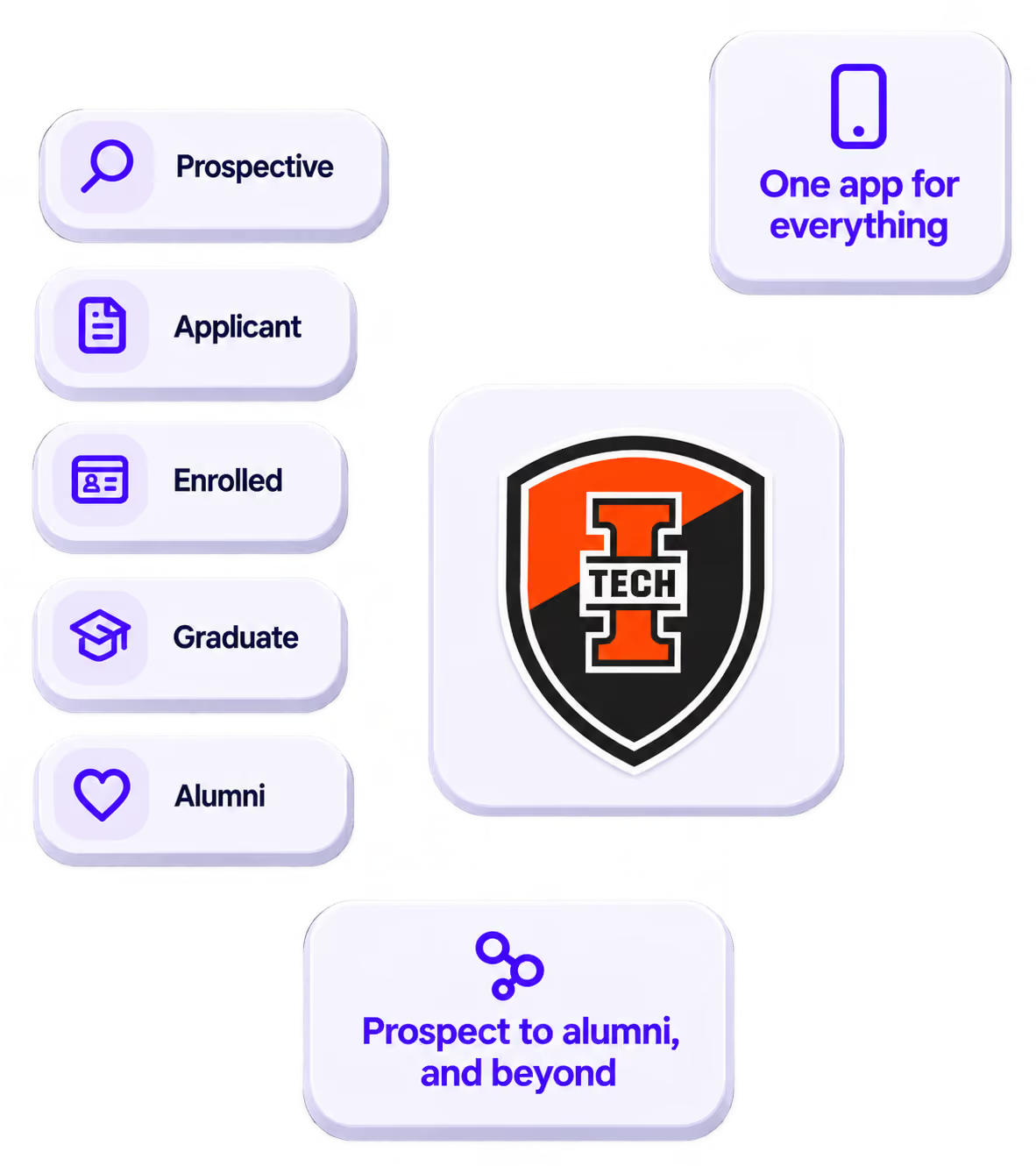
The power of your brand in your app, from first visit to alumni.
Build trust
Attendees download your app, not ours. Your name, colors, and crest in the stores.
.avif)
One place for the whole event
Schedules, maps, registration, and updates in one branded hub - not five tools.
Stand out
A branded app is what people keep on their phone after the printed program is in the recycling.
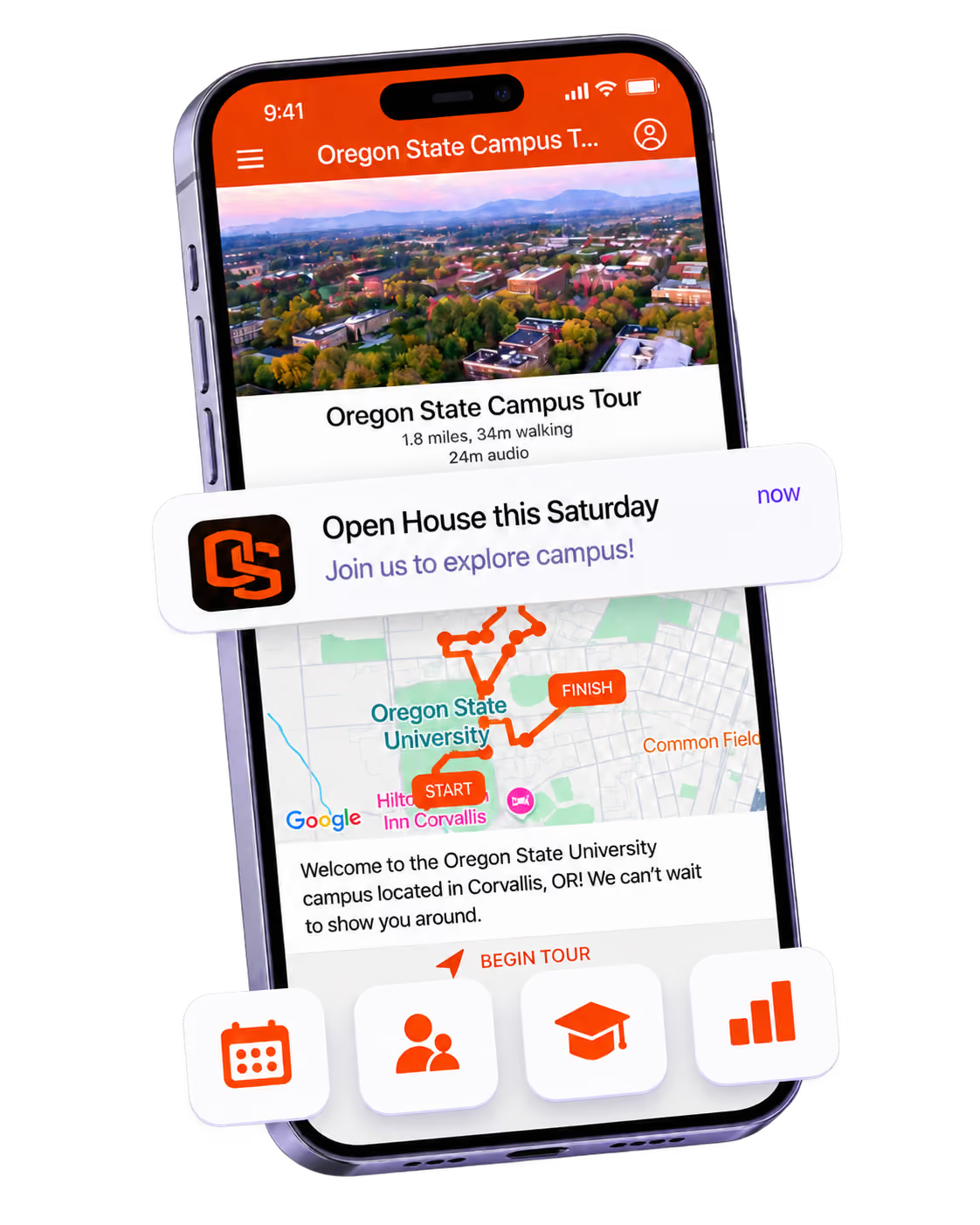

Get the Mobile App Playbook
A short guide to running the whole student journey in one app. No fluff, just what works.
for higher ed
Campus
Playbook
A practical guide to building a connected campus experience.
Free playbook
The Mobile App Playbook for Universities
Students decide if they belong long before they set foot on campus. This playbook shows how to win them over from the first visit through graduation.
- Grow enrollment and boost recruitment
- Increase belonging and retention
- Run every event from one branded app
By submitting, you agree to our Privacy Policy.
You're in.
.png)