
Campus apps by department
Admissions, orientation, student life, and more — one campus app that works across departments.

Campus apps by department
Admissions, orientation, student life, and more — one campus app that works across departments.
Build unlimited event apps on one license
One partnership for unlimited campus events — orientation, tours, student life, and everything in between.
Build unlimited event apps on one license
One partnership for unlimited campus events — orientation, tours, student life, and everything in between.
Compare event app platforms
See how Guidebook stacks up against other event app and registration platforms.
Compare event app platforms
See how Guidebook stacks up against other event app and registration platforms.
Event apps for nonprofit and community programs
Give members, volunteers, and donors one branded app for conferences, fundraisers, and year-round community.
Event apps for nonprofit and community programs
Give members, volunteers, and donors one branded app for conferences, fundraisers, and year-round community.
Campus integrations and an open API
Connect Guidebook with the campus systems, APIs, and tools your team already uses.
Campus integrations and an open API
Connect Guidebook with the campus systems, APIs, and tools your team already uses.
Event apps for corporate and enterprise teams
Internal meetings, offsites, and large-scale corporate events — with the branding and control enterprise teams need.
Event apps for corporate and enterprise teams
Internal meetings, offsites, and large-scale corporate events — with the branding and control enterprise teams need.
Create a branded event app with no coding
Put schedules, maps, resources, and updates in every attendee's pocket — built for campus events and programs.
Create a branded event app with no coding
Put schedules, maps, resources, and updates in every attendee's pocket — built for campus events and programs.
Launch a branded, white-label event app
A white-label event app with your branding, your content, and your attendee experience — no coding required.
Launch a branded, white-label event app
A white-label event app with your branding, your content, and your attendee experience — no coding required.
Everything in the Guidebook platform
Explore the features event teams use to engage attendees before, during, and after the event.
Everything in the Guidebook platform
Explore the features event teams use to engage attendees before, during, and after the event.
One app for in-person and virtual attendees
The same schedule, networking, and updates whether people are in the room or joining remotely.
One app for in-person and virtual attendees
The same schedule, networking, and updates whether people are in the room or joining remotely.
Event apps built for associations
Annual meetings, chapter events, and member engagement — without rebuilding a new app every year.
Event apps built for associations
Annual meetings, chapter events, and member engagement — without rebuilding a new app every year.
A branded event website that matches the app
Promote the event, collect interest, and keep branding consistent from the first click to check-in.
A branded event website that matches the app
Promote the event, collect interest, and keep branding consistent from the first click to check-in.
Plan, run, and measure events on one platform
App, registration, badges, and websites in one workflow — so planning isn't a pile of disconnected tools.
Plan, run, and measure events on one platform
App, registration, badges, and websites in one workflow — so planning isn't a pile of disconnected tools.
Keep members engaged between events
One branded app for the conference and everything that happens the other 51 weeks of the year.
Keep members engaged between events
One branded app for the conference and everything that happens the other 51 weeks of the year.
The conference app attendees actually use
Schedules, maps, networking, and live updates for annual meetings, summits, and multi-day conferences.
The conference app attendees actually use
Schedules, maps, networking, and live updates for annual meetings, summits, and multi-day conferences.
Registration that feeds your app and badges
Collect registrations, payments, and attendee data in the same platform as your event app.
Registration that feeds your app and badges
Collect registrations, payments, and attendee data in the same platform as your event app.
Design and print event badges in one place
Custom badges, QR check-in, and on-site printing — without a separate badge vendor.
Design and print event badges in one place
Custom badges, QR check-in, and on-site printing — without a separate badge vendor.
A Smaller School?
Deliver a polished, branded event experience without a large team or a big budget.
A Smaller School?
Deliver a polished, branded event experience without a large team or a big budget.
Running Family Programs?
Give families everything they need, from schedules and maps to real-time updates, all in one place.
Running Family Programs?
Give families everything they need, from schedules and maps to real-time updates, all in one place.
Coordinating Move-In Day?
Share updates, manage events, and keep students informed from move-in through the academic year.

Coordinating Move-In Day?
Share updates, manage events, and keep students informed from move-in through the academic year.
Offering Campus Tours?
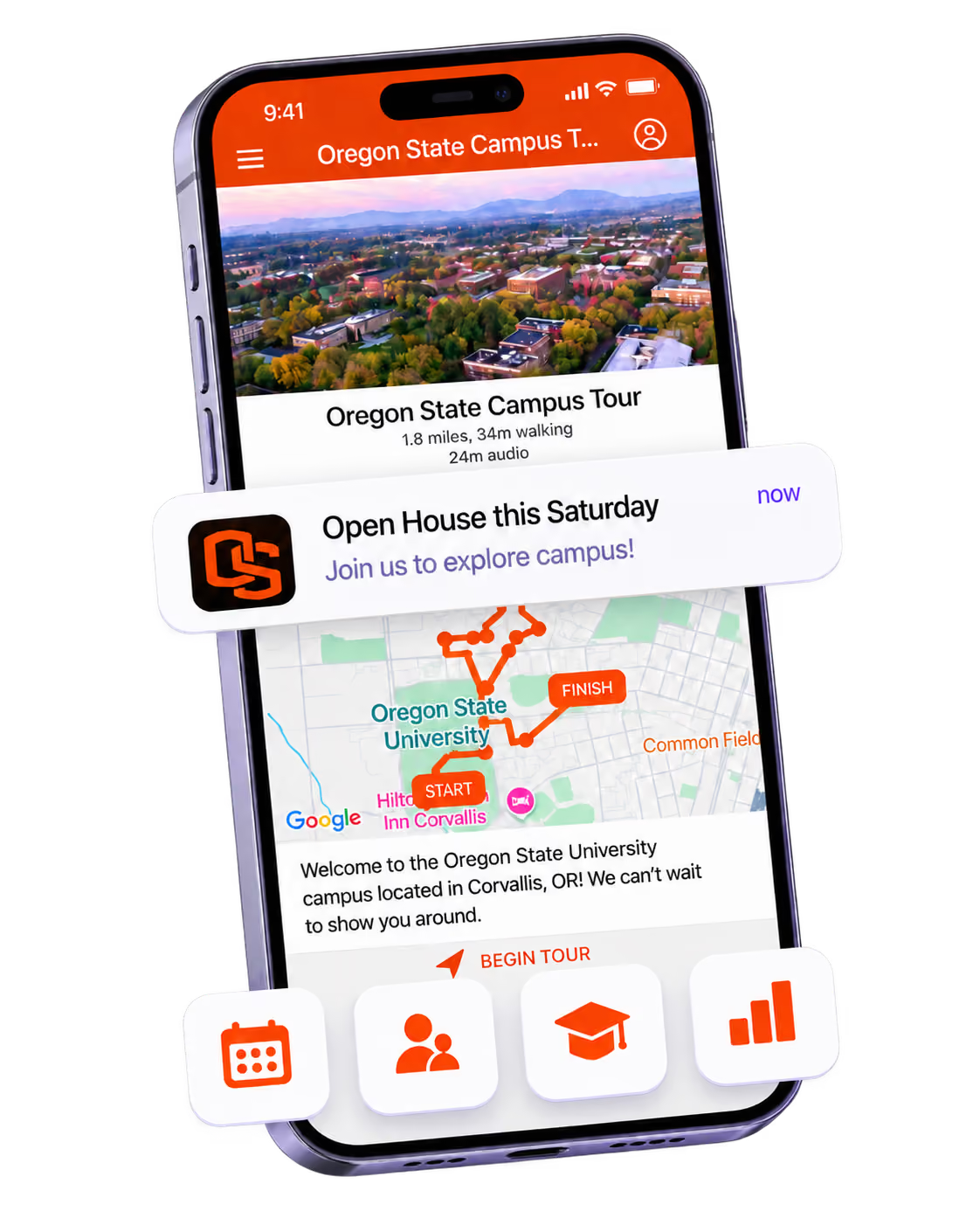
Deliver branded, self-guided tour experiences with interactive maps and rich media, available 24/7.

Offering Campus Tours?
Deliver branded, self-guided tour experiences with interactive maps and rich media, available 24/7.
Organising a Career Fair?
Simplify logistics for students, employers, and Career Services staff with one easy-to-use app.
Organising a Career Fair?
Simplify logistics for students, employers, and Career Services staff with one easy-to-use app.
Managing Alumni Events?
Plan reunions, regional events, and fundraising campaigns with an app built for alumni engagement.
Managing Alumni Events?
Plan reunions, regional events, and fundraising campaigns with an app built for alumni engagement.
Boost Student Engagement
One hub for schedules, resources, and events that keeps students connected throughout the academic year.
Boost Student Engagement
One hub for schedules, resources, and events that keeps students connected throughout the academic year.
Planning Orientation?
Help new students feel prepared from day one with schedules, campus resources, and real-time updates in one app.
Planning Orientation?
Help new students feel prepared from day one with schedules, campus resources, and real-time updates in one app.
Running Admissions Events?
Manage open houses, tours, and yield events with a branded app that saves time and engages prospective students.

Running Admissions Events?
Manage open houses, tours, and yield events with a branded app that saves time and engages prospective students.
Get a custom Sponsorship Package Template
Stop starting from scratch. Grab free templates that helWe'll build a tailored sponsorship package with suggested pricing, tiers, and benefits..for your specific event.p you build professional sponsorship packages and close deals faster.
Get a custom Sponsorship Package Template
Stop starting from scratch. Grab free templates that helWe'll build a tailored sponsorship package with suggested pricing, tiers, and benefits..for your specific event.p you build professional sponsorship packages and close deals faster.
Plan Your Next Event Without Missing a Beat.
From venue selection to post-event wrap-up, this free checklist walks you through every step (so nothing falls through the cracks).
.avif)
Plan Your Next Event Without Missing a Beat.
From venue selection to post-event wrap-up, this free checklist walks you through every step (so nothing falls through the cracks).
Real Results From Real Events
100,000+ organizations trust Guidebook. See exactly how universities, associations, enterprises, and more put it to work.

Real Results From Real Events
100,000+ organizations trust Guidebook. See exactly how universities, associations, enterprises, and more put it to work.
Flexible pricing for every event size
Find the perfect plan for your needs, from intimate gatherings to large-scale conferences.
Flexible pricing for every event size
Find the perfect plan for your needs, from intimate gatherings to large-scale conferences.
Join our event experts
Watch on-demand webinars and join live sessions with industry leaders sharing best practices for event success.
.avif)
Join our event experts
Watch on-demand webinars and join live sessions with industry leaders sharing best practices for event success.
Guidebook in Action
Book a personalized walkthrough and discover how we help event teams create better attendee experiences.
Guidebook in Action
Book a personalized walkthrough and discover how we help event teams create better attendee experiences.
What is a Tradeshow?
A tradeshow is a business event where companies showcase products and services to industry professionals. Learn about tradeshow benefits, planning tips, and effective exhibiting strategies.
A Tradeshow is a large-scale exhibition where businesses showcase products, services, and innovations to industry professionals, potential buyers, and partners within a specific market sector. These events typically span multiple days and feature hundreds of exhibitors competing for attention on a bustling show floor. Tradeshows generate billions in business deals annually and remain one of the most effective ways to build industry relationships.
Here's the thing: tradeshows aren't just about setting up a booth and hoping for the best. They're strategic business investments that require months of planning, clear goals, and flawless execution. The companies that win at tradeshows treat them as full-scale marketing campaigns—not just events to attend.
Key Characteristics of Tradeshows
- Industry-Specific Focus: Tradeshows target particular sectors like technology, healthcare, or manufacturing. This focus ensures attendees share common interests and business needs.
- Exhibition Hall Format: The core experience happens on a show floor with booths ranging from simple 10x10 setups to massive custom installations spanning thousands of square feet.
- B2B Orientation: Most tradeshows cater to business buyers rather than consumers. Attendees come with purchasing authority and specific problems to solve.
- Multi-Day Duration: Events typically run 2-5 days, giving exhibitors multiple opportunities to connect with prospects and close deals.
- Educational Programming: Beyond the exhibit hall, tradeshows offer keynotes, breakout sessions, and workshops that add value for attendees.
- Networking Opportunities: Structured mixers, happy hours, and meeting spaces help attendees build relationships beyond booth conversations.
- Lead Generation Engine: Exhibitors collect contact information through badge scans, demos, and giveaways to fuel their sales pipelines.
Tradeshow vs. Related Event Types
Conference
- Scope: Educational content takes center stage with speakers and sessions
- Focus: Knowledge sharing and professional development
- Timeline: Typically 1-3 days with packed session schedules
- Channels: Breakout rooms, main stages, and workshop spaces
- Goal: Learning, certification, and thought leadership
Trade Fair
- Scope: Often includes public attendance alongside industry professionals
- Focus: Product display and direct sales opportunities
- Timeline: Can extend to a week or longer for major international events
- Channels: Exhibition halls, outdoor spaces, and demo areas
- Goal: Brand awareness and immediate transactions
Expo
- Scope: Broader audience including consumers and general public
- Focus: Showcasing innovations and industry trends
- Timeline: Varies from single-day events to multi-week exhibitions
- Channels: Convention centers, fairgrounds, and specialized venues
- Goal: Mass exposure and market education
While these event types overlap, tradeshows stand out for their laser focus on B2B relationships and measurable business outcomes. Understanding these differences helps you choose the right events for your event marketing strategy.
Essential Tradeshow Components
Design an Eye-Catching Booth
Your booth is your storefront on the show floor. It needs to stop people in their tracks within seconds.
Invest in professional graphics, clear messaging, and interactive elements. Consider lighting, height, and traffic flow. The best booths create experiences, not just displays.
Check out ideas for creating an interactive trade show booth that draws crowds.
Train Your Booth Staff
Even the most stunning booth fails without skilled staff. Your team needs to:
- Greet visitors warmly within 3 seconds
- Ask qualifying questions quickly
- Deliver consistent product messaging
- Capture lead information accurately
- Know when to hand off to specialists
Create Compelling Collateral
Print materials still matter at tradeshows. Bring business cards, product sheets, and branded giveaways.
But don't overdo it. Most attendees won't carry heavy bags. Focus on one memorable takeaway that reinforces your message.
Set Up Lead Capture Systems
Badge scanners, tablet forms, and business card collection all work. The key is having a system that captures information consistently.
Use event check-in software to streamline the process and sync data with your CRM automatically.
Plan Your Demo Strategy
Live demonstrations draw crowds and create memorable moments. Schedule demos at regular intervals throughout each day.
Keep demos short—5-10 minutes max. Focus on solving one specific problem rather than showing every feature.
The Tradeshow Planning Timeline
Start 6-12 Months Before the Event
Early planning separates successful exhibitors from scrambling ones. Book your booth space early to secure prime locations near entrances or high-traffic areas.
Set your budget now. Include booth design, travel, shipping, marketing, and staff costs. Most companies underestimate expenses by 20-30%.
Execute Marketing 3-6 Months Out
Don't wait for the show to start marketing. Reach out to prospects and schedule meetings in advance.
- Send personalized emails to target accounts
- Promote your presence on social media
- Create a landing page for appointment booking
- Coordinate with event digital marketing efforts
Finalize Logistics 1-3 Months Before
This is crunch time. Confirm shipping deadlines, hotel reservations, and staff schedules.
Order promotional items and print materials. Test all technology. Create backup plans for common problems like delayed shipments or equipment failures.
Execute On-Site With Precision
Arrive early for setup. Walk the floor before doors open. Brief your team daily on goals and talking points.
Track leads in real-time. Adjust your approach based on what's working. Stay energized—tradeshows are marathons, not sprints.
Follow Up Within 48 Hours
Speed matters. Leads go cold fast after tradeshows. Have your follow-up emails and calls ready before the event ends.
Segment leads by priority. Hot prospects get personal calls. Warm leads get targeted emails. Everyone gets something within two days.
Why Tradeshows Matter
For Event Success:
- Face-to-Face Connections: Nothing replaces in-person conversations for building trust and reading body language
- Competitive Intelligence: See what competitors are doing, how they're positioning, and what's resonating with buyers
- Product Feedback: Get immediate reactions to new offerings from your target market
- Media Exposure: Industry journalists and analysts attend major tradeshows looking for stories
- Partnership Opportunities: Meet potential partners, distributors, and collaborators in one location
For Business Objectives:
- Pipeline Generation: A single tradeshow can generate 6-12 months of sales opportunities
- Brand Positioning: Establish your company as a serious player in your industry
- Customer Retention: Strengthen relationships with existing customers through exclusive events
- Market Research: Learn about event trends and shifting buyer priorities firsthand
- ROI Measurement: Track event ROI through closed deals attributed to tradeshow leads
Managing tradeshow logistics gets easier with the right tools. Guidebook's event management platform helps exhibitors and organizers coordinate schedules, share updates, and keep everyone informed throughout the event.
Tradeshow Best Practices
- Set Specific, Measurable Goals: Define exactly how many leads you want, meetings to book, or deals to close. Vague goals produce vague results.
- Research Attendees Before the Show: Use the attendee list to identify priority targets. Reach out before the event to schedule meetings.
- Create a Pre-Show Marketing Campaign: Learn how to advertise your event presence through email, social media, and direct outreach.
- Design Your Booth for Conversation: Include semi-private meeting spaces. Standing at a counter doesn't close deals—sitting down does.
- Staff Your Booth Strategically: Rotate team members to prevent burnout. Always have at least two people present during show hours.
- Offer Something Valuable: Giveaways work, but exclusive content, demos, or consultations work better. Give people a reason to stop.
- Capture Detailed Lead Notes: Badge scans aren't enough. Record specific pain points, timelines, and next steps for each conversation.
- Network Beyond Your Booth: Attend sessions, visit other booths, and join evening events. Some of the best connections happen off the show floor.
- Document Everything for Next Year: Use an event debrief template to capture lessons learned while they're fresh.
- Follow Up Relentlessly: The fortune is in the follow-up. Create a systematic process that ensures no lead falls through the cracks.
Common Tradeshow Mistakes
Waiting Until the Last Minute to Plan: Rushed planning leads to expensive mistakes. You'll pay premium prices for shipping, miss marketing opportunities, and stress out your team. Start planning at least six months ahead for major shows.
Ignoring Pre-Show Marketing: Showing up without scheduled meetings is like fishing without bait. Your competitors are booking appointments weeks in advance. Don't rely on walk-up traffic alone.
Understaffing Your Booth: One person can't handle a busy booth. They'll miss opportunities while talking to existing visitors. Plan for coverage during breaks, meals, and high-traffic periods.
Focusing on Quantity Over Quality: Scanning 500 badges means nothing if none convert. Train your team to qualify leads quickly and spend time with real prospects.
Neglecting Booth Appearance: Wrinkled graphics, cluttered tables, and tired displays signal that you don't care. First impressions happen in seconds. Make them count.
Failing to Follow Up Promptly: Waiting a week to contact leads is waiting too long. Your competitors are calling the same people. Speed wins.
Skipping the Post-Show Analysis: Without measuring results, you can't improve. Track every lead to closed revenue. Calculate your true cost per acquisition. Use data to make next year better.
Final Thoughts
Tradeshows remain one of the most powerful tools in B2B marketing. Despite the rise of digital channels, nothing replaces the energy of a packed show floor and the trust built through face-to-face conversations.
The tradeshow industry continues to evolve. Hybrid elements, enhanced technology, and changing attendee expectations mean exhibitors must adapt constantly. Companies that embrace innovation while mastering fundamentals will thrive.
Think of your next tradeshow as more than an event—it's a concentrated opportunity to accelerate your business. Every conversation, every demo, every connection has potential. The preparation you put in determines the results you get out.
Ready to make your next tradeshow a success? Explore event management tips and event planning resources to sharpen your approach. Check out sponsorship package examples if you're considering exhibitor opportunities. And when you need a platform to keep your team and attendees connected, schedule a Guidebook demo to see how we can help. Your best tradeshow is still ahead of you.
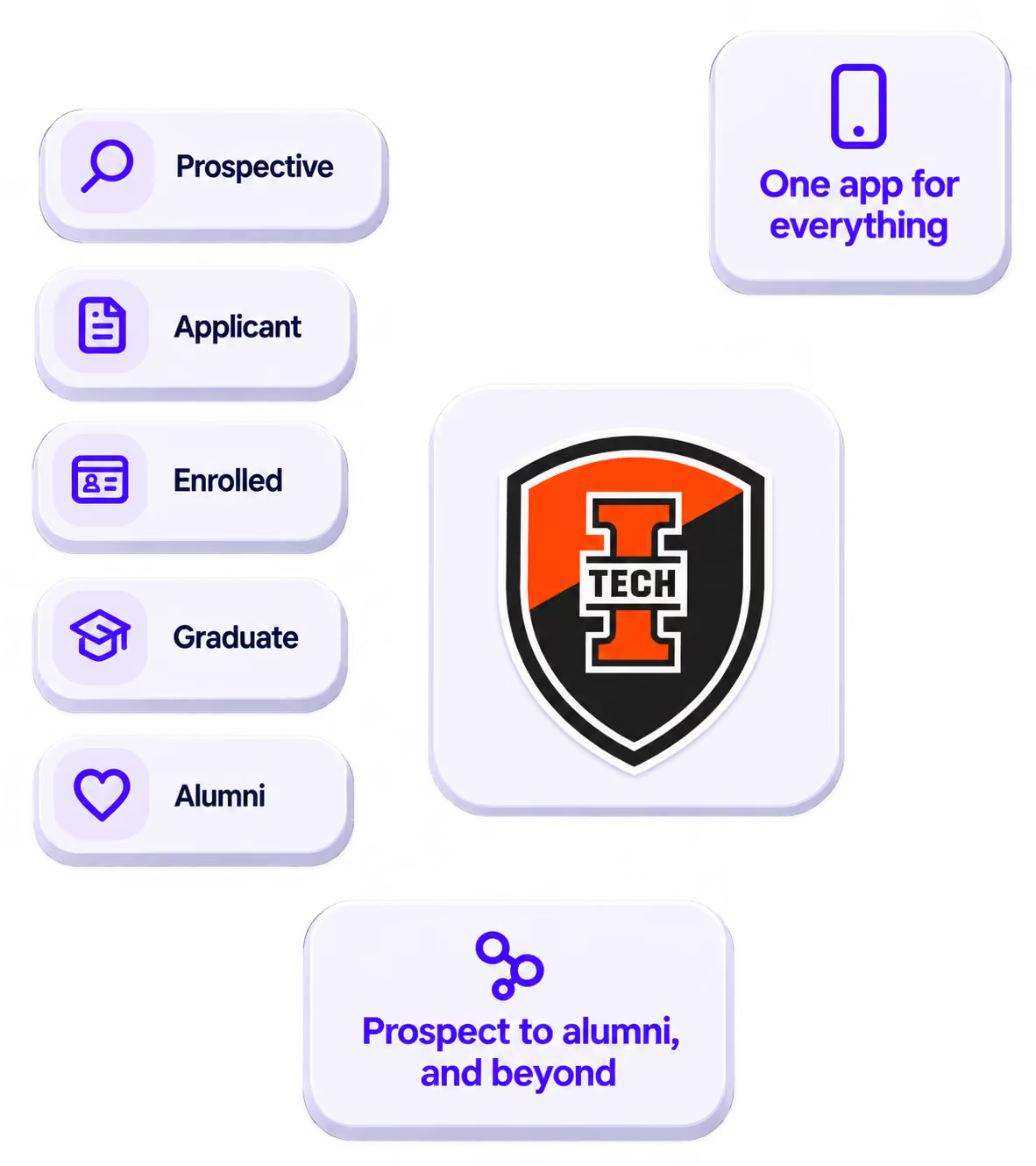
The power of your brand in your app, from first visit to alumni.
Build trust
Attendees download your app, not ours. Your name, colors, and crest in the stores.
.avif)
One place for the whole event
Schedules, maps, registration, and updates in one branded hub - not five tools.
Stand out
A branded app is what people keep on their phone after the printed program is in the recycling.

Get the Mobile App Playbook
A short guide to running the whole student journey in one app. No fluff, just what works.
for higher ed
Campus
Playbook
A practical guide to building a connected campus experience.
Free playbook
The Mobile App Playbook for Universities
Students decide if they belong long before they set foot on campus. This playbook shows how to win them over from the first visit through graduation.
- Grow enrollment and boost recruitment
- Increase belonging and retention
- Run every event from one branded app
By submitting, you agree to our Privacy Policy.
You're in.
.png)