
Campus apps by department
Admissions, orientation, student life, and more — one campus app that works across departments.

Campus apps by department
Admissions, orientation, student life, and more — one campus app that works across departments.
Build unlimited event apps on one license
One partnership for unlimited campus events — orientation, tours, student life, and everything in between.
Build unlimited event apps on one license
One partnership for unlimited campus events — orientation, tours, student life, and everything in between.
Compare event app platforms
See how Guidebook stacks up against other event app and registration platforms.
Compare event app platforms
See how Guidebook stacks up against other event app and registration platforms.
Event apps for nonprofit and community programs
Give members, volunteers, and donors one branded app for conferences, fundraisers, and year-round community.
Event apps for nonprofit and community programs
Give members, volunteers, and donors one branded app for conferences, fundraisers, and year-round community.
Campus integrations and an open API
Connect Guidebook with the campus systems, APIs, and tools your team already uses.
Campus integrations and an open API
Connect Guidebook with the campus systems, APIs, and tools your team already uses.
Event apps for corporate and enterprise teams
Internal meetings, offsites, and large-scale corporate events — with the branding and control enterprise teams need.
Event apps for corporate and enterprise teams
Internal meetings, offsites, and large-scale corporate events — with the branding and control enterprise teams need.
Create a branded event app with no coding
Put schedules, maps, resources, and updates in every attendee's pocket — built for campus events and programs.
Create a branded event app with no coding
Put schedules, maps, resources, and updates in every attendee's pocket — built for campus events and programs.
Launch a branded, white-label event app
A white-label event app with your branding, your content, and your attendee experience — no coding required.
Launch a branded, white-label event app
A white-label event app with your branding, your content, and your attendee experience — no coding required.
Everything in the Guidebook platform
Explore the features event teams use to engage attendees before, during, and after the event.
Everything in the Guidebook platform
Explore the features event teams use to engage attendees before, during, and after the event.
One app for in-person and virtual attendees
The same schedule, networking, and updates whether people are in the room or joining remotely.
One app for in-person and virtual attendees
The same schedule, networking, and updates whether people are in the room or joining remotely.
Event apps built for associations
Annual meetings, chapter events, and member engagement — without rebuilding a new app every year.
Event apps built for associations
Annual meetings, chapter events, and member engagement — without rebuilding a new app every year.
A branded event website that matches the app
Promote the event, collect interest, and keep branding consistent from the first click to check-in.
A branded event website that matches the app
Promote the event, collect interest, and keep branding consistent from the first click to check-in.
Plan, run, and measure events on one platform
App, registration, badges, and websites in one workflow — so planning isn't a pile of disconnected tools.
Plan, run, and measure events on one platform
App, registration, badges, and websites in one workflow — so planning isn't a pile of disconnected tools.
Keep members engaged between events
One branded app for the conference and everything that happens the other 51 weeks of the year.
Keep members engaged between events
One branded app for the conference and everything that happens the other 51 weeks of the year.
The conference app attendees actually use
Schedules, maps, networking, and live updates for annual meetings, summits, and multi-day conferences.
The conference app attendees actually use
Schedules, maps, networking, and live updates for annual meetings, summits, and multi-day conferences.
Registration that feeds your app and badges
Collect registrations, payments, and attendee data in the same platform as your event app.
Registration that feeds your app and badges
Collect registrations, payments, and attendee data in the same platform as your event app.
Design and print event badges in one place
Custom badges, QR check-in, and on-site printing — without a separate badge vendor.
Design and print event badges in one place
Custom badges, QR check-in, and on-site printing — without a separate badge vendor.
A Smaller School?
Deliver a polished, branded event experience without a large team or a big budget.
A Smaller School?
Deliver a polished, branded event experience without a large team or a big budget.
Running Family Programs?
Give families everything they need, from schedules and maps to real-time updates, all in one place.
Running Family Programs?
Give families everything they need, from schedules and maps to real-time updates, all in one place.
Coordinating Move-In Day?
Share updates, manage events, and keep students informed from move-in through the academic year.

Coordinating Move-In Day?
Share updates, manage events, and keep students informed from move-in through the academic year.
Offering Campus Tours?
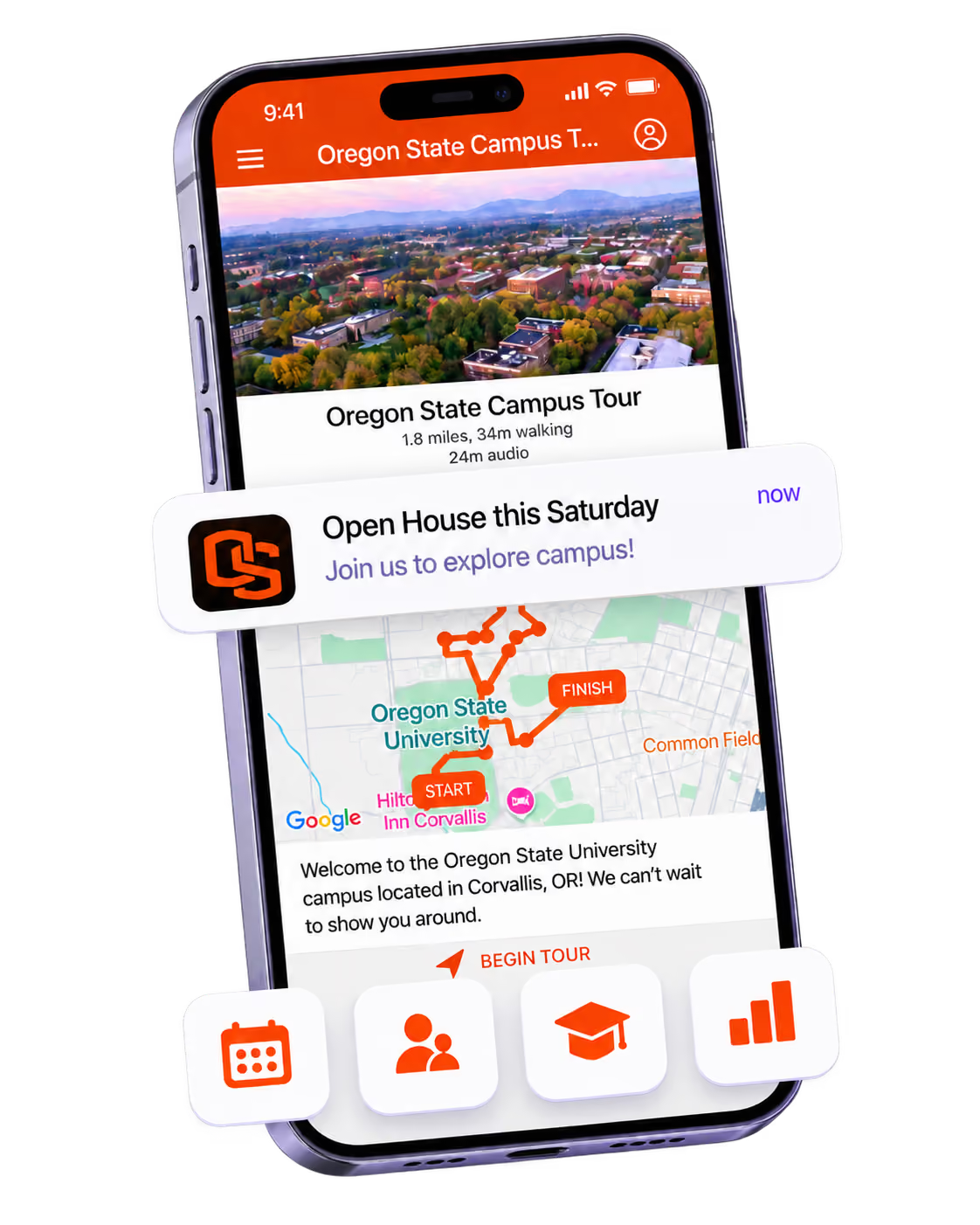
Deliver branded, self-guided tour experiences with interactive maps and rich media, available 24/7.

Offering Campus Tours?
Deliver branded, self-guided tour experiences with interactive maps and rich media, available 24/7.
Organising a Career Fair?
Simplify logistics for students, employers, and Career Services staff with one easy-to-use app.
Organising a Career Fair?
Simplify logistics for students, employers, and Career Services staff with one easy-to-use app.
Managing Alumni Events?
Plan reunions, regional events, and fundraising campaigns with an app built for alumni engagement.
Managing Alumni Events?
Plan reunions, regional events, and fundraising campaigns with an app built for alumni engagement.
Boost Student Engagement
One hub for schedules, resources, and events that keeps students connected throughout the academic year.
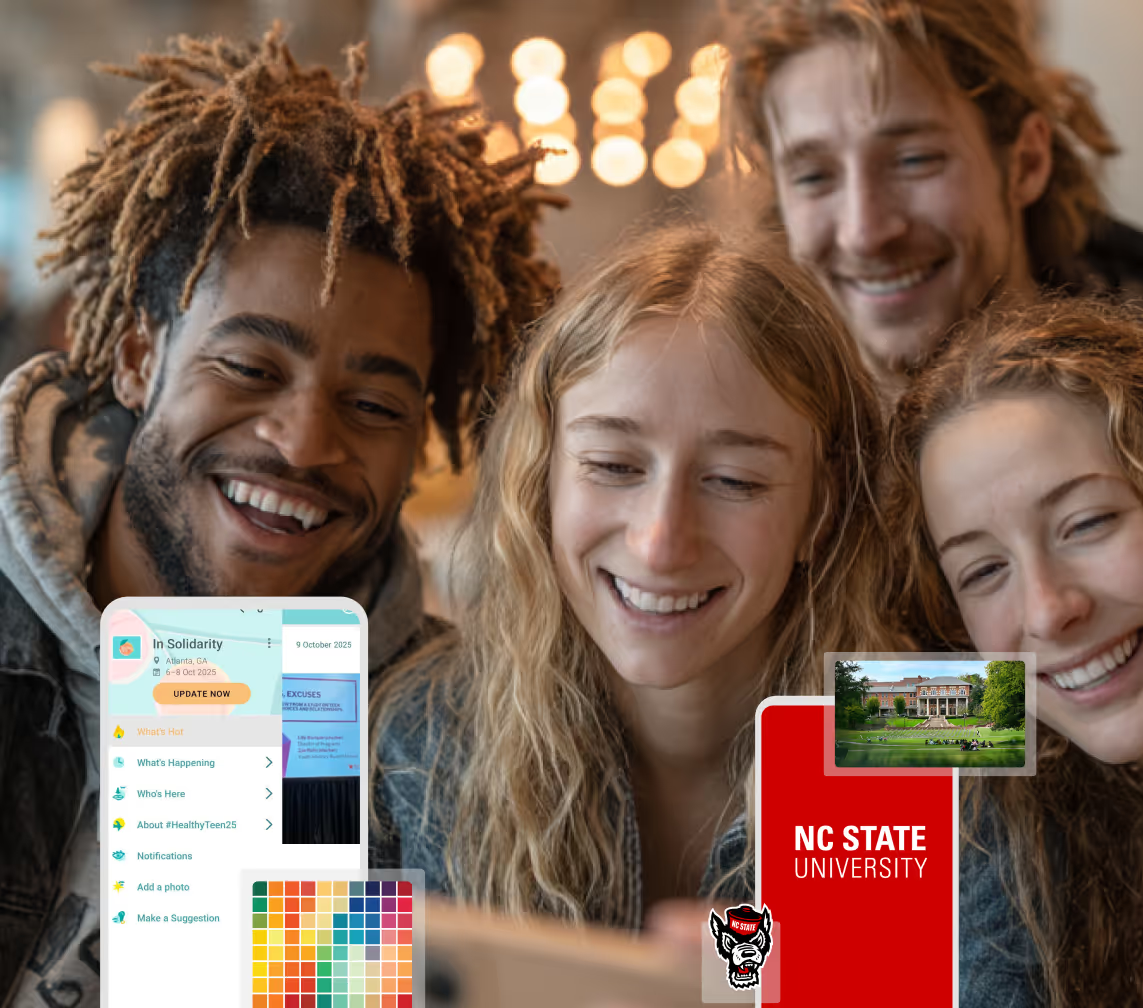
Boost Student Engagement
One hub for schedules, resources, and events that keeps students connected throughout the academic year.
Planning Orientation?
Help new students feel prepared from day one with schedules, campus resources, and real-time updates in one app.
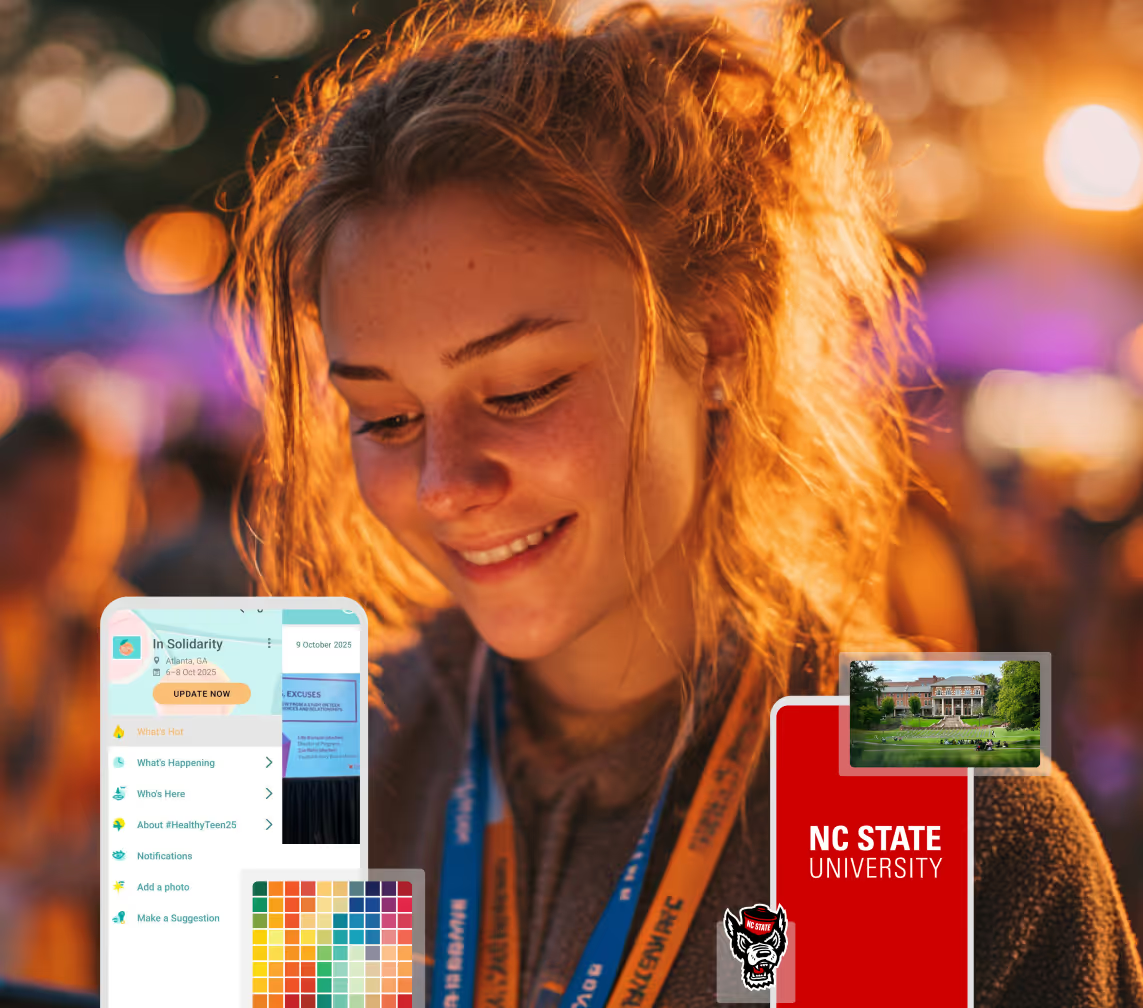
Planning Orientation?
Help new students feel prepared from day one with schedules, campus resources, and real-time updates in one app.
Running Admissions Events?
Manage open houses, tours, and yield events with a branded app that saves time and engages prospective students.

Running Admissions Events?
Manage open houses, tours, and yield events with a branded app that saves time and engages prospective students.
Get a custom Sponsorship Package Template
Stop starting from scratch. Grab free templates that helWe'll build a tailored sponsorship package with suggested pricing, tiers, and benefits..for your specific event.p you build professional sponsorship packages and close deals faster.
Get a custom Sponsorship Package Template
Stop starting from scratch. Grab free templates that helWe'll build a tailored sponsorship package with suggested pricing, tiers, and benefits..for your specific event.p you build professional sponsorship packages and close deals faster.
Plan Your Next Event Without Missing a Beat.
From venue selection to post-event wrap-up, this free checklist walks you through every step (so nothing falls through the cracks).
.avif)
Plan Your Next Event Without Missing a Beat.
From venue selection to post-event wrap-up, this free checklist walks you through every step (so nothing falls through the cracks).
Real Results From Real Events
100,000+ organizations trust Guidebook. See exactly how universities, associations, enterprises, and more put it to work.

Real Results From Real Events
100,000+ organizations trust Guidebook. See exactly how universities, associations, enterprises, and more put it to work.
Flexible pricing for every event size
Find the perfect plan for your needs, from intimate gatherings to large-scale conferences.

Flexible pricing for every event size
Find the perfect plan for your needs, from intimate gatherings to large-scale conferences.
Join our event experts
Watch on-demand webinars and join live sessions with industry leaders sharing best practices for event success.
.avif)
Join our event experts
Watch on-demand webinars and join live sessions with industry leaders sharing best practices for event success.
Guidebook in Action
Book a personalized walkthrough and discover how we help event teams create better attendee experiences.
Guidebook in Action
Book a personalized walkthrough and discover how we help event teams create better attendee experiences.

What does the attendee journey include in event planning?
The attendee journey in event planning covers every touchpoint, from registration to post-event follow-up. Discover key stages, engagement tips, and optimization strategies.

Attendee Journey in Event Planning is the complete path your guests travel from first hearing about your event to becoming loyal advocates who can't wait for the next one. It covers every touchpoint, emotion, and interaction along the way. When you map this journey well, you create experiences that feel personal, seamless, and memorable.
Here's the thing: most event planners focus on what happens during the event itself. But the attendee journey starts weeks or months before and continues long after. It's the difference between hosting an event and creating an experience. Smart planners know that every email, every check-in moment, and every follow-up shapes how people feel about your brand.
Key Characteristics of the Attendee Journey
- Multi-Phase Structure: The journey spans five distinct phases—awareness, registration, pre-event, live event, and post-event. Each phase requires different strategies and touchpoints.
- Emotional Arc: Attendees experience a range of emotions from curiosity to excitement to satisfaction. Great events intentionally design for these emotional peaks.
- Multiple Touchpoints: The average attendee interacts with your event 15-20 times before arriving. Each touchpoint shapes their expectations and engagement level.
- Personalization Potential: Modern attendee journeys can be customized based on attendee type, interests, and behavior. One-size-fits-all approaches feel outdated.
- Measurable Milestones: Each phase has clear metrics you can track. Open rates, registration completion, app downloads, and feedback scores tell the story.
- Technology-Enabled: Digital tools like event management platforms make it possible to orchestrate complex journeys at scale.
- Continuous Loop: The journey doesn't end—it circles back. Post-event engagement feeds into awareness for your next event.
Attendee Journey vs. Related Concepts
Event Experience
- Scope: Focuses primarily on what happens during the live event itself
- Focus: In-person or virtual interactions, sessions, and networking
- Timeline: Limited to event days only
- Channels: On-site touchpoints, venue, and programming
- Goal: Create memorable moments during the event
Event Marketing Funnel
- Scope: Covers awareness through registration conversion
- Focus: Promotional activities and messaging that drive sign-ups
- Timeline: Pre-event period leading to registration deadline
- Channels: Email, social media, advertising, and content marketing
- Goal: Maximize registrations and ticket sales
Attendee Engagement Strategy
- Scope: Tactics to keep attendees active and participating
- Focus: Interaction, participation, and community building
- Timeline: Primarily during and immediately after the event
- Channels: Event apps, live polling, networking features, and gamification
- Goal: Boost participation rates and satisfaction scores
The attendee journey encompasses all three concepts. It's the umbrella that connects your event marketing efforts to your live experience to your follow-up strategy. Think of it as the master blueprint that ensures nothing falls through the cracks.
The Five Phases of the Attendee Journey
Understanding each phase helps you create intentional touchpoints. Let's break down what happens at each stage and what attendees need from you.
Phase 1: Awareness and Discovery
This is where potential attendees first learn your event exists. They might find you through social media, word of mouth, or search results.
Your job here is simple: grab attention and spark curiosity. Strong event SEO helps people find you. Compelling messaging makes them want to learn more.
- Create clear, benefit-focused event descriptions
- Use eye-catching visuals that reflect your event's personality
- Leverage past attendee testimonials and social proof
- Make your value proposition obvious within seconds
Phase 2: Registration and Commitment
Now they're interested. The registration phase is where curiosity turns into commitment. A clunky event registration process kills momentum fast.
Keep forms short. Offer clear pricing. Send immediate confirmation. These basics matter more than you think.
- Limit required fields to essentials only
- Provide multiple payment options
- Send instant confirmation with next steps
- Include calendar invites and save-the-date options
Phase 3: Pre-Event Anticipation
The weeks between registration and arrival are golden. This is when you build excitement and set expectations. Don't go silent.
Smart planners use this time to share speaker announcements, networking opportunities, and practical details. It's also the perfect window to promote your event app.
- Send a welcome sequence with key information
- Share sneak peeks of sessions and speakers
- Encourage early networking through community features
- Provide logistics like parking, dress code, and schedules
Phase 4: Live Event Experience
This is showtime. Everything you've planned comes together. The live event phase is where attendees form their strongest memories.
Smooth event check-in sets the tone. Clear wayfinding reduces stress. Engaging sessions deliver value. Networking opportunities create connections.
- Start with a warm, efficient check-in process
- Provide real-time updates through your event app
- Create intentional networking moments
- Gather feedback while experiences are fresh
Phase 5: Post-Event Follow-Through
The event ended, but the journey continues. Post-event communication determines whether attendees become advocates or forget you existed.
Send thank-you messages within 24 hours. Share session recordings and resources. Ask for feedback. Tease what's coming next.
- Express genuine gratitude for attendance
- Provide access to recordings and materials
- Send surveys while memories are fresh
- Nurture the relationship toward future events
Why Attendee Journey Mapping Matters
For Event Success:
- Higher Attendance Rates: Well-designed journeys reduce no-shows by keeping registrants engaged and excited throughout the pre-event period.
- Better On-Site Experience: When attendees arrive prepared and informed, they can focus on content and connections instead of logistics.
- Increased Engagement: Intentional touchpoints at each phase boost participation in sessions, networking, and interactive features.
- Stronger Feedback: Attendees who feel cared for throughout their journey provide more thoughtful, actionable feedback.
- Word-of-Mouth Growth: Exceptional journeys turn attendees into advocates who promote your event to their networks.
For Business Objectives:
- Improved Event ROI: Every phase of the journey offers opportunities to demonstrate value and justify investment.
- Sponsor Satisfaction: Engaged attendees interact more with sponsor content, delivering better results for your partners.
- Data Collection: Journey touchpoints provide valuable insights about attendee preferences and behavior patterns.
- Brand Building: Consistent, thoughtful communication strengthens your organization's reputation and trust.
- Repeat Attendance: Great journeys create loyal attendees who return year after year without heavy marketing spend.
Platforms like Guidebook's event management software help you orchestrate these complex journeys without overwhelming your team. From registration to post-event surveys, the right tools make personalization possible at scale.
Attendee Journey Best Practices
- Map Before You Plan: Document every touchpoint before creating content. This reveals gaps and opportunities you'd otherwise miss.
- Segment Your Audience: First-time attendees need different communication than returning veterans. Create journey variations for each group.
- Front-Load Value: Don't save all the good stuff for event day. Share valuable content during the pre-event phase to build anticipation.
- Reduce Friction Everywhere: Audit each touchpoint for unnecessary steps. Every extra click or form field costs you engagement.
- Communicate Consistently: Maintain regular contact without overwhelming inboxes. A cadence of 1-2 emails per week works for most events.
- Personalize When Possible: Use attendee data to customize recommendations, schedules, and networking suggestions.
- Test Your Technology: Walk through the entire digital journey yourself. Broken links and confusing interfaces derail even great events.
- Empower Your Team: Everyone from event coordinators to volunteers should understand the journey and their role in it.
- Collect Feedback at Multiple Points: Don't wait until the end. Quick pulse checks throughout reveal issues you can fix in real-time.
- Close the Loop: Show attendees how their feedback shaped improvements. This builds trust and encourages future participation.
Common Attendee Journey Mistakes
Going Silent After Registration: Many planners celebrate registrations, then disappear until event week. This gap kills momentum and increases no-shows. Keep the conversation going with valuable pre-event content.
Overwhelming with Information: Sending everything at once confuses attendees. They can't process a 20-page PDF of session descriptions. Drip information strategically based on what they need and when.
Ignoring Mobile Experience: Most attendees interact with your event on their phones. If your registration form, emails, or event content aren't mobile-friendly, you're creating unnecessary friction.
Treating All Attendees the Same: A CEO and a first-year employee have different needs and expectations. Generic communication feels impersonal. Segment your audience and customize accordingly.
Forgetting the Post-Event Phase: The event ends and communication stops. This wastes the goodwill you've built. Post-event follow-up is your best opportunity to convert attendees into advocates.
Skipping the Debrief: Without a proper event debrief, you lose valuable insights. Document what worked and what didn't while memories are fresh.
Relying on Memory Instead of Data: Gut feelings aren't reliable. Track metrics at each journey phase to understand what's actually working and where attendees drop off.
Final Thoughts
The attendee journey transforms event planning from a logistics exercise into an experience design challenge. When you think in terms of journeys, you stop asking "what do we need to do?" and start asking "how do we want people to feel?"
The best events in the world share one thing in common: they're intentional about every touchpoint. From the first Instagram ad to the final thank-you email, nothing happens by accident. This level of care shows, and attendees notice.
Here's the exciting part: you don't need a massive budget or team to create great attendee journeys. You need clarity about your audience, intentionality about your touchpoints, and tools that help you execute consistently. Start by mapping your current journey, identify the biggest gaps, and improve one phase at a time.
Ready to level up your attendee journey? Explore event planning process fundamentals, discover event management tips from the pros, or see how Guidebook's platform can help you create seamless experiences from registration to follow-up. Your attendees deserve a journey worth talking about—and you have everything you need to create one.
The power of your brand in your app, from first visit to alumni.
Build trust
Attendees download your app, not ours. Your name, colors, and crest in the stores.
.avif)
One place for the whole event
Schedules, maps, registration, and updates in one branded hub - not five tools.
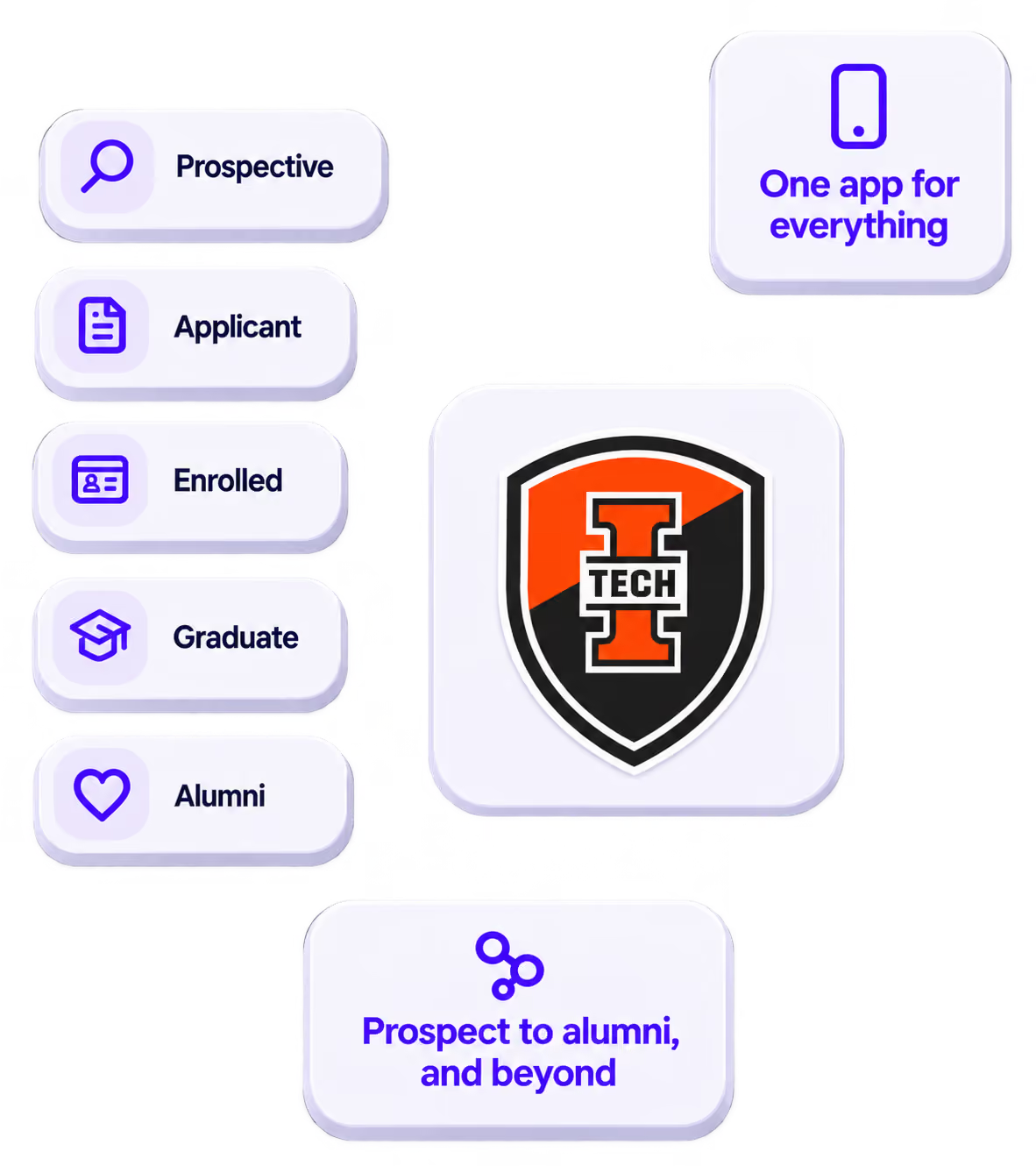
Stand out
A branded app is what people keep on their phone after the printed program is in the recycling.

Get the Mobile App Playbook
A short guide to running the whole student journey in one app. No fluff, just what works.
for higher ed
Campus
Playbook
A practical guide to building a connected campus experience.
Free playbook
The Mobile App Playbook for Universities
Students decide if they belong long before they set foot on campus. This playbook shows how to win them over from the first visit through graduation.
- Grow enrollment and boost recruitment
- Increase belonging and retention
- Run every event from one branded app
By submitting, you agree to our Privacy Policy.
You're in.
.png)