
Campus apps by department
Admissions, orientation, student life, and more — one campus app that works across departments.

Campus apps by department
Admissions, orientation, student life, and more — one campus app that works across departments.
Build unlimited event apps on one license
One partnership for unlimited campus events — orientation, tours, student life, and everything in between.
Build unlimited event apps on one license
One partnership for unlimited campus events — orientation, tours, student life, and everything in between.
Compare event app platforms
See how Guidebook stacks up against other event app and registration platforms.
Compare event app platforms
See how Guidebook stacks up against other event app and registration platforms.
Event apps for nonprofit and community programs
Give members, volunteers, and donors one branded app for conferences, fundraisers, and year-round community.
Event apps for nonprofit and community programs
Give members, volunteers, and donors one branded app for conferences, fundraisers, and year-round community.
Campus integrations and an open API
Connect Guidebook with the campus systems, APIs, and tools your team already uses.
Campus integrations and an open API
Connect Guidebook with the campus systems, APIs, and tools your team already uses.
Event apps for corporate and enterprise teams
Internal meetings, offsites, and large-scale corporate events — with the branding and control enterprise teams need.
Event apps for corporate and enterprise teams
Internal meetings, offsites, and large-scale corporate events — with the branding and control enterprise teams need.
Create a branded event app with no coding
Put schedules, maps, resources, and updates in every attendee's pocket — built for campus events and programs.
Create a branded event app with no coding
Put schedules, maps, resources, and updates in every attendee's pocket — built for campus events and programs.
Launch a branded, white-label event app
A white-label event app with your branding, your content, and your attendee experience — no coding required.
Launch a branded, white-label event app
A white-label event app with your branding, your content, and your attendee experience — no coding required.
Everything in the Guidebook platform
Explore the features event teams use to engage attendees before, during, and after the event.
Everything in the Guidebook platform
Explore the features event teams use to engage attendees before, during, and after the event.
One app for in-person and virtual attendees
The same schedule, networking, and updates whether people are in the room or joining remotely.
One app for in-person and virtual attendees
The same schedule, networking, and updates whether people are in the room or joining remotely.
Event apps built for associations
Annual meetings, chapter events, and member engagement — without rebuilding a new app every year.
Event apps built for associations
Annual meetings, chapter events, and member engagement — without rebuilding a new app every year.
A branded event website that matches the app
Promote the event, collect interest, and keep branding consistent from the first click to check-in.
A branded event website that matches the app
Promote the event, collect interest, and keep branding consistent from the first click to check-in.
Plan, run, and measure events on one platform
App, registration, badges, and websites in one workflow — so planning isn't a pile of disconnected tools.
Plan, run, and measure events on one platform
App, registration, badges, and websites in one workflow — so planning isn't a pile of disconnected tools.
Keep members engaged between events
One branded app for the conference and everything that happens the other 51 weeks of the year.
Keep members engaged between events
One branded app for the conference and everything that happens the other 51 weeks of the year.
The conference app attendees actually use
Schedules, maps, networking, and live updates for annual meetings, summits, and multi-day conferences.
The conference app attendees actually use
Schedules, maps, networking, and live updates for annual meetings, summits, and multi-day conferences.
Registration that feeds your app and badges
Collect registrations, payments, and attendee data in the same platform as your event app.
Registration that feeds your app and badges
Collect registrations, payments, and attendee data in the same platform as your event app.
Design and print event badges in one place
Custom badges, QR check-in, and on-site printing — without a separate badge vendor.
Design and print event badges in one place
Custom badges, QR check-in, and on-site printing — without a separate badge vendor.
A Smaller School?
Deliver a polished, branded event experience without a large team or a big budget.
A Smaller School?
Deliver a polished, branded event experience without a large team or a big budget.
Running Family Programs?
Give families everything they need, from schedules and maps to real-time updates, all in one place.
Running Family Programs?
Give families everything they need, from schedules and maps to real-time updates, all in one place.
Coordinating Move-In Day?
Share updates, manage events, and keep students informed from move-in through the academic year.

Coordinating Move-In Day?
Share updates, manage events, and keep students informed from move-in through the academic year.
Offering Campus Tours?
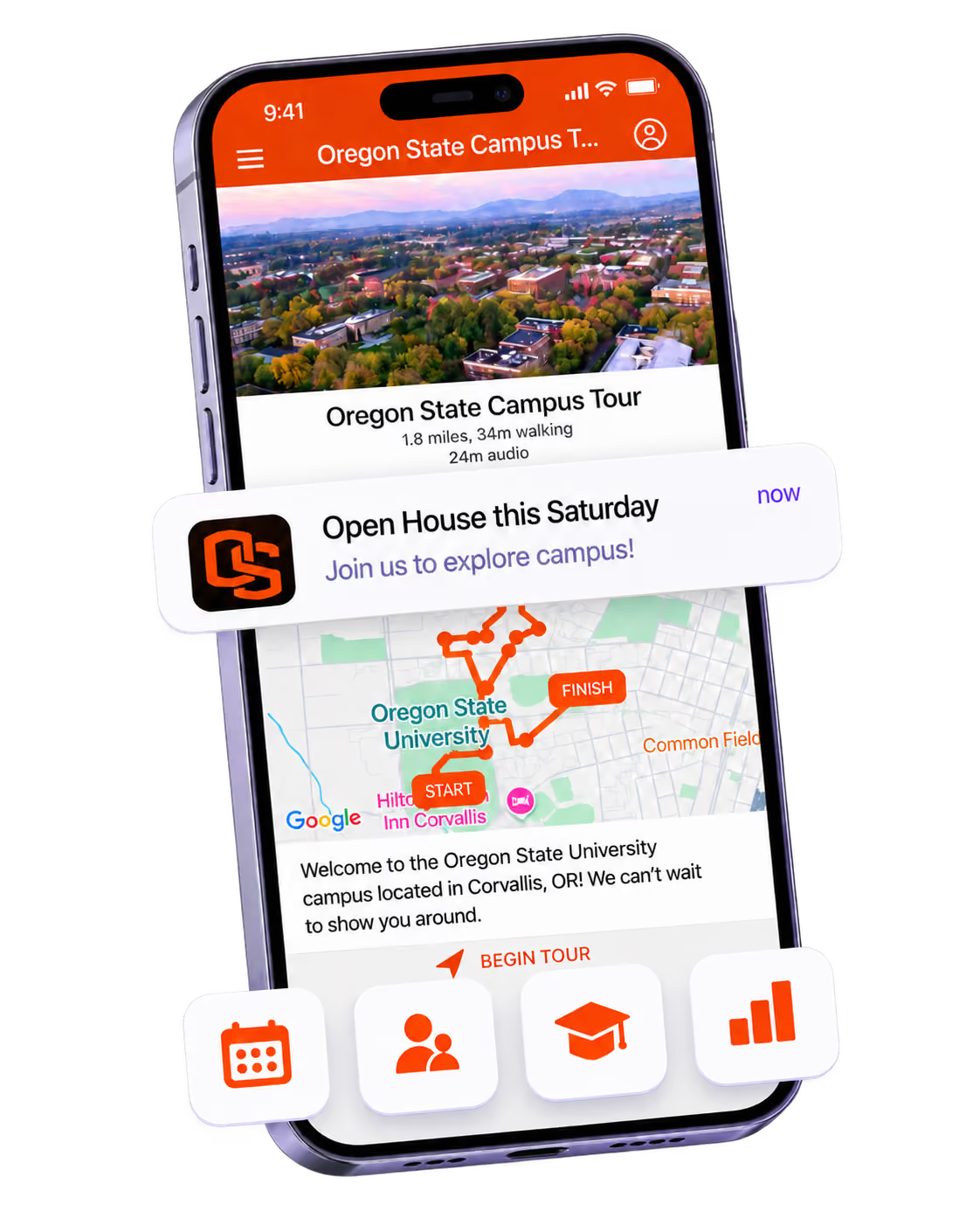
Deliver branded, self-guided tour experiences with interactive maps and rich media, available 24/7.

Offering Campus Tours?
Deliver branded, self-guided tour experiences with interactive maps and rich media, available 24/7.
Organising a Career Fair?
Simplify logistics for students, employers, and Career Services staff with one easy-to-use app.
Organising a Career Fair?
Simplify logistics for students, employers, and Career Services staff with one easy-to-use app.
Managing Alumni Events?
Plan reunions, regional events, and fundraising campaigns with an app built for alumni engagement.
Managing Alumni Events?
Plan reunions, regional events, and fundraising campaigns with an app built for alumni engagement.
Boost Student Engagement
One hub for schedules, resources, and events that keeps students connected throughout the academic year.
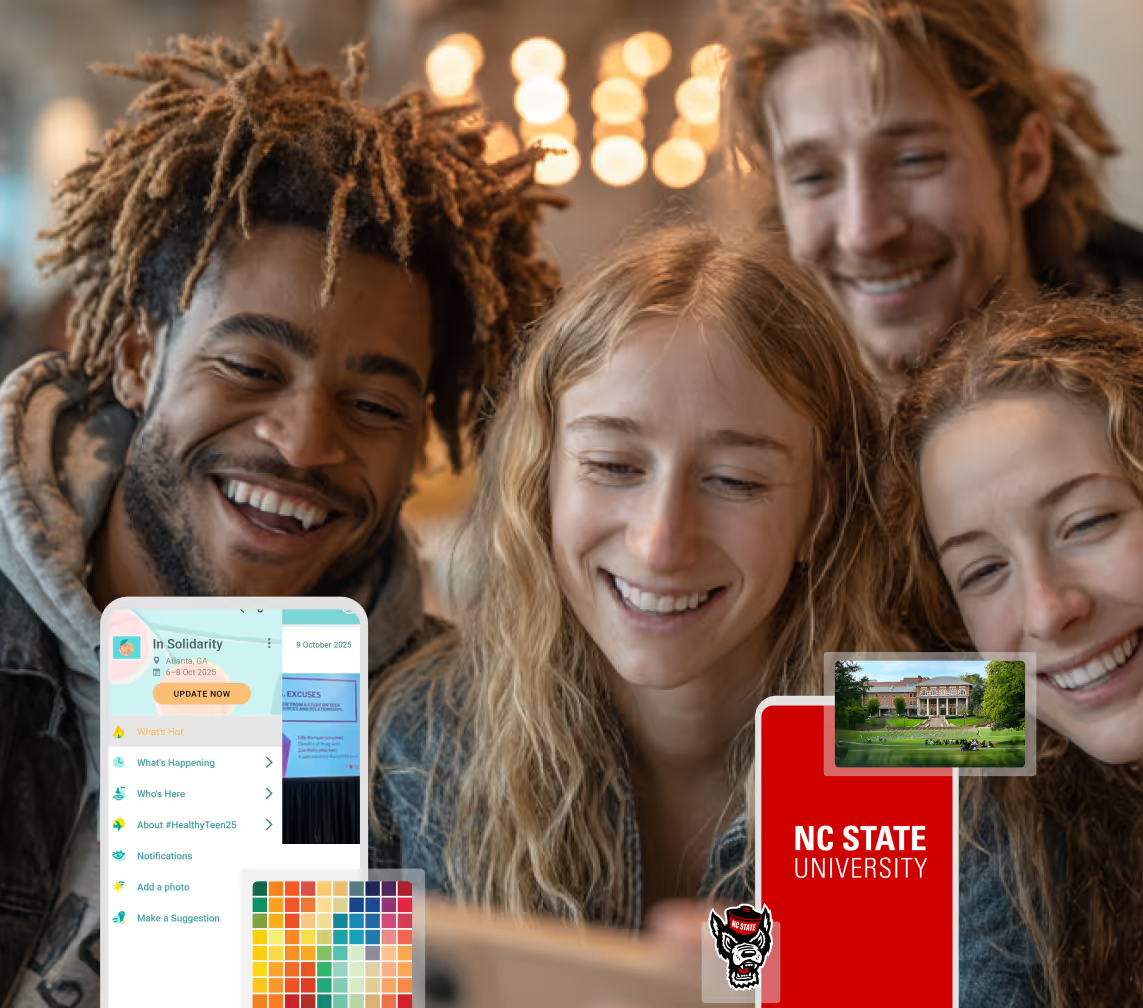
Boost Student Engagement
One hub for schedules, resources, and events that keeps students connected throughout the academic year.
Planning Orientation?
Help new students feel prepared from day one with schedules, campus resources, and real-time updates in one app.
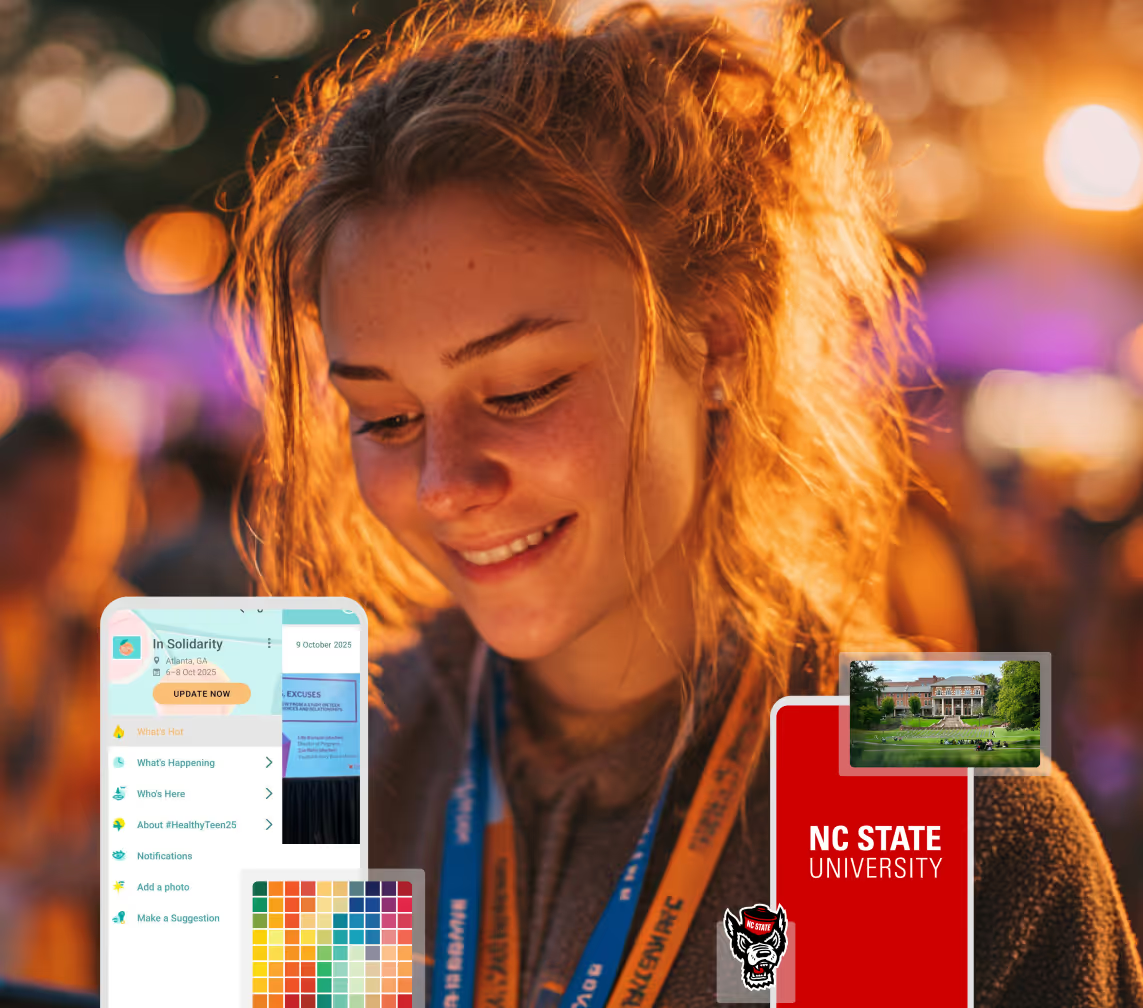
Planning Orientation?
Help new students feel prepared from day one with schedules, campus resources, and real-time updates in one app.
Running Admissions Events?
Manage open houses, tours, and yield events with a branded app that saves time and engages prospective students.

Running Admissions Events?
Manage open houses, tours, and yield events with a branded app that saves time and engages prospective students.
Get a custom Sponsorship Package Template
Stop starting from scratch. Grab free templates that helWe'll build a tailored sponsorship package with suggested pricing, tiers, and benefits..for your specific event.p you build professional sponsorship packages and close deals faster.
Get a custom Sponsorship Package Template
Stop starting from scratch. Grab free templates that helWe'll build a tailored sponsorship package with suggested pricing, tiers, and benefits..for your specific event.p you build professional sponsorship packages and close deals faster.
Plan Your Next Event Without Missing a Beat.
From venue selection to post-event wrap-up, this free checklist walks you through every step (so nothing falls through the cracks).
.avif)
Plan Your Next Event Without Missing a Beat.
From venue selection to post-event wrap-up, this free checklist walks you through every step (so nothing falls through the cracks).
Real Results From Real Events
100,000+ organizations trust Guidebook. See exactly how universities, associations, enterprises, and more put it to work.

Real Results From Real Events
100,000+ organizations trust Guidebook. See exactly how universities, associations, enterprises, and more put it to work.
Flexible pricing for every event size
Find the perfect plan for your needs, from intimate gatherings to large-scale conferences.
Flexible pricing for every event size
Find the perfect plan for your needs, from intimate gatherings to large-scale conferences.
Join our event experts
Watch on-demand webinars and join live sessions with industry leaders sharing best practices for event success.
.avif)
Join our event experts
Watch on-demand webinars and join live sessions with industry leaders sharing best practices for event success.
Guidebook in Action
Book a personalized walkthrough and discover how we help event teams create better attendee experiences.
Guidebook in Action
Book a personalized walkthrough and discover how we help event teams create better attendee experiences.

What are Virtual Networking Events?
Virtual networking events connect professionals online, enabling relationship-building and knowledge sharing. Discover event formats, engagement tips, and best practices.

Virtual Networking Events are online gatherings designed to help professionals connect, build relationships, and exchange ideas without meeting in person. These events use digital platforms to recreate the spontaneous conversations and meaningful connections that happen at in-person conferences. They've become essential for organizations looking to expand their reach beyond geographic boundaries.
Here's the thing: virtual networking isn't just a backup plan for when you can't meet face-to-face. It's a powerful format that removes travel barriers and opens doors to global connections. Attendees can meet people they'd never encounter at local events. And for introverts? The digital format often feels less intimidating than working a crowded room.
Key Characteristics of Virtual Networking Events
- Digital-First Design: These events are built specifically for online interaction, not just in-person events moved to video calls. The best ones use purpose-built platforms with features like virtual lounges and breakout rooms.
- Structured Connection Opportunities: Unlike casual video calls, virtual networking events include planned activities like speed networking, topic-based discussions, and one-on-one matching.
- Global Accessibility: Anyone with internet access can join, regardless of location. This opens networking to people who can't travel due to budget, time, or physical constraints.
- Flexible Participation: Attendees can often choose their level of engagement. Some prefer active video conversations while others participate through chat or messaging.
- Data-Rich Insights: Digital platforms track engagement metrics that in-person events can't capture. Organizers see who connected with whom and which topics sparked the most interest.
- Lower Cost Structure: Without venue rentals, catering, or travel expenses, virtual networking events cost significantly less to produce and attend.
- Asynchronous Options: Many platforms allow connections to continue after the live event ends through messaging features and attendee directories.
Virtual Networking Events vs. Related Event Types
Webinars
- Scope: One-to-many broadcast format with limited audience interaction
- Focus: Content delivery and education from speakers to viewers
- Timeline: Typically 30-90 minutes with Q&A at the end
- Channels: Video streaming with chat sidebar for questions
- Goal: Share information and generate leads through valuable content
Virtual Conferences
- Scope: Multi-session events with keynotes, breakouts, and exhibits
- Focus: Comprehensive programming covering multiple topics and formats
- Timeline: Half-day to multi-day events with packed schedules
- Channels: Multiple stages, virtual booths, and networking lounges
- Goal: Deliver full conference experience including learning and networking
Online Communities
- Scope: Ongoing member engagement without specific event dates
- Focus: Continuous relationship building and peer support
- Timeline: Always-on with periodic live touchpoints
- Channels: Forums, discussion boards, and member directories
- Goal: Foster long-term connections and community belonging
Virtual networking events sit in a unique sweet spot. They're more interactive than webinars but more focused than full conferences. And unlike online communities, they create urgency through scheduled live interactions.
Essential Virtual Networking Event Formats
Speed Networking Sessions
Think of this as digital speed dating for professionals. Attendees rotate through short one-on-one video calls, typically 3-5 minutes each. The platform automatically matches participants and moves them to the next conversation.
This format works brilliantly for large groups. Everyone meets multiple people in a short time. It's efficient and removes the awkwardness of approaching strangers.
Topic-Based Roundtables
Small groups gather around specific themes or challenges. A facilitator guides discussion while participants share experiences and insights. These sessions typically run 30-45 minutes with 8-12 people per table.
The focused nature creates deeper conversations than general networking. Attendees connect over shared interests rather than random chance.
Virtual Happy Hours
Casual, unstructured time for organic conversations. Some platforms add games, trivia, or icebreaker activities to spark interaction. The relaxed atmosphere helps people connect on a personal level.
These work best as add-ons to more structured programming. They give attendees a chance to follow up on earlier conversations.
Facilitated Introductions
AI-powered matching connects attendees based on profiles, interests, or goals. The platform suggests specific people to meet and provides conversation starters. This removes the guesswork from networking.
Smart matching increases the quality of connections. People spend time with relevant contacts instead of random encounters.
Virtual Exhibit Halls
Sponsors and exhibitors host virtual booths where attendees can drop in for conversations. Some include video chat, downloadable resources, and product demos. It's networking with a commercial purpose.
For sponsorship packages, virtual booths offer measurable engagement data that physical booths can't match.
How to Plan Virtual Networking Events
Choose the Right Platform
Your technology makes or breaks the experience. Look for platforms with:
- Easy video chat functionality
- Breakout room capabilities
- Attendee matching features
- Mobile-friendly design
- Chat and messaging tools
Test everything before your event. Technical glitches kill networking momentum faster than anything else.
Design for Engagement
Virtual attendees need more structure than in-person ones. Build in specific activities rather than hoping people will mingle on their own. Create a mix of formats to accommodate different personality types.
Consider your event planning process carefully. Every minute should have a purpose.
Prepare Your Attendees
Send clear instructions before the event. Include:
- Platform login details and tech requirements
- Tips for optimizing their profile
- Schedule with networking session times
- Conversation starters or icebreaker prompts
- Guidance on camera and audio setup
The more prepared attendees feel, the more confident they'll be participating.
Train Your Facilitators
Virtual networking needs active facilitation. Assign team members to:
- Welcome newcomers and make introductions
- Keep conversations moving in breakout rooms
- Troubleshoot technical issues
- Monitor chat for questions or concerns
Good facilitators transform awkward silence into meaningful connection.
Why Virtual Networking Events Matter
For Event Success:
- Expanded Reach: Remove geographic barriers and attract attendees from anywhere in the world without travel costs or visa requirements.
- Higher Attendance Rates: People who can't take time off work or afford travel can still participate, boosting your total numbers.
- Better Data Collection: Track exactly who connected with whom, which sessions were popular, and how engaged attendees were throughout.
- Increased Accessibility: Accommodate attendees with disabilities, caregiving responsibilities, or health concerns that prevent in-person attendance.
- Extended Event Life: Connections continue after the live event through platform messaging and attendee directories.
For Business Objectives:
- Lead Generation: Capture detailed attendee information and engagement data for sales follow-up and nurturing campaigns.
- Brand Awareness: Position your organization as an industry connector and thought leader through valuable networking opportunities.
- Customer Retention: Strengthen relationships with existing customers by facilitating peer connections and community building.
- Partnership Development: Create structured opportunities for potential partners to meet and explore collaboration.
- Talent Recruitment: Connect with potential candidates in a low-pressure environment that showcases your company culture.
Platforms like Guidebook's event management platform help organizers create engaging virtual networking experiences. The right tools make it easy to build connections that last beyond the event itself.
Virtual Networking Events Best Practices
- Start with Clear Objectives: Define what success looks like before you plan anything else. Are you focused on lead generation, community building, or something else? Your goals shape every decision.
- Keep Sessions Short and Focused: Virtual attention spans are shorter than in-person ones. Plan networking blocks of 30-45 minutes maximum with breaks between.
- Use Icebreakers Strategically: Give people conversation starters. Display prompts on screen or send them in advance. Don't assume strangers will know what to talk about.
- Create Multiple Entry Points: Some people love video chat. Others prefer text-based interaction. Offer both options so everyone can participate comfortably.
- Build in Buffer Time: Technical issues happen. Schedule 5-10 minutes between sessions for troubleshooting and transitions.
- Follow Up Immediately: Send attendee contact lists or connection summaries within 24 hours. Strike while relationships are fresh.
- Gather Feedback Actively: Use polls during the event and surveys after. Ask specifically about the networking experience, not just content.
- Promote Your Event Effectively: Use event digital marketing strategies to reach your target audience. Highlight the networking opportunities in your messaging.
- Test Your Technology Thoroughly: Run a full rehearsal with your team. Identify potential issues before attendees encounter them.
- Measure What Matters: Track event ROI through connection rates, follow-up meetings scheduled, and attendee satisfaction scores.
Common Virtual Networking Events Mistakes
Copying In-Person Formats Exactly: What works in a hotel ballroom doesn't translate directly to screens. Virtual events need different pacing, shorter sessions, and more structured activities. Adapt your approach for the medium.
Ignoring Time Zones: Global reach means global scheduling challenges. A 2pm session in New York is midnight in Singapore. Offer multiple time slots or rotate schedules for recurring events.
Overwhelming Attendees with Options: Too many simultaneous networking sessions create decision paralysis. Keep choices simple and guide people toward the right fit for their goals.
Skipping the Tech Rehearsal: Platform crashes and audio issues destroy networking momentum. Test everything with real users before going live. Have backup plans ready.
Forgetting Introverts: Not everyone thrives in video calls with strangers. Offer text-based networking options, smaller group sizes, and asynchronous connection opportunities.
Neglecting Post-Event Follow-Up: The event ends but relationships are just beginning. Provide tools and prompts for attendees to continue conversations. Use your event debrief template to capture lessons learned.
Underestimating Facilitation Needs: Virtual rooms without active hosts become awkward quickly. Assign facilitators to every breakout space and train them on keeping energy high.
Final Thoughts
Virtual networking events have evolved from pandemic necessity to permanent fixture in the event landscape. They offer something in-person events can't: truly global connections without the barriers of travel, cost, and time.
The organizations seeing the best results treat virtual networking as its own discipline. They don't just move cocktail hours online. They design experiences specifically for digital interaction, with the right technology, facilitation, and follow-up systems in place.
The future of professional networking is hybrid. Smart event planners are building skills in both formats. They understand that some connections happen best in person while others thrive in virtual spaces. The key is matching the format to the goal.
Ready to create virtual networking experiences that actually work? Explore virtual event planning strategies, check out current event trends, and discover how Guidebook's platform can help you build meaningful connections at scale. Because at the end of the day, events are about people finding each other. The best technology just makes that easier.
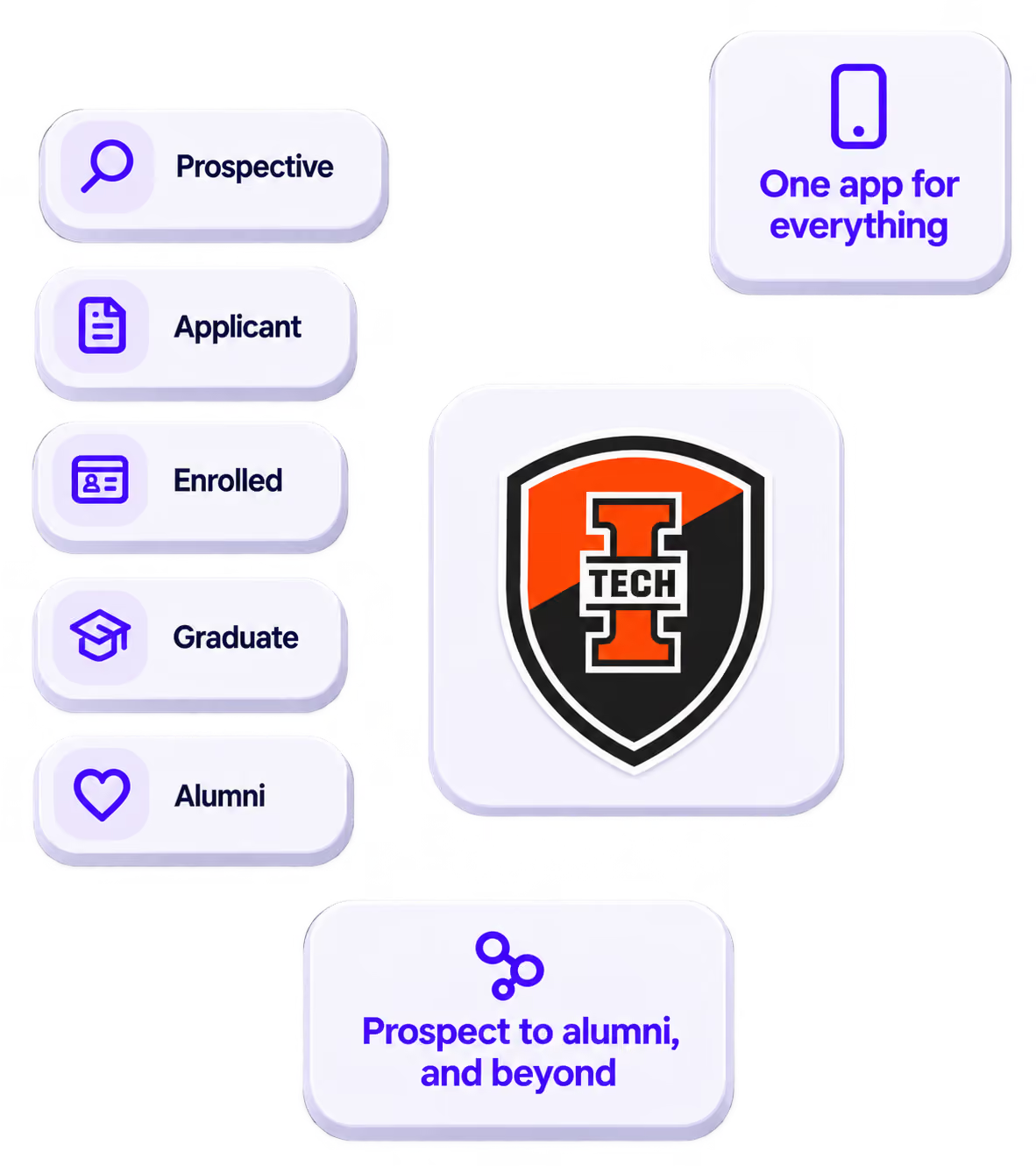
The power of your brand in your app, from first visit to alumni.
Build trust
Attendees download your app, not ours. Your name, colors, and crest in the stores.
.avif)
One place for the whole event
Schedules, maps, registration, and updates in one branded hub - not five tools.
Stand out
A branded app is what people keep on their phone after the printed program is in the recycling.

Get the Mobile App Playbook
A short guide to running the whole student journey in one app. No fluff, just what works.
for higher ed
Campus
Playbook
A practical guide to building a connected campus experience.
Free playbook
The Mobile App Playbook for Universities
Students decide if they belong long before they set foot on campus. This playbook shows how to win them over from the first visit through graduation.
- Grow enrollment and boost recruitment
- Increase belonging and retention
- Run every event from one branded app
By submitting, you agree to our Privacy Policy.
You're in.
.png)