
Campus apps by department
Admissions, orientation, student life, and more — one campus app that works across departments.

Campus apps by department
Admissions, orientation, student life, and more — one campus app that works across departments.
Build unlimited event apps on one license
One partnership for unlimited campus events — orientation, tours, student life, and everything in between.
Build unlimited event apps on one license
One partnership for unlimited campus events — orientation, tours, student life, and everything in between.
Compare event app platforms
See how Guidebook stacks up against other event app and registration platforms.
Compare event app platforms
See how Guidebook stacks up against other event app and registration platforms.
Event apps for nonprofit and community programs
Give members, volunteers, and donors one branded app for conferences, fundraisers, and year-round community.
Event apps for nonprofit and community programs
Give members, volunteers, and donors one branded app for conferences, fundraisers, and year-round community.
Campus integrations and an open API
Connect Guidebook with the campus systems, APIs, and tools your team already uses.
Campus integrations and an open API
Connect Guidebook with the campus systems, APIs, and tools your team already uses.
Event apps for corporate and enterprise teams
Internal meetings, offsites, and large-scale corporate events — with the branding and control enterprise teams need.
Event apps for corporate and enterprise teams
Internal meetings, offsites, and large-scale corporate events — with the branding and control enterprise teams need.
Create a branded event app with no coding
Put schedules, maps, resources, and updates in every attendee's pocket — built for campus events and programs.
Create a branded event app with no coding
Put schedules, maps, resources, and updates in every attendee's pocket — built for campus events and programs.
Launch a branded, white-label event app
A white-label event app with your branding, your content, and your attendee experience — no coding required.
Launch a branded, white-label event app
A white-label event app with your branding, your content, and your attendee experience — no coding required.
Everything in the Guidebook platform
Explore the features event teams use to engage attendees before, during, and after the event.
Everything in the Guidebook platform
Explore the features event teams use to engage attendees before, during, and after the event.
One app for in-person and virtual attendees
The same schedule, networking, and updates whether people are in the room or joining remotely.
One app for in-person and virtual attendees
The same schedule, networking, and updates whether people are in the room or joining remotely.
Event apps built for associations
Annual meetings, chapter events, and member engagement — without rebuilding a new app every year.
Event apps built for associations
Annual meetings, chapter events, and member engagement — without rebuilding a new app every year.
A branded event website that matches the app
Promote the event, collect interest, and keep branding consistent from the first click to check-in.
A branded event website that matches the app
Promote the event, collect interest, and keep branding consistent from the first click to check-in.
Plan, run, and measure events on one platform
App, registration, badges, and websites in one workflow — so planning isn't a pile of disconnected tools.
Plan, run, and measure events on one platform
App, registration, badges, and websites in one workflow — so planning isn't a pile of disconnected tools.
Keep members engaged between events
One branded app for the conference and everything that happens the other 51 weeks of the year.
Keep members engaged between events
One branded app for the conference and everything that happens the other 51 weeks of the year.
The conference app attendees actually use
Schedules, maps, networking, and live updates for annual meetings, summits, and multi-day conferences.
The conference app attendees actually use
Schedules, maps, networking, and live updates for annual meetings, summits, and multi-day conferences.
Registration that feeds your app and badges
Collect registrations, payments, and attendee data in the same platform as your event app.
Registration that feeds your app and badges
Collect registrations, payments, and attendee data in the same platform as your event app.
Design and print event badges in one place
Custom badges, QR check-in, and on-site printing — without a separate badge vendor.
Design and print event badges in one place
Custom badges, QR check-in, and on-site printing — without a separate badge vendor.
A Smaller School?
Deliver a polished, branded event experience without a large team or a big budget.
A Smaller School?
Deliver a polished, branded event experience without a large team or a big budget.
Running Family Programs?
Give families everything they need, from schedules and maps to real-time updates, all in one place.
Running Family Programs?
Give families everything they need, from schedules and maps to real-time updates, all in one place.
Coordinating Move-In Day?
Share updates, manage events, and keep students informed from move-in through the academic year.

Coordinating Move-In Day?
Share updates, manage events, and keep students informed from move-in through the academic year.
Offering Campus Tours?
Deliver branded, self-guided tour experiences with interactive maps and rich media, available 24/7.

Offering Campus Tours?
Deliver branded, self-guided tour experiences with interactive maps and rich media, available 24/7.
Organising a Career Fair?
Simplify logistics for students, employers, and Career Services staff with one easy-to-use app.
Organising a Career Fair?
Simplify logistics for students, employers, and Career Services staff with one easy-to-use app.
Managing Alumni Events?
Plan reunions, regional events, and fundraising campaigns with an app built for alumni engagement.
Managing Alumni Events?
Plan reunions, regional events, and fundraising campaigns with an app built for alumni engagement.
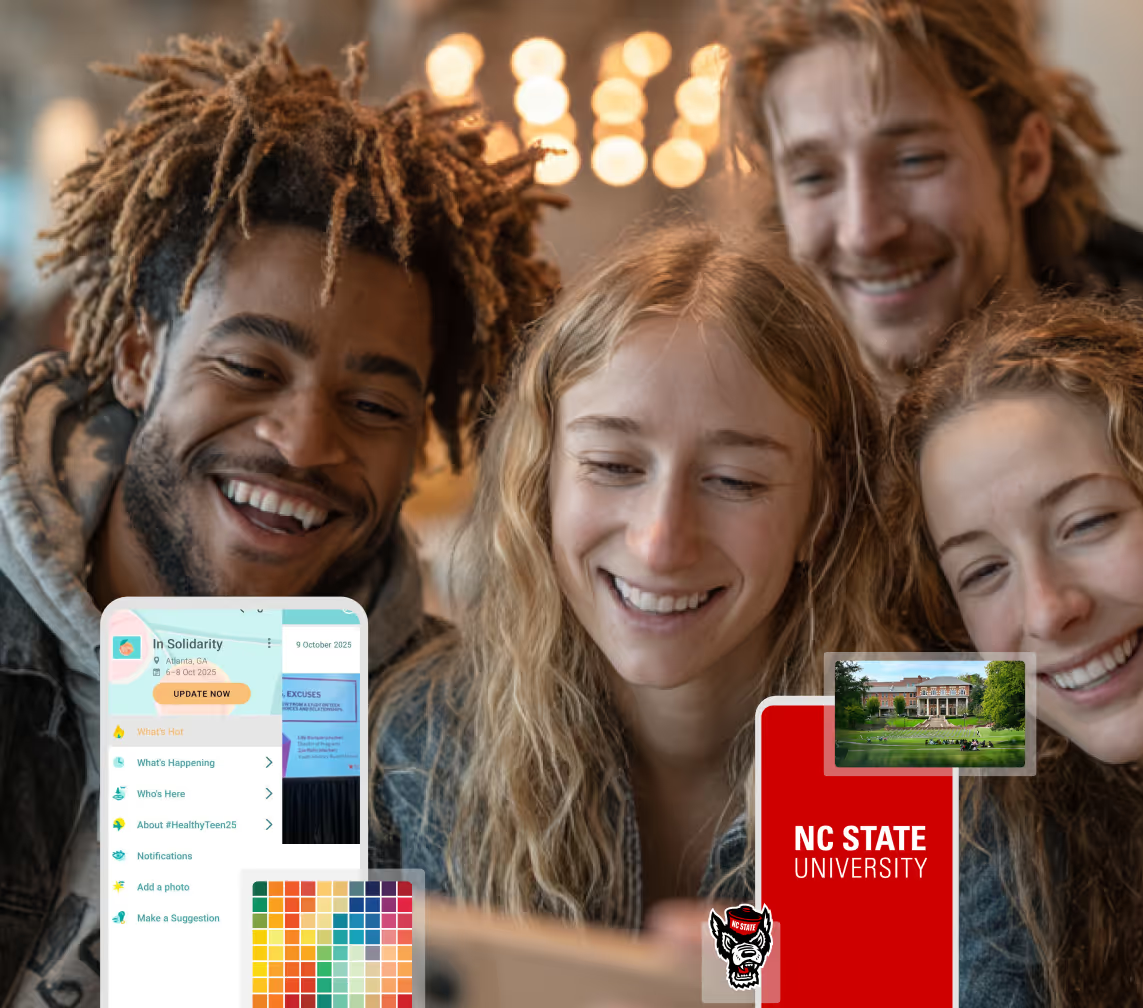
Boost Student Engagement
One hub for schedules, resources, and events that keeps students connected throughout the academic year.
Boost Student Engagement
One hub for schedules, resources, and events that keeps students connected throughout the academic year.
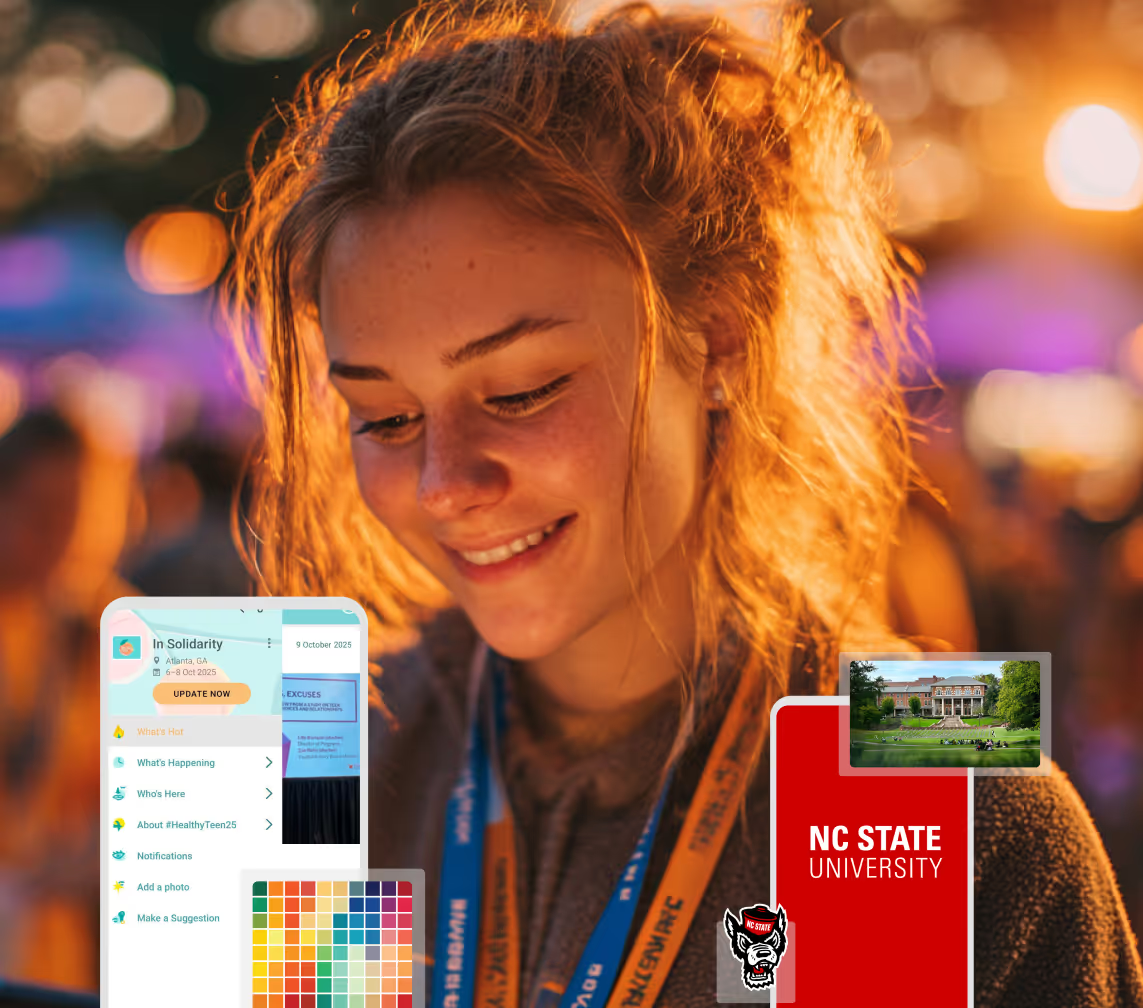
Planning Orientation?
Help new students feel prepared from day one with schedules, campus resources, and real-time updates in one app.
Planning Orientation?
Help new students feel prepared from day one with schedules, campus resources, and real-time updates in one app.
Running Admissions Events?
Manage open houses, tours, and yield events with a branded app that saves time and engages prospective students.

Running Admissions Events?
Manage open houses, tours, and yield events with a branded app that saves time and engages prospective students.
Get a custom Sponsorship Package Template
Stop starting from scratch. Grab free templates that helWe'll build a tailored sponsorship package with suggested pricing, tiers, and benefits..for your specific event.p you build professional sponsorship packages and close deals faster.
Get a custom Sponsorship Package Template
Stop starting from scratch. Grab free templates that helWe'll build a tailored sponsorship package with suggested pricing, tiers, and benefits..for your specific event.p you build professional sponsorship packages and close deals faster.
Plan Your Next Event Without Missing a Beat.
From venue selection to post-event wrap-up, this free checklist walks you through every step (so nothing falls through the cracks).
.avif)
Plan Your Next Event Without Missing a Beat.
From venue selection to post-event wrap-up, this free checklist walks you through every step (so nothing falls through the cracks).
Real Results From Real Events
100,000+ organizations trust Guidebook. See exactly how universities, associations, enterprises, and more put it to work.

Real Results From Real Events
100,000+ organizations trust Guidebook. See exactly how universities, associations, enterprises, and more put it to work.
Flexible pricing for every event size
Find the perfect plan for your needs, from intimate gatherings to large-scale conferences.
Flexible pricing for every event size
Find the perfect plan for your needs, from intimate gatherings to large-scale conferences.
Join our event experts
Watch on-demand webinars and join live sessions with industry leaders sharing best practices for event success.
.avif)
Join our event experts
Watch on-demand webinars and join live sessions with industry leaders sharing best practices for event success.
Guidebook in Action
Book a personalized walkthrough and discover how we help event teams create better attendee experiences.
Guidebook in Action
Book a personalized walkthrough and discover how we help event teams create better attendee experiences.

What is Hybrid Event Planning?
Hybrid event planning combines in-person and virtual experiences to maximize reach and engagement. Discover key benefits, planning tips, and technology solutions for successful hybrid events.

Hybrid Event Planning is the strategic process of designing and executing events that seamlessly blend in-person and virtual experiences for maximum audience reach and engagement. It combines traditional venue logistics with digital streaming, interactive tools, and dual-audience management. When done right, hybrid events deliver the best of both worlds—live energy plus global accessibility.
Here's the thing: hybrid isn't just "adding a livestream" to your conference. It's a fundamentally different approach to event design. You're creating two distinct experiences that feel equally valuable. Remote attendees shouldn't feel like second-class participants watching from the sidelines. They need their own engagement opportunities, networking options, and interactive moments.
Key Characteristics of Hybrid Event Planning
- Dual-Audience Design: Every element must work for both in-person and virtual attendees. This means rethinking everything from session formats to networking breaks.
- Technology Integration: Reliable streaming, event check-in software, and interactive platforms form the backbone of successful hybrid events.
- Synchronized Timing: Content delivery must account for different time zones while keeping both audiences engaged simultaneously.
- Parallel Engagement Strategies: In-person attendees might network over coffee. Virtual attendees need chat rooms, breakout sessions, or virtual lounges.
- Unified Branding: Whether someone's in the room or on their laptop, the event experience should feel cohesive and professionally produced.
- Flexible Content Delivery: Some sessions work better live. Others shine as on-demand recordings. Smart hybrid planning uses both. event ROI metrics.
Hybrid Event Planning vs. Related Event Types
Virtual Event Planning
- Scope: 100% online with no physical venue component
- Focus: Digital engagement, streaming quality, and online networking
- Timeline: Often shorter sessions to combat screen fatigue
- Channels: Single digital platform for all attendees
- Goal: Maximize reach without geographic limitations
In-Person Event Planning
- Scope: Traditional venue-based experiences only
- Focus: Physical logistics, catering, and face-to-face networking
- Timeline: Full-day or multi-day formats common
- Channels: On-site touchpoints and printed materials
- Goal: Create memorable, immersive experiences
Simulcast Events
- Scope: Live broadcast of in-person content to remote viewers
- Focus: One-way content delivery with limited interaction
- Timeline: Mirrors the in-person schedule exactly
- Channels: Streaming platform as passive viewing option
- Goal: Extend reach without full hybrid investment
The key difference? True virtual event planning and hybrid planning both prioritize engagement. Simulcasts just broadcast content. Hybrid events create two complete experiences that happen to run simultaneously.
Essential Components of Hybrid Event Planning
Choose the Right Technology Stack
Your tech choices make or break hybrid events. You'll need reliable streaming equipment, a robust platform, and backup systems for when things go wrong.
Start with these essentials:
- Professional-grade cameras and microphones
- Stable, high-bandwidth internet (plus a backup connection)
- Interactive platform with chat, polls, and Q&A features
- A branded mobile app for both audience segments
Design for Two Audiences Simultaneously
This is where most hybrid events fail. Planners focus on the in-room experience and treat virtual as an afterthought.
Instead, assign dedicated team members to each audience. Create engagement moments specifically for remote attendees. Consider having a virtual host who speaks directly to online participants.
Build Interactive Touchpoints
Passive watching kills engagement. Build in moments where both audiences can participate together.
Try these approaches:
- Live polls displayed on screens and in the virtual platform
- Q&A sessions that pull questions from both audiences
- Gamification elements that work across formats
- Shared social walls showing posts from all attendees
Plan Your Content Strategy
Not every session format works for hybrid. Keynotes translate well. Hands-on workshops? Much harder.
Consider which sessions should be:
- Fully hybrid (both audiences participate live)
- In-person only (with recordings available later)
- Virtual only (exclusive content for remote attendees)
- On-demand (pre-recorded and available anytime)
Create Networking Opportunities for Everyone
Networking is the biggest hybrid challenge. In-person attendees naturally connect during breaks. Virtual attendees need structured opportunities.
Solutions include virtual networking lounges, scheduled one-on-one video meetings, and hybrid roundtable discussions where remote participants join via screen.
The Hybrid Event Planning Process
Start with Clear Goals and Audience Analysis
Before booking venues or platforms, answer these questions:
- What percentage of attendees will be virtual vs. in-person?
- What's the primary goal for each audience segment?
- How will you measure success for both groups?
Your answers shape every decision that follows. A 70% virtual audience needs different planning than 70% in-person.
Budget for Two Events (Because That's What You're Running)
Hybrid events cost more than single-format events. You're essentially producing two experiences. Budget accordingly.
Key cost categories include:
- Venue and catering (in-person)
- Streaming equipment and technical crew
- Virtual platform licensing
- Additional staff for virtual audience management
- Post-event content editing and hosting
Build Your Production Timeline
Hybrid events need longer planning runways. You're coordinating physical logistics AND technical requirements.
Start planning 6-12 months out for large events. Schedule tech rehearsals at least one week before. Test everything twice—then test it again.
Rehearse with Both Audiences in Mind
Run full technical rehearsals that simulate the actual event. Have team members join virtually to test the remote experience. Check audio levels, camera angles, and platform functionality.
Common issues to catch during rehearsals:
- Audio feedback when speakers are near monitors
- Lighting that works for the room but washes out on camera
- Platform features that don't work as expected
- Timing issues between live and streamed content
Why Hybrid Event Planning Matters
For Event Success:
- Expanded Reach: Remove geographic barriers and welcome attendees from anywhere in the world.
- Increased Attendance: People who can't travel can still participate fully in your event.
- Weather-Proof Programming: Travel disruptions don't derail your event when virtual attendance is an option.
- Extended Content Life: Recorded sessions become valuable on-demand resources for months after the event.
- Richer Data Collection: Digital touchpoints provide detailed engagement metrics you can't get from in-person-only events.
For Business Objectives:
- Higher ROI Potential: More attendees without proportionally higher venue costs improves your return on investment.
- Sponsor Value: Offer sponsors exposure to both in-person and virtual audiences with creative sponsorship packages.
- Sustainability Goals: Reduced travel means lower carbon footprint—increasingly important for corporate events.
- Accessibility Compliance: Virtual options make events more accessible to people with disabilities or health concerns.
- Future-Proofing: Build skills and infrastructure that prepare your organization for whatever comes next.
Platforms like Guidebook's event management platform help planners deliver cohesive hybrid experiences. From event registration to real-time engagement, the right tools make hybrid planning manageable.
Hybrid Event Planning Best Practices
- Assign Dedicated Virtual Hosts: Don't make your main presenter manage chat and Q&A. Have someone focused entirely on the virtual audience experience.
- Over-Communicate with Remote Attendees: Virtual participants can't read the room. Send more updates, more reminders, and more context than you think necessary.
- Create Virtual-Only Perks: Exclusive content, early access to recordings, or virtual swag bags make remote attendance feel special—not second-best.
- Test Your Internet Redundancy: Have a backup internet connection ready. When your primary connection fails (and it might), you'll be grateful.
- Keep Sessions Shorter: Screen fatigue is real. Cap virtual sessions at 45-60 minutes with breaks built in.
- Use Professional Production Values: Laptop webcams and built-in mics won't cut it. Invest in quality audio and video equipment.
- Plan for Time Zones: If you have global attendees, consider session timing carefully. Offer on-demand options for those who can't attend live.
- Integrate Your Event Digital Marketing: Promote both attendance options equally. Don't treat virtual as the backup plan.
- Collect Feedback from Both Audiences: Use your event debrief template to gather insights from in-person AND virtual attendees separately.
- Document Everything for Next Time: Hybrid events have steep learning curves. Detailed documentation helps your team improve with each event.
Common Hybrid Event Planning Mistakes
Treating Virtual as an Afterthought: This is the most common mistake. Planners design a great in-person event, then "add streaming" at the last minute. Virtual attendees notice when they're not the priority. They disengage, leave negative feedback, and don't return.
Underestimating Technical Requirements: Hybrid events need serious technical infrastructure. Skimping on equipment, bandwidth, or technical staff leads to embarrassing failures. One streaming glitch can ruin months of planning.
Ignoring the Engagement Gap: In-person attendees naturally engage through body language, side conversations, and physical presence. Virtual attendees need intentional engagement opportunities. Without them, they'll multitask, tune out, or leave early.
Using the Wrong Session Formats: Some content works beautifully in hybrid format. Other content doesn't translate at all. Forcing every session into hybrid mode frustrates both audiences. Be strategic about what goes hybrid.
Forgetting About Networking: Conferences aren't just about content—they're about connections. Many hybrid events nail the sessions but completely ignore networking. Virtual attendees leave feeling isolated and disconnected.
Overwhelming Attendees with Platform Complexity: Too many tools, logins, and platforms confuse attendees. Keep your tech stack simple. One app, one platform, one clear path to engagement works better than a dozen disconnected tools.
Skipping Rehearsals: "We'll figure it out live" is a recipe for disaster. Technical rehearsals catch problems before they become public failures. Never skip them—no matter how experienced your team.
Final Thoughts
Hybrid event planning isn't going away. It's become a core competency for modern event professionals. The organizations that master it gain competitive advantages in reach, engagement, and flexibility.
The industry has moved past the "is hybrid worth it?" debate. Now the question is "how do we do hybrid well?" That requires investment in skills, technology, and mindset shifts. It means treating virtual attendees as first-class participants, not afterthoughts.
The best hybrid events feel seamless. Attendees don't think about the technology—they focus on the content, connections, and experience. That seamlessness takes serious planning, but the results speak for themselves: higher attendance, broader reach, and events that work for everyone.
Ready to level up your hybrid event strategy? Explore event management tips for practical guidance, check out current event trends shaping the industry, or dive into the event planning process for a comprehensive framework. Guidebook's event management platform helps planners create engaging hybrid experiences with branded apps, real-time updates, and powerful engagement tools. Book a demo to see how it works.
Because in 2026, the question isn't whether to go hybrid. It's how to make hybrid unforgettable.
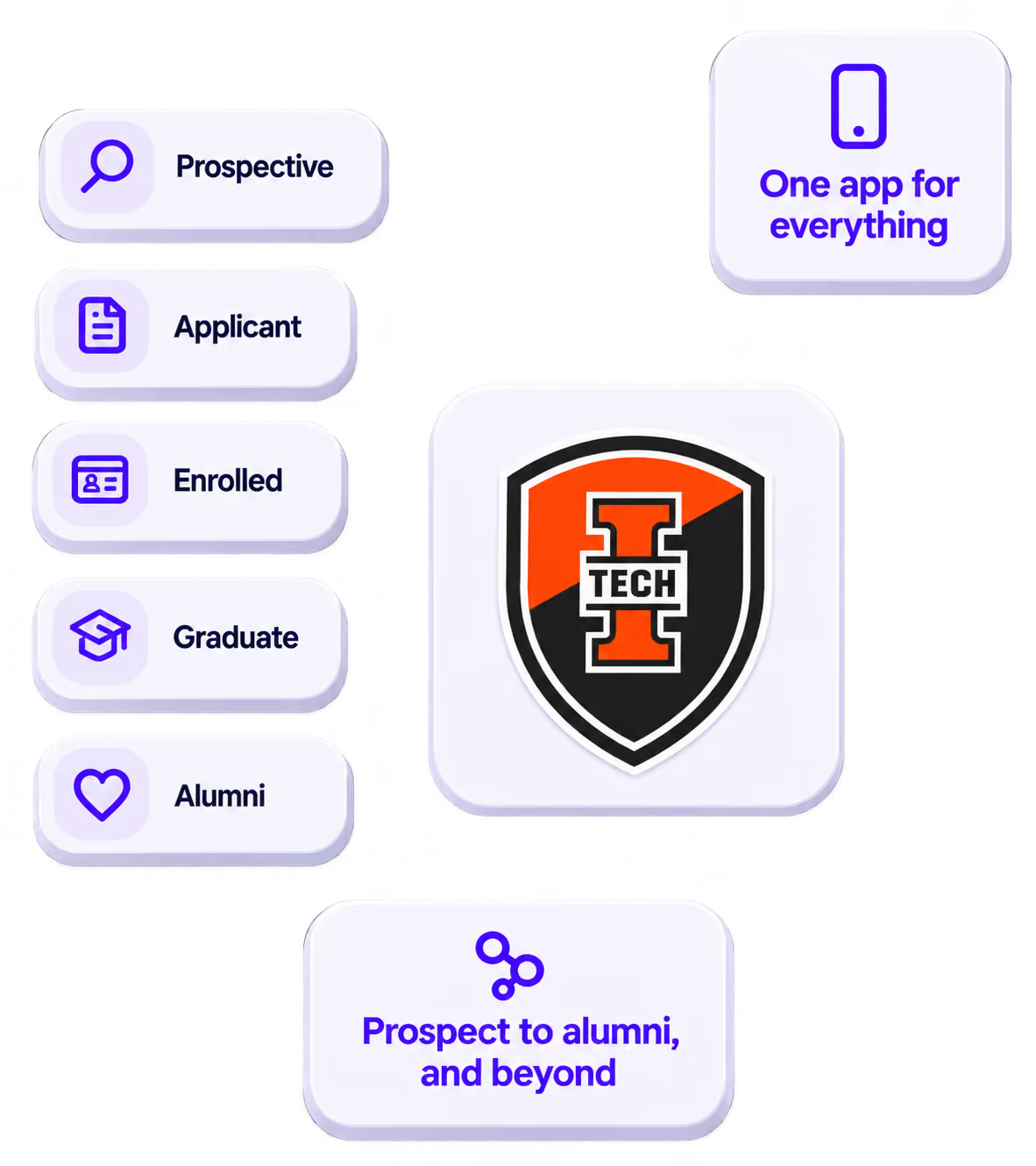
The power of your brand in your app, from first visit to alumni.
Build trust
Attendees download your app, not ours. Your name, colors, and crest in the stores.
.avif)
One place for the whole event
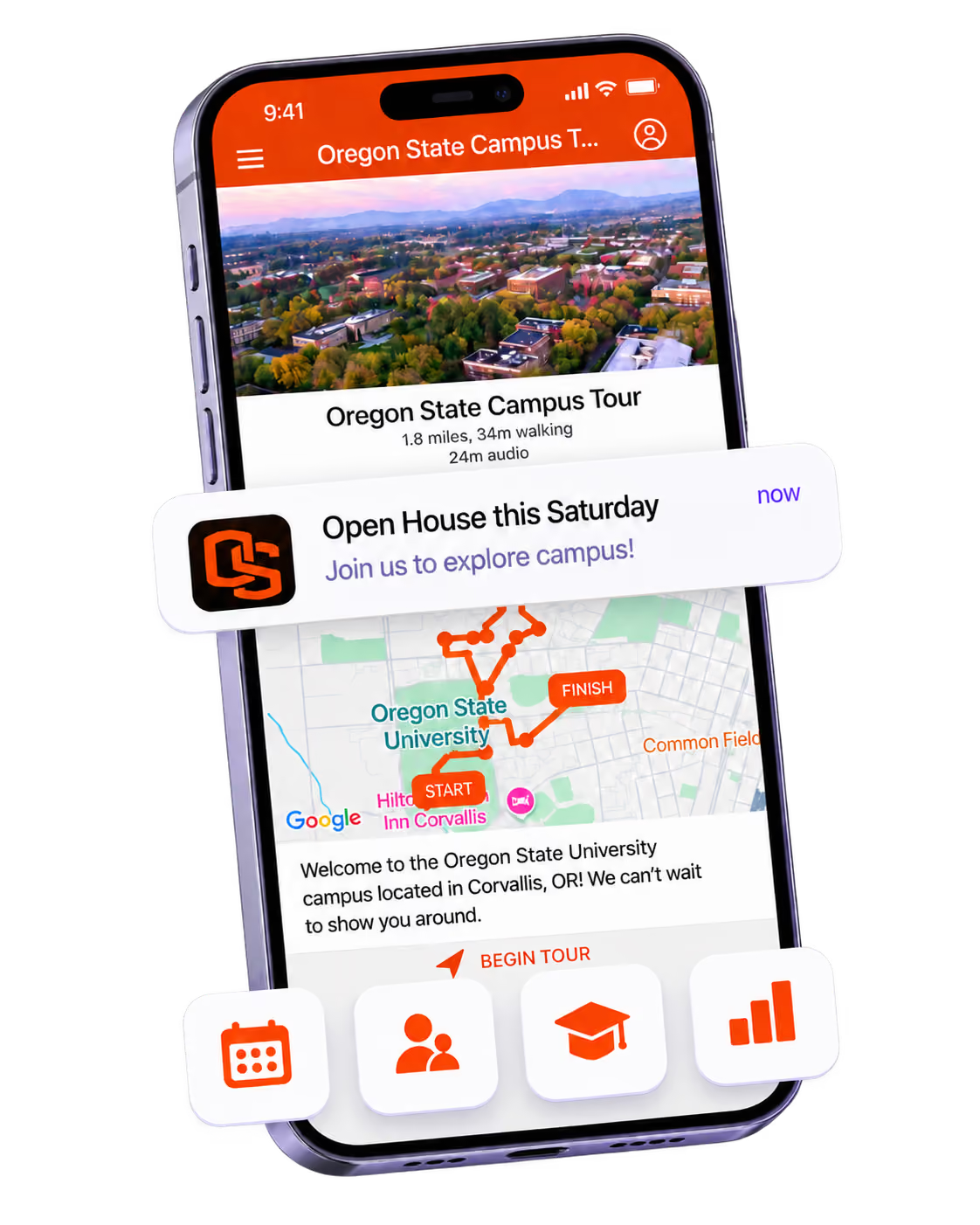
Schedules, maps, registration, and updates in one branded hub - not five tools.
Stand out
A branded app is what people keep on their phone after the printed program is in the recycling.

Get the Mobile App Playbook
A short guide to running the whole student journey in one app. No fluff, just what works.
for higher ed
Campus
Playbook
A practical guide to building a connected campus experience.
Free playbook
The Mobile App Playbook for Universities
Students decide if they belong long before they set foot on campus. This playbook shows how to win them over from the first visit through graduation.
- Grow enrollment and boost recruitment
- Increase belonging and retention
- Run every event from one branded app
By submitting, you agree to our Privacy Policy.
You're in.
.png)