
Campus apps by department
Admissions, orientation, student life, and more — one campus app that works across departments.

Campus apps by department
Admissions, orientation, student life, and more — one campus app that works across departments.
Build unlimited event apps on one license
One partnership for unlimited campus events — orientation, tours, student life, and everything in between.
Build unlimited event apps on one license
One partnership for unlimited campus events — orientation, tours, student life, and everything in between.
Compare event app platforms
See how Guidebook stacks up against other event app and registration platforms.
Compare event app platforms
See how Guidebook stacks up against other event app and registration platforms.
Event apps for nonprofit and community programs
Give members, volunteers, and donors one branded app for conferences, fundraisers, and year-round community.
Event apps for nonprofit and community programs
Give members, volunteers, and donors one branded app for conferences, fundraisers, and year-round community.
Campus integrations and an open API
Connect Guidebook with the campus systems, APIs, and tools your team already uses.
Campus integrations and an open API
Connect Guidebook with the campus systems, APIs, and tools your team already uses.
Event apps for corporate and enterprise teams
Internal meetings, offsites, and large-scale corporate events — with the branding and control enterprise teams need.
Event apps for corporate and enterprise teams
Internal meetings, offsites, and large-scale corporate events — with the branding and control enterprise teams need.
Create a branded event app with no coding
Put schedules, maps, resources, and updates in every attendee's pocket — built for campus events and programs.
Create a branded event app with no coding
Put schedules, maps, resources, and updates in every attendee's pocket — built for campus events and programs.
Launch a branded, white-label event app
A white-label event app with your branding, your content, and your attendee experience — no coding required.
Launch a branded, white-label event app
A white-label event app with your branding, your content, and your attendee experience — no coding required.
Everything in the Guidebook platform
Explore the features event teams use to engage attendees before, during, and after the event.
Everything in the Guidebook platform
Explore the features event teams use to engage attendees before, during, and after the event.
One app for in-person and virtual attendees
The same schedule, networking, and updates whether people are in the room or joining remotely.
One app for in-person and virtual attendees
The same schedule, networking, and updates whether people are in the room or joining remotely.
Event apps built for associations
Annual meetings, chapter events, and member engagement — without rebuilding a new app every year.
Event apps built for associations
Annual meetings, chapter events, and member engagement — without rebuilding a new app every year.
A branded event website that matches the app
Promote the event, collect interest, and keep branding consistent from the first click to check-in.
A branded event website that matches the app
Promote the event, collect interest, and keep branding consistent from the first click to check-in.
Plan, run, and measure events on one platform
App, registration, badges, and websites in one workflow — so planning isn't a pile of disconnected tools.
Plan, run, and measure events on one platform
App, registration, badges, and websites in one workflow — so planning isn't a pile of disconnected tools.
Keep members engaged between events
One branded app for the conference and everything that happens the other 51 weeks of the year.
Keep members engaged between events
One branded app for the conference and everything that happens the other 51 weeks of the year.
The conference app attendees actually use
Schedules, maps, networking, and live updates for annual meetings, summits, and multi-day conferences.
The conference app attendees actually use
Schedules, maps, networking, and live updates for annual meetings, summits, and multi-day conferences.
Registration that feeds your app and badges
Collect registrations, payments, and attendee data in the same platform as your event app.
Registration that feeds your app and badges
Collect registrations, payments, and attendee data in the same platform as your event app.
Design and print event badges in one place
Custom badges, QR check-in, and on-site printing — without a separate badge vendor.
Design and print event badges in one place
Custom badges, QR check-in, and on-site printing — without a separate badge vendor.
A Smaller School?
Deliver a polished, branded event experience without a large team or a big budget.
A Smaller School?
Deliver a polished, branded event experience without a large team or a big budget.
Running Family Programs?
Give families everything they need, from schedules and maps to real-time updates, all in one place.
Running Family Programs?
Give families everything they need, from schedules and maps to real-time updates, all in one place.
Coordinating Move-In Day?
Share updates, manage events, and keep students informed from move-in through the academic year.

Coordinating Move-In Day?
Share updates, manage events, and keep students informed from move-in through the academic year.
Offering Campus Tours?
Deliver branded, self-guided tour experiences with interactive maps and rich media, available 24/7.

Offering Campus Tours?
Deliver branded, self-guided tour experiences with interactive maps and rich media, available 24/7.
Organising a Career Fair?
Simplify logistics for students, employers, and Career Services staff with one easy-to-use app.
Organising a Career Fair?
Simplify logistics for students, employers, and Career Services staff with one easy-to-use app.
Managing Alumni Events?
Plan reunions, regional events, and fundraising campaigns with an app built for alumni engagement.
Managing Alumni Events?
Plan reunions, regional events, and fundraising campaigns with an app built for alumni engagement.
Boost Student Engagement
One hub for schedules, resources, and events that keeps students connected throughout the academic year.
Boost Student Engagement
One hub for schedules, resources, and events that keeps students connected throughout the academic year.
Planning Orientation?
Help new students feel prepared from day one with schedules, campus resources, and real-time updates in one app.
Planning Orientation?
Help new students feel prepared from day one with schedules, campus resources, and real-time updates in one app.
Running Admissions Events?
Manage open houses, tours, and yield events with a branded app that saves time and engages prospective students.

Running Admissions Events?
Manage open houses, tours, and yield events with a branded app that saves time and engages prospective students.
Get a custom Sponsorship Package Template
Stop starting from scratch. Grab free templates that helWe'll build a tailored sponsorship package with suggested pricing, tiers, and benefits..for your specific event.p you build professional sponsorship packages and close deals faster.
Get a custom Sponsorship Package Template
Stop starting from scratch. Grab free templates that helWe'll build a tailored sponsorship package with suggested pricing, tiers, and benefits..for your specific event.p you build professional sponsorship packages and close deals faster.
Plan Your Next Event Without Missing a Beat.
From venue selection to post-event wrap-up, this free checklist walks you through every step (so nothing falls through the cracks).
.avif)
Plan Your Next Event Without Missing a Beat.
From venue selection to post-event wrap-up, this free checklist walks you through every step (so nothing falls through the cracks).
Real Results From Real Events
100,000+ organizations trust Guidebook. See exactly how universities, associations, enterprises, and more put it to work.

Real Results From Real Events
100,000+ organizations trust Guidebook. See exactly how universities, associations, enterprises, and more put it to work.
Flexible pricing for every event size
Find the perfect plan for your needs, from intimate gatherings to large-scale conferences.
Flexible pricing for every event size
Find the perfect plan for your needs, from intimate gatherings to large-scale conferences.
Join our event experts
Watch on-demand webinars and join live sessions with industry leaders sharing best practices for event success.
.avif)
Join our event experts
Watch on-demand webinars and join live sessions with industry leaders sharing best practices for event success.
Guidebook in Action
Book a personalized walkthrough and discover how we help event teams create better attendee experiences.
Guidebook in Action
Book a personalized walkthrough and discover how we help event teams create better attendee experiences.

What is Exhibiting at Trade Shows?
Exhibiting at trade shows boosts brand visibility and connects you with potential clients. Discover key benefits, booth strategies, and tips for maximizing your trade show ROI.

Exhibiting at trade shows is the strategic practice of showcasing your brand, products, or services at industry events to generate leads, build relationships, and boost visibility. It combines face-to-face marketing with immersive brand experiences. Done right, trade show exhibiting delivers ROI that digital marketing alone can't match.
Here's the thing: exhibiting isn't just about showing up with a booth. It's about creating memorable moments that turn strangers into prospects and prospects into customers. The companies that win at trade shows plan months ahead, train their teams, and follow up fast. Those that don't? They waste thousands on forgettable experiences.
Key Characteristics of Exhibiting at Trade Shows
- Face-to-Face Engagement: Unlike digital marketing, trade shows let you shake hands, read body language, and build trust in real time. Nothing beats human connection.
- Targeted Audience Access: Attendees come pre-qualified. They're already interested in your industry, saving you the work of finding them.
- Multi-Sensory Brand Experience: Visitors can see, touch, and interact with your products. This creates stronger memories than any ad campaign.
- Competitive Intelligence: You'll see what competitors are doing, how they're positioning themselves, and what's resonating with attendees.
- Concentrated Networking: Trade shows pack months of relationship-building into a few days. You'll meet partners, suppliers, and customers all in one place.
- Immediate Feedback Loop: Watch reactions to your pitch in real time. Adjust your messaging on the spot based on what works.
- Content Generation Opportunity: Capture photos, videos, testimonials, and demos you can use in event digital marketing for months afterward.
Exhibiting at Trade Shows vs. Related Marketing Activities
Trade Show Sponsorship
- Scope: Brand visibility through signage, programs, and event materials without a physical booth presence
- Focus: Awareness and brand association with the event itself
- Timeline: Passive exposure throughout the event duration
- Channels: Printed materials, digital displays, announcements, and branded items
- Goal: Build brand recognition and goodwill without direct sales conversations
Trade Show Attendance
- Scope: Walking the floor as a visitor to learn, network, and scout opportunities
- Focus: Research, education, and informal relationship building
- Timeline: Limited to event hours with no setup or teardown
- Channels: One-on-one conversations, session attendance, and observation
- Goal: Gather intelligence and make connections without the investment of a booth
Conference Speaking
- Scope: Presenting expertise on stage to establish thought leadership
- Focus: Education and credibility building through content delivery
- Timeline: Concentrated impact during your session with extended influence
- Channels: Keynotes, panels, workshops, and breakout sessions
- Goal: Position your brand as an industry authority and attract inbound interest
Each approach serves different goals. Smart companies often combine exhibiting with sponsorship and speaking to maximize their trade show investment. The key is matching your strategy to your objectives and budget.
Essential Components of a Successful Trade Show Exhibit
Design a Booth That Stops Traffic
Your booth has three seconds to grab attention. Make them count. Use bold visuals, clear messaging, and open layouts that invite people in.
Avoid cluttered displays that overwhelm visitors. Instead, focus on one hero product or message. Height matters too—taller elements draw eyes from across the floor.
Create Interactive Experiences
Static displays don't cut it anymore. Today's attendees expect engagement. Consider these options:
- Product demos they can try themselves
- Touch screens with interactive content
- Games or contests with prizes
- VR or AR experiences
- Live presentations on a schedule
Learn more about creating an interactive trade show booth that drives engagement.
Staff Your Booth Strategically
Your team makes or breaks your exhibit. Choose people who are friendly, knowledgeable, and energetic. Train them on your goals, key messages, and lead capture process.
Rotate staff to prevent burnout. Standing for eight hours kills enthusiasm. Fresh faces mean better conversations.
Prepare Your Lead Capture System
Don't rely on business cards in a fishbowl. Use digital tools to capture leads with notes about each conversation. This makes follow-up faster and more personal.
Event check-in software can streamline this process and integrate with your CRM.
Plan Your Pre-Show Marketing
The best exhibitors start marketing weeks before the event. They:
- Email existing contacts about their booth location
- Schedule meetings with key prospects in advance
- Promote their presence on social media
- Offer incentives for visiting their booth
- Coordinate with event advertising strategies
The Trade Show Exhibiting Timeline
Three to Six Months Before: Strategic Planning
Start by defining clear goals. Are you launching a product? Generating leads? Building brand awareness? Your objectives shape every decision that follows.
Book your booth space early. Prime locations go fast. Corner booths and spots near entrances cost more but deliver better traffic.
One to Three Months Before: Preparation Phase
This is when the real work happens:
- Finalize booth design and order materials
- Create promotional content and giveaways
- Train your booth staff on messaging and goals
- Set up meetings with prospects and partners
- Coordinate travel and accommodations
- Review event management tips for smooth execution
One Week Before: Final Preparations
Confirm all logistics. Double-check shipping, hotel reservations, and staff schedules. Run through your pitch one more time. Pack backup supplies for everything that could go wrong.
During the Show: Execution Mode
Arrive early for setup. Test all technology before doors open. Hold brief team huddles each morning to review goals and share what's working.
Document everything. Take photos, record testimonials, and note competitor activities. This content fuels your post-show marketing.
Post-Show: Follow-Up Sprint
Speed matters. Contact hot leads within 48 hours while your conversation is fresh. Use an event debrief template to capture lessons learned.
Why Exhibiting at Trade Shows Matters
For Event Success:
- Qualified Lead Generation: Trade shows deliver prospects who are actively looking for solutions like yours
- Shortened Sales Cycles: Face-to-face meetings build trust faster than months of emails and calls
- Product Launch Platform: New offerings get immediate feedback from your target market
- Media Exposure: Industry press covers trade shows, giving exhibitors earned media opportunities
- Partnership Development: Meet potential partners, distributors, and collaborators in one place
For Business Objectives:
- Brand Positioning: Your booth presence signals that you're a serious player in your industry
- Competitive Differentiation: Stand out by showing what makes you different, not just telling
- Customer Retention: Existing customers appreciate face time and exclusive previews
- Market Research: Learn what prospects want directly from their questions and reactions
- Team Development: Trade shows sharpen your team's pitch and product knowledge
Measuring event ROI helps you prove the value of your trade show investment. Guidebook's event management platform helps exhibitors track engagement and capture leads efficiently.
Exhibiting at Trade Shows Best Practices
- Set Specific, Measurable Goals: "Generate 50 qualified leads" beats "raise awareness." Numbers keep your team focused and make success clear.
- Research the Attendee List: Most shows share attendee data. Identify your top targets and reach out before the event to schedule meetings.
- Create a Compelling Booth Hook: Give people a reason to stop. Whether it's a demo, a game, or a giveaway, make your booth impossible to walk past.
- Train Your Team on Qualifying Questions: Not every visitor is a prospect. Teach staff to quickly identify decision-makers and serious buyers.
- Use Technology to Capture Leads: Badge scanners, apps, and tablets beat paper forms. They're faster and feed directly into your follow-up system.
- Schedule Staff Breaks: Tired teams give weak pitches. Build in regular breaks so everyone stays sharp and enthusiastic.
- Follow Up Within 48 Hours: Most exhibitors wait too long. Be the company that responds fast with personalized messages.
- Leverage Social Media During the Event: Post live updates, behind-the-scenes content, and attendee photos. Tag the event and use official hashtags.
- Collect Testimonials On-Site: Happy customers at your booth? Ask for a quick video testimonial while their enthusiasm is high.
- Debrief Immediately After: Gather your team while memories are fresh. Document what worked, what didn't, and what to change next time.
Common Exhibiting at Trade Shows Mistakes
Waiting Until the Last Minute: Rushed planning leads to forgotten materials, untrained staff, and missed opportunities. Start early and build in buffer time for surprises.
Ignoring Pre-Show Marketing: Showing up without telling anyone is like throwing a party without invitations. Your best prospects won't find you by accident.
Staffing the Booth with the Wrong People: Technical experts who hate small talk won't generate leads. Choose team members who are personable, curious, and good listeners.
Talking Too Much, Listening Too Little: Visitors don't want a monologue. Ask questions, understand their challenges, then show how you can help.
Failing to Qualify Leads: Treating every badge scan as a hot lead wastes your sales team's time. Capture notes about each conversation to prioritize follow-up.
Slow or Generic Follow-Up: "Thanks for visiting our booth" emails get deleted. Reference your specific conversation and offer clear next steps.
Not Measuring Results: Without tracking, you can't prove ROI or improve next time. Set up systems to measure leads, meetings, and closed deals from each show.
Final Thoughts
Exhibiting at trade shows remains one of the most powerful ways to grow your business. In a world of digital noise, face-to-face connections cut through. The handshake, the demo, the real conversation—these create relationships that emails never will.
The trade show industry continues to evolve. Hybrid events, digital lead capture, and interactive technology are changing how exhibitors engage. But the fundamentals stay the same: know your audience, prepare thoroughly, and follow up fast.
Think of your next trade show as an investment, not an expense. Every dollar spent on booth design, staff training, and pre-show marketing should drive measurable results. The companies that approach exhibiting strategically consistently outperform those that wing it.
Ready to make your next trade show your best one yet? Explore event planning resources, check out sponsorship package examples, and discover how Guidebook's platform can help you capture leads and engage attendees. Your booth is waiting—make it unforgettable.
The power of your brand in your app, from first visit to alumni.
Build trust
Attendees download your app, not ours. Your name, colors, and crest in the stores.
.avif)
One place for the whole event
Schedules, maps, registration, and updates in one branded hub - not five tools.
Stand out
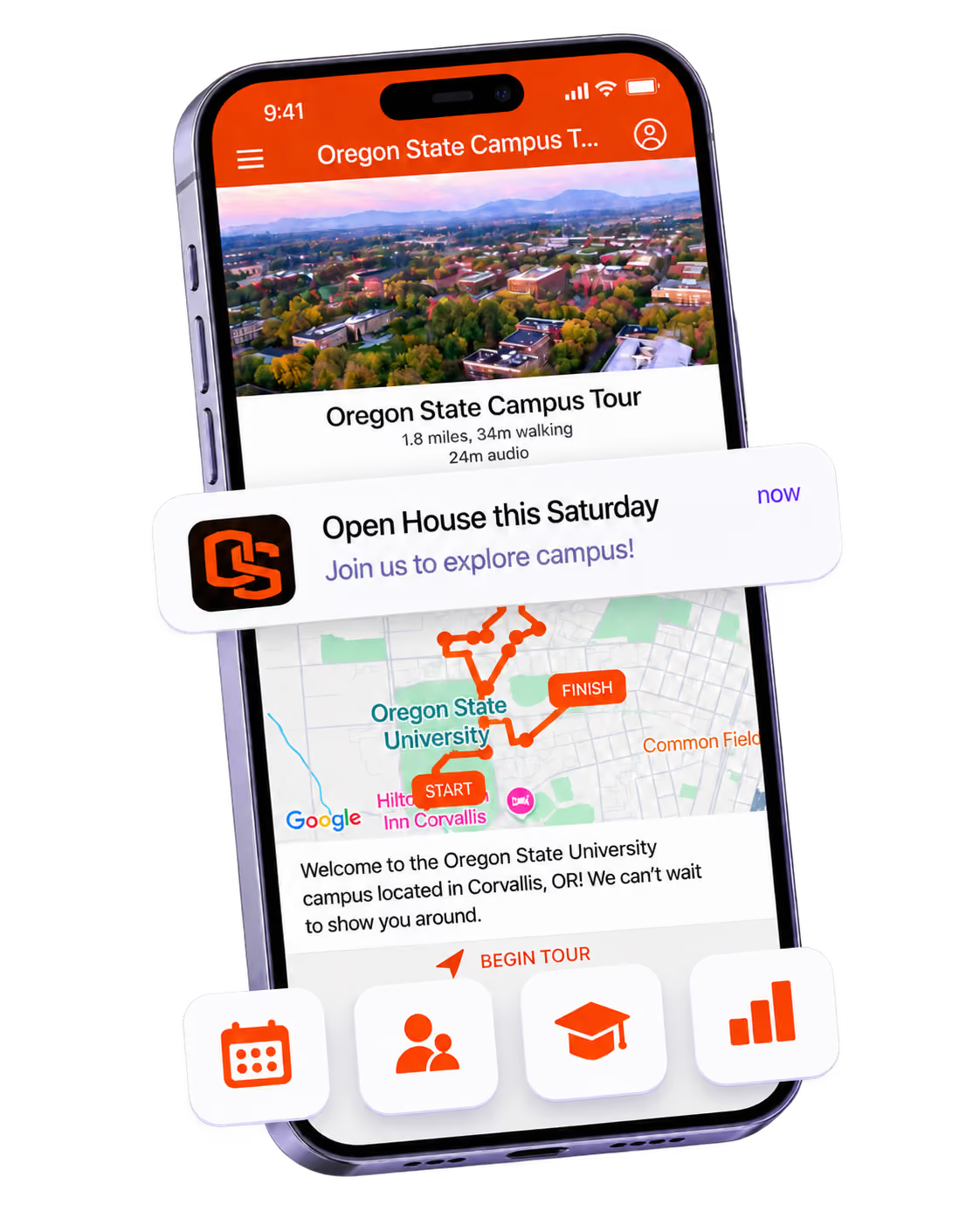
A branded app is what people keep on their phone after the printed program is in the recycling.

Get the Mobile App Playbook
A short guide to running the whole student journey in one app. No fluff, just what works.
for higher ed
Campus
Playbook
A practical guide to building a connected campus experience.
Free playbook
The Mobile App Playbook for Universities
Students decide if they belong long before they set foot on campus. This playbook shows how to win them over from the first visit through graduation.
- Grow enrollment and boost recruitment
- Increase belonging and retention
- Run every event from one branded app
By submitting, you agree to our Privacy Policy.
You're in.
.png)