
Campus apps by department
Admissions, orientation, student life, and more — one campus app that works across departments.

Campus apps by department
Admissions, orientation, student life, and more — one campus app that works across departments.
Build unlimited event apps on one license
One partnership for unlimited campus events — orientation, tours, student life, and everything in between.
Build unlimited event apps on one license
One partnership for unlimited campus events — orientation, tours, student life, and everything in between.
Compare event app platforms
See how Guidebook stacks up against other event app and registration platforms.
Compare event app platforms
See how Guidebook stacks up against other event app and registration platforms.
Event apps for nonprofit and community programs
Give members, volunteers, and donors one branded app for conferences, fundraisers, and year-round community.
Event apps for nonprofit and community programs
Give members, volunteers, and donors one branded app for conferences, fundraisers, and year-round community.
Campus integrations and an open API
Connect Guidebook with the campus systems, APIs, and tools your team already uses.
Campus integrations and an open API
Connect Guidebook with the campus systems, APIs, and tools your team already uses.
Event apps for corporate and enterprise teams
Internal meetings, offsites, and large-scale corporate events — with the branding and control enterprise teams need.
Event apps for corporate and enterprise teams
Internal meetings, offsites, and large-scale corporate events — with the branding and control enterprise teams need.
Create a branded event app with no coding
Put schedules, maps, resources, and updates in every attendee's pocket — built for campus events and programs.
Create a branded event app with no coding
Put schedules, maps, resources, and updates in every attendee's pocket — built for campus events and programs.
Launch a branded, white-label event app
A white-label event app with your branding, your content, and your attendee experience — no coding required.
Launch a branded, white-label event app
A white-label event app with your branding, your content, and your attendee experience — no coding required.
Everything in the Guidebook platform
Explore the features event teams use to engage attendees before, during, and after the event.
Everything in the Guidebook platform
Explore the features event teams use to engage attendees before, during, and after the event.
One app for in-person and virtual attendees
The same schedule, networking, and updates whether people are in the room or joining remotely.
One app for in-person and virtual attendees
The same schedule, networking, and updates whether people are in the room or joining remotely.
Event apps built for associations
Annual meetings, chapter events, and member engagement — without rebuilding a new app every year.
Event apps built for associations
Annual meetings, chapter events, and member engagement — without rebuilding a new app every year.
A branded event website that matches the app
Promote the event, collect interest, and keep branding consistent from the first click to check-in.
A branded event website that matches the app
Promote the event, collect interest, and keep branding consistent from the first click to check-in.
Plan, run, and measure events on one platform
App, registration, badges, and websites in one workflow — so planning isn't a pile of disconnected tools.
Plan, run, and measure events on one platform
App, registration, badges, and websites in one workflow — so planning isn't a pile of disconnected tools.
Keep members engaged between events
One branded app for the conference and everything that happens the other 51 weeks of the year.
Keep members engaged between events
One branded app for the conference and everything that happens the other 51 weeks of the year.
The conference app attendees actually use
Schedules, maps, networking, and live updates for annual meetings, summits, and multi-day conferences.
The conference app attendees actually use
Schedules, maps, networking, and live updates for annual meetings, summits, and multi-day conferences.
Registration that feeds your app and badges
Collect registrations, payments, and attendee data in the same platform as your event app.
Registration that feeds your app and badges
Collect registrations, payments, and attendee data in the same platform as your event app.
Design and print event badges in one place
Custom badges, QR check-in, and on-site printing — without a separate badge vendor.
Design and print event badges in one place
Custom badges, QR check-in, and on-site printing — without a separate badge vendor.
A Smaller School?
Deliver a polished, branded event experience without a large team or a big budget.

A Smaller School?
Deliver a polished, branded event experience without a large team or a big budget.
Running Family Programs?
Give families everything they need, from schedules and maps to real-time updates, all in one place.
Running Family Programs?
Give families everything they need, from schedules and maps to real-time updates, all in one place.
Coordinating Move-In Day?
Share updates, manage events, and keep students informed from move-in through the academic year.

Coordinating Move-In Day?
Share updates, manage events, and keep students informed from move-in through the academic year.
Offering Campus Tours?
Deliver branded, self-guided tour experiences with interactive maps and rich media, available 24/7.

Offering Campus Tours?
Deliver branded, self-guided tour experiences with interactive maps and rich media, available 24/7.
Organising a Career Fair?
Simplify logistics for students, employers, and Career Services staff with one easy-to-use app.
Organising a Career Fair?
Simplify logistics for students, employers, and Career Services staff with one easy-to-use app.
Managing Alumni Events?
Plan reunions, regional events, and fundraising campaigns with an app built for alumni engagement.
Managing Alumni Events?
Plan reunions, regional events, and fundraising campaigns with an app built for alumni engagement.
Boost Student Engagement
One hub for schedules, resources, and events that keeps students connected throughout the academic year.
Boost Student Engagement
One hub for schedules, resources, and events that keeps students connected throughout the academic year.
Planning Orientation?
Help new students feel prepared from day one with schedules, campus resources, and real-time updates in one app.

Planning Orientation?
Help new students feel prepared from day one with schedules, campus resources, and real-time updates in one app.
Running Admissions Events?
Manage open houses, tours, and yield events with a branded app that saves time and engages prospective students.

Running Admissions Events?
Manage open houses, tours, and yield events with a branded app that saves time and engages prospective students.
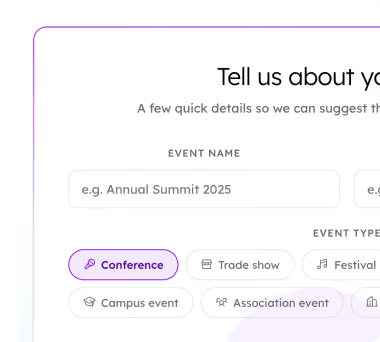
Get a custom Sponsorship Package Template
Stop starting from scratch. Grab free templates that helWe'll build a tailored sponsorship package with suggested pricing, tiers, and benefits..for your specific event.p you build professional sponsorship packages and close deals faster.
Get a custom Sponsorship Package Template
Stop starting from scratch. Grab free templates that helWe'll build a tailored sponsorship package with suggested pricing, tiers, and benefits..for your specific event.p you build professional sponsorship packages and close deals faster.
Plan Your Next Event Without Missing a Beat.
From venue selection to post-event wrap-up, this free checklist walks you through every step (so nothing falls through the cracks).
.avif)
Plan Your Next Event Without Missing a Beat.
From venue selection to post-event wrap-up, this free checklist walks you through every step (so nothing falls through the cracks).
Real Results From Real Events
100,000+ organizations trust Guidebook. See exactly how universities, associations, enterprises, and more put it to work.

Real Results From Real Events
100,000+ organizations trust Guidebook. See exactly how universities, associations, enterprises, and more put it to work.
Flexible pricing for every event size
Find the perfect plan for your needs, from intimate gatherings to large-scale conferences.

Flexible pricing for every event size
Find the perfect plan for your needs, from intimate gatherings to large-scale conferences.
Join our event experts
Watch on-demand webinars and join live sessions with industry leaders sharing best practices for event success.
.avif)
Join our event experts
Watch on-demand webinars and join live sessions with industry leaders sharing best practices for event success.
Guidebook in Action
Book a personalized walkthrough and discover how we help event teams create better attendee experiences.
Guidebook in Action
Book a personalized walkthrough and discover how we help event teams create better attendee experiences.

What is a Debrief Meeting?
A debrief meeting reviews completed projects or events to assess outcomes, share insights, and identify improvements. Learn key steps, best practices, and effective debrief templates.

A Debrief Meeting is the structured post-event conversation where teams analyze what worked, what didn't, and what to improve for next time. It brings together key stakeholders to review outcomes against goals. Done right, a debrief meeting transforms raw experience into actionable insights that make your next event even better.
Here's the thing: A debrief meeting isn't just a casual chat about how things went. It's a focused session with a clear agenda, specific questions, and documented takeaways. Without it, you'll repeat the same mistakes. With it, you'll build on every success and fix every failure before your next event.
Key Characteristics of a Debrief Meeting
- Time-Bound Structure: Debrief meetings happen within 48-72 hours of an event while details are fresh. Waiting too long means losing valuable insights.
- Inclusive Participation: Everyone involved in the event attends—from event coordinators to volunteers. Different perspectives reveal blind spots.
- Data-Driven Discussion: Teams review actual metrics, not just feelings. Attendance numbers, survey scores, and event ROI guide the conversation.
- Blame-Free Environment: The goal is improvement, not finger-pointing. Honest feedback only happens when people feel safe sharing.
- Documented Outcomes: Every insight gets recorded. An event debrief template keeps discussions organized and actionable.
- Action-Oriented Focus: Debrief meetings end with specific next steps. Vague conclusions like "do better" don't count.
- Forward-Looking Mindset: While reviewing the past, the real purpose is improving future events.
Debrief Meeting vs. Related Meeting Types
Status Meeting
- Scope: Ongoing project updates during planning phases
- Focus: Current progress and immediate blockers
- Timeline: Happens regularly before and during events
- Participants: Core planning team only
- Goal: Keep projects on track in real-time
Post-Mortem Meeting
- Scope: Deep analysis of specific failures or incidents
- Focus: Root cause investigation of problems
- Timeline: Triggered by significant issues
- Participants: Technical and leadership teams
- Goal: Prevent specific problems from recurring
Retrospective Meeting
- Scope: Team process and collaboration review
- Focus: How the team worked together
- Timeline: End of project sprints or phases
- Participants: Internal team members
- Goal: Improve team dynamics and workflows
While these meeting types overlap, debrief meetings specifically focus on event outcomes and attendee experience. They're broader than post-mortems but more event-specific than retrospectives. Understanding meeting minutes helps you document any of these sessions effectively.
Essential Debrief Meeting Components
Set a Clear Agenda Before You Start
Every effective debrief needs structure. Without an agenda, conversations wander and key topics get missed.
Your agenda should include time blocks for each discussion area. Allocate 10-15 minutes per major topic. Share the agenda 24 hours before the meeting so participants can prepare their thoughts.
Gather Data and Feedback First
Don't walk into a debrief empty-handed. Collect attendee surveys, registration numbers, and social media mentions beforehand.
- Review event check-in software data for attendance patterns
- Pull engagement metrics from your event app
- Compile vendor and sponsor feedback
- Document any incidents or complaints
Include the Right People
Too many attendees slow things down. Too few miss critical perspectives. Aim for 6-10 participants maximum.
Include representatives from each major function: logistics, marketing, registration, and on-site operations. If you worked with external vendors, get their input too—even if they can't attend live.
Create Psychological Safety
People won't share honest feedback if they fear blame. Start by acknowledging that mistakes are learning opportunities.
Use phrases like "What can we improve?" instead of "What went wrong?" This subtle shift encourages openness. Leaders should model vulnerability by sharing their own missteps first.
Document Everything in Real-Time
Assign a dedicated note-taker. They shouldn't be the facilitator—running the meeting and capturing details is too much for one person.
Use a shared document everyone can see. This keeps the team aligned and prevents "I thought we agreed to something different" moments later.
The Debrief Meeting Process
Start with Wins and Celebrations
Begin on a positive note. Spend the first 10 minutes highlighting what worked well.
This isn't just feel-good fluff. Identifying successes helps you repeat them. Did your event digital marketing drive record registrations? Document exactly what you did so you can do it again.
Review Goals Against Outcomes
Pull out your original event objectives. Compare them to actual results.
- Did you hit your attendance target?
- How did satisfaction scores compare to benchmarks?
- Were sponsors happy with their exposure?
- Did you stay within budget?
Numbers tell the story. If you aimed for 500 attendees and got 450, that's a 10% gap worth discussing.
Identify Challenges and Root Causes
Now dig into problems. But don't stop at surface-level issues.
If registration was chaotic, ask why. Was it understaffing? Poor signage? Technology failures? Keep asking "why" until you reach the root cause. That's where real solutions live.
Brainstorm Solutions Together
Once you've identified problems, generate fixes as a team. The people closest to the work often have the best ideas.
Don't judge ideas during brainstorming. Write everything down first. Then prioritize based on impact and feasibility. Some solutions are quick wins. Others need more event planning resources.
Assign Owners and Deadlines
Every action item needs a name and a date. "We should improve check-in" means nothing. "Sarah will research new check-in solutions by March 15" means something.
Without clear ownership, good intentions fade. Follow up in your next planning meeting to ensure progress.
Why Debrief Meetings Matter
For Event Success:
- Continuous Improvement: Each event builds on lessons from the last, creating an upward quality spiral.
- Faster Problem-Solving: Issues identified early get fixed before they become patterns.
- Better Attendee Experience: Feedback-driven changes directly address what attendees want.
- Stronger Team Performance: Regular debriefs help teams communicate better and work more efficiently.
- Institutional Knowledge: Documented insights survive staff turnover and inform future planners.
For Business Objectives:
- Higher ROI: Eliminating waste and doubling down on what works improves your event ROI.
- Sponsor Retention: Addressing sponsor concerns keeps them coming back year after year.
- Budget Optimization: Understanding where money was well-spent guides future allocations.
- Risk Reduction: Identifying near-misses prevents future disasters.
- Competitive Advantage: Organizations that learn faster outperform those that don't.
Platforms like Guidebook's event management platform make debriefs more effective by providing real-time engagement data. When you can see exactly which sessions attendees loved and which they skipped, your debrief conversations become much more productive.
Debrief Meeting Best Practices
- Schedule It Before the Event Happens: Block the debrief on everyone's calendar during initial planning. This ensures attendance and signals its importance.
- Hold It Within 48-72 Hours: Memories fade fast. The sooner you debrief, the more accurate your insights will be.
- Use a Consistent Template: Standardized formats make debriefs faster and ensure you don't miss key topics. Check out event debrief templates for starting points.
- Limit the Meeting to 60-90 Minutes: Longer meetings lose focus. If you need more time, schedule a follow-up for specific topics.
- Separate Facilitator and Note-Taker Roles: One person can't effectively do both. Split the responsibilities for better results.
- Start with Data, Not Opinions: Ground discussions in facts first. This prevents debates based on different perceptions of the same event.
- Balance Positive and Constructive Feedback: Aim for a 3:1 ratio of wins to improvements. This keeps morale high while still addressing issues.
- Create Action Items with SMART Goals: Every takeaway should be Specific, Measurable, Achievable, Relevant, and Time-bound.
- Share the Summary Within 24 Hours: Distribute notes while the meeting is fresh. Include action items, owners, and deadlines.
- Review Previous Debrief Notes Before Your Next Event: Close the loop by checking whether you actually implemented past improvements.
Common Debrief Meeting Mistakes
Waiting Too Long to Meet: Scheduling the debrief weeks after the event kills its value. Details get fuzzy, emotions cool, and urgency fades. By then, you've already started planning the next event without learning from the last one.
Turning It Into a Blame Session: When debriefs become finger-pointing exercises, people stop being honest. They'll hide mistakes instead of sharing them. This defeats the entire purpose and damages team trust.
Skipping the Data: Relying only on gut feelings leads to biased conclusions. The loudest voice wins, not the best insight. Always anchor discussions in actual metrics and attendee feedback.
Forgetting to Document: A great conversation means nothing if no one writes it down. Six months later, you'll have the same problems because no one remembers the solutions you discussed.
Creating Action Items Without Owners: "We should do better at registration" isn't an action item. Without a specific person responsible and a deadline, nothing changes.
Only Including Leadership: Executives see events from 30,000 feet. The volunteers working check-in saw the real problems. Include frontline perspectives for complete insights.
Focusing Only on Negatives: All-criticism debriefs demoralize teams and miss opportunities to replicate successes. Celebrate wins before diving into improvements.
Final Thoughts
Debrief meetings are where good event teams become great ones. They transform scattered observations into organized insights. They turn one-time fixes into permanent improvements. Most importantly, they create a culture of learning that compounds over time.
The event industry moves fast. Event trends shift constantly, attendee expectations rise every year, and competition for attention intensifies. Teams that systematically learn from each event will outpace those that wing it.
Think of your debrief meeting as an investment. The hour you spend reviewing one event pays dividends across every future event. It's not overhead—it's how professionals operate.
Ready to make your debriefs more data-driven? Guidebook's event management platform captures the engagement metrics you need for meaningful post-event analysis. From session attendance to app usage patterns, you'll have concrete data to fuel your discussions. Book a demo to see how real-time insights can transform your debrief meetings—and every event that follows.
Because the best event you'll ever run is always the next one.
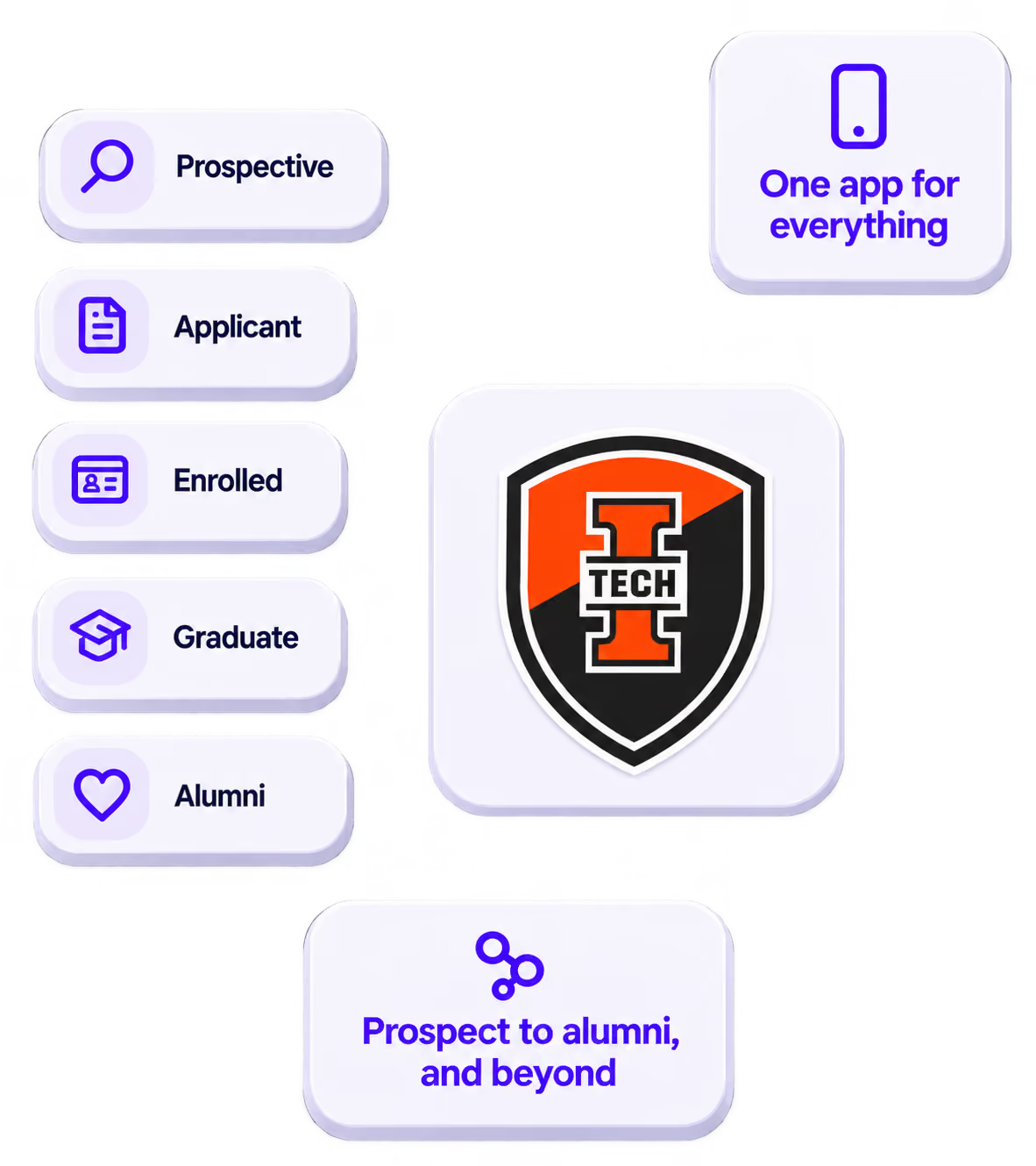
The power of your brand in your app, from first visit to alumni.
Build trust
Attendees download your app, not ours. Your name, colors, and crest in the stores.
.avif)
One place for the whole event
Schedules, maps, registration, and updates in one branded hub - not five tools.
Stand out
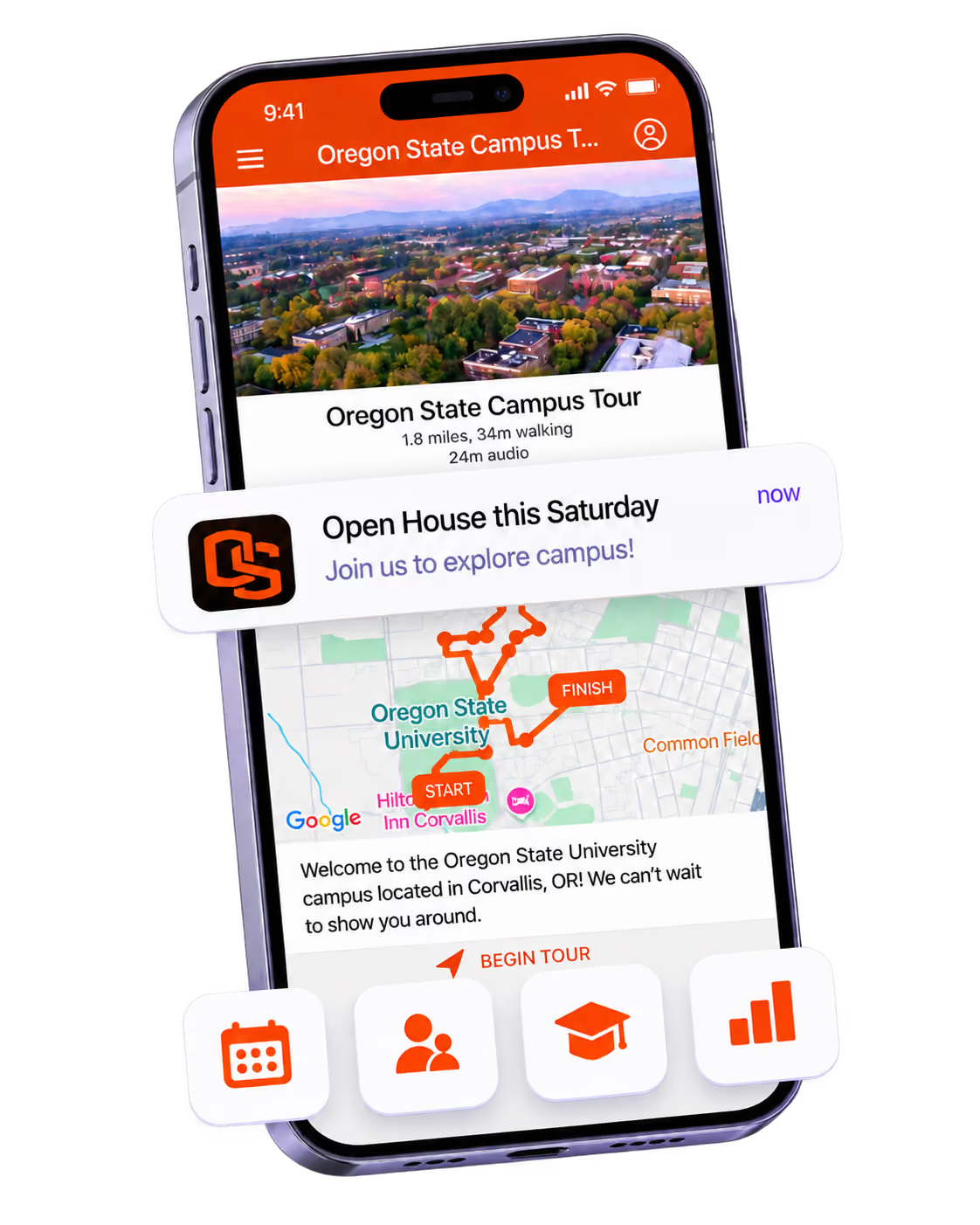
A branded app is what people keep on their phone after the printed program is in the recycling.

Get the Mobile App Playbook
A short guide to running the whole student journey in one app. No fluff, just what works.
for higher ed
Campus
Playbook
A practical guide to building a connected campus experience.
Free playbook
The Mobile App Playbook for Universities
Students decide if they belong long before they set foot on campus. This playbook shows how to win them over from the first visit through graduation.
- Grow enrollment and boost recruitment
- Increase belonging and retention
- Run every event from one branded app
By submitting, you agree to our Privacy Policy.
You're in.
.png)