
Campus apps by department
Admissions, orientation, student life, and more — one campus app that works across departments.

Campus apps by department
Admissions, orientation, student life, and more — one campus app that works across departments.
Build unlimited event apps on one license
One partnership for unlimited campus events — orientation, tours, student life, and everything in between.
Build unlimited event apps on one license
One partnership for unlimited campus events — orientation, tours, student life, and everything in between.
Compare event app platforms
See how Guidebook stacks up against other event app and registration platforms.
Compare event app platforms
See how Guidebook stacks up against other event app and registration platforms.
Event apps for nonprofit and community programs
Give members, volunteers, and donors one branded app for conferences, fundraisers, and year-round community.
Event apps for nonprofit and community programs
Give members, volunteers, and donors one branded app for conferences, fundraisers, and year-round community.
Campus integrations and an open API
Connect Guidebook with the campus systems, APIs, and tools your team already uses.
Campus integrations and an open API
Connect Guidebook with the campus systems, APIs, and tools your team already uses.
Event apps for corporate and enterprise teams
Internal meetings, offsites, and large-scale corporate events — with the branding and control enterprise teams need.
Event apps for corporate and enterprise teams
Internal meetings, offsites, and large-scale corporate events — with the branding and control enterprise teams need.
Create a branded event app with no coding
Put schedules, maps, resources, and updates in every attendee's pocket — built for campus events and programs.
Create a branded event app with no coding
Put schedules, maps, resources, and updates in every attendee's pocket — built for campus events and programs.
Launch a branded, white-label event app
A white-label event app with your branding, your content, and your attendee experience — no coding required.
Launch a branded, white-label event app
A white-label event app with your branding, your content, and your attendee experience — no coding required.
Everything in the Guidebook platform
Explore the features event teams use to engage attendees before, during, and after the event.
Everything in the Guidebook platform
Explore the features event teams use to engage attendees before, during, and after the event.
One app for in-person and virtual attendees
The same schedule, networking, and updates whether people are in the room or joining remotely.
One app for in-person and virtual attendees
The same schedule, networking, and updates whether people are in the room or joining remotely.
Event apps built for associations
Annual meetings, chapter events, and member engagement — without rebuilding a new app every year.
Event apps built for associations
Annual meetings, chapter events, and member engagement — without rebuilding a new app every year.
A branded event website that matches the app
Promote the event, collect interest, and keep branding consistent from the first click to check-in.
A branded event website that matches the app
Promote the event, collect interest, and keep branding consistent from the first click to check-in.
Plan, run, and measure events on one platform
App, registration, badges, and websites in one workflow — so planning isn't a pile of disconnected tools.
Plan, run, and measure events on one platform
App, registration, badges, and websites in one workflow — so planning isn't a pile of disconnected tools.
Keep members engaged between events
One branded app for the conference and everything that happens the other 51 weeks of the year.
Keep members engaged between events
One branded app for the conference and everything that happens the other 51 weeks of the year.
The conference app attendees actually use
Schedules, maps, networking, and live updates for annual meetings, summits, and multi-day conferences.
The conference app attendees actually use
Schedules, maps, networking, and live updates for annual meetings, summits, and multi-day conferences.
Registration that feeds your app and badges
Collect registrations, payments, and attendee data in the same platform as your event app.
Registration that feeds your app and badges
Collect registrations, payments, and attendee data in the same platform as your event app.
Design and print event badges in one place
Custom badges, QR check-in, and on-site printing — without a separate badge vendor.
Design and print event badges in one place
Custom badges, QR check-in, and on-site printing — without a separate badge vendor.
A Smaller School?
Deliver a polished, branded event experience without a large team or a big budget.

A Smaller School?
Deliver a polished, branded event experience without a large team or a big budget.
Running Family Programs?
Give families everything they need, from schedules and maps to real-time updates, all in one place.

Running Family Programs?
Give families everything they need, from schedules and maps to real-time updates, all in one place.
Coordinating Move-In Day?
Share updates, manage events, and keep students informed from move-in through the academic year.

Coordinating Move-In Day?
Share updates, manage events, and keep students informed from move-in through the academic year.
Offering Campus Tours?
Deliver branded, self-guided tour experiences with interactive maps and rich media, available 24/7.

Offering Campus Tours?
Deliver branded, self-guided tour experiences with interactive maps and rich media, available 24/7.
Organising a Career Fair?
Simplify logistics for students, employers, and Career Services staff with one easy-to-use app.

Organising a Career Fair?
Simplify logistics for students, employers, and Career Services staff with one easy-to-use app.
Managing Alumni Events?
Plan reunions, regional events, and fundraising campaigns with an app built for alumni engagement.

Managing Alumni Events?
Plan reunions, regional events, and fundraising campaigns with an app built for alumni engagement.
Boost Student Engagement
One hub for schedules, resources, and events that keeps students connected throughout the academic year.

Boost Student Engagement
One hub for schedules, resources, and events that keeps students connected throughout the academic year.
Planning Orientation?
Help new students feel prepared from day one with schedules, campus resources, and real-time updates in one app.

Planning Orientation?
Help new students feel prepared from day one with schedules, campus resources, and real-time updates in one app.
Running Admissions Events?
Manage open houses, tours, and yield events with a branded app that saves time and engages prospective students.

Running Admissions Events?
Manage open houses, tours, and yield events with a branded app that saves time and engages prospective students.
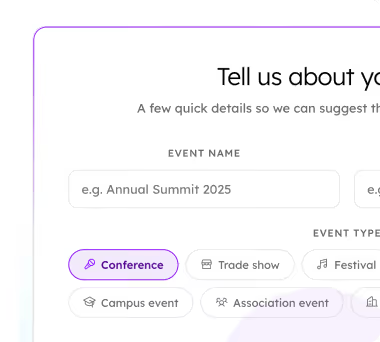
Get a custom Sponsorship Package Template
Stop starting from scratch. Grab free templates that helWe'll build a tailored sponsorship package with suggested pricing, tiers, and benefits..for your specific event.p you build professional sponsorship packages and close deals faster.
Get a custom Sponsorship Package Template
Stop starting from scratch. Grab free templates that helWe'll build a tailored sponsorship package with suggested pricing, tiers, and benefits..for your specific event.p you build professional sponsorship packages and close deals faster.
Plan Your Next Event Without Missing a Beat.
From venue selection to post-event wrap-up, this free checklist walks you through every step (so nothing falls through the cracks).
.avif)
Plan Your Next Event Without Missing a Beat.
From venue selection to post-event wrap-up, this free checklist walks you through every step (so nothing falls through the cracks).
Real Results From Real Events
100,000+ organizations trust Guidebook. See exactly how universities, associations, enterprises, and more put it to work.

Real Results From Real Events
100,000+ organizations trust Guidebook. See exactly how universities, associations, enterprises, and more put it to work.
Flexible pricing for every event size
Find the perfect plan for your needs, from intimate gatherings to large-scale conferences.

Flexible pricing for every event size
Find the perfect plan for your needs, from intimate gatherings to large-scale conferences.
Join our event experts
Watch on-demand webinars and join live sessions with industry leaders sharing best practices for event success.
.avif)
Join our event experts
Watch on-demand webinars and join live sessions with industry leaders sharing best practices for event success.
Guidebook in Action
Book a personalized walkthrough and discover how we help event teams create better attendee experiences.
Guidebook in Action
Book a personalized walkthrough and discover how we help event teams create better attendee experiences.

What qualifies as compliant continuing education credit tracking?
Compliant continuing education credit tracking ensures accurate, up-to-date records that meet regulatory standards. Learn key requirements, best practices, and audit-ready documentation tips.

Continuing Education Credit Tracking is the systematic process of recording, monitoring, and verifying professional development credits that participants earn at conferences, workshops, and academic programs. In higher education, this spans CEU tracking at faculty professional development events, credit hour documentation for continuing education divisions, and compliance reporting for accredited programs. When done right, it transforms what feels like an administrative burden into a seamless experience that serves learners, institutions, and accreditors alike.
Here’s the thing: for higher education institutions, CE credit tracking is a compliance obligation, a student service commitment, and often a revenue-generating function all at once. Your continuing education division runs noncredit programs that need CEU documentation. Your nursing school, social work program, and law school run mandatory continuing education events that feed into state licensing compliance. Your faculty development office tracks professional development hours for accreditation evidence. And every conference your institution hosts for external professionals requires accurate credit issuance and certificate generation. A robust CE tracking system isn’t optional infrastructure. It’s a core institutional function that touches accreditation, licensing, revenue, and alumni service simultaneously.
Key Characteristics of Continuing Education Credit Tracking
- Session-Level Credit Assignment: Credits link to specific sessions or activities rather than whole events, allowing partial credit for attendees who don’t complete everything.
- Attendance Verification: Systems confirm actual participation through sign-in sheets, badge scans, QR codes, or digital check-in rather than relying on registration records alone.
- Credit Type Management: Different credit types (CEU, CME, CLE, CPE, PDH, contact hours) require separate tracking rules and calculations.
- Certificate Generation: Automated creation of completion certificates that meet accreditor formatting and content requirements.
- Compliance Reporting: Built-in audit trails and export capabilities that satisfy accreditation body requirements.
- Real-Time Monitoring: Dashboard views that show credit accumulation for individual attendees throughout a multi-session event.
- Record Retention: Long-term storage of credit records that professionals may need for license renewal years after an event.
Continuing Education Credit Tracking vs. Related Systems
Event Registration System
- Scope: Pre-event sign-up and attendee data collection
- Focus: Who is attending and what they need
- Timeline: Before the event
- Output: Attendee lists and contact records
- Goal: Manage attendance commitments
CE Credit Tracking System
- Scope: Session-level participation and credit verification
- Focus: What credits each person earned and how
- Timeline: During and after the event
- Output: Credit records and certificates
- Goal: Document and verify professional development compliance
Learning Management System (LMS)
- Scope: Ongoing course-based learning environments
- Focus: Curriculum delivery and assessment
- Timeline: Continuous
- Output: Course completions, grades, and transcripts
- Goal: Manage formal educational programs
Integrated platforms that connect registration, attendance tracking, and credit management eliminate the manual data transfer that creates errors and audit risk. The best solutions connect all three systems in a single workflow.
Essential Components of CE Credit Tracking Systems
Session-Level Credit Assignment
Effective CE tracking starts with assigning specific credit values to individual sessions before the event begins. Each session receives a credit amount, credit type, and eligibility criteria. Attendees who complete the session earn those credits. Those who don’t aren’t credited. This session-level granularity is what makes partial credit possible and what most accreditation bodies require.
For multi-day conferences and faculty development events, map each session to its corresponding accreditation category. A session on “Clinical Documentation” earns nursing contact hours. A session on “Research Ethics” earns IRB CE credits. Getting this mapping right before the event is critical — fixing it after the certificates have been issued is a painful process.
Attendance Verification Methods
Verification is where compliance lives or dies. Accreditation bodies don’t accept registration records as proof of attendance — they require documented evidence of actual participation. Your tracking system must capture that evidence in a format that survives an audit.
- QR code check-in: Attendees scan on entry and exit. Provides timestamped, verifiable attendance records with minimal staff overhead.
- Badge scan stations: Effective for large sessions where individual check-in would create bottlenecks.
- Digital sign-in sheets: Tablet-based signatures that create searchable, auditable records without paper management.
- Session attestation: Post-session confirmation through the event app that the attendee completed the required learning objectives.
Credit Calculation Rules
Different accrediting bodies calculate credits differently. One contact hour of nursing CE is 60 minutes of qualifying instruction. One CEU equals 10 contact hours of qualifying instruction. One CLE credit is 60 minutes of qualifying legal instruction. One CME credit is one hour of accredited medical education activity.
Your system needs to encode these rules accurately and apply them consistently. Manual calculation creates errors. Errors create compliance problems for the professionals who earned the credits and institutional liability for the organization that issued them.
Certificate Generation
Certificates are the deliverable that makes CE credit real for participants. They need to include specific information required by the relevant accrediting body: attendee name, program title, credit amount and type, date of completion, and provider accreditation information.
Automate certificate generation to ensure consistency and eliminate the staff time that manual certificate creation requires. Send certificates immediately after event completion when possible — participants are most engaged and most likely to save the documentation they need for license renewal.
Reporting and Compliance Tools
Your tracking system should make compliance reporting straightforward, not something you dread. Built-in reporting that generates accreditor-required outputs — attendance rosters, credit summaries, session completion rates — saves hours of manual data preparation and reduces the risk of errors in your compliance submissions.
For accreditation site visits, the ability to pull complete credit records on short notice is not a nice-to-have. It’s what separates an institution that handles a site visit confidently from one that scrambles.
How CE Credit Tracking Works at Events
Pre-Event Setup and Configuration
CE credit tracking requires more setup investment than general event registration, but that investment pays off in execution accuracy. Before your event, map every session to its credit type and value, configure your attendance verification method for each room or format, and test certificate generation with sample records. For health professions events, verify your accreditation provider information is current and correct — an expired accreditation number invalidates the credits you’ve issued.
During-Event Credit Capture
Execution is where most CE tracking failures happen. Staff who don’t understand why verification matters rush through check-in. Attendees who forget to check in at the start of a session miss credit for sessions they attended. Technical failures during check-in create gaps in your records that are difficult to reconstruct after the fact.
Invest in staff training before the event. Make check-in procedures visible and easy to follow. Have a backup verification method ready for technology failures. The few minutes spent on thorough session check-in are worth far more than the hours you’d spend trying to reconstruct records after the event.
Post-Event Processing and Distribution
Post-event processing involves calculating final credit totals, generating certificates, and distributing them to participants. The faster you complete this process, the better — professionals who need CE credits for near-term license renewals are following up within days. A 30-day certificate turnaround creates unnecessary stress for your participants and reflects poorly on your institution’s professionalism.
Automate distribution where possible. Individual email certificates, downloadable PDFs from an attendee portal, and third-party transcript verification integrations (where applicable) all serve different participant needs. Offer multiple access methods.
Long-Term Record Maintenance
CE credit records must be retained for years — often 5-7 years depending on the accreditation body and credit type. Professionals may need to verify their credits years after an event when renewing licenses or demonstrating compliance during audits. Your record-keeping system needs to make those lookups fast and reliable.
A participant who contacts your continuing education division two years after attending a workshop and can’t get their certificate replaced is a lost relationship. A participant who receives it within an hour is a loyal advocate.
Why Continuing Education Credit Tracking Matters
For Event Success:
- Attendee Satisfaction: Accurate, fast credit processing is a core expectation for professionals attending CE events. When it works seamlessly, they return. When it fails, they tell colleagues.
- Event Credibility: Organizations that consistently deliver accurate CE credits build the reputation that makes their events worth attending year after year.
- Compliance Protection: Systematic tracking protects your organization from the liability exposure that comes with inaccurate or unverifiable credit claims.
- Data for Program Improvement: Session-level attendance and completion data reveals which topics drive engagement and which sessions need redesign.
For Institutional and Academic Outcomes:
- Accreditation Evidence: Regional and programmatic accreditors require documentation that faculty professional development and program-specific CE activities are occurring at the required frequency and quality. Your CE credit tracking data is your accreditation evidence. Gaps in that documentation are gaps in your accreditation case.
- Licensing and Compliance for Professional Programs: Nursing, social work, counseling, and health professions programs all operate under state licensing requirements that mandate documented CE participation. Your tracking system is what keeps your graduates and alumni in compliance with their licenses — and what keeps your institution in good standing with the licensing bodies that govern your programs.
- Continuing Education Revenue Justification: Continuing education divisions are often expected to be revenue-generating or self-sustaining. Accurate credit tracking is what makes that programming worth purchasing. Professionals won’t pay for CE programs that don’t reliably deliver verifiable credits and certificates. The tracking system is the product.
- Student and Alumni Service: Alumni who return for professional development programs, graduate students who need CEU documentation for their fields, and nondegree learners who are building professional credentials all depend on your institution’s ability to track and verify their credits accurately. That reliability builds long-term loyalty to the institution.
Guidebook helps higher education institutions and continuing education divisions manage CE credit tracking alongside all other event logistics. Faculty development days, professional conference programming, and noncredit CE workshops all run through the same platform — with session-level credit assignment, attendance verification, and certificate generation built in. See how higher education teams use Guidebook.
Continuing Education Credit Tracking Best Practices
- Map Credits Before the Event: Assign credit values and types to every session during the planning phase, not as an afterthought after the event. Retroactive credit assignment creates compliance risk and staff headaches.
- Train Your Check-In Staff: Session check-in staff are your compliance front line. Make sure they understand why verification matters, not just how to operate the check-in tool.
- Test Your Certificate Templates: Run test certificates through your system before the event to confirm all required accreditor information appears correctly.
- Automate Distribution: Send certificates immediately after event completion when possible. Participants who receive their documentation quickly are satisfied participants. Delays create follow-up volume.
- Build Accessible Record Lookup: Create a simple way for participants to access their credit records months or years after an event. A searchable participant portal eliminates one-off requests to your staff.
- Maintain Accreditation Currency: Review your accreditation provider status before every major CE event. An expired accreditation number invalidates the credits you issue.
- Document Your Methodology: Create written procedures for how your organization tracks, calculates, and issues CE credits. Documented methodology is what you present during an accreditation audit.
- Integrate with Registration: Use a platform that connects registration data directly to credit tracking. Manual data transfer between systems creates errors that compromise your compliance records.
Common Continuing Education Credit Tracking Mistakes
Relying on Registration Records for Attendance: Registration and attendance are not the same thing. Accreditation bodies require proof of actual session participation, not proof of pre-event sign-up. Build attendance verification into your event execution, not your pre-event planning.
Manual Credit Calculation: Calculating CE credits by hand for hundreds of attendees across multiple sessions and credit types creates errors that compound. Automate calculation rules within your tracking system.
Delayed Certificate Distribution: Professionals who need CE credits for near-term license renewals are following up within days of an event. A multi-week certificate turnaround generates unnecessary follow-up volume and frustrates participants.
Inadequate Record Retention: CE records must be retained for years. Participants who contact you two years after an event need their records. Build a long-term record management strategy before your first event, not after you’ve lost records that no longer exist.
Ignoring Credit Type Distinctions: CEUs, contact hours, CME credits, and CLE credits are not interchangeable. Issuing the wrong credit type for a professional’s specific licensing requirement creates a compliance problem for them and credibility damage for your institution.
Continuing Education Credit Tracking in Higher Education
Higher education institutions are among the most demanding environments for CE credit tracking. You’re managing multiple program types — credit-bearing, noncredit, CEU, CME, CLE, CPE — often simultaneously, across different divisions, with different accreditation requirements governing each. Getting this right requires more than a spreadsheet.
Faculty Professional Development Tracking
Accreditation bodies require evidence that faculty are engaged in ongoing professional development. Tracking that development — conferences attended, workshops completed, certifications renewed — in a centralized, reportable system is an accreditation compliance function. Institutions that can pull that data quickly during a site visit are in a fundamentally different position than those that have to scramble.
Health Professions and Licensed Program CE
Nursing schools, social work programs, counseling programs, and health professions departments often run mandatory CE events for students, alumni, and community practitioners. Accurate credit tracking, state-compliant certificate generation, and verifiable attendance records are legally required. A tracking system that fails here doesn’t just create administrative problems — it creates licensing liability for the professionals and alumni who depend on your documentation. See how Guidebook supports campus and professional development programming.
Continuing Education Division Programming
For institutions with dedicated continuing education or professional studies divisions, credit tracking is the core value proposition. Noncredit learners are paying for verified, portable, professionally recognized credits and certificates. The quality of your tracking system determines the quality of your CE product. Divisions with accurate, fast, reliable credit issuance retain learners and build the reputation that drives enrollment in the next cohort.
Conference and Symposium CE Credit Management
When your institution hosts a regional conference or academic symposium that offers continuing education credits to attending professionals, you’re responsible for every attendee’s credit record. Session-level attendance verification, credit calculation, and certificate generation need to happen accurately and at scale. See how Guidebook supports academic conferences and campus programming.
Final Thoughts
Continuing education credit tracking has evolved from a compliance checkbox into a core institutional function. Attendees expect it. Accreditation bodies require it. And institutions that do it well use the resulting data to improve their programming and serve their professional communities better.
The institutions that manage CE tracking well are the ones that treat it as a core institutional function rather than a compliance afterthought. They invest in systems that connect registration, attendance, and certificate generation in one workflow. They train their staff. They retain their records. They respond quickly when participants need their documentation.
For higher education institutions, CE credit tracking is where compliance, student service, and institutional reputation intersect. The programs that track credits accurately and issue certificates reliably build the professional trust that sustains enrollment, alumni engagement, and accreditation confidence. Book a demo to see how Guidebook handles CE credit tracking for faculty development, professional program compliance, and continuing education division programming — all in one place. See how higher education teams use Guidebook.
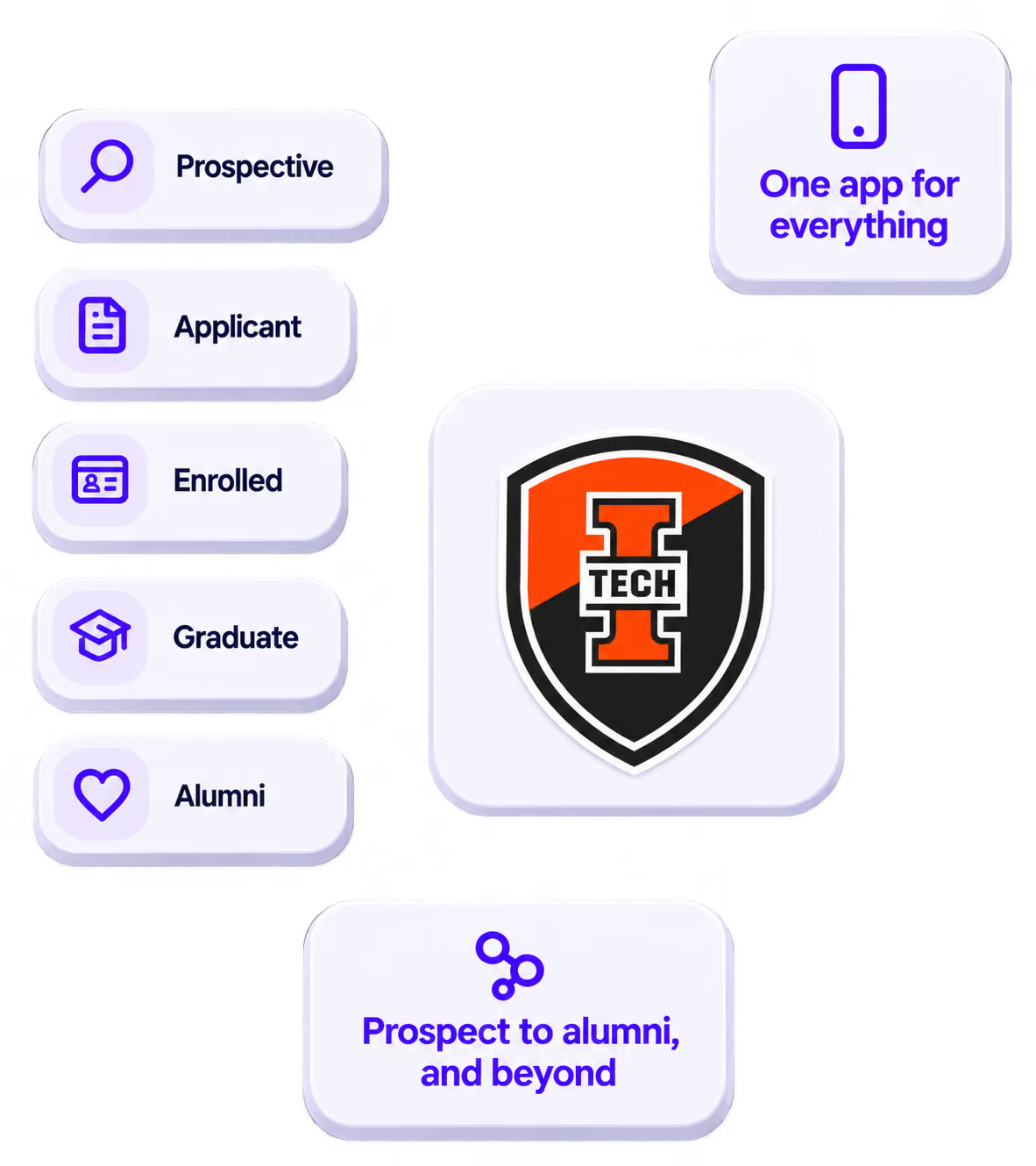
The power of your brand in your app, from first visit to alumni.
Build trust
Attendees download your app, not ours. Your name, colors, and crest in the stores.
.avif)
One place for the whole event
Schedules, maps, registration, and updates in one branded hub - not five tools.
Stand out
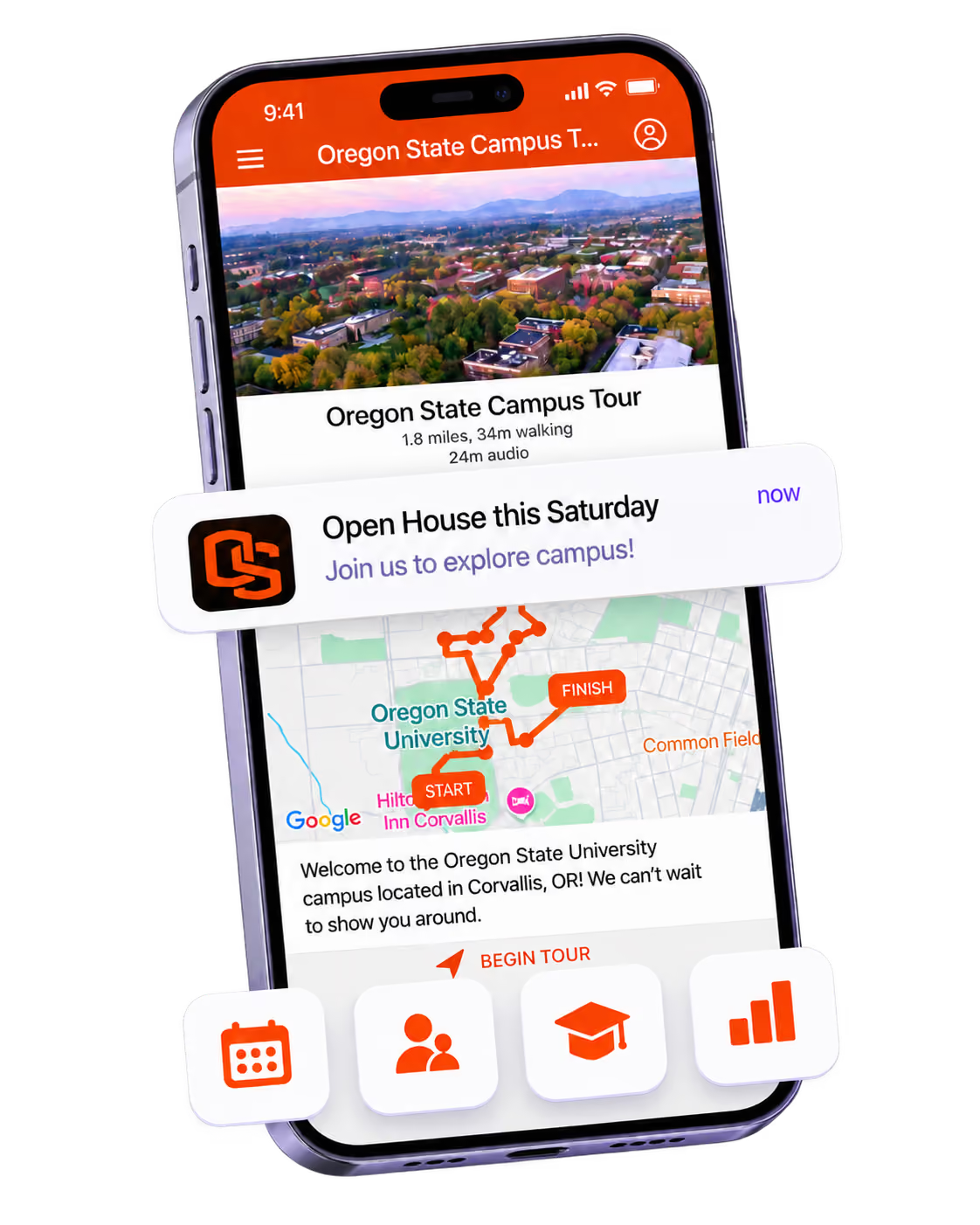
A branded app is what people keep on their phone after the printed program is in the recycling.

Get the Mobile App Playbook
A short guide to running the whole student journey in one app. No fluff, just what works.
for higher ed
Campus
Playbook
A practical guide to building a connected campus experience.
Free playbook
The Mobile App Playbook for Universities
Students decide if they belong long before they set foot on campus. This playbook shows how to win them over from the first visit through graduation.
- Grow enrollment and boost recruitment
- Increase belonging and retention
- Run every event from one branded app
By submitting, you agree to our Privacy Policy.
You're in.
.png)