
Campus apps by department
Admissions, orientation, student life, and more — one campus app that works across departments.

Campus apps by department
Admissions, orientation, student life, and more — one campus app that works across departments.
Build unlimited event apps on one license
One partnership for unlimited campus events — orientation, tours, student life, and everything in between.
Build unlimited event apps on one license
One partnership for unlimited campus events — orientation, tours, student life, and everything in between.
Compare event app platforms
See how Guidebook stacks up against other event app and registration platforms.
Compare event app platforms
See how Guidebook stacks up against other event app and registration platforms.
Event apps for nonprofit and community programs
Give members, volunteers, and donors one branded app for conferences, fundraisers, and year-round community.
Event apps for nonprofit and community programs
Give members, volunteers, and donors one branded app for conferences, fundraisers, and year-round community.
Campus integrations and an open API
Connect Guidebook with the campus systems, APIs, and tools your team already uses.
Campus integrations and an open API
Connect Guidebook with the campus systems, APIs, and tools your team already uses.
Event apps for corporate and enterprise teams
Internal meetings, offsites, and large-scale corporate events — with the branding and control enterprise teams need.
Event apps for corporate and enterprise teams
Internal meetings, offsites, and large-scale corporate events — with the branding and control enterprise teams need.
Create a branded event app with no coding
Put schedules, maps, resources, and updates in every attendee's pocket — built for campus events and programs.
Create a branded event app with no coding
Put schedules, maps, resources, and updates in every attendee's pocket — built for campus events and programs.
Launch a branded, white-label event app
A white-label event app with your branding, your content, and your attendee experience — no coding required.
Launch a branded, white-label event app
A white-label event app with your branding, your content, and your attendee experience — no coding required.
Everything in the Guidebook platform
Explore the features event teams use to engage attendees before, during, and after the event.
Everything in the Guidebook platform
Explore the features event teams use to engage attendees before, during, and after the event.
One app for in-person and virtual attendees
The same schedule, networking, and updates whether people are in the room or joining remotely.
One app for in-person and virtual attendees
The same schedule, networking, and updates whether people are in the room or joining remotely.
Event apps built for associations
Annual meetings, chapter events, and member engagement — without rebuilding a new app every year.
Event apps built for associations
Annual meetings, chapter events, and member engagement — without rebuilding a new app every year.
A branded event website that matches the app
Promote the event, collect interest, and keep branding consistent from the first click to check-in.
A branded event website that matches the app
Promote the event, collect interest, and keep branding consistent from the first click to check-in.
Plan, run, and measure events on one platform
App, registration, badges, and websites in one workflow — so planning isn't a pile of disconnected tools.
Plan, run, and measure events on one platform
App, registration, badges, and websites in one workflow — so planning isn't a pile of disconnected tools.
Keep members engaged between events
One branded app for the conference and everything that happens the other 51 weeks of the year.
Keep members engaged between events
One branded app for the conference and everything that happens the other 51 weeks of the year.
The conference app attendees actually use
Schedules, maps, networking, and live updates for annual meetings, summits, and multi-day conferences.
The conference app attendees actually use
Schedules, maps, networking, and live updates for annual meetings, summits, and multi-day conferences.
Registration that feeds your app and badges
Collect registrations, payments, and attendee data in the same platform as your event app.
Registration that feeds your app and badges
Collect registrations, payments, and attendee data in the same platform as your event app.
Design and print event badges in one place
Custom badges, QR check-in, and on-site printing — without a separate badge vendor.
Design and print event badges in one place
Custom badges, QR check-in, and on-site printing — without a separate badge vendor.
A Smaller School?
Deliver a polished, branded event experience without a large team or a big budget.
A Smaller School?
Deliver a polished, branded event experience without a large team or a big budget.
Running Family Programs?
Give families everything they need, from schedules and maps to real-time updates, all in one place.
Running Family Programs?
Give families everything they need, from schedules and maps to real-time updates, all in one place.
Coordinating Move-In Day?
Share updates, manage events, and keep students informed from move-in through the academic year.

Coordinating Move-In Day?
Share updates, manage events, and keep students informed from move-in through the academic year.
Offering Campus Tours?
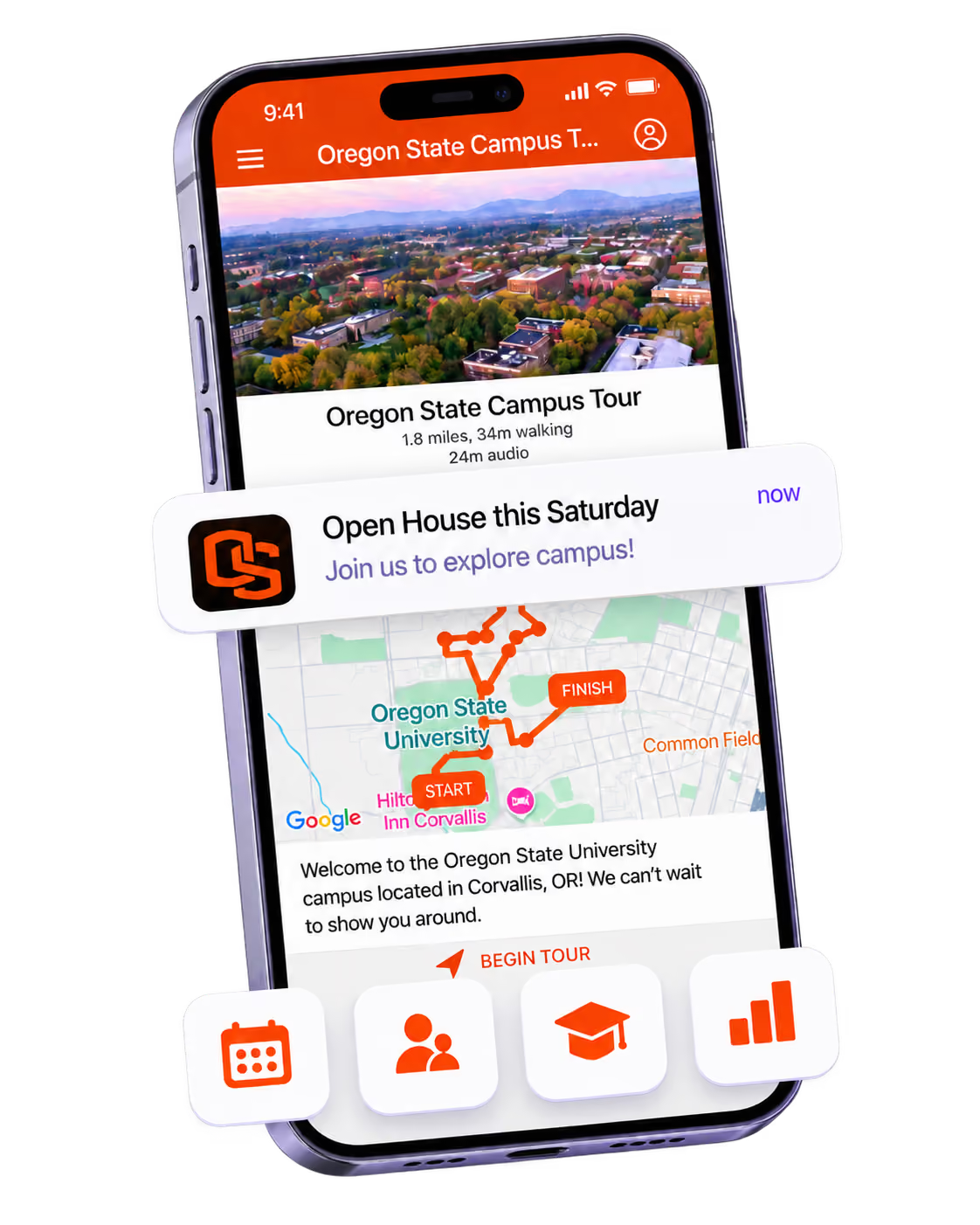
Deliver branded, self-guided tour experiences with interactive maps and rich media, available 24/7.

Offering Campus Tours?
Deliver branded, self-guided tour experiences with interactive maps and rich media, available 24/7.
Organising a Career Fair?
Simplify logistics for students, employers, and Career Services staff with one easy-to-use app.
Organising a Career Fair?
Simplify logistics for students, employers, and Career Services staff with one easy-to-use app.
Managing Alumni Events?
Plan reunions, regional events, and fundraising campaigns with an app built for alumni engagement.
Managing Alumni Events?
Plan reunions, regional events, and fundraising campaigns with an app built for alumni engagement.
Boost Student Engagement
One hub for schedules, resources, and events that keeps students connected throughout the academic year.
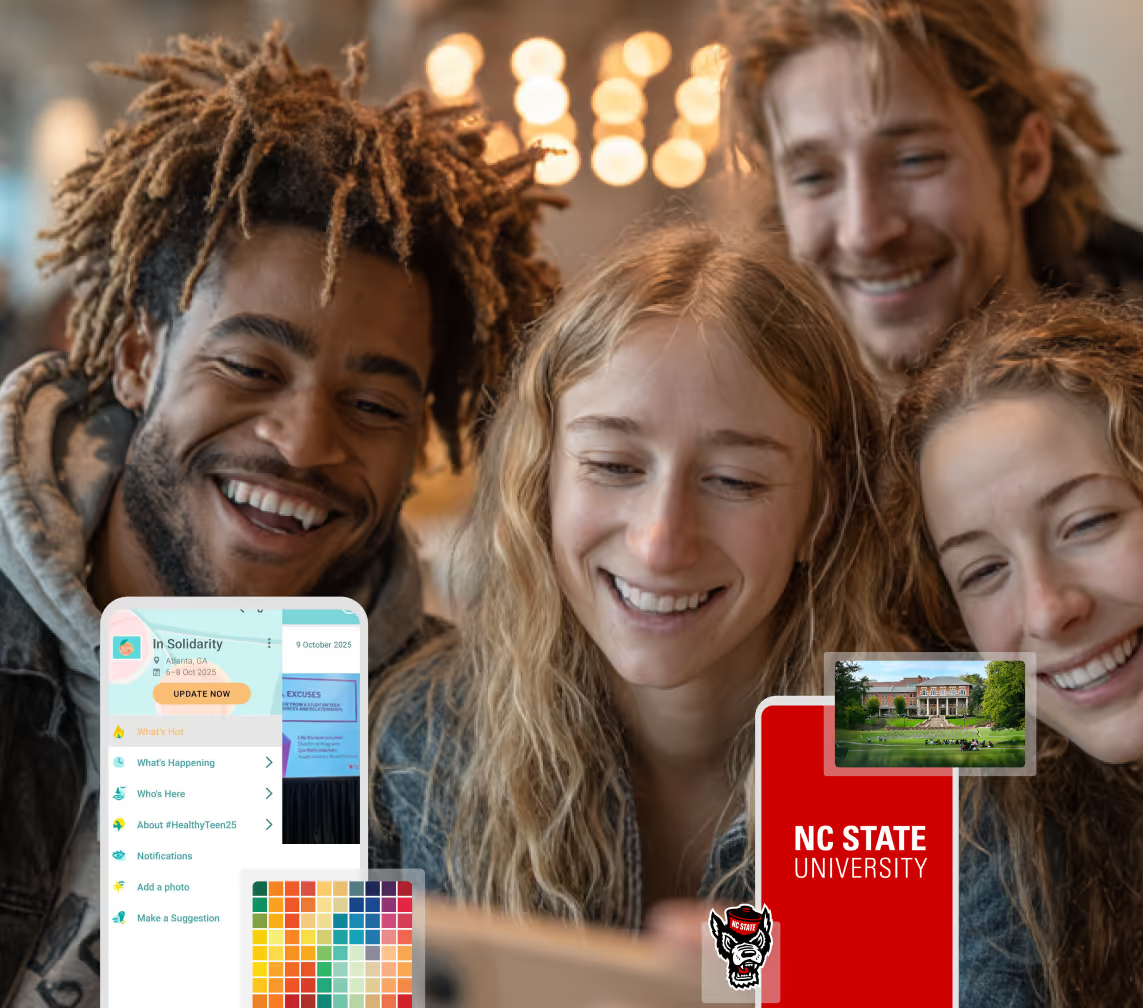
Boost Student Engagement
One hub for schedules, resources, and events that keeps students connected throughout the academic year.
Planning Orientation?
Help new students feel prepared from day one with schedules, campus resources, and real-time updates in one app.
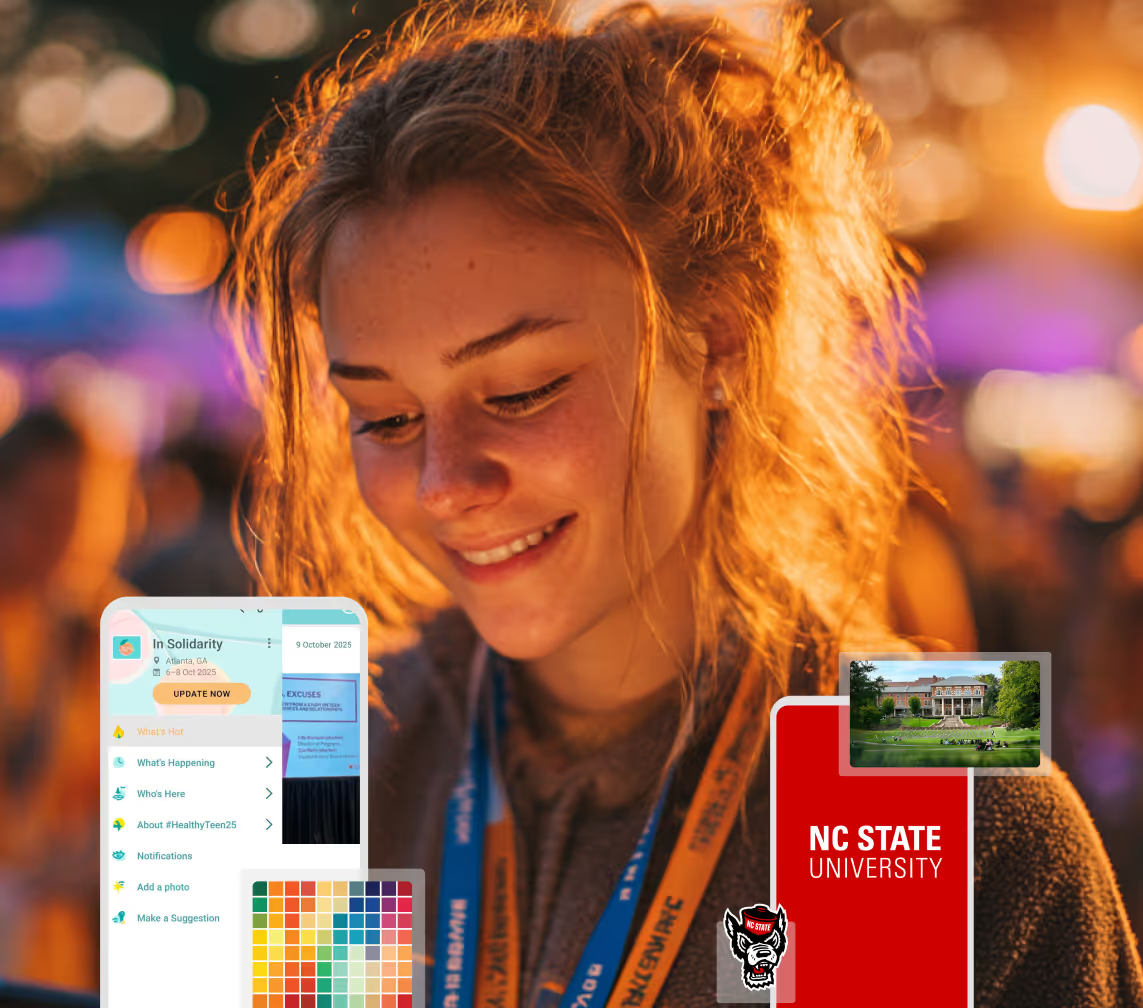
Planning Orientation?
Help new students feel prepared from day one with schedules, campus resources, and real-time updates in one app.
Running Admissions Events?
Manage open houses, tours, and yield events with a branded app that saves time and engages prospective students.

Running Admissions Events?
Manage open houses, tours, and yield events with a branded app that saves time and engages prospective students.
Get a custom Sponsorship Package Template
Stop starting from scratch. Grab free templates that helWe'll build a tailored sponsorship package with suggested pricing, tiers, and benefits..for your specific event.p you build professional sponsorship packages and close deals faster.
Get a custom Sponsorship Package Template
Stop starting from scratch. Grab free templates that helWe'll build a tailored sponsorship package with suggested pricing, tiers, and benefits..for your specific event.p you build professional sponsorship packages and close deals faster.
Plan Your Next Event Without Missing a Beat.
From venue selection to post-event wrap-up, this free checklist walks you through every step (so nothing falls through the cracks).
.avif)
Plan Your Next Event Without Missing a Beat.
From venue selection to post-event wrap-up, this free checklist walks you through every step (so nothing falls through the cracks).
Real Results From Real Events
100,000+ organizations trust Guidebook. See exactly how universities, associations, enterprises, and more put it to work.

Real Results From Real Events
100,000+ organizations trust Guidebook. See exactly how universities, associations, enterprises, and more put it to work.
Flexible pricing for every event size
Find the perfect plan for your needs, from intimate gatherings to large-scale conferences.

Flexible pricing for every event size
Find the perfect plan for your needs, from intimate gatherings to large-scale conferences.
Join our event experts
Watch on-demand webinars and join live sessions with industry leaders sharing best practices for event success.
.avif)
Join our event experts
Watch on-demand webinars and join live sessions with industry leaders sharing best practices for event success.
Guidebook in Action
Book a personalized walkthrough and discover how we help event teams create better attendee experiences.
Guidebook in Action
Book a personalized walkthrough and discover how we help event teams create better attendee experiences.

How can admissions handle last-minute event changes?
Admissions teams can manage last-minute event changes with clear communication, flexible planning, and rapid response tools. Discover best practices, messaging templates, and crisis management tips.

Last minute admissions event changes are the unexpected modifications to scheduled admissions events that require rapid communication and coordination to maintain attendee experience and institutional credibility. These changes can range from venue switches to speaker cancellations to complete event postponements. When handled well, they build trust. When handled poorly, they damage your school's reputation with prospective students and families.
Here's the thing: every admissions team will face last minute changes at some point. Weather happens. Speakers get sick. Technology fails. The difference between chaos and confidence lies in your preparation. Schools that plan for the unexpected don't just survive these moments—they often turn them into opportunities to showcase their responsiveness and care.
Key Characteristics of Last Minute Admissions Event Changes
- Time Sensitivity: These changes occur within 24-72 hours of an event, leaving minimal time for traditional communication methods. Every minute counts when families have already booked travel.
- High Stakes Communication: Prospective students and parents are making major life decisions. Poor handling of changes can shift their perception of your entire institution.
- Multi-Channel Coordination: Effective responses require simultaneous updates across email, mobile apps, social media, and on-site signage. One missed channel creates confusion.
- Staff Flexibility Requirements: Team members must pivot quickly from planned roles to crisis management mode. This demands clear protocols and empowered decision-makers.
- Technology Dependence: Schools with event management platforms can push real-time updates instantly. Those relying on printed materials face significant disadvantages.
- Reputation Impact: How you handle disruptions often matters more than the disruption itself. Families remember grace under pressure.
- Documentation Needs: Every change requires tracking for follow-up communication and future event debriefs.
Last Minute Admissions Event Changes vs. Related Terms
Planned Event Modifications
- Scope: Scheduled adjustments made weeks or months in advance
- Focus: Optimization and improvement of existing plans
- Timeline: Days to weeks before the event
- Channels: Standard communication workflows with ample lead time
- Goal: Enhance attendee experience through thoughtful refinement
Event Crisis Management
- Scope: Major disruptions requiring institutional-level response
- Focus: Safety, legal compliance, and damage control
- Timeline: Immediate response with ongoing management
- Channels: Official institutional communications, media relations
- Goal: Protect attendees and institutional reputation
Day-of Event Adjustments
- Scope: Minor tweaks during event execution
- Focus: Real-time problem-solving for small issues
- Timeline: During the event itself
- Channels: Staff radios, on-site announcements, app notifications
- Goal: Maintain smooth operations without attendee awareness
Last minute admissions event changes sit between planned modifications and full crisis management. They're significant enough to require attendee notification but not severe enough to trigger institutional emergency protocols. Understanding this distinction helps teams respond appropriately.
Common Types of Last Minute Admissions Event Changes
Venue and Location Shifts
Room changes happen more than anyone likes to admit. Maybe a pipe burst. Perhaps another department double-booked the space. Whatever the cause, families need clear directions fast.
The key is providing specific navigation help. Don't just announce "new location." Include building names, room numbers, and walking directions. Better yet, use an admissions event app with interactive maps.
Schedule and Timing Adjustments
Sessions run long. Speakers arrive late. Weather delays campus tours. These timing shifts cascade through your entire event schedule.
Smart teams build buffer time into original schedules. When changes still happen, they communicate:
- What's changing
- Why it's changing (briefly)
- What attendees should do now
- When normal programming resumes
Speaker and Presenter Cancellations
Your keynote dean has the flu. Your student panel member has a family emergency. These changes require both logistical and emotional intelligence.
Have backup speakers identified in advance. When substitutions happen, frame them positively. "We're excited to welcome..." sounds better than "Unfortunately, due to..."
Weather-Related Modifications
Outdoor campus tours don't work in thunderstorms. Parking lot events fail in extreme heat. Weather changes demand quick thinking.
Develop indoor alternatives for every outdoor activity. Communicate changes early—families appreciate knowing before they leave their hotels, not when they arrive soaked.
Technology and Equipment Failures
Projectors die. Microphones screech. Wi-Fi crashes during your virtual event component. Technical failures test your team's adaptability.
Always have analog backups. Printed handouts, whiteboard markers, and battery-powered speakers save presentations. For hybrid events, have a dedicated tech support person on standby.
The Last Minute Change Communication Process
Assess the Situation Quickly
Before communicating anything, understand what's actually happening. Gather facts from reliable sources. Avoid spreading rumors or incomplete information.
Ask yourself:
- What exactly changed?
- Who does this affect?
- What are our options?
- What's the timeline for resolution?
Decide on Your Response
Not every change requires the same response level. A 15-minute delay might need only an app notification. A venue change needs email, app push, social media, and on-site signage.
Match your communication intensity to the change's impact. Over-communicating minor issues creates noise. Under-communicating major issues creates chaos.
Craft Clear Messages
Your message should answer three questions immediately:
- What happened?
- What should I do?
- Where can I get help?
Skip lengthy explanations. Families don't need your internal drama. They need actionable information delivered with confidence.
Deploy Across All Channels
Use every communication tool available. This includes:
- Push notifications through your event app
- Email to registered attendees
- Social media updates
- Website banner announcements
- On-site signage and staff announcements
Consistency matters. Every channel should share the same core message.
Monitor and Adjust
After sending communications, watch for questions and confusion. Staff should be ready to answer the same questions repeatedly with patience.
If your initial message wasn't clear, send a follow-up. It's better to over-clarify than leave families frustrated.
Why Last Minute Admissions Event Changes Matter
For Event Success:
- Attendee Satisfaction: Families who feel informed and cared for during disruptions often rate events higher than those with no issues at all.
- Staff Confidence: Teams with clear protocols handle stress better. This calm energy transfers to attendees.
- Schedule Recovery: Quick, effective responses minimize cascading delays. One well-handled change prevents three more problems.
- Real-Time Engagement: Modern event check-in software and apps let you track who received updates and who might need personal outreach.
- Feedback Quality: How you handle challenges often generates the most memorable feedback—positive or negative.
For Business Objectives:
- Yield Protection: Admitted students watching how you handle problems are evaluating whether they want to spend four years at your institution.
- Brand Differentiation: Schools that handle disruptions gracefully stand out. Families talk about these experiences.
- Resource Efficiency: Good systems reduce the staff time spent on damage control. That time can go toward meaningful student interactions.
- Data Collection: Tracking how changes affect attendance and engagement informs future event planning.
- Competitive Advantage: When other schools fumble their events, your smooth handling becomes a selling point.
Guidebook's event management platform helps admissions teams push instant updates to attendees' phones. When changes happen, you're not scrambling to print new signs or send mass emails that arrive too late.
Last Minute Admissions Event Changes Best Practices
- Build Contingency Plans Before You Need Them: Create backup plans for your top five most likely disruptions. Document these in a shared location your whole team can access.
- Empower On-Site Decision Makers: Don't require approval chains for minor changes. Trust your team leads to make calls within defined parameters.
- Use Technology That Supports Real-Time Updates: Printed programs can't change. Branded mobile apps can. Invest in tools that flex with your needs.
- Communicate Early and Often: When you know something might change, give families a heads-up. "We're monitoring the weather" prepares them for possible adjustments.
- Train Staff on Communication Protocols: Everyone should know who makes announcements, through which channels, and with what approval. Practice this before events.
- Keep Messages Short and Action-Oriented: Long explanations waste time. Tell people what to do, not why things went wrong.
- Maintain a Calm, Confident Tone: Your energy sets the room's energy. Panicked staff create panicked families. Confident staff create trust.
- Follow Up After the Event: Send a thank-you message acknowledging any disruptions. This shows you care about the experience beyond the event itself.
- Document Everything for Future Learning: Use your event debrief template to capture what happened, what worked, and what you'd do differently.
- Create Feedback Loops with Attendees: Ask families how they felt about communication during changes. Their insights improve your next event.
Common Last Minute Admissions Event Changes Mistakes
Waiting Too Long to Communicate: Some teams hope problems will resolve before they need to say anything. This backfires. Families arriving to discover changes feel blindsided and disrespected. Communicate as soon as you know something, even if details are still developing.
Using Only One Communication Channel: Sending an email isn't enough. Not everyone checks email constantly. Use multiple channels simultaneously to ensure your message reaches everyone regardless of their preferred platform.
Providing Incomplete Information: Telling families "the location changed" without saying where to go creates frustration. Every communication should include specific next steps. If you don't have all the answers yet, say when you'll have them.
Apologizing Excessively: One sincere apology is appropriate. Repeated apologies make you seem incompetent. Acknowledge the inconvenience, then focus on solutions. Families want confidence, not groveling.
Forgetting About Staff Communication: Your team needs updates before attendees do. Staff who learn about changes from confused families can't help effectively. Brief your team first, then communicate externally.
Ignoring the Emotional Impact: Families may have traveled hundreds of miles for your event. A cancelled session isn't just a schedule change—it's a disappointment. Acknowledge feelings while providing practical information.
Failing to Update Digital Materials: If your website still shows the old schedule while your app shows the new one, you've created confusion. Update all platforms simultaneously or note which source is most current.
Final Thoughts
Last minute admissions event changes test your team's preparation, communication skills, and grace under pressure. They're inevitable in event planning, but they don't have to derail your goals. The schools that handle disruptions best are those that plan for them in advance.
The admissions landscape keeps getting more competitive. Families visit multiple campuses and compare experiences. Your ability to handle the unexpected often matters more than your perfectly planned sessions. It shows prospective students what kind of institution you really are.
Think of last minute changes as opportunities rather than obstacles. They're chances to demonstrate your school's values in action. When you communicate clearly, respond quickly, and treat families with respect during disruptions, you build trust that lasts beyond the event itself.
Guidebook helps schools manage these moments with confidence. From admissions events to new student programs, our platform lets you push real-time updates, track engagement, and keep everyone informed. Ready to see how it works? Book a demo and discover why leading institutions trust Guidebook for their most important events. Because when changes happen—and they will—you'll be ready.
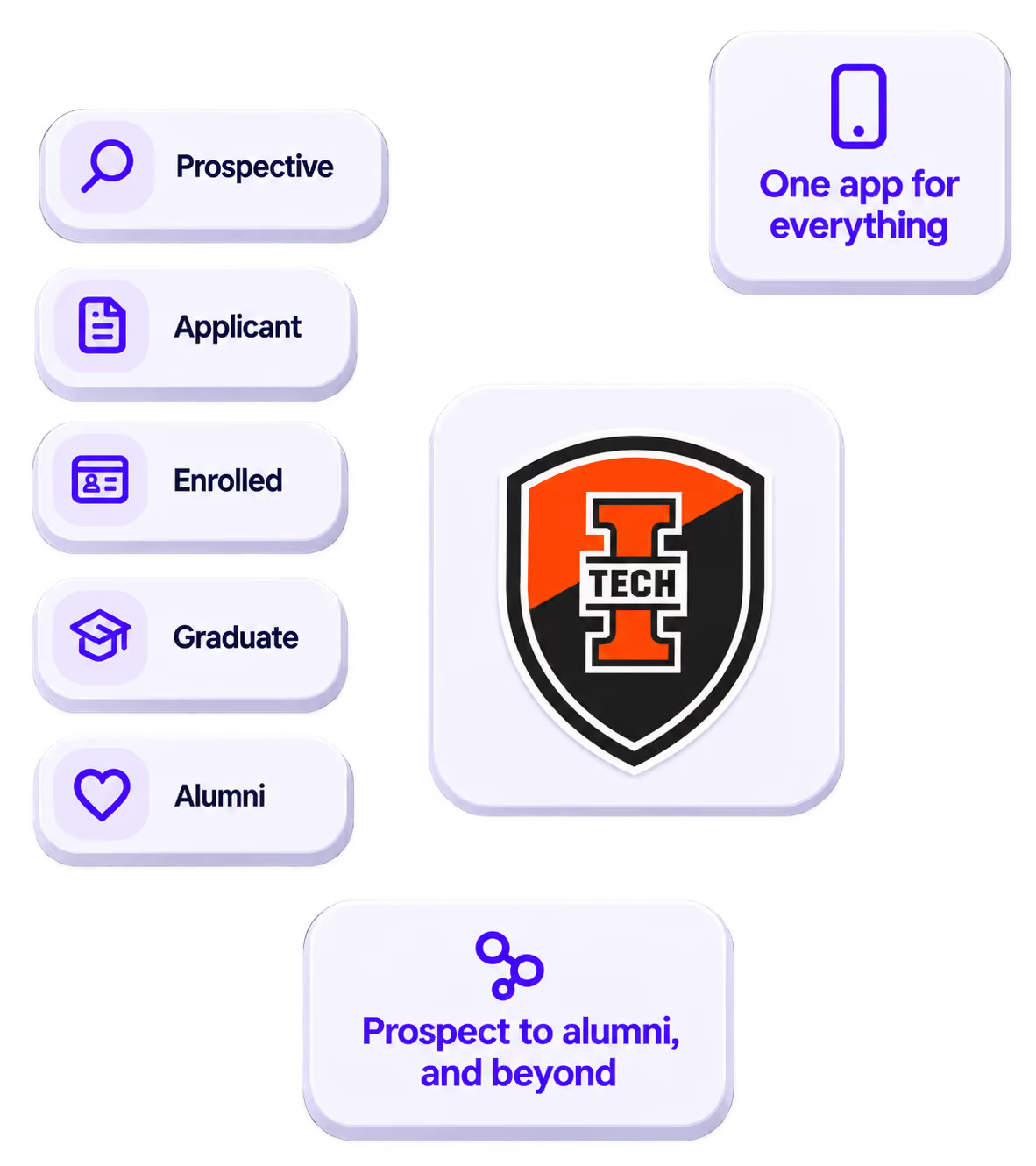
The power of your brand in your app, from first visit to alumni.
Build trust
Attendees download your app, not ours. Your name, colors, and crest in the stores.
.avif)
One place for the whole event
Schedules, maps, registration, and updates in one branded hub - not five tools.
Stand out
A branded app is what people keep on their phone after the printed program is in the recycling.

Get the Mobile App Playbook
A short guide to running the whole student journey in one app. No fluff, just what works.
for higher ed
Campus
Playbook
A practical guide to building a connected campus experience.
Free playbook
The Mobile App Playbook for Universities
Students decide if they belong long before they set foot on campus. This playbook shows how to win them over from the first visit through graduation.
- Grow enrollment and boost recruitment
- Increase belonging and retention
- Run every event from one branded app
By submitting, you agree to our Privacy Policy.
You're in.
.png)