
Campus apps by department
Admissions, orientation, student life, and more — one campus app that works across departments.

Campus apps by department
Admissions, orientation, student life, and more — one campus app that works across departments.
Build unlimited event apps on one license
One partnership for unlimited campus events — orientation, tours, student life, and everything in between.
Build unlimited event apps on one license
One partnership for unlimited campus events — orientation, tours, student life, and everything in between.
Compare event app platforms
See how Guidebook stacks up against other event app and registration platforms.
Compare event app platforms
See how Guidebook stacks up against other event app and registration platforms.
Event apps for nonprofit and community programs
Give members, volunteers, and donors one branded app for conferences, fundraisers, and year-round community.
Event apps for nonprofit and community programs
Give members, volunteers, and donors one branded app for conferences, fundraisers, and year-round community.
Campus integrations and an open API
Connect Guidebook with the campus systems, APIs, and tools your team already uses.
Campus integrations and an open API
Connect Guidebook with the campus systems, APIs, and tools your team already uses.
Event apps for corporate and enterprise teams
Internal meetings, offsites, and large-scale corporate events — with the branding and control enterprise teams need.
Event apps for corporate and enterprise teams
Internal meetings, offsites, and large-scale corporate events — with the branding and control enterprise teams need.
Create a branded event app with no coding
Put schedules, maps, resources, and updates in every attendee's pocket — built for campus events and programs.
Create a branded event app with no coding
Put schedules, maps, resources, and updates in every attendee's pocket — built for campus events and programs.
Launch a branded, white-label event app
A white-label event app with your branding, your content, and your attendee experience — no coding required.
Launch a branded, white-label event app
A white-label event app with your branding, your content, and your attendee experience — no coding required.
Everything in the Guidebook platform
Explore the features event teams use to engage attendees before, during, and after the event.
Everything in the Guidebook platform
Explore the features event teams use to engage attendees before, during, and after the event.
One app for in-person and virtual attendees
The same schedule, networking, and updates whether people are in the room or joining remotely.
One app for in-person and virtual attendees
The same schedule, networking, and updates whether people are in the room or joining remotely.
Event apps built for associations
Annual meetings, chapter events, and member engagement — without rebuilding a new app every year.
Event apps built for associations
Annual meetings, chapter events, and member engagement — without rebuilding a new app every year.
A branded event website that matches the app
Promote the event, collect interest, and keep branding consistent from the first click to check-in.
A branded event website that matches the app
Promote the event, collect interest, and keep branding consistent from the first click to check-in.
Plan, run, and measure events on one platform
App, registration, badges, and websites in one workflow — so planning isn't a pile of disconnected tools.
Plan, run, and measure events on one platform
App, registration, badges, and websites in one workflow — so planning isn't a pile of disconnected tools.
Keep members engaged between events
One branded app for the conference and everything that happens the other 51 weeks of the year.
Keep members engaged between events
One branded app for the conference and everything that happens the other 51 weeks of the year.
The conference app attendees actually use
Schedules, maps, networking, and live updates for annual meetings, summits, and multi-day conferences.
The conference app attendees actually use
Schedules, maps, networking, and live updates for annual meetings, summits, and multi-day conferences.
Registration that feeds your app and badges
Collect registrations, payments, and attendee data in the same platform as your event app.
Registration that feeds your app and badges
Collect registrations, payments, and attendee data in the same platform as your event app.
Design and print event badges in one place
Custom badges, QR check-in, and on-site printing — without a separate badge vendor.
Design and print event badges in one place
Custom badges, QR check-in, and on-site printing — without a separate badge vendor.
A Smaller School?
Deliver a polished, branded event experience without a large team or a big budget.
A Smaller School?
Deliver a polished, branded event experience without a large team or a big budget.
Running Family Programs?
Give families everything they need, from schedules and maps to real-time updates, all in one place.
Running Family Programs?
Give families everything they need, from schedules and maps to real-time updates, all in one place.
Coordinating Move-In Day?
Share updates, manage events, and keep students informed from move-in through the academic year.

Coordinating Move-In Day?
Share updates, manage events, and keep students informed from move-in through the academic year.
Offering Campus Tours?
Deliver branded, self-guided tour experiences with interactive maps and rich media, available 24/7.

Offering Campus Tours?
Deliver branded, self-guided tour experiences with interactive maps and rich media, available 24/7.
Organising a Career Fair?
Simplify logistics for students, employers, and Career Services staff with one easy-to-use app.
Organising a Career Fair?
Simplify logistics for students, employers, and Career Services staff with one easy-to-use app.
Managing Alumni Events?
Plan reunions, regional events, and fundraising campaigns with an app built for alumni engagement.
Managing Alumni Events?
Plan reunions, regional events, and fundraising campaigns with an app built for alumni engagement.
Boost Student Engagement
One hub for schedules, resources, and events that keeps students connected throughout the academic year.
Boost Student Engagement
One hub for schedules, resources, and events that keeps students connected throughout the academic year.
Planning Orientation?
Help new students feel prepared from day one with schedules, campus resources, and real-time updates in one app.
Planning Orientation?
Help new students feel prepared from day one with schedules, campus resources, and real-time updates in one app.
Running Admissions Events?
Manage open houses, tours, and yield events with a branded app that saves time and engages prospective students.

Running Admissions Events?
Manage open houses, tours, and yield events with a branded app that saves time and engages prospective students.
Get a custom Sponsorship Package Template
Stop starting from scratch. Grab free templates that helWe'll build a tailored sponsorship package with suggested pricing, tiers, and benefits..for your specific event.p you build professional sponsorship packages and close deals faster.
Get a custom Sponsorship Package Template
Stop starting from scratch. Grab free templates that helWe'll build a tailored sponsorship package with suggested pricing, tiers, and benefits..for your specific event.p you build professional sponsorship packages and close deals faster.
Plan Your Next Event Without Missing a Beat.
From venue selection to post-event wrap-up, this free checklist walks you through every step (so nothing falls through the cracks).
.avif)
Plan Your Next Event Without Missing a Beat.
From venue selection to post-event wrap-up, this free checklist walks you through every step (so nothing falls through the cracks).
Real Results From Real Events
100,000+ organizations trust Guidebook. See exactly how universities, associations, enterprises, and more put it to work.

Real Results From Real Events
100,000+ organizations trust Guidebook. See exactly how universities, associations, enterprises, and more put it to work.
Flexible pricing for every event size
Find the perfect plan for your needs, from intimate gatherings to large-scale conferences.
Flexible pricing for every event size
Find the perfect plan for your needs, from intimate gatherings to large-scale conferences.
Join our event experts
Watch on-demand webinars and join live sessions with industry leaders sharing best practices for event success.
.avif)
Join our event experts
Watch on-demand webinars and join live sessions with industry leaders sharing best practices for event success.
Guidebook in Action
Book a personalized walkthrough and discover how we help event teams create better attendee experiences.
Guidebook in Action
Book a personalized walkthrough and discover how we help event teams create better attendee experiences.

What are Community Engagement Events?
Community engagement events foster connections and participation within a group or area. Discover event types, planning tips, and strategies to boost involvement and impact.

Community Engagement Events are gatherings designed to bring people together around shared interests, causes, or goals while building lasting connections between organizations and their audiences. These events range from town halls and volunteer days to festivals and workshops. They transform passive audiences into active participants who feel invested in your mission.
Here's the thing: community engagement events aren't just about showing up. They're about creating meaningful two-way interactions. Unlike traditional events where attendees simply watch or listen, these gatherings invite people to contribute, collaborate, and connect. That's what makes them powerful tools for building loyalty and trust.
Key Characteristics of Community Engagement Events
- Two-Way Communication: Attendees don't just receive information—they share ideas, ask questions, and provide feedback that shapes outcomes.
- Shared Purpose: Every event centers on a common goal or cause that resonates with participants and gives them a reason to care.
- Inclusive Participation: Activities welcome people of all backgrounds and skill levels, removing barriers to involvement.
- Relationship Building: The focus extends beyond single interactions to create ongoing connections between organizers and community members.
- Local Relevance: Content and activities address specific needs, interests, or challenges within the target community.
- Measurable Impact: Success ties to concrete outcomes like volunteer sign-ups, feedback collected, or partnerships formed.
Community Engagement Events vs. Related Event Types
Public Relations Events
- Scope: Media-focused gatherings aimed at generating coverage
- Focus: Brand messaging and reputation management
- Timeline: Often one-time or campaign-based
- Channels: Press releases, media kits, journalist outreach
- Goal: Positive media coverage and brand awareness
Corporate Events
- Scope: Internal or client-facing business gatherings
- Focus: Company objectives and stakeholder relationships
- Timeline: Annual meetings, quarterly reviews, product launches
- Channels: Internal communications, client databases
- Goal: Business outcomes like sales, retention, or team alignment
Fundraising Events
- Scope: Donor-focused gatherings for nonprofits or causes
- Focus: Financial contributions and donor cultivation
- Timeline: Seasonal campaigns or milestone-based
- Channels: Donor databases, social media, direct mail
- Goal: Revenue generation and donor retention
While these event types overlap, community engagement events stand apart through their emphasis on participation over promotion. They prioritize building relationships that last beyond a single gathering.
Types of Community Engagement Events
Town Halls and Forums
Town halls create space for open dialogue between organizations and community members. Attendees ask questions, voice concerns, and hear directly from leadership.
These events work well for:
- Announcing major changes or initiatives
- Gathering feedback on proposed plans
- Addressing community concerns transparently
Volunteer and Service Days
Nothing builds community like working together toward a shared goal. Service events let participants contribute their time and skills to causes they care about.
Popular formats include park cleanups, food drives, and habitat restoration projects. These hands-on experiences create bonds that passive events simply can't match.
Workshops and Skill-Sharing Sessions
Educational events position your organization as a valuable resource. They also attract people who want to learn and grow—exactly the engaged community members you want.
Consider offering:
- Professional development workshops
- DIY and maker sessions
- Health and wellness classes
- Financial literacy seminars
Cultural Celebrations and Festivals
Festivals bring diverse groups together through food, music, art, and shared traditions. They're perfect for celebrating what makes your community unique.
These larger events require more event planning resources but deliver outsized impact. A well-run festival can become an annual tradition that defines your community's identity.
Networking Mixers and Social Gatherings
Sometimes the best engagement happens over coffee or appetizers. Casual social events lower barriers and let authentic connections form naturally.
Keep the format loose and the atmosphere welcoming. Your job is to bring the right people together—then get out of the way.
Planning Community Engagement Events
Define Your Community First
Before planning anything, get crystal clear on who you're trying to reach. What do they care about? Where do they gather? What challenges do they face?
Talk to community members directly. Survey your audience. Review past event data. The more you understand your community, the better you can serve them.
Set Measurable Goals
Vague goals lead to vague results. Define exactly what success looks like before your event.
Strong goals might include:
- Collect 200 feedback responses
- Sign up 50 new volunteers
- Connect 100 community members with local resources
- Achieve 85% satisfaction rating
Understanding event ROI helps you prove value and secure support for future events.
Choose the Right Format
Match your event format to your goals and audience preferences. A town hall works great for gathering feedback. A festival builds broad awareness. A workshop develops deeper relationships with smaller groups.
Consider hybrid options too. Virtual events can extend your reach to community members who can't attend in person.
Build in Participation Opportunities
Passive audiences don't become engaged communities. Design activities that invite contribution at every turn.
Ideas include:
- Q&A sessions with live polling
- Breakout discussions on specific topics
- Hands-on activities and demonstrations
- Feedback stations throughout the venue
- Photo opportunities that encourage social sharing
Promote Through Community Channels
Your community already has gathering places—online and offline. Meet them where they are.
Effective promotion channels include:
- Local Facebook groups and community pages
- Neighborhood newsletters and bulletin boards
- Partner organization networks
- Local media and community calendars
Learn more about how to advertise events effectively to maximize attendance.
Why Community Engagement Events Matter
For Event Success:
- Higher Attendance Rates: People show up when they feel personally connected to the cause and community.
- Stronger Word-of-Mouth: Engaged attendees become ambassadors who spread the word to their networks.
- Better Feedback Quality: Participants who feel invested provide more thoughtful, actionable input.
- Increased Repeat Attendance: Community connections keep people coming back event after event.
- More Authentic Content: Engaged communities generate user-created content that amplifies your reach.
For Business Objectives:
- Brand Loyalty: Community ties create emotional connections that competitors can't easily replicate.
- Market Intelligence: Direct community interaction reveals needs and opportunities you'd otherwise miss.
- Partnership Opportunities: Active community presence attracts collaborators and sponsors.
- Talent Pipeline: Engaged community members often become volunteers, advocates, or employees.
- Social Impact: Meaningful community work builds reputation and fulfills organizational mission.
Guidebook's event management platform helps organizations create seamless community experiences. From event registration to real-time updates, the right tools make engagement easier for everyone.
Community Engagement Events Best Practices
- Start with Listening Sessions: Before planning your event, gather input from community members about what they actually want and need.
- Partner with Local Organizations: Collaborate with established community groups to extend your reach and build credibility. Check out sponsorship package examples for partnership ideas.
- Make Accessibility a Priority: Choose venues, times, and formats that work for diverse community members, including those with disabilities or transportation challenges.
- Train Your Team on Engagement: Staff and volunteers should know how to facilitate conversations, not just manage logistics.
- Create Multiple Entry Points: Offer various ways to participate so everyone finds their comfort level, from observing to leading.
- Follow Up Meaningfully: Share what you learned and what actions you're taking based on community input. This closes the feedback loop.
- Document and Share Stories: Capture photos, testimonials, and outcomes to celebrate your community and attract future participants.
- Use Technology Thoughtfully: Digital tools should enhance connection, not replace it. Event check-in software speeds up logistics so you can focus on people.
- Build Consistency: Regular events build stronger communities than one-off spectacles. Create a calendar your community can count on.
- Measure What Matters: Track engagement metrics like participation rates, feedback quality, and follow-up actions—not just attendance numbers.
Common Community Engagement Events Mistakes
Talking More Than Listening: Organizations often use "engagement" events as platforms for one-way messaging. If attendees don't have meaningful opportunities to contribute, you're hosting a presentation, not building community.
Ignoring Accessibility Barriers: Choosing inconvenient locations, times, or formats excludes community members you're trying to reach. Consider transportation, childcare, language, and physical accessibility in every decision.
Failing to Follow Through: Collecting feedback without acting on it destroys trust fast. If you ask for input, be prepared to share what you learned and what you're doing about it.
Over-Programming the Experience: Packed agendas leave no room for organic connection. Build in unstructured time for conversations and relationship-building.
Treating Events as Isolated Incidents: Single events rarely build lasting community. Create ongoing touchpoints and communication channels that maintain connections between gatherings.
Skipping the Debrief: Without post-event reflection, you miss opportunities to improve. Use an event debrief template to capture lessons learned.
Underestimating Resource Needs: Community engagement requires more staff attention than traditional events. Plan for facilitators, not just logistics coordinators.
Final Thoughts
Community engagement events represent one of the most powerful tools for building lasting relationships with your audience. They transform passive observers into active participants who feel genuine ownership in your mission and success.
The organizations that thrive in today's landscape understand something important: people crave connection. They want to belong to something bigger than themselves. Well-designed community events satisfy that need while advancing organizational goals.
Whether you're planning a neighborhood cleanup, a town hall forum, or a multi-day festival, the principles remain the same. Listen first. Create space for participation. Follow through on commitments. Build consistency over time.
Ready to create community experiences that truly engage? Explore community event ideas for inspiration, or dive into event management tips to sharpen your planning skills. Guidebook's platform helps organizations of all sizes deliver seamless community experiences—request a demo to see how it works.
Because at the end of the day, the strongest communities aren't built by accident. They're built by people who show up, listen, and keep showing up.
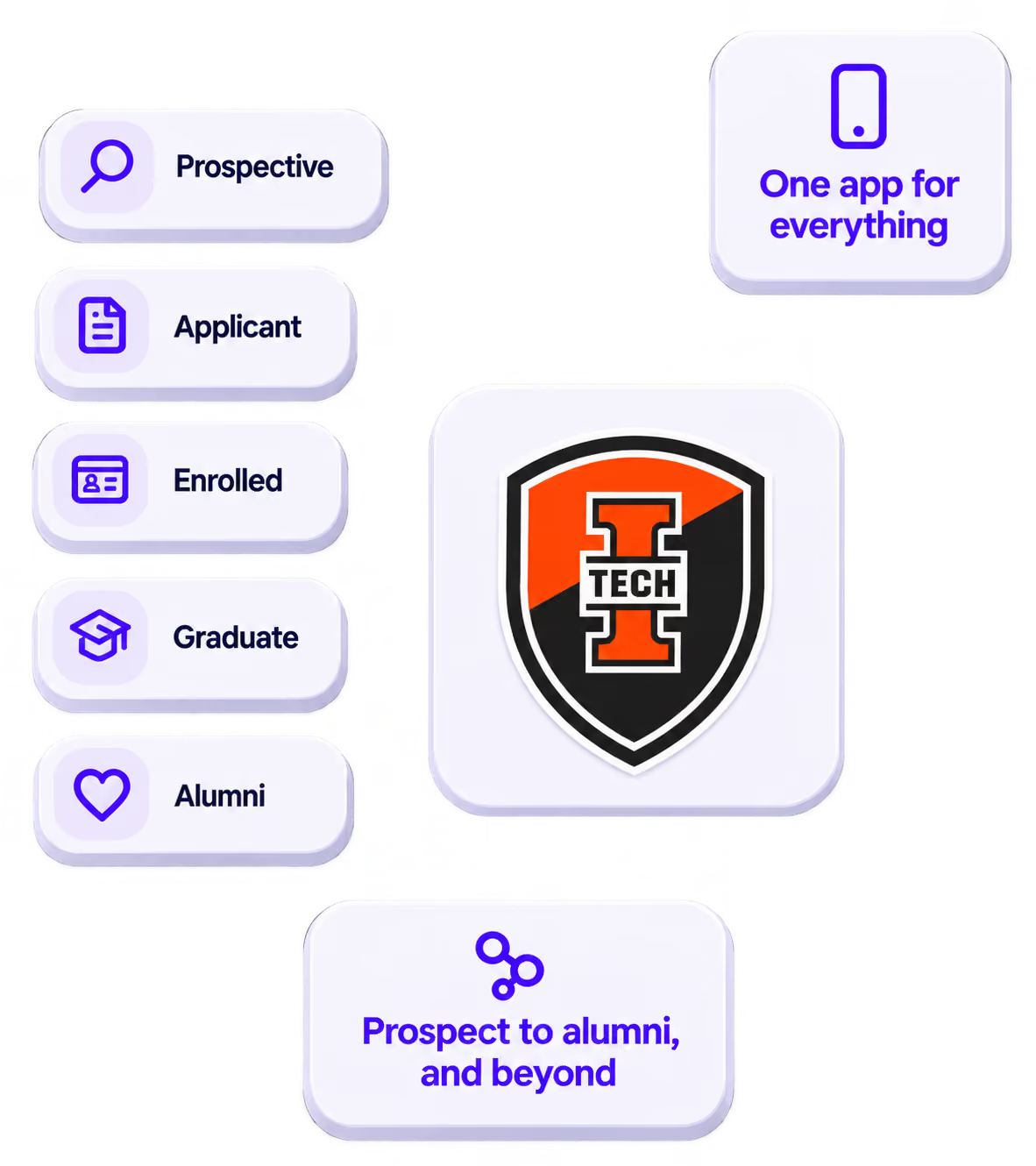
The power of your brand in your app, from first visit to alumni.
Build trust
Attendees download your app, not ours. Your name, colors, and crest in the stores.
.avif)
One place for the whole event
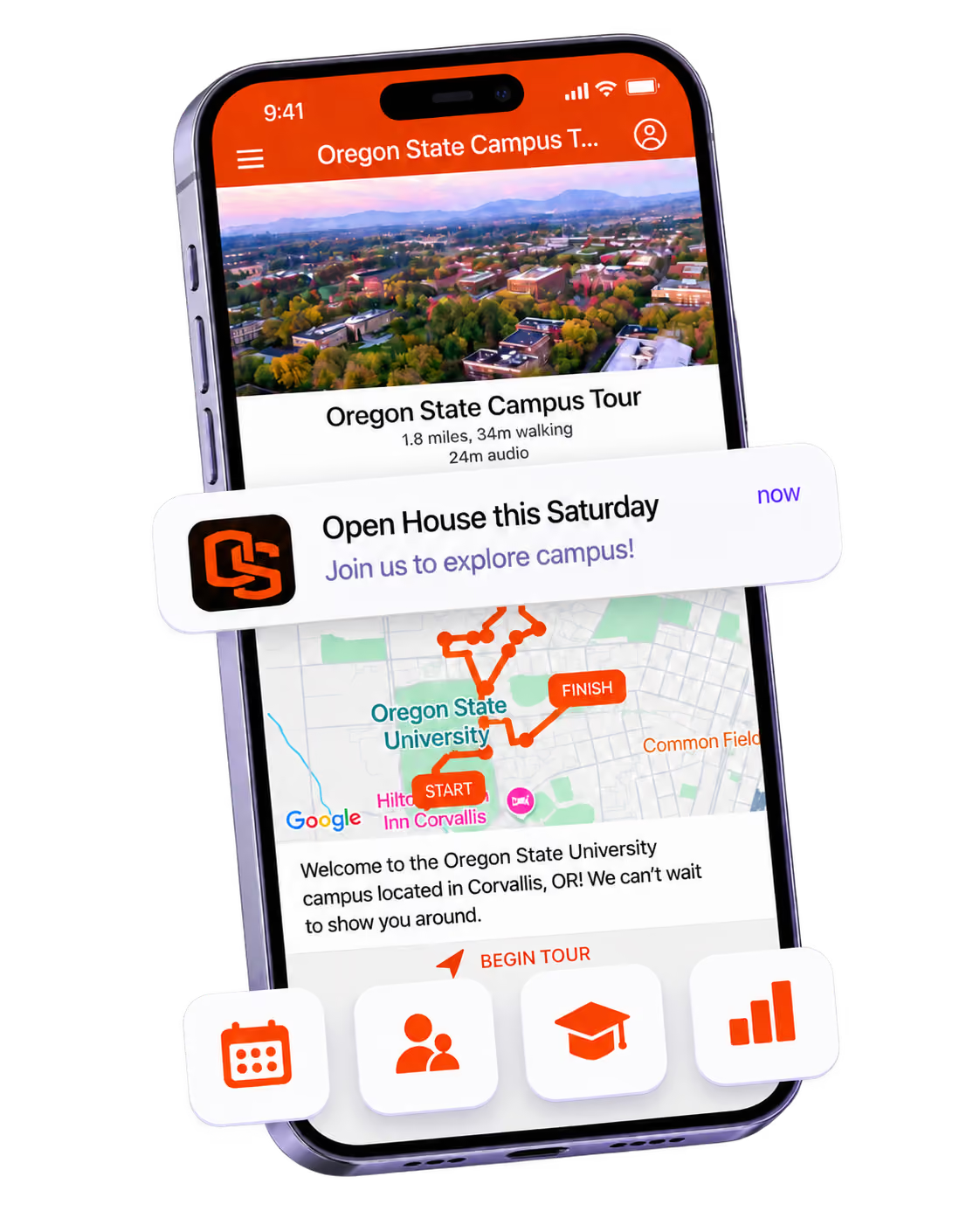
Schedules, maps, registration, and updates in one branded hub - not five tools.
Stand out
A branded app is what people keep on their phone after the printed program is in the recycling.

Get the Mobile App Playbook
A short guide to running the whole student journey in one app. No fluff, just what works.
for higher ed
Campus
Playbook
A practical guide to building a connected campus experience.
Free playbook
The Mobile App Playbook for Universities
Students decide if they belong long before they set foot on campus. This playbook shows how to win them over from the first visit through graduation.
- Grow enrollment and boost recruitment
- Increase belonging and retention
- Run every event from one branded app
By submitting, you agree to our Privacy Policy.
You're in.
.png)