A Smaller School?
Deliver a polished, branded event experience without a large team or a big budget.
A Smaller School?
Deliver a polished, branded event experience without a large team or a big budget.
Running Family Programs?
Give families everything they need, from schedules and maps to real-time updates, all in one place.
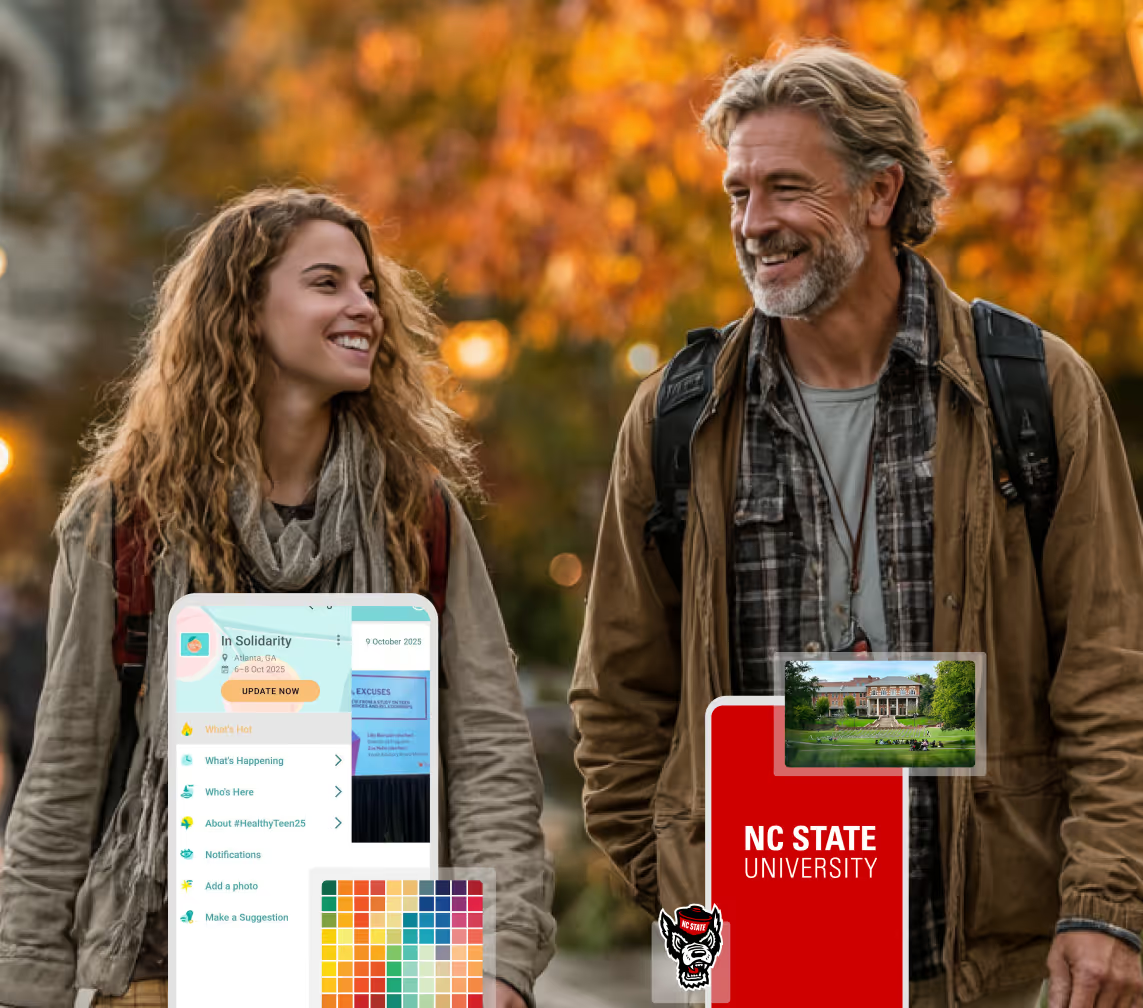
Running Family Programs?
Give families everything they need, from schedules and maps to real-time updates, all in one place.
Coordinating Move-In Day?
Share updates, manage events, and keep students informed from move-in through the academic year.

Coordinating Move-In Day?
Share updates, manage events, and keep students informed from move-in through the academic year.
Offering Campus Tours?
Deliver branded, self-guided tour experiences with interactive maps and rich media, available 24/7.

Offering Campus Tours?
Deliver branded, self-guided tour experiences with interactive maps and rich media, available 24/7.
Organising a Career Fair?
Simplify logistics for students, employers, and Career Services staff with one easy-to-use app.
Organising a Career Fair?
Simplify logistics for students, employers, and Career Services staff with one easy-to-use app.
Managing Alumni Events?
Plan reunions, regional events, and fundraising campaigns with an app built for alumni engagement.

Managing Alumni Events?
Plan reunions, regional events, and fundraising campaigns with an app built for alumni engagement.
Boost Student Engagement
One hub for schedules, resources, and events that keeps students connected throughout the academic year.
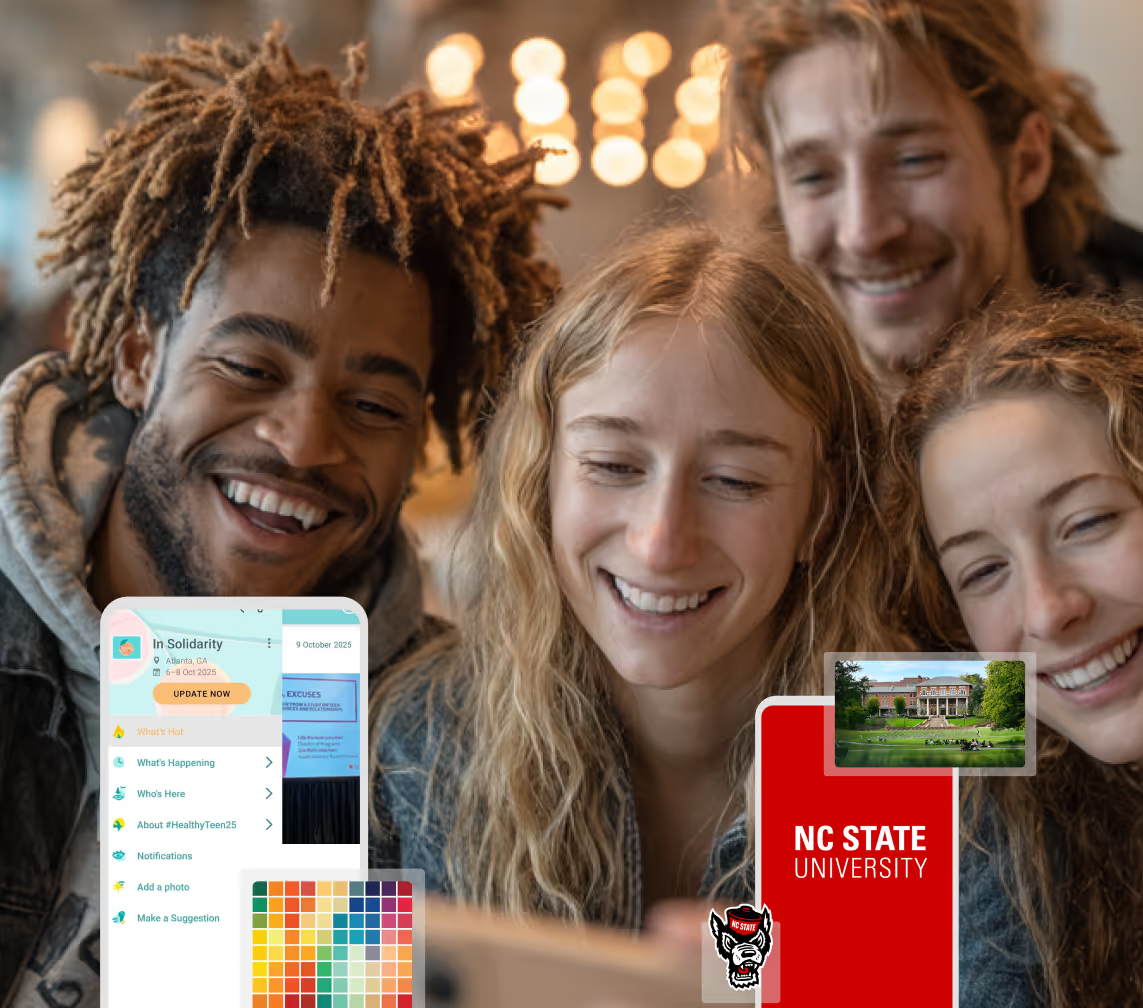
Boost Student Engagement
One hub for schedules, resources, and events that keeps students connected throughout the academic year.
Planning Orientation?
Help new students feel prepared from day one with schedules, campus resources, and real-time updates in one app.
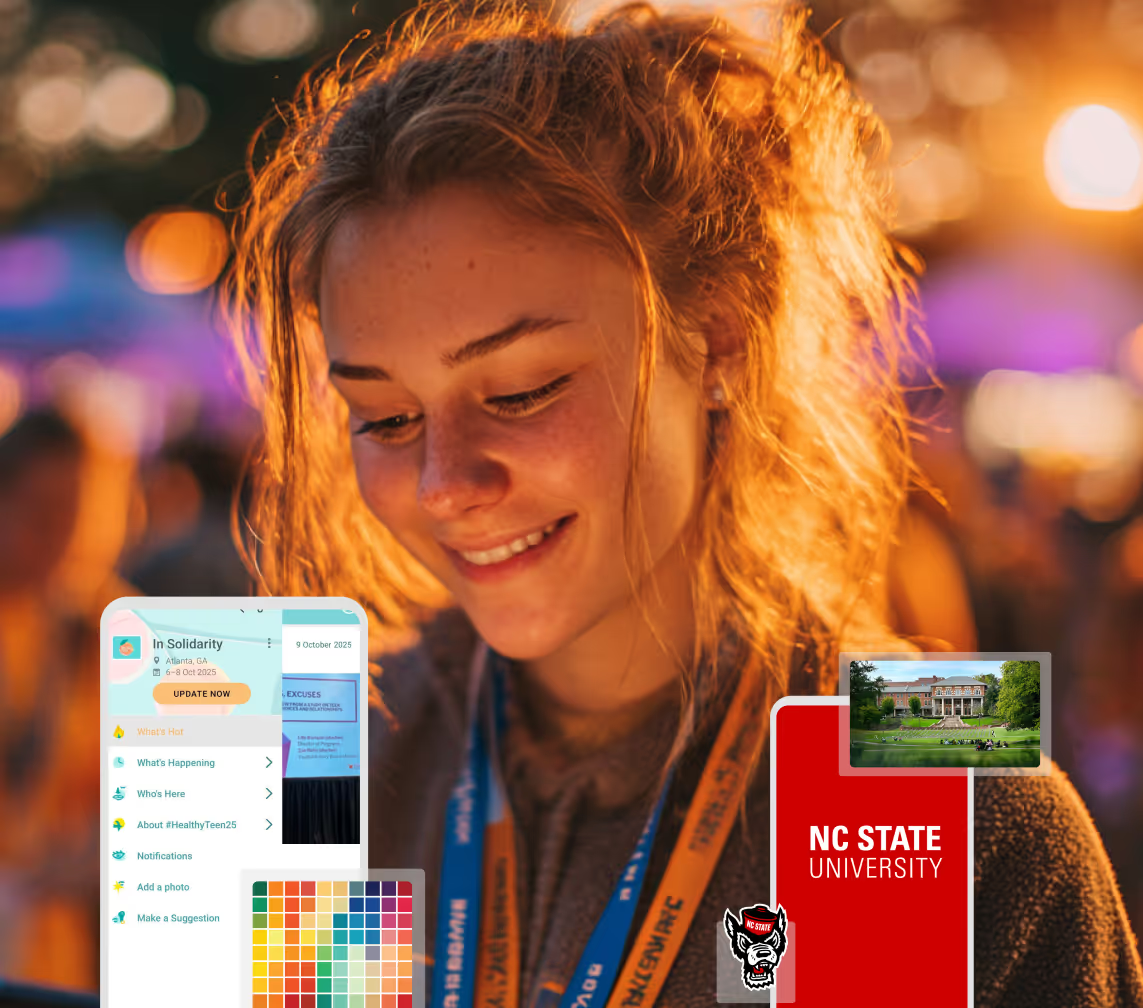
Planning Orientation?
Help new students feel prepared from day one with schedules, campus resources, and real-time updates in one app.
Running Admissions Events?
Manage open houses, tours, and yield events with a branded app that saves time and engages prospective students.

Running Admissions Events?
Manage open houses, tours, and yield events with a branded app that saves time and engages prospective students.
Get a custom Sponsorship Package Template
Stop starting from scratch. Grab free templates that helWe'll build a tailored sponsorship package with suggested pricing, tiers, and benefits..for your specific event.p you build professional sponsorship packages and close deals faster.
Get a custom Sponsorship Package Template
Stop starting from scratch. Grab free templates that helWe'll build a tailored sponsorship package with suggested pricing, tiers, and benefits..for your specific event.p you build professional sponsorship packages and close deals faster.
Plan Your Next Event Without Missing a Beat.
From venue selection to post-event wrap-up, this free checklist walks you through every step (so nothing falls through the cracks).
.avif)
Plan Your Next Event Without Missing a Beat.
From venue selection to post-event wrap-up, this free checklist walks you through every step (so nothing falls through the cracks).
Real Results From Real Events
100,000+ organizations trust Guidebook. See exactly how universities, associations, enterprises, and more put it to work.

Real Results From Real Events
100,000+ organizations trust Guidebook. See exactly how universities, associations, enterprises, and more put it to work.
Flexible pricing for every event size
Find the perfect plan for your needs, from intimate gatherings to large-scale conferences.

Flexible pricing for every event size
Find the perfect plan for your needs, from intimate gatherings to large-scale conferences.
Join our event experts
Watch on-demand webinars and join live sessions with industry leaders sharing best practices for event success.
.avif)
Join our event experts
Watch on-demand webinars and join live sessions with industry leaders sharing best practices for event success.
Guidebook in Action
Book a personalized walkthrough and discover how we help event teams create better attendee experiences.
Guidebook in Action
Book a personalized walkthrough and discover how we help event teams create better attendee experiences.
The First-Gen Melt Problem: Why Your Most At-Risk Students Disappear Quietly
%20(1).avif)




The First-Gen Melt Problem: Why Your Most At-Risk Students Disappear Quietly
- First-generation students face disproportionately high summer melt because the post-deposit window is full of barriers their continuing-generation peers navigate with family help.
- Most post-deposit communication strategies assume a level of college literacy that first-gen students simply don't have yet.
- Peer connection and pre-arrival belonging are the strongest predictors of whether a first-gen student makes it to move-in day.
- Research shows targeted, proactive outreach specifically designed for first-gen students increases fall enrollment outcomes.
- The fix isn't a separate first-gen program. It's redesigning your existing post-deposit strategy to account for the specific barriers first-gen students face.
Picture this: sometime in late June, you pull up your CRM and notice a name you recognize. They attended your admitted student day in March. Paid their deposit in April. Seemed genuinely excited. And then, quietly, they stopped responding. No bounce. No withdrawal form. Just silence.
You follow up. No reply. You follow up again. Still nothing.
By August 25, they're not there.
This student wasn't lost to a better offer from a competitor. They weren't academically underprepared. They were the first in their family to get into college, and somewhere between May 1 and move-in day, the weight of everything they didn't know how to do became heavier than their excitement about everything they'd worked toward.
This is first-gen melt. It's happening at your institution right now. And the hard truth is that your post-deposit communication strategy probably wasn't built to stop it.
Here's what's driving it, and what you can do before the fall semester begins.
What the melt numbers don't show you
The national summer melt rate averages around 14% across all admitted students. That number sounds manageable. It isn't.
Because that 14% is an average across every student type, every income bracket, every level of family college experience. When researchers isolate low-income and first-generation-heavy populations, melt rates climb to 20-40% (Castleman & Page, 2014, via Zilliox, Voices of Reform, 2024). Research consistently shows that first-generation students melt at substantially higher rates than their continuing-generation peers.
Your institution's aggregate melt number flattens that gap. It averages together students who have parents texting them reminders about housing deadlines with students who are figuring out what a housing deadline is for the first time. When you look at overall melt, you're not seeing the full picture. You're seeing the average of two very different experiences.
The students driving your worst melt outcomes are often the ones your institution was most proud to admit.
What is first-generation student summer melt?
First-generation student summer melt is the disproportionate rate at which first-generation college students who have deposited fail to enroll in the fall term. Where general summer melt averages around 14% nationally, rates for low-income and first-gen-heavy populations reach 20-40% (Castleman & Page, 2014, via Zilliox, 2024). The gap is driven by financial aid complexity, unfamiliar pre-matriculation processes, and the absence of family context that continuing-generation students rely on without realizing it.
Why the drop-off happens: three specific barriers
First-gen melt isn't mysterious. It's predictable. The same three barriers appear in the research, and they all peak in the exact window between deposit and move-in.
The paperwork maze
After deposit day, students face a cascade of tasks: financial aid verification, housing contracts, course registration, health forms, immunization records, parking registration. For continuing-generation students, a parent who's been through this process steps in. They know what "verification hold" means. They know you call the financial aid office, not just submit the form.
First-gen students navigate this alone. And when something goes wrong, whether a form rejected, a hold on the account, or a deadline quietly missed, there's no one in the house who knows what to do next (Castleman & Page, 2014). The task sits undone. The silence starts.
The language gap
"Academic adviser." "FAFSA verification." "EFC." "Room and board charges." "Holds on your account." "Credit hours." "Add/drop period."
These terms are invisible furniture to people who grew up around higher education. For first-gen students, they're a foreign language encountered at high speed, during the most stressful summer of their lives.
Many admissions teams describe the moment they realize their post-deposit communications assume a level of college literacy their first-gen students simply don't yet have. The emails are technically complete. Every piece of information is in there. And yet the students who need that information most are the ones least equipped to act on it.
A plain-language glossary, accessible before arrival and built into the experience students are already using, changes that.
The connection void
Without a parent or older sibling who went to college, first-gen students often have no one to tell them that the confusion they're feeling is normal. That everyone is figuring this out. That showing up in August and not knowing anyone is part of it.
When your institution goes quiet after deposit day, or pivots to logistics-only communication, first-gen students don't hear reassurance. They hear silence. And silence, in the absence of family scaffolding, feels like confirmation that maybe they don't belong there after all.
Pre-arrival peer connection is one of the strongest predictors of whether a deposited student makes it to move-in day. Orientation teams at institutions serving high first-gen populations consistently report that when students meet each other during the summer, in a structured event, in a shared digital space, in any intentional moment, their sense of belonging goes up before they've even set foot on campus.
The communication gap your strategy probably has
Here's the thing about most post-deposit communication programs: they were built by people who know how college works, for students who grew up around it.
They're well-intentioned. They're informationally complete. And they're structurally mismatched with what first-gen students actually need.
The gap shows up in a few predictable places.
Assumed knowledge in the subject lines. "Complete your housing selection" assumes the student knows what housing selection is, why it matters, and that missing it has consequences. First-gen students often don't.
One channel, the wrong one. Email-heavy post-deposit communication is built for an audience that checks email. First-gen students, like most of their generation, are on their phones. Portal messages get missed. Email inboxes are noise. A notification in an app they've already downloaded for something they care about, like an admitted student day or a campus map, is a different thing entirely.
Timing that doesn't match anxiety peaks. First-gen students don't stress about housing the week you send the housing email. They stress the moment the financial aid award letter doesn't look right, at 10pm on a Wednesday, when your financial aid office is closed. Communication designed around your calendar, not their anxiety calendar, misses the window.
Melt isn't just an enrollment problem. It's an equity problem. The institutions that yield their first-gen students at the highest rates aren't doing more outreach. They're doing more targeted outreach, at the right moments, in plain language, on the device their students actually use.
What changes when you design for first-gen students specifically
The good news: you don't need a separate first-gen program. You need a smarter version of what you're already doing.
Here's what that looks like in practice.
Plain-language glossary content, available before arrival. Not buried in an orientation portal. Not sent as a PDF attachment. Available in the admitted student app your incoming class is already using, from deposit day forward. Accessible, searchable, theirs to keep. Many admissions teams serving high first-gen populations already build "College 101" content into their pre-arrival experience. The ones seeing the strongest yield outcomes build it into an environment students actively use, not one they have to remember to visit.
Targeted communication tracks for first-gen students. The same admitted student app that delivers your general yield communication can deliver a separate track for first-gen admitted students. A custom welcome message. A specific resource list. A prompt to connect with other first-gen students before August. This isn't harder to build. It's a deliberate design choice.
At least one pre-arrival peer connection moment. Virtual or in-person. Structured or informal. What matters is that first-gen admitted students meet someone else who is also a first-gen admitted student before move-in day. Belonging that forms over the summer persists through orientation. Students who arrive knowing a peer arrive ready to stay.
Proactive outreach at the moments anxiety peaks. Targeted outreach for first-gen students, meaning reminders tied to specific tasks, at the right time, in plain language, moves the needle on fall enrollment. When a deposited student gets a nudge the day before a housing deadline rather than three weeks before, the task gets done. When the nudge explains what the task is and why it matters, it gets done by the students who needed the explanation most.
You can read more about the admissions and enrollment tools teams use to build this kind of experience at Guidebook's admissions and enrollment page.
What Andrea Crilly saw at Indiana Tech
Andrea Crilly, Assistant Director of Admissions for Campus Experience at Indiana Tech, didn't set out to build a first-gen yield strategy. She set out to fix a broken admitted student event experience.
Indiana Tech serves a high first-gen population. Before redesigning their admitted student day experience around connection, clarity, and a mobile app their students could actually use, yield sat at 40%. After: 82%. That's a 105% increase. Staff hours dropped from 400 to 25. A team of five became a team of two. Printing costs fell by 29%, a four-figure saving per event. Enrollment share grew from 14% to 32%.
The mechanism wasn't magic. It was removing friction. Replacing confusion with clarity. Giving students an experience that said, clearly and visibly, "we built this for you."
For a first-gen student deciding between May and August whether this institution is really theirs, that signal matters more than any yield event you'll ever run.
Read the full Indiana Tech case study.
What to do before move-in day
You still have time. Here are three things a Director of Admissions can do right now.
Audit your post-deposit communications for assumed college literacy. Pull every email in your May-August sequence. Read each one as if you'd never heard the word "FAFSA." Find every sentence that assumes context a first-gen student doesn't have. Rewrite those sentences.
Add one targeted first-gen touchpoint. One email, one push notification, one in-app message that speaks directly to first-gen students. Acknowledges their experience. Names the confusion as normal. Points to plain-language resources. You don't need a new platform to do this. You need a deliberate moment.
Create at least one pre-arrival peer connection opportunity. A virtual meet-and-greet. A first-gen admitted student group in your admitted student app. A single event in July, two hours, on Zoom if that's what you have. What matters is that first-gen admitted students hear, before August, that there are others like them. That they're not navigating this alone.
Less melt. More moments. The students disappearing quietly from your yield numbers deserve both. That's the promise behind one app for every moment that matters: a single place where your admitted students find clarity, connection, and the campus they're about to join.
Conclusion
The first-gen students who melt aren't failing. They're asking for help with problems that feel unsolvable, in a language they haven't fully learned yet, with nobody to ask.
The admissions teams who retain them aren't doing more work. They're doing more deliberate work, in the places where it counts most: the paperwork maze, the language gap, the silence after deposit day.
Your most at-risk students are also, often, your most motivated. They cleared more hurdles to reach your deposit page than most of your incoming class will ever face. They just need your post-deposit strategy to meet them where they are.
Ready to see what a communication strategy built for first-gen students looks like in practice? Explore Guidebook's admissions and enrollment resources.
More on summer melt and yield strategy: What is summer melt? | What does "yield" mean in higher ed admissions? | What is an admitted student day? | New student programs
[faq] Q: Why do first-generation students experience higher summer melt rates than other students? A: First-gen students face the post-deposit process without the family scaffolding that continuing-generation students often take for granted. Financial aid verification, housing contracts, course registration: these tasks are navigable if someone in your household has done them before. For first-gen students, every step is new, often confusing, and happening during a summer when campus support is limited. Research consistently shows first-gen students melt at substantially higher rates than their continuing-generation peers, driven by this combination of administrative complexity, unfamiliar language, and the absence of informal guidance. Q: What's the difference between summer melt and first-gen summer melt? A: Summer melt affects all admitted students. Nationally, about 14% of college-intending students who deposit fail to enroll in the fall. First-gen summer melt refers specifically to the disproportionate share of that loss that falls on first-generation students. Low-income and first-gen-heavy populations see melt rates of 20-40% (Castleman & Page, 2014). The mechanisms are the same, but the exposure is higher: more administrative friction, less family guidance, and fewer informal support networks to catch students when something goes wrong in July. Q: When should post-deposit outreach for first-gen students start? A: The day after deposit, not the week before orientation. The post-deposit window is when melt risk is highest, and it starts early. Financial aid award letters arrive in April and May. Housing deadlines hit in June. Course registration opens in July. Each of these moments is a potential drop-off point for first-gen students who don't know what to do next. Outreach timed to those specific task moments, rather than your general calendar cadence, is far more effective than a generic welcome sequence. Q: What does targeted post-deposit communication for first-gen students actually look like? A: It looks like plain language where your standard emails use jargon. It looks like a task-specific reminder the day before a housing deadline, not three weeks before. It looks like a glossary of college terms available in an app they've already downloaded, not buried in a portal they haven't visited. It looks like one message that says, directly, "you're the first in your family to do this, and that's a specific thing, here's what you need to know this week." The content isn't radically different. The design intent is. Q: Does peer connection before move-in day actually reduce summer melt? A: Yes. Pre-arrival peer connection is one of the most consistent predictors of whether a deposited student makes it to the first day of class. When first-gen students meet other first-gen students over the summer, in a structured event, in a shared digital space, in any intentional moment, their sense of belonging increases before they've set foot on campus. That belonging is protective. Students who arrive knowing someone are less likely to interpret early confusion as evidence that they don't belong there. Q: How do you measure whether your first-gen melt interventions are working? A: Start by disaggregating your melt data. Most institutions track overall melt, the yield rate from deposit to enrollment. Fewer track it by first-gen status. If you don't know what your first-gen melt rate is separately from your overall rate, you can't know whether it's improving. From there, track engagement with targeted touchpoints: did first-gen students open the targeted communication, complete the task it pointed to, show up at the pre-arrival connection event? Engagement with the process is an early indicator. Fall enrollment is the outcome you're ultimately measuring. Q: What's the most common mistake admissions teams make with first-gen post-deposit communication? A: Assuming that more communication solves the problem. First-gen students aren't melting because they didn't get enough emails. They're melting because the communication they received assumed context they didn't have, arrived in a channel they don't habitually check, or asked them to complete a task without explaining what it was or why it mattered. The fix isn't volume. It's intentional design: the right information, in plain language, at the moment the student actually needs it, in an environment they're already using. [/faq]Plan with Confidence, Not stress
Get the complete event planning checklist with pre-event prep, day-of setup, and post-event follow-up all in one place..