See who actually showed up, in Slate
When someone checks in at your event, Guidebook marks their Slate registration Attended, with the time they arrived.
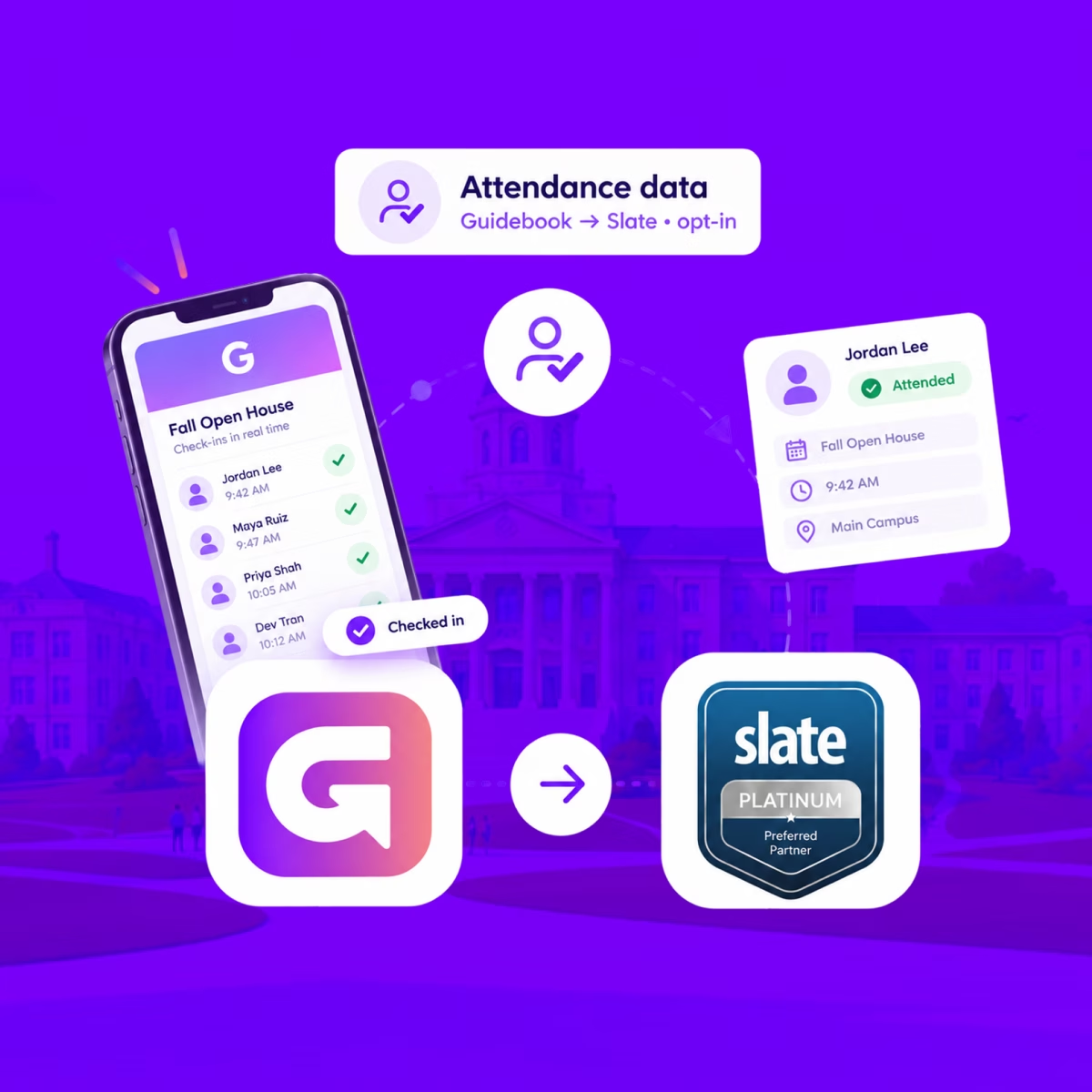
See who actually showed up, in Slate
When someone checks in at your event, Guidebook marks their Slate registration Attended, with the time they arrived.
Send app engagement back to Slate
For students who opt in, downloads, schedule adds, views, and form responses land on their event registration every hour.
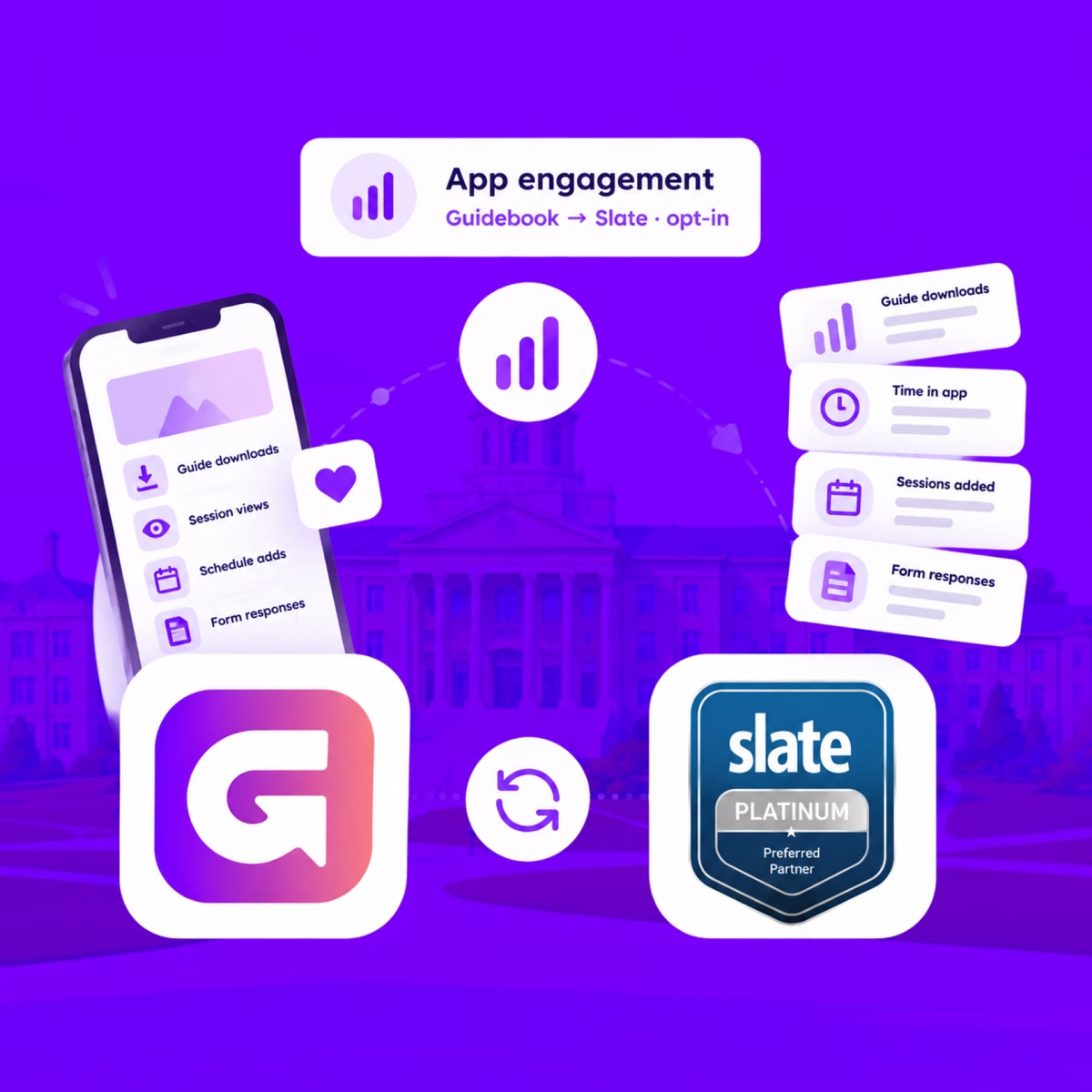
Send app engagement back to Slate
For students who opt in, downloads, schedule adds, views, and form responses land on their event registration every hour.
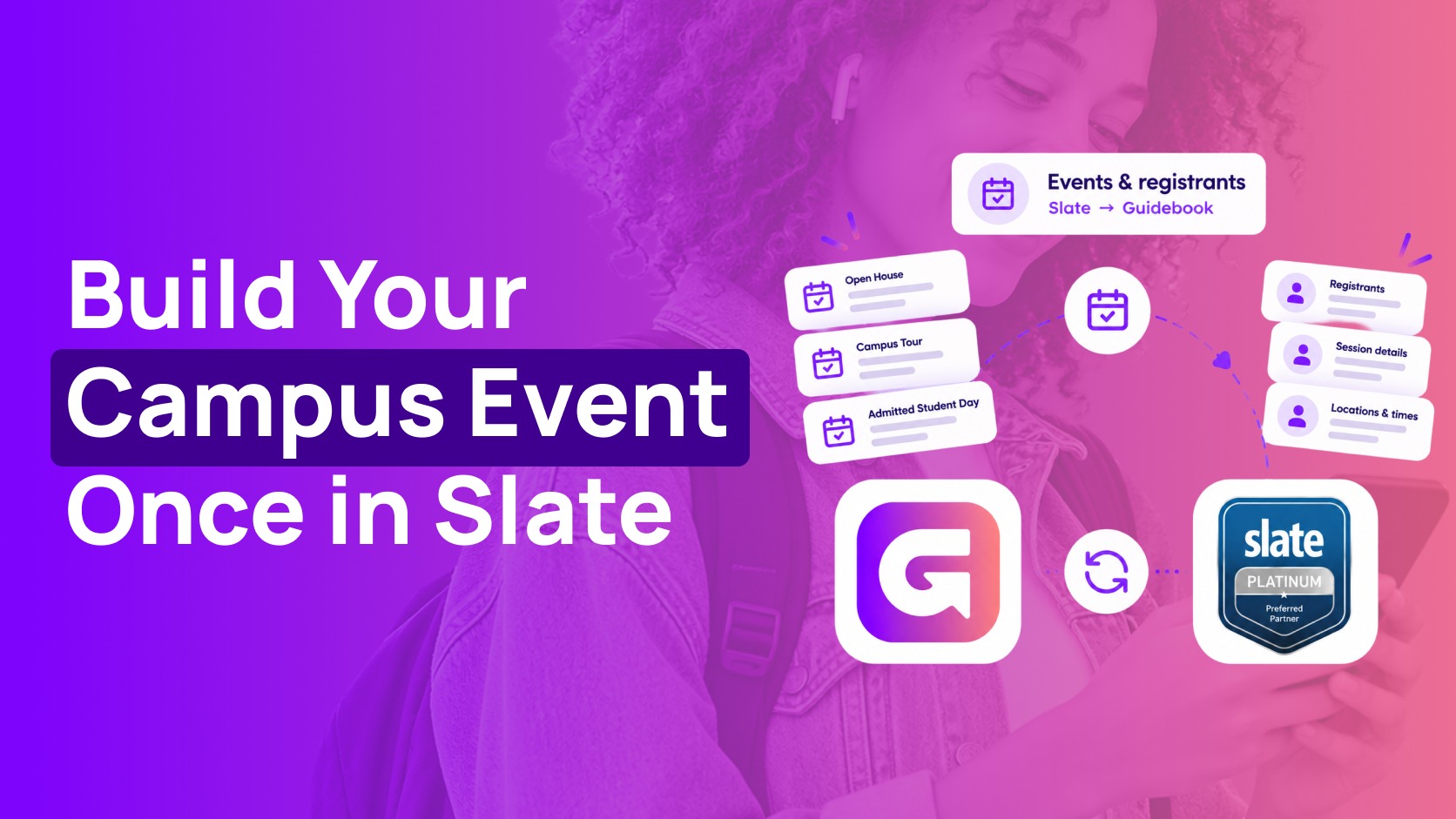
Build the campus event once in Slate
Link a Slate folder to a guide. Every event becomes a session, and registrants are added automatically.

Build the campus event once in Slate
Link a Slate folder to a guide. Every event becomes a session, and registrants are added automatically.
Slate profiles, in the campus app
Match each student's Slate record to their Guidebook account, so college, major, and orientation details stay current on every sync.
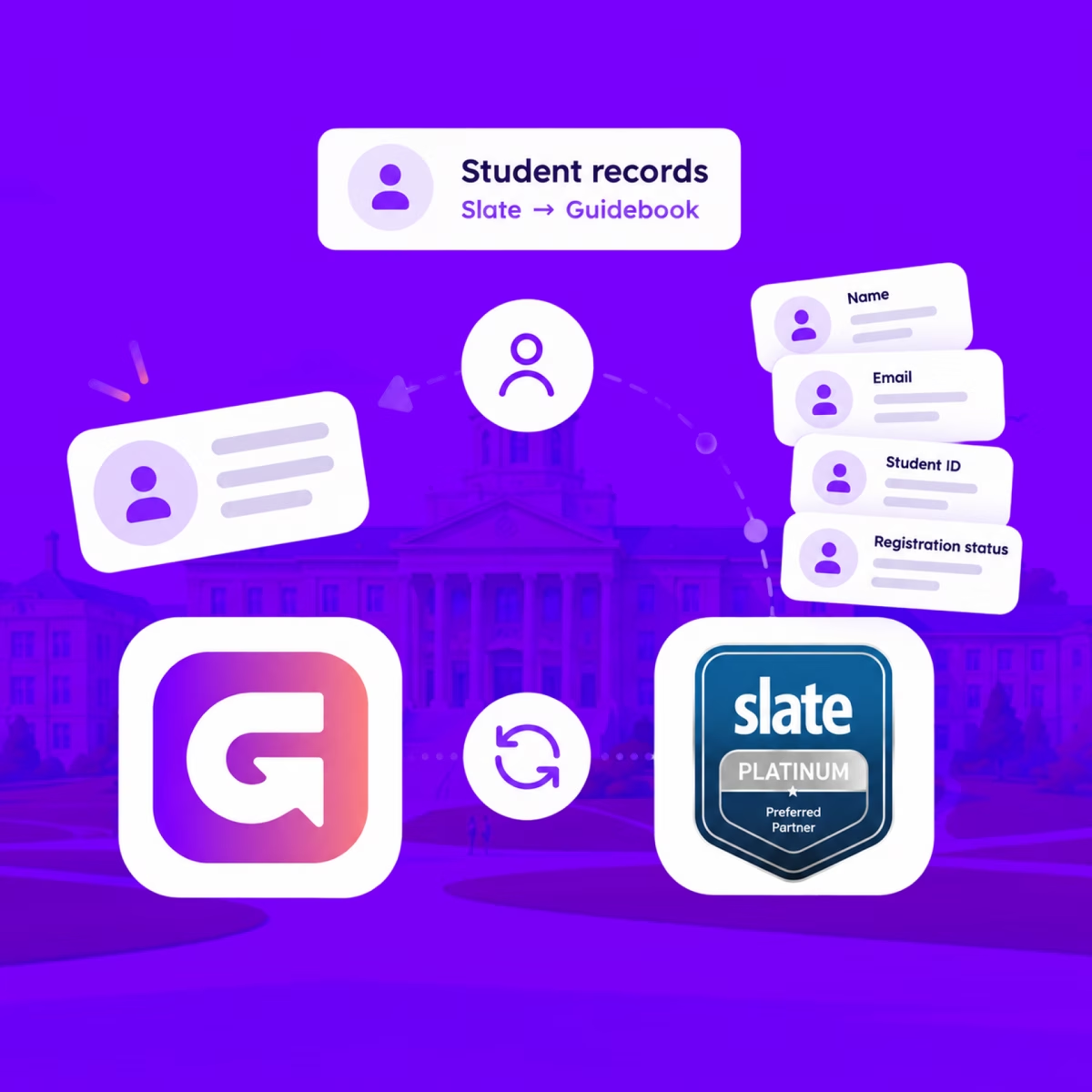
Slate profiles, in the campus app
Match each student's Slate record to their Guidebook account, so college, major, and orientation details stay current on every sync.
Campus apps by department
Admissions, orientation, student life, and more — one campus app that works across departments.

Campus apps by department
Admissions, orientation, student life, and more — one campus app that works across departments.
Build unlimited event apps on one license
One partnership for unlimited campus events — orientation, tours, student life, and everything in between.
Build unlimited event apps on one license
One partnership for unlimited campus events — orientation, tours, student life, and everything in between.
Compare event app platforms
See how Guidebook stacks up against other event app and registration platforms.
Compare event app platforms
See how Guidebook stacks up against other event app and registration platforms.
Event apps for nonprofit and community programs
Give members, volunteers, and donors one branded app for conferences, fundraisers, and year-round community.
Event apps for nonprofit and community programs
Give members, volunteers, and donors one branded app for conferences, fundraisers, and year-round community.
Campus integrations and an open API
Connect Guidebook with the campus systems, APIs, and tools your team already uses.
Campus integrations and an open API
Connect Guidebook with the campus systems, APIs, and tools your team already uses.
Event apps for corporate and enterprise teams
Internal meetings, offsites, and large-scale corporate events — with the branding and control enterprise teams need.
Event apps for corporate and enterprise teams
Internal meetings, offsites, and large-scale corporate events — with the branding and control enterprise teams need.
Create a branded event app with no coding
Put schedules, maps, resources, and updates in every attendee's pocket — built for campus events and programs.
Create a branded event app with no coding
Put schedules, maps, resources, and updates in every attendee's pocket — built for campus events and programs.
Launch a branded, white-label event app
A white-label event app with your branding, your content, and your attendee experience — no coding required.
Launch a branded, white-label event app
A white-label event app with your branding, your content, and your attendee experience — no coding required.
Everything in the Guidebook platform
Explore the features event teams use to engage attendees before, during, and after the event.
Everything in the Guidebook platform
Explore the features event teams use to engage attendees before, during, and after the event.
One app for in-person and virtual attendees
The same schedule, networking, and updates whether people are in the room or joining remotely.
One app for in-person and virtual attendees
The same schedule, networking, and updates whether people are in the room or joining remotely.
Event apps built for associations
Annual meetings, chapter events, and member engagement — without rebuilding a new app every year.
Event apps built for associations
Annual meetings, chapter events, and member engagement — without rebuilding a new app every year.
A branded event website that matches the app
Promote the event, collect interest, and keep branding consistent from the first click to check-in.
A branded event website that matches the app
Promote the event, collect interest, and keep branding consistent from the first click to check-in.
Plan, run, and measure events on one platform
App, registration, badges, and websites in one workflow — so planning isn't a pile of disconnected tools.
Plan, run, and measure events on one platform
App, registration, badges, and websites in one workflow — so planning isn't a pile of disconnected tools.
Keep members engaged between events
One branded app for the conference and everything that happens the other 51 weeks of the year.
Keep members engaged between events
One branded app for the conference and everything that happens the other 51 weeks of the year.
The conference app attendees actually use
Schedules, maps, networking, and live updates for annual meetings, summits, and multi-day conferences.
The conference app attendees actually use
Schedules, maps, networking, and live updates for annual meetings, summits, and multi-day conferences.
Registration that feeds your app and badges
Collect registrations, payments, and attendee data in the same platform as your event app.
Registration that feeds your app and badges
Collect registrations, payments, and attendee data in the same platform as your event app.
Design and print event badges in one place
Custom badges, QR check-in, and on-site printing — without a separate badge vendor.
Design and print event badges in one place
Custom badges, QR check-in, and on-site printing — without a separate badge vendor.
A Smaller School?
Deliver a polished, branded event experience without a large team or a big budget.
A Smaller School?
Deliver a polished, branded event experience without a large team or a big budget.
Running Family Programs?
Give families everything they need, from schedules and maps to real-time updates, all in one place.
Running Family Programs?
Give families everything they need, from schedules and maps to real-time updates, all in one place.
Coordinating Move-In Day?
Share updates, manage events, and keep students informed from move-in through the academic year.

Coordinating Move-In Day?
Share updates, manage events, and keep students informed from move-in through the academic year.
Offering Campus Tours?
Deliver branded, self-guided tour experiences with interactive maps and rich media, available 24/7.
Offering Campus Tours?
Deliver branded, self-guided tour experiences with interactive maps and rich media, available 24/7.
Organising a Career Fair?
Simplify logistics for students, employers, and Career Services staff with one easy-to-use app.
Organising a Career Fair?
Simplify logistics for students, employers, and Career Services staff with one easy-to-use app.
Managing Alumni Events?
Plan reunions, regional events, and fundraising campaigns with an app built for alumni engagement.
Managing Alumni Events?
Plan reunions, regional events, and fundraising campaigns with an app built for alumni engagement.
Boost Student Engagement
One hub for schedules, resources, and events that keeps students connected throughout the academic year.
Boost Student Engagement
One hub for schedules, resources, and events that keeps students connected throughout the academic year.
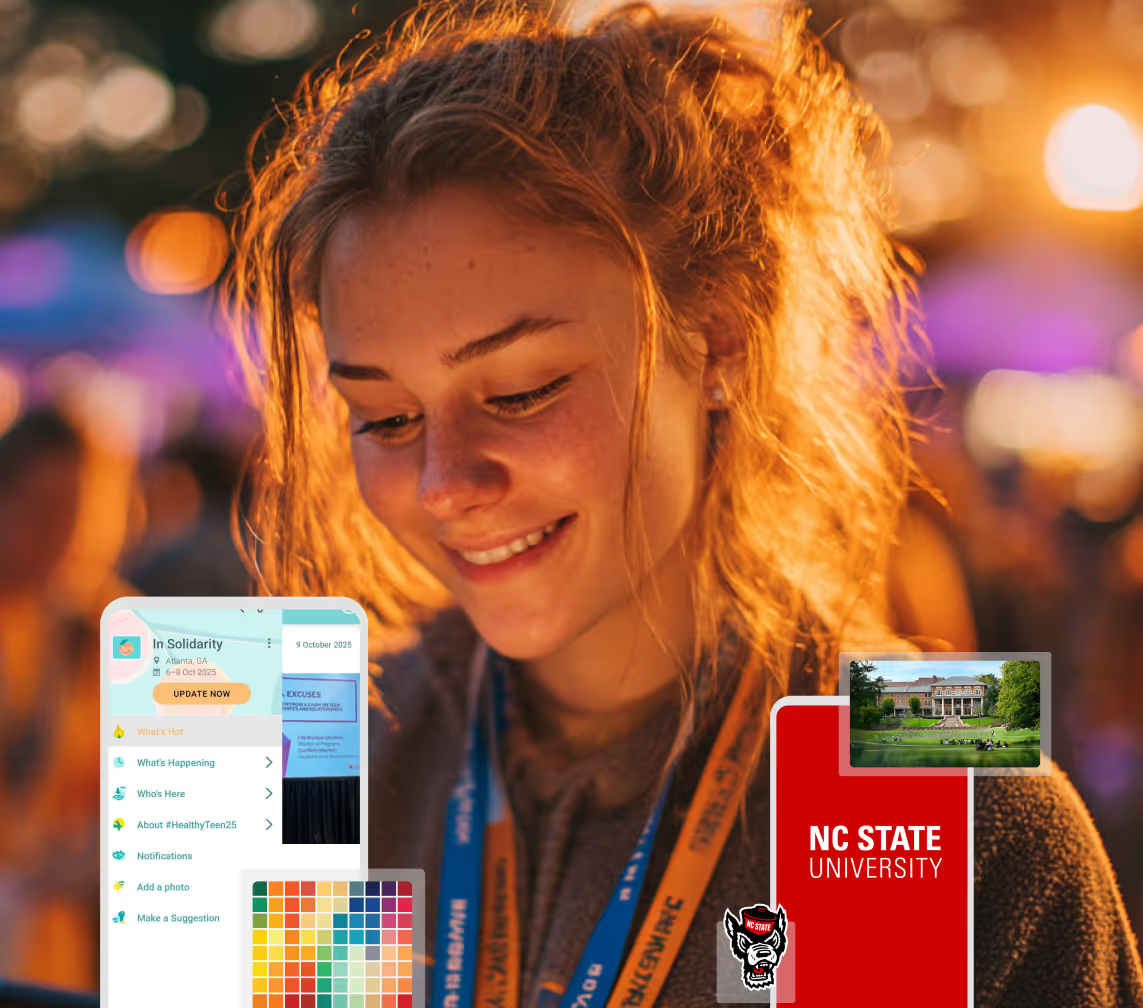
Planning Orientation?
Help new students feel prepared from day one with schedules, campus resources, and real-time updates in one app.
Planning Orientation?
Help new students feel prepared from day one with schedules, campus resources, and real-time updates in one app.
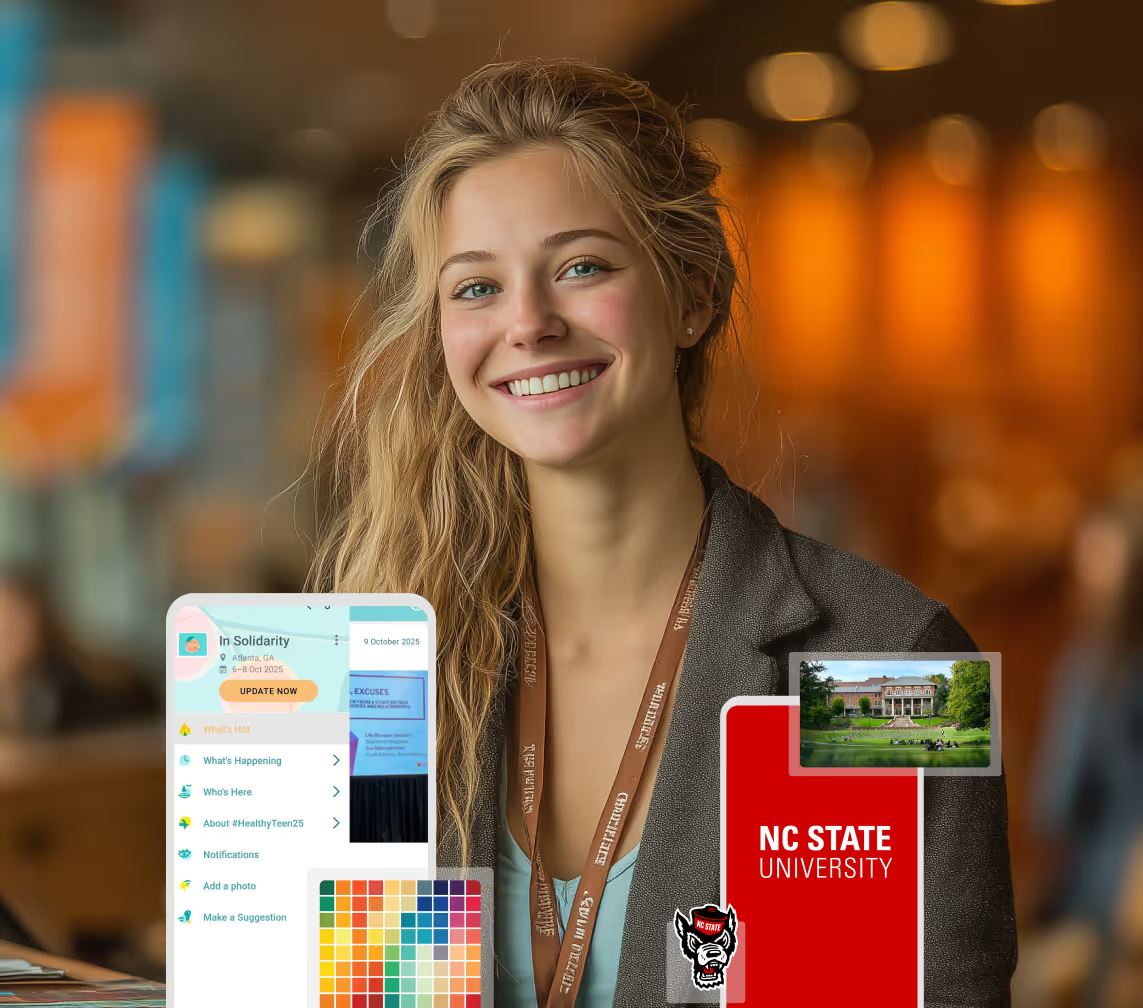
Running Admissions Events?
Manage open houses, tours, and yield events with a branded app that saves time and engages prospective students.
Running Admissions Events?
Manage open houses, tours, and yield events with a branded app that saves time and engages prospective students.
Get a custom Sponsorship Package Template
Stop starting from scratch. Grab free templates that helWe'll build a tailored sponsorship package with suggested pricing, tiers, and benefits..for your specific event.p you build professional sponsorship packages and close deals faster.
Get a custom Sponsorship Package Template
Stop starting from scratch. Grab free templates that helWe'll build a tailored sponsorship package with suggested pricing, tiers, and benefits..for your specific event.p you build professional sponsorship packages and close deals faster.
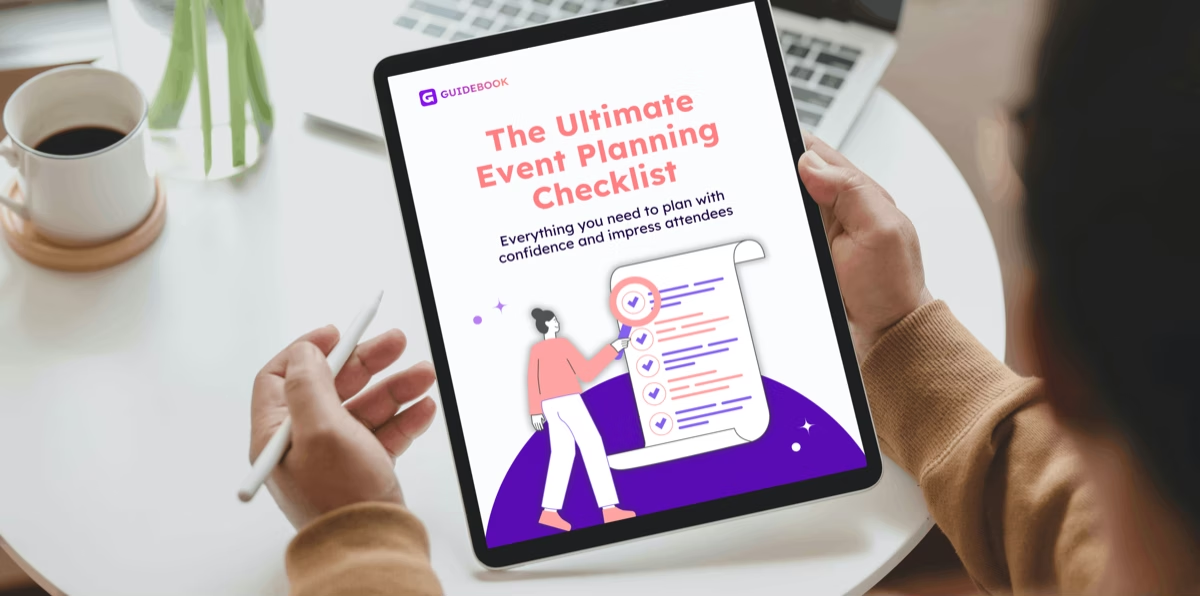
Plan Your Next Event Without Missing a Beat.
From venue selection to post-event wrap-up, this free checklist walks you through every step (so nothing falls through the cracks).
Plan Your Next Event Without Missing a Beat.
From venue selection to post-event wrap-up, this free checklist walks you through every step (so nothing falls through the cracks).
Real Results From Real Events
100,000+ organizations trust Guidebook. See exactly how universities, associations, enterprises, and more put it to work.

Real Results From Real Events
100,000+ organizations trust Guidebook. See exactly how universities, associations, enterprises, and more put it to work.
Flexible pricing for every event size
Find the perfect plan for your needs, from intimate gatherings to large-scale conferences.

Flexible pricing for every event size
Find the perfect plan for your needs, from intimate gatherings to large-scale conferences.
Join our event experts
Watch on-demand webinars and join live sessions with industry leaders sharing best practices for event success.

Join our event experts
Watch on-demand webinars and join live sessions with industry leaders sharing best practices for event success.
Guidebook in Action
Book a personalized walkthrough and discover how we help event teams create better attendee experiences.
Guidebook in Action
Book a personalized walkthrough and discover how we help event teams create better attendee experiences.
Why Pacific Moved Orientation to Move-In Day




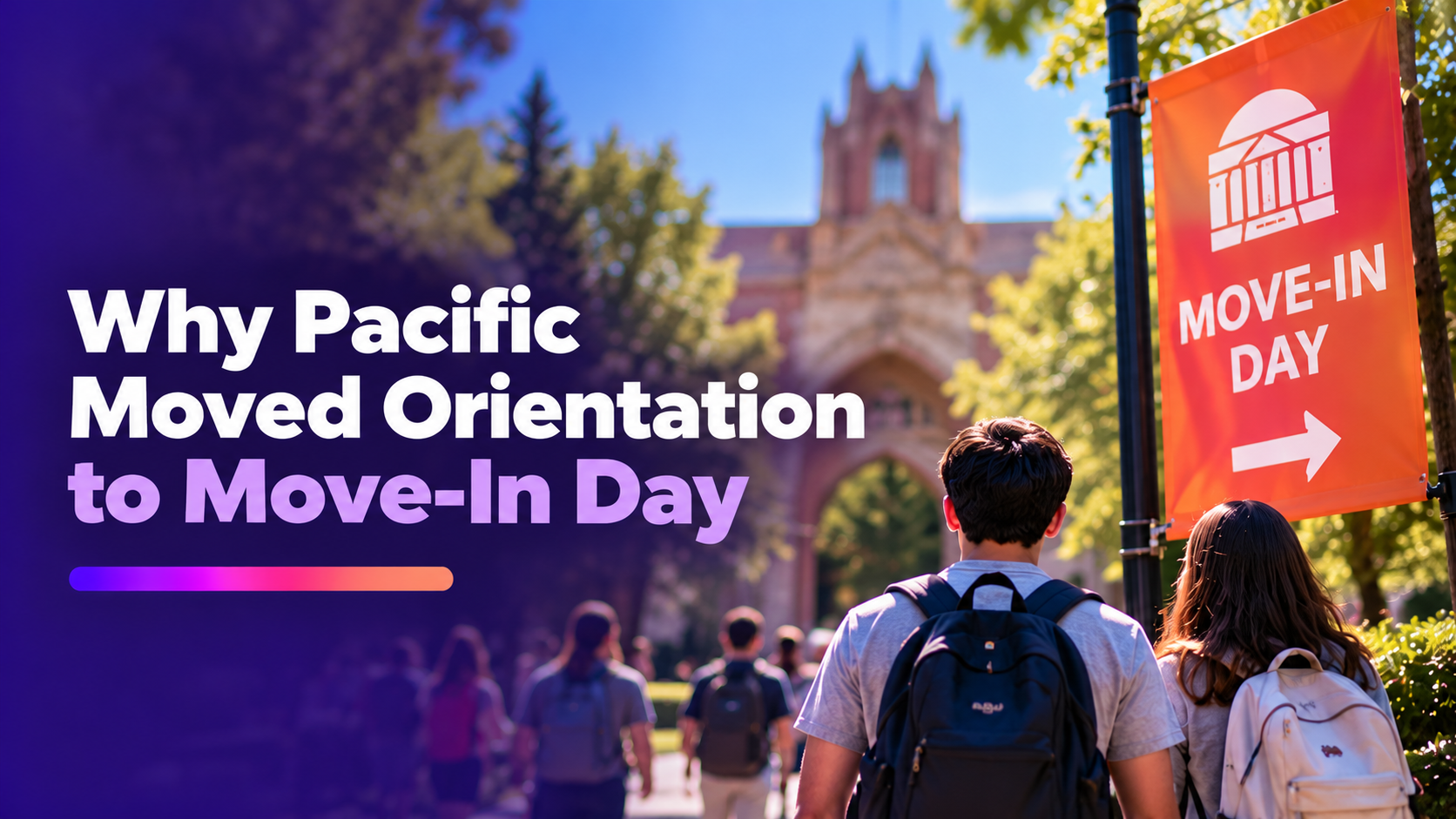
Why Pacific Moved Orientation to Move-In Day
- Pacific brings every new student in on move-in day, runs a two-day orientation, then goes straight into Week of Welcome.
- First-to-second-year retention has been in the 92% range, up from roughly 85 to 89% in earlier years. The goal is 98%.
- Alyssa credits much of that to the move-in model. It's a practitioner's read, not a controlled study.
- Feedback cut orientation from three days to two, with the fun moved into themed Week of Welcome days.
- About fifty orientation leaders run the student-led programs that do the most for belonging.
At a lot of campuses, orientation happens in the summer. Students travel in for a couple of days, then head home until fall. Alyssa, who works on orientation at the University of the Pacific, thinks that model can make yield and retention harder.
Pacific does it differently. Students arrive on move-in day, go straight into a two-day orientation, and roll right into Week of Welcome. In Campus Notes Episode 4, Alyssa explains why, and what Pacific has seen since.
What belonging sounds like at Pacific
Alyssa points to the first six weeks of the semester as the stretch when first-year students start to form a sense of belonging. Pacific listens for it in how students talk. When they say they're going back home for the weekend, they aren't talking about where they grew up. They mean campus.
"When we start hearing students say that Pacific is their home, that's when we really feel like they belong," she says. Other signs: students bringing friends to campus, and inviting their parents back for family weekend.
It isn't one event. It's a process.
What is first-to-second-year retention?
First-to-second-year retention is the share of first-year students who come back for their second year. It's one of the most closely watched numbers in student affairs, because the first year is when students are most likely to leave. Orientation and welcome programming sit at the very start of that year, which is why teams look closely at them when retention moves. See also what new student orientation covers.
One arrival. One class.
Before COVID, and before Alyssa joined, Pacific ran the summer model. Afterward, the team shifted. Alyssa's view is that students now need to be ingrained on campus a little longer, so bringing everyone in at once was partly a deliberate choice.
Summer isn't silent, either. Pacific's admissions team runs summer send-offs, events hosted in the places where admitted students are clustered. It's a way to take Pacific into their communities while students wait for fall.
Then everyone arrives together. Campus partners run programming, and returning students come back early, so new students start meeting the people they'll see in class.

The retention number, and how to read it
Alyssa says first-to-second-year retention has been in the 92% range for the past couple of years. In earlier years, it sat closer to the 85 to 89% range. The goal is 98%. "Ninety two is pretty good," she says.
She credits a big part of that to the move-in model. That's her read as the person running the program, not a controlled study, and plenty can change on a campus in a few years. It's still a pattern worth testing: one place, one time, one incoming class.
Cut what isn't working
Pacific assesses orientation from three directions: the students going through it, their parents and families, and the campus partners running sessions. Last year's three-day orientation drew a clear message. It felt too long.
So the team asked what had to stay and what could move into Week of Welcome. Orientation is now two days of new student checklist and onboarding pieces. Week of Welcome carries the fun, with a theme for each day:
- Wellness day. A Take Care Fair and a trip where Pacific takes over Target so students can shop.
- Involvement day. Club fairs on campus.
The point isn't to fill every hour. Alyssa wants students to get the information they need, have fun, and still have time to rest before classes start.
By students, for students
About fifty student leaders serve as orientation leaders through orientation and Week of Welcome. The programs they lead are the ones Alyssa sees doing the most for belonging. Leaders talk about their own experience at Pacific, and new students start to see themselves in it.

From pen and paper to check-in
Tracking attendance has been the hard part. In Alyssa's first year, orientation leaders checked in with students and logged attendance on paper spreadsheets. Last year, students swiped into programs with their ID cards.
When this episode was recorded, Pacific was preparing to use Guidebook session check-in and a gamified guide. The plan:
- Points for connecting with other students in the app and personalizing their account
- A leaderboard, with the top three called out at breakfast, lunch, and dinner across the two orientation days, each winning a goody bag
- A selfie challenge on Stockton's Miracle Mile, where local shops and restaurants partner with the university on student discounts, with points for every stop
Alyssa is honest that earlier attempts at gamification didn't stick. What she's hoping for is a shift in mindset, from "I have to go to orientation" to "I get to go to orientation." If you're weighing the same move, here's how Purdue uses gamification at orientation.

What to take back to your campus
- Question the summer default. If students scatter for months after orientation, ask whether arrival is a better moment to start.
- Listen for "home." The words students use are a belonging signal you can hear before any survey comes back.
- Ask three groups. Students, families, and campus partners will each tell you something different.
- Trim on purpose. Keep onboarding in orientation and move the fun into welcome week.
- Read retention carefully. A better number after a program change is a strong signal, not a controlled result.
Planning your own arrival model? See how orientation teams run new student programs with Guidebook, read about welcome week beyond orientation, or see how to track orientation attendance digitally.
Watch Alyssa's full conversation in Campus Notes Episode 4.
Frequently asked questions

Get the Mobile App Playbook
A short guide to running the whole student journey in one app. No fluff, just what works.
for higher ed
Campus
Playbook
A practical guide to building a connected campus experience.
Free playbook
The Mobile App Playbook for Universities
Students decide if they belong long before they set foot on campus. This playbook shows how to win them over from the first visit through graduation.
- Grow enrollment and boost recruitment
- Increase belonging and retention
- Run every event from one branded app
By submitting, you agree to our Privacy Policy.
You're in.