Campus apps by department
Admissions, orientation, student life, and more — one campus app that works across departments.

Campus apps by department
Admissions, orientation, student life, and more — one campus app that works across departments.
Build unlimited event apps on one license
One partnership for unlimited campus events — orientation, tours, student life, and everything in between.
Build unlimited event apps on one license
One partnership for unlimited campus events — orientation, tours, student life, and everything in between.
Compare event app platforms
See how Guidebook stacks up against other event app and registration platforms.
Compare event app platforms
See how Guidebook stacks up against other event app and registration platforms.
Event apps for nonprofit and community programs
Give members, volunteers, and donors one branded app for conferences, fundraisers, and year-round community.
Event apps for nonprofit and community programs
Give members, volunteers, and donors one branded app for conferences, fundraisers, and year-round community.
Campus integrations and an open API
Connect Guidebook with the campus systems, APIs, and tools your team already uses.
Campus integrations and an open API
Connect Guidebook with the campus systems, APIs, and tools your team already uses.
Event apps for corporate and enterprise teams
Internal meetings, offsites, and large-scale corporate events — with the branding and control enterprise teams need.
Event apps for corporate and enterprise teams
Internal meetings, offsites, and large-scale corporate events — with the branding and control enterprise teams need.
Create a branded event app with no coding
Put schedules, maps, resources, and updates in every attendee's pocket — built for campus events and programs.
Create a branded event app with no coding
Put schedules, maps, resources, and updates in every attendee's pocket — built for campus events and programs.
Launch a branded, white-label event app
A white-label event app with your branding, your content, and your attendee experience — no coding required.
Launch a branded, white-label event app
A white-label event app with your branding, your content, and your attendee experience — no coding required.
Everything in the Guidebook platform
Explore the features event teams use to engage attendees before, during, and after the event.
Everything in the Guidebook platform
Explore the features event teams use to engage attendees before, during, and after the event.
One app for in-person and virtual attendees
The same schedule, networking, and updates whether people are in the room or joining remotely.
One app for in-person and virtual attendees
The same schedule, networking, and updates whether people are in the room or joining remotely.
Event apps built for associations
Annual meetings, chapter events, and member engagement — without rebuilding a new app every year.
Event apps built for associations
Annual meetings, chapter events, and member engagement — without rebuilding a new app every year.
A branded event website that matches the app
Promote the event, collect interest, and keep branding consistent from the first click to check-in.
A branded event website that matches the app
Promote the event, collect interest, and keep branding consistent from the first click to check-in.
Plan, run, and measure events on one platform
App, registration, badges, and websites in one workflow — so planning isn't a pile of disconnected tools.
Plan, run, and measure events on one platform
App, registration, badges, and websites in one workflow — so planning isn't a pile of disconnected tools.
Keep members engaged between events
One branded app for the conference and everything that happens the other 51 weeks of the year.
Keep members engaged between events
One branded app for the conference and everything that happens the other 51 weeks of the year.
The conference app attendees actually use
Schedules, maps, networking, and live updates for annual meetings, summits, and multi-day conferences.
The conference app attendees actually use
Schedules, maps, networking, and live updates for annual meetings, summits, and multi-day conferences.
Registration that feeds your app and badges
Collect registrations, payments, and attendee data in the same platform as your event app.
Registration that feeds your app and badges
Collect registrations, payments, and attendee data in the same platform as your event app.
Design and print event badges in one place
Custom badges, QR check-in, and on-site printing — without a separate badge vendor.
Design and print event badges in one place
Custom badges, QR check-in, and on-site printing — without a separate badge vendor.
A Smaller School?
Deliver a polished, branded event experience without a large team or a big budget.
A Smaller School?
Deliver a polished, branded event experience without a large team or a big budget.
Running Family Programs?
Give families everything they need, from schedules and maps to real-time updates, all in one place.
Running Family Programs?
Give families everything they need, from schedules and maps to real-time updates, all in one place.
Coordinating Move-In Day?
Share updates, manage events, and keep students informed from move-in through the academic year.

Coordinating Move-In Day?
Share updates, manage events, and keep students informed from move-in through the academic year.
Offering Campus Tours?
Deliver branded, self-guided tour experiences with interactive maps and rich media, available 24/7.

Offering Campus Tours?
Deliver branded, self-guided tour experiences with interactive maps and rich media, available 24/7.
Organising a Career Fair?
Simplify logistics for students, employers, and Career Services staff with one easy-to-use app.
Organising a Career Fair?
Simplify logistics for students, employers, and Career Services staff with one easy-to-use app.
Managing Alumni Events?
Plan reunions, regional events, and fundraising campaigns with an app built for alumni engagement.
Managing Alumni Events?
Plan reunions, regional events, and fundraising campaigns with an app built for alumni engagement.
Boost Student Engagement
One hub for schedules, resources, and events that keeps students connected throughout the academic year.
Boost Student Engagement
One hub for schedules, resources, and events that keeps students connected throughout the academic year.
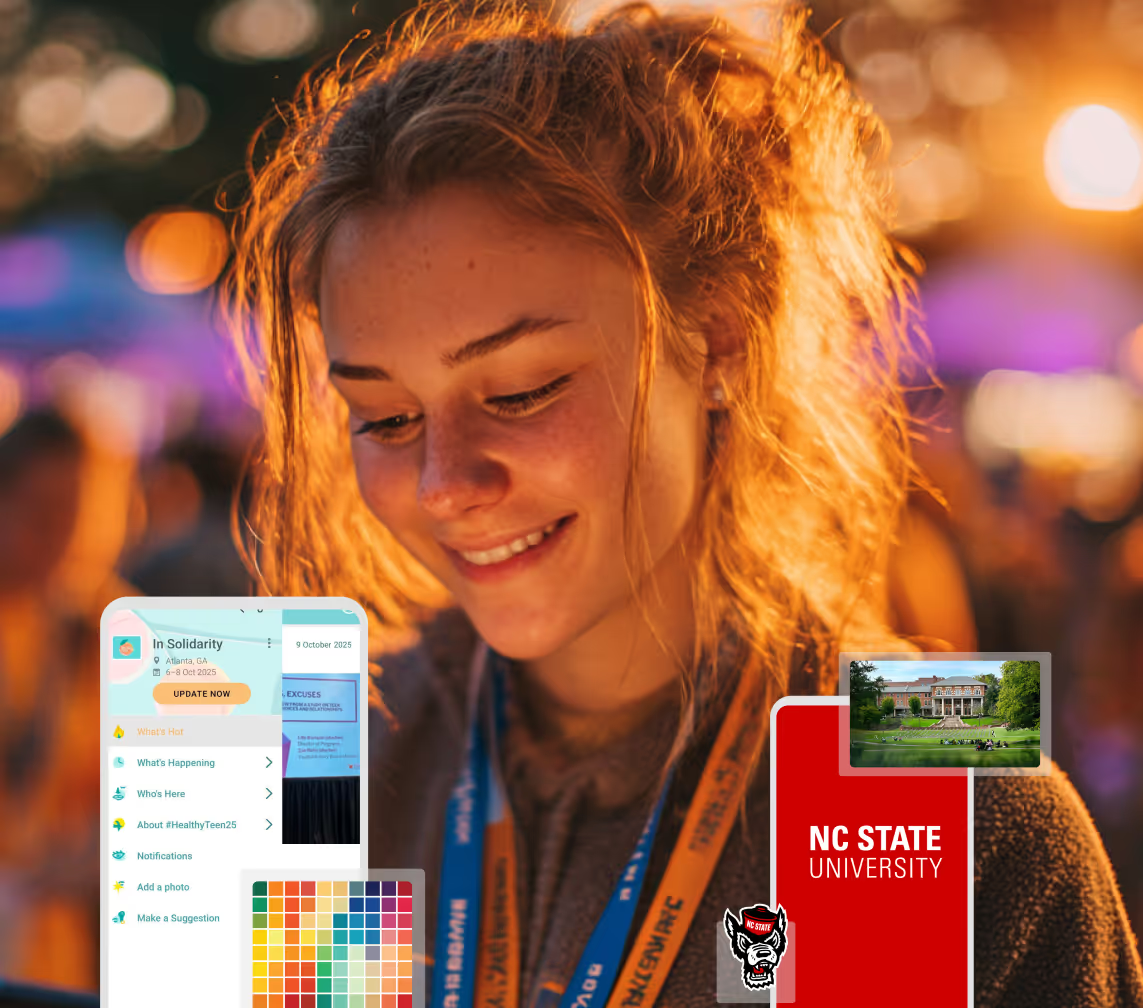
Planning Orientation?
Help new students feel prepared from day one with schedules, campus resources, and real-time updates in one app.
Planning Orientation?
Help new students feel prepared from day one with schedules, campus resources, and real-time updates in one app.
Running Admissions Events?
Manage open houses, tours, and yield events with a branded app that saves time and engages prospective students.

Running Admissions Events?
Manage open houses, tours, and yield events with a branded app that saves time and engages prospective students.
Get a custom Sponsorship Package Template
Stop starting from scratch. Grab free templates that helWe'll build a tailored sponsorship package with suggested pricing, tiers, and benefits..for your specific event.p you build professional sponsorship packages and close deals faster.
Get a custom Sponsorship Package Template
Stop starting from scratch. Grab free templates that helWe'll build a tailored sponsorship package with suggested pricing, tiers, and benefits..for your specific event.p you build professional sponsorship packages and close deals faster.
Plan Your Next Event Without Missing a Beat.
From venue selection to post-event wrap-up, this free checklist walks you through every step (so nothing falls through the cracks).
.avif)
Plan Your Next Event Without Missing a Beat.
From venue selection to post-event wrap-up, this free checklist walks you through every step (so nothing falls through the cracks).
Real Results From Real Events
100,000+ organizations trust Guidebook. See exactly how universities, associations, enterprises, and more put it to work.

Real Results From Real Events
100,000+ organizations trust Guidebook. See exactly how universities, associations, enterprises, and more put it to work.
Flexible pricing for every event size
Find the perfect plan for your needs, from intimate gatherings to large-scale conferences.

Flexible pricing for every event size
Find the perfect plan for your needs, from intimate gatherings to large-scale conferences.
Join our event experts
Watch on-demand webinars and join live sessions with industry leaders sharing best practices for event success.
.avif)
Join our event experts
Watch on-demand webinars and join live sessions with industry leaders sharing best practices for event success.
Guidebook in Action
Book a personalized walkthrough and discover how we help event teams create better attendee experiences.
Guidebook in Action
Book a personalized walkthrough and discover how we help event teams create better attendee experiences.
The Orientation Coordinator's First-90-Days Playbook
%20(1).avif)




The Orientation Coordinator's First-90-Days Playbook
- The 90 days between deposit and move-in aren't a waiting room, they're your highest-leverage retention window.
- Orientation programs that communicate early and often build the trust that gets students to show up ready.
- The coordinators running the smoothest programs aren't working harder, they're working in phases, with clear handoffs at each stage.
- Your students already have the device. Your job is to meet them there before someone else does.
The admitted student letter went out in March. Your program runs in August. Between those two moments is a 90-day window that most orientation teams underestimate, some ignore, and the best ones have learned to treat as the whole job.
This is your playbook for that window.
It's not a new framework. It's a cleaner version of what you're already doing: building something students trust enough to show up for, and that families trust enough to let go.
Here's what you'll find below: a phase-by-phase breakdown of the first 90 days, the communication cadence that earns trust before orientation week, the setup mistakes that cost programs their summer, and what success actually looks like on the day itself.
The window most orientation coordinators underestimate
By the time orientation week arrives, the retention decision is already half-made.
Students who feel uninformed, lost, or like an afterthought in the months before they arrive are more likely to quietly reconsider. It doesn't happen in one moment. It happens in accumulated silence, unanswered questions, and emails that feel like they went to a database, not a person.
Your 90-day window isn't setup time. It's relationship time. Every communication you send between deposit and move-in either builds trust or erodes it. The programs that show up to orientation week with confident, engaged students built that confidence over 12 weeks, not 12 hours.
What does an orientation coordinator actually own?
The orientation coordinator owns the student's transition from deposited to enrolled, acclimated, and belonging. That means the pre-arrival window (deposit through arrival), orientation day itself, and the handoff to first-year programs. It's one of the few roles in higher education that touches a student at every stage of their most vulnerable transition. The job isn't logistics. The logistics are in service of something much more important: making a student feel like they made the right choice before they've stepped foot in a classroom.
Phase 1: Days 1–30 – Build the foundation
Deposit season ends. Most orientation teams exhale. The best ones open a new doc.
Daniel Haddad, Associate Director of Orientation Programs at Baylor University, describes the mindset his team uses: it's always August. The fall debrief isn't recovery. It's the start of next year's build. At Baylor, where the team runs 11 orientation sessions across 3,400 to 3,600 incoming students each summer, the only way to run that volume without breaking is to start before anyone's thinking about it.
Your first 30 days are about architecture, not content. Decisions made now will govern every session description, every track, every communication touch you send in June and July.
What to do in Phase 1:
- Run your post-program debrief while the details are fresh. Which sessions got strong feedback? Which ones sat at 30%? Which campus partners need a different brief next cycle?
- Align with stakeholders early. The offices that will present at your program (financial aid, housing, health center, advising) need lead time. Lock in their availability and session formats before April ends.
- Make your naming decision. The name you give your guide or app is something you'll live with all summer. You can update the content inside it, but the title itself may be locked once you publish. Choose something that holds across all your cohorts and connects to how your institution brands orientation as a whole.
- Start hiring and training your student leaders. Your orientation leaders are the most credible voice your students will hear. The earlier they're trained, the more confident they'll be on the floor.
Phase 2: Days 31–60 – Build in public
Late spring is when the work becomes visible. Content goes into the guide. Tracks take shape. The communication drip starts.
This phase is where many programs stumble. They treat the 30-day window before orientation as build time. The programs that run smoothest treat it as trust-building time, and they start much earlier.
Build your tracks first, then fill them.
Your students aren't one audience. First-year students need fast, action-oriented instructions. Transfer students have a different set of unknowns. Parents and family members want detail, want documents, want to feel reassured. Building those three tracks separately, with language tailored to each, isn't extra work. It's what keeps your office phone quiet during the week before orientation.
Think about what goes in each track:
- First-year students: Required sessions, campus map, what to bring, where to park, what to expect when they separate from their family for the first time.
- Transfer students: A track that acknowledges they're not brand-new to college but brand-new to this institution. Don't bury them in first-year content.
- Parents, families, and supporters: The sessions designed for them, hot-topic office contacts (financial aid, housing, health center), and resources they'll want to revisit in September when their student calls home.
Start the communication drip.
Your students are hearing from a dozen offices between deposit and arrival. The programs that cut through the noise don't send more, they send better: timely, specific, useful information delivered at the right moment in the arrival experience.
Start communicating from the voice of orientation programs as early as April or May. Not to promote the app. Not to sell anything. Just to be a trusted name in their inbox before you need something from them. By the time you ask a student to download your guide in July, you want them to recognize who's asking.
The strongest programs make their pre-arrival sequence easy to reference, so students and families can look back at any point and see the full arc of what's coming. It signals one important thing: we planned this for you. See the Purdue orientation case study for how one program built its pre-arrival communication.
The 30-days-out communication cadence:
- 30 days out: Welcome to the countdown. Task list, what to expect, first look at the schedule.
- 21 days out: Session spotlight. Highlight two or three things they'll do, not just attend.
- 14 days out: Download the app. Not before this, they're not thinking about it yet.
- 7 days out: Practical prep. Parking, what to bring, who to contact with questions.
- 2 days out: Personal email from their orientation leader. Request a response. This one matters.
That last touch is worth building into your leader training. A personal email from a peer, with a name attached and a direct ask for a reply, does something a broadcast message never will. It tells a student that someone already knows they're coming.
Phase 3: Days 61–90 – Go live and get ready for the real thing
Six to eight weeks out, your guide goes live. Not to push app downloads yet. To get comfortable with the tool before you need it under pressure.
Run your soft launch like a practice run.
The coordinators who handle on-the-fly orientation day changes calmly are the ones who've already been in the builder. They know where the location field is. They've sent a test push notification. They've watched a session update propagate in real time and confirmed it works before 800 people are waiting to know what room they're in.
Your app is only as powerful as your team's comfort with it. Build that comfort before August, not during it.
Your multi-modal download campaign:
Students don't download an app from one ask. They download it after the fifth time they've heard about it in different places. Email, social media, your online orientation modules, orientation leader outreach, and a QR code on their move-in check-in sheet all pointing to the same thing. By the time they walk into your gym check-in line, hearing "did you download the app?" should feel like confirmation, not a new request.
This is what it means to meet students on the device in their hand. Not a website squeezed onto a phone screen. A native mobile experience that's already there when they need it. Your app. Your team. Your timeline.
Brief your student leaders on real-time updates.
On orientation day, your student leaders are the fastest distribution network you have. If a room changes, they need to know how to direct students to the app, not to a whiteboard. Build that into training. Walk them through what a push notification looks like from a student's perspective. The institutions that run the smoothest programs treat this as a three-minute training item. The ones that scramble on orientation day skipped it.
What success looks like on orientation day:
Picture this: it's the second session block of your summer program, and a presenter swaps rooms at the last minute. A few years ago, that meant a coordinator sprinting to the building entrance with a handwritten sign. Today, you're sitting in the courtyard where the next session starts, you make a 90-second edit on your phone, and the update reaches every student before they've stood up from their chairs.
Nobody calls the office. Nobody stops an orientation leader to ask what happened. Families aren't confused. The program moves forward and no one knows anything shifted except you and the presenter.
That's the goal. Not a perfect program. A resilient one. See how Seattle University runs real-time updates across their orientation program and how Coastal Carolina approaches information design for on-the-fly changes.
The three mistakes that eat your summer
1. Rushing the rollout.
Many orientation coordinators describe the same experience: they knew the app needed time to build properly, but other pressures pushed the build into the last two to three weeks before the program. The result is a guide that works but doesn't work well, with sessions missing, tracks incomplete, families getting the same view as students because there wasn't time to separate them.
Eight weeks of intentional build is not a luxury. It's the difference between a guide you're proud of and one you're apologizing for.
2. Forgetting the transfer track.
It happens to first-time builders and to experienced coordinators who've had a hectic spring. Transfer students have different questions, different anxieties, and different prior expectations than first-year students. They deserve a track that reflects that. Build it in Phase 2, not the night before transfer orientation.
3. Over-engineering the guide at the expense of speed.
The best orientation guides aren't the most detailed ones. They're the fastest ones. A student standing between two buildings with three minutes to find their next session doesn't need a paragraph. They need a room number and a map pin. Design for the student who's already late, not the one sitting down to read.
Plan it in phases. Build it like it matters.
The 90-day window doesn't belong to admissions or the registrar. It belongs to you.
Every timely email. Every session description written for a nervous first-year student and their equally nervous parent. Every real-time update pushed from a courtyard while your program keeps moving. It's all the same work. It's all orientation.
Your students don't experience the chaos behind the scenes. They experience what you put in front of them: a guide that answers their questions before they ask, a schedule that updates before they're lost, a leader who knew their name before they arrived.
Build it in phases. Start in February. Test before July. Trust the work.
When you're ready to go deeper, explore how Guidebook supports new student programs and see what your orientation program could look like next August.
[faq] Q: What should an orientation coordinator do in the first 30 days after students deposit? A: The first 30 days are about architecture, not content. Run your post-program debrief while the details are fresh. Lock in campus partner availability before April ends, since financial aid, housing, health center, and advising need more lead time than most coordinators give them. Make your guide naming decision now, because the title may be locked once you publish. And start hiring your student leaders. The earlier they're trained, the more effective they'll be on orientation day. Q: How early should you start building your orientation app or guide? A: Eight weeks before your first session is the floor, not the target. The programs that run the smoothest start in Phase 1, roughly 60 to 90 days out, loading content gradually rather than sprinting in the final two weeks. A rushed build produces a guide that works but doesn't work well, with incomplete tracks, missing sessions, and a team that's never tested the tool under pressure. Build early so you can fix quietly, not frantically. Q: How do you get students to actually download the orientation app? A: You don't get them to download it with one ask. You get there through five or six touches across different channels: email, social media, online orientation modules, a personal email from their orientation leader, and a QR code at move-in check-in. Each touch builds on the last. The key is starting your communication drip early enough that students already trust the name in their inbox before you ask them to take action. By mid-July, downloading the app should feel like the obvious next step, not a new request. Q: What's the difference between a student track and a parent/family track in orientation? A: A student track shows first-year or transfer students the sessions, locations, and resources designed specifically for them, fast, direct, and action-oriented. A parent and family track shows supporters their separate programming, key office contacts (financial aid, housing, health center), and resources they'll want to revisit later when their student calls home with questions. The two audiences have different anxieties and different information needs. Giving them the same view of the guide serves neither well. Q: How do you handle last-minute schedule changes during orientation? A: The coordinators who handle changes calmly are the ones who practiced before orientation week. If your team is comfortable in the builder, knows where the location field is, has sent a test push notification, a room change becomes a 90-second edit, not a crisis. Push the update, it reaches every student's phone before they've stood up from their chairs. Brief your student leaders on what a real-time update looks like from the student side so they can redirect people confidently without waiting for direction from the office. Q: What does a good orientation communication cadence look like? A: Start communicating from the voice of orientation programs as early as April or May, not to promote your app, but to become a trusted name before you need something from students. Then at 30 days out, send a welcome and task list. At 21 days, highlight specific sessions or experiences. At 14 days, introduce the app download. At seven days, cover practical logistics: parking, what to bring, who to answer questions. Two days out, have each orientation leader send a personal email to their assigned students and request a reply. That final touch is the one that turns a name on a list into a relationship. [/faq]
Get the Mobile App Playbook
A short guide to running the whole student journey in one app. No fluff, just what works.
for higher ed
Campus
Playbook
A practical guide to building a connected campus experience.
Free playbook
The Mobile App Playbook for Universities
Students decide if they belong long before they set foot on campus. This playbook shows how to win them over from the first visit through graduation.
- Grow enrollment and boost recruitment
- Increase belonging and retention
- Run every event from one branded app
By submitting, you agree to our Privacy Policy.
You're in.
.png)