Campus apps by department
Admissions, orientation, student life, and more — one campus app that works across departments.

Campus apps by department
Admissions, orientation, student life, and more — one campus app that works across departments.
Build unlimited event apps on one license
One partnership for unlimited campus events — orientation, tours, student life, and everything in between.
Build unlimited event apps on one license
One partnership for unlimited campus events — orientation, tours, student life, and everything in between.
Compare event app platforms
See how Guidebook stacks up against other event app and registration platforms.
Compare event app platforms
See how Guidebook stacks up against other event app and registration platforms.
Event apps for nonprofit and community programs
Give members, volunteers, and donors one branded app for conferences, fundraisers, and year-round community.
Event apps for nonprofit and community programs
Give members, volunteers, and donors one branded app for conferences, fundraisers, and year-round community.
Campus integrations and an open API
Connect Guidebook with the campus systems, APIs, and tools your team already uses.
Campus integrations and an open API
Connect Guidebook with the campus systems, APIs, and tools your team already uses.
Event apps for corporate and enterprise teams
Internal meetings, offsites, and large-scale corporate events — with the branding and control enterprise teams need.
Event apps for corporate and enterprise teams
Internal meetings, offsites, and large-scale corporate events — with the branding and control enterprise teams need.
Create a branded event app with no coding
Put schedules, maps, resources, and updates in every attendee's pocket — built for campus events and programs.
Create a branded event app with no coding
Put schedules, maps, resources, and updates in every attendee's pocket — built for campus events and programs.
Launch a branded, white-label event app
A white-label event app with your branding, your content, and your attendee experience — no coding required.
Launch a branded, white-label event app
A white-label event app with your branding, your content, and your attendee experience — no coding required.
Everything in the Guidebook platform
Explore the features event teams use to engage attendees before, during, and after the event.
Everything in the Guidebook platform
Explore the features event teams use to engage attendees before, during, and after the event.
One app for in-person and virtual attendees
The same schedule, networking, and updates whether people are in the room or joining remotely.
One app for in-person and virtual attendees
The same schedule, networking, and updates whether people are in the room or joining remotely.
Event apps built for associations
Annual meetings, chapter events, and member engagement — without rebuilding a new app every year.
Event apps built for associations
Annual meetings, chapter events, and member engagement — without rebuilding a new app every year.
A branded event website that matches the app
Promote the event, collect interest, and keep branding consistent from the first click to check-in.
A branded event website that matches the app
Promote the event, collect interest, and keep branding consistent from the first click to check-in.
Plan, run, and measure events on one platform
App, registration, badges, and websites in one workflow — so planning isn't a pile of disconnected tools.
Plan, run, and measure events on one platform
App, registration, badges, and websites in one workflow — so planning isn't a pile of disconnected tools.
Keep members engaged between events
One branded app for the conference and everything that happens the other 51 weeks of the year.
Keep members engaged between events
One branded app for the conference and everything that happens the other 51 weeks of the year.
The conference app attendees actually use
Schedules, maps, networking, and live updates for annual meetings, summits, and multi-day conferences.
The conference app attendees actually use
Schedules, maps, networking, and live updates for annual meetings, summits, and multi-day conferences.
Registration that feeds your app and badges
Collect registrations, payments, and attendee data in the same platform as your event app.
Registration that feeds your app and badges
Collect registrations, payments, and attendee data in the same platform as your event app.
Design and print event badges in one place
Custom badges, QR check-in, and on-site printing — without a separate badge vendor.
Design and print event badges in one place
Custom badges, QR check-in, and on-site printing — without a separate badge vendor.
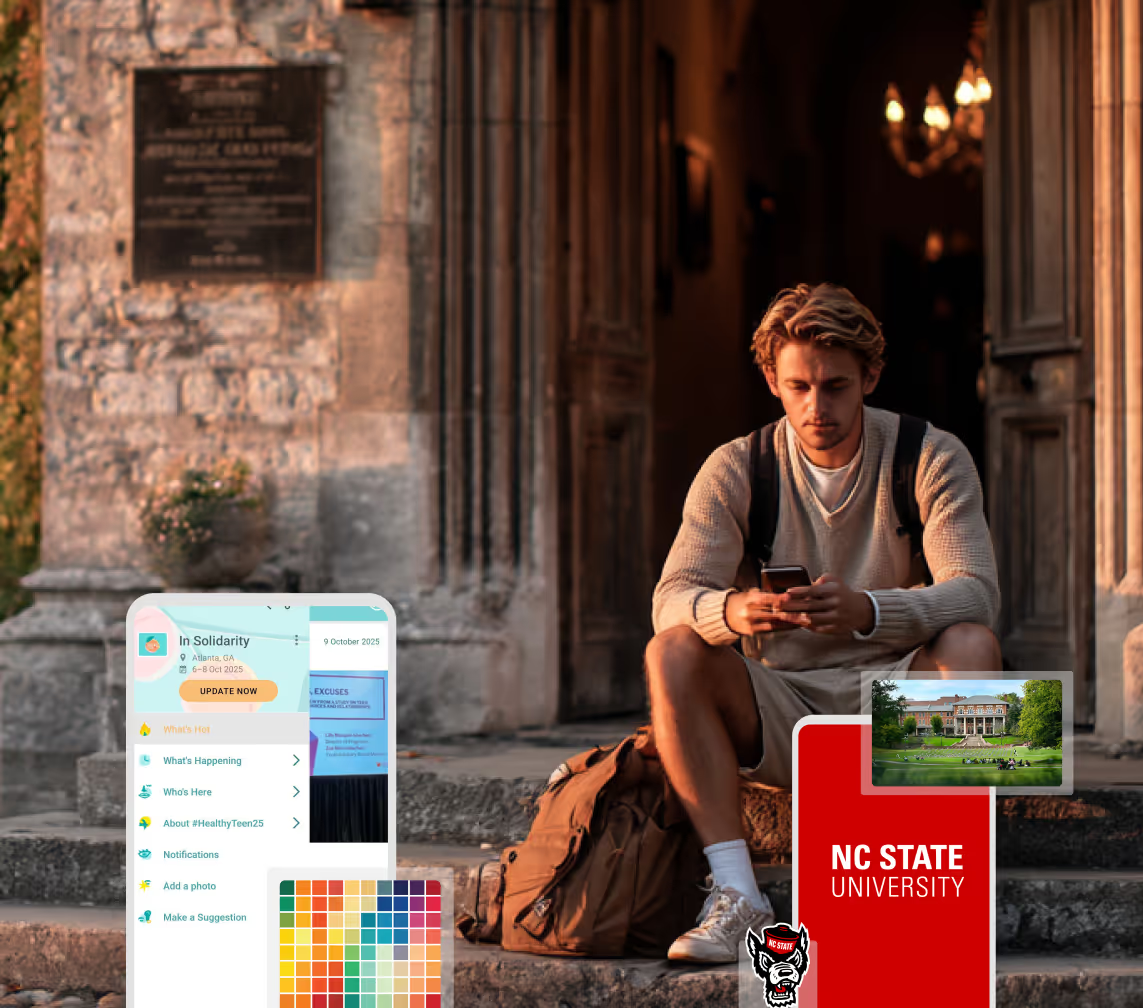
A Smaller School?
Deliver a polished, branded event experience without a large team or a big budget.
A Smaller School?
Deliver a polished, branded event experience without a large team or a big budget.
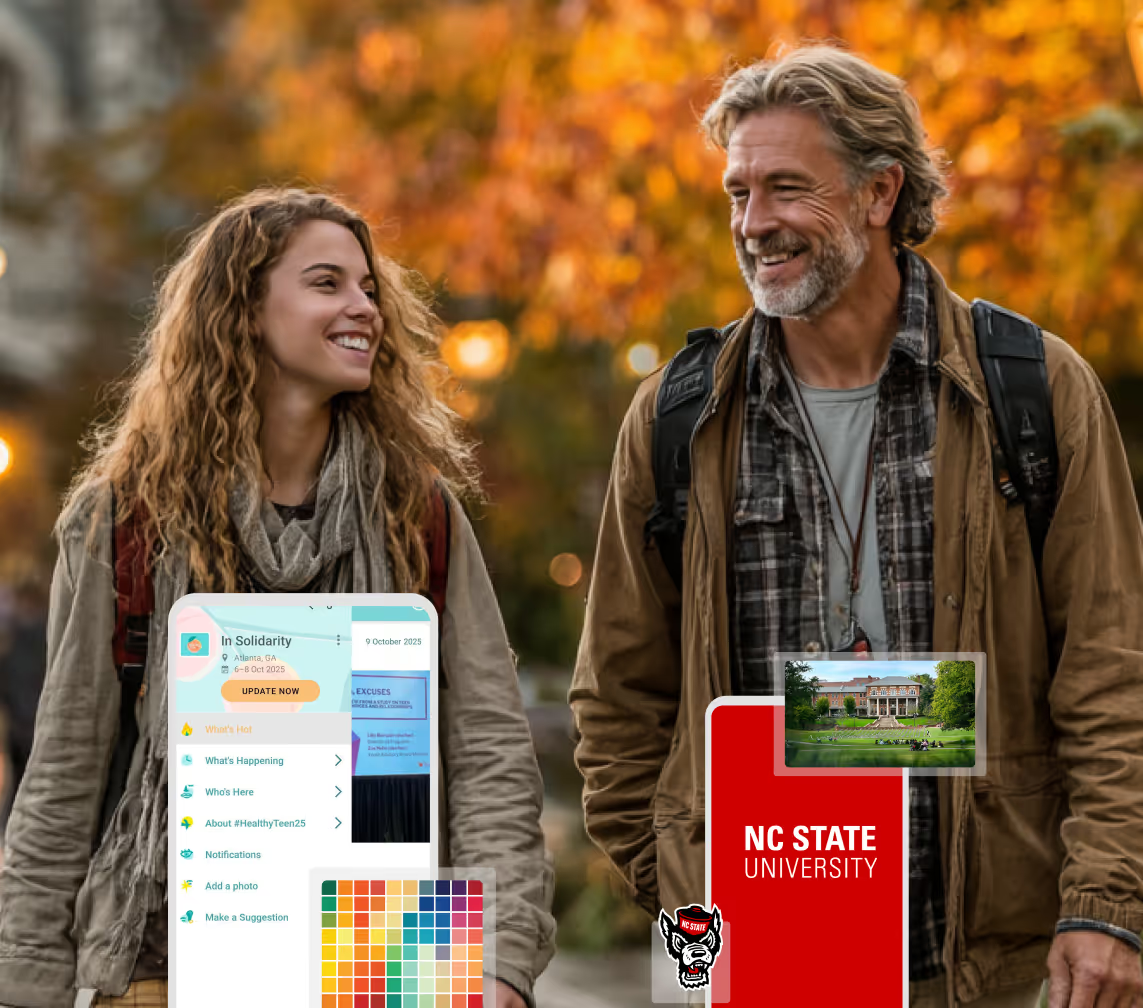
Running Family Programs?
Give families everything they need, from schedules and maps to real-time updates, all in one place.
Running Family Programs?
Give families everything they need, from schedules and maps to real-time updates, all in one place.
Coordinating Move-In Day?
Share updates, manage events, and keep students informed from move-in through the academic year.

Coordinating Move-In Day?
Share updates, manage events, and keep students informed from move-in through the academic year.
Offering Campus Tours?
Deliver branded, self-guided tour experiences with interactive maps and rich media, available 24/7.

Offering Campus Tours?
Deliver branded, self-guided tour experiences with interactive maps and rich media, available 24/7.
Organising a Career Fair?
Simplify logistics for students, employers, and Career Services staff with one easy-to-use app.
Organising a Career Fair?
Simplify logistics for students, employers, and Career Services staff with one easy-to-use app.
Managing Alumni Events?
Plan reunions, regional events, and fundraising campaigns with an app built for alumni engagement.
Managing Alumni Events?
Plan reunions, regional events, and fundraising campaigns with an app built for alumni engagement.
Boost Student Engagement
One hub for schedules, resources, and events that keeps students connected throughout the academic year.
Boost Student Engagement
One hub for schedules, resources, and events that keeps students connected throughout the academic year.
Planning Orientation?
Help new students feel prepared from day one with schedules, campus resources, and real-time updates in one app.
Planning Orientation?
Help new students feel prepared from day one with schedules, campus resources, and real-time updates in one app.
Running Admissions Events?
Manage open houses, tours, and yield events with a branded app that saves time and engages prospective students.

Running Admissions Events?
Manage open houses, tours, and yield events with a branded app that saves time and engages prospective students.
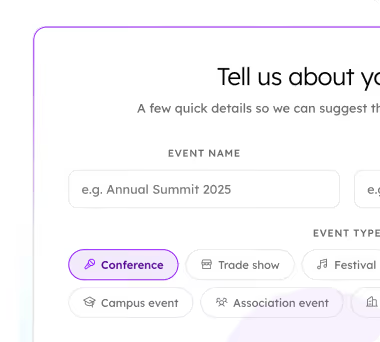
Get a custom Sponsorship Package Template
Stop starting from scratch. Grab free templates that helWe'll build a tailored sponsorship package with suggested pricing, tiers, and benefits..for your specific event.p you build professional sponsorship packages and close deals faster.
Get a custom Sponsorship Package Template
Stop starting from scratch. Grab free templates that helWe'll build a tailored sponsorship package with suggested pricing, tiers, and benefits..for your specific event.p you build professional sponsorship packages and close deals faster.
Plan Your Next Event Without Missing a Beat.
From venue selection to post-event wrap-up, this free checklist walks you through every step (so nothing falls through the cracks).
.avif)
Plan Your Next Event Without Missing a Beat.
From venue selection to post-event wrap-up, this free checklist walks you through every step (so nothing falls through the cracks).
Real Results From Real Events
100,000+ organizations trust Guidebook. See exactly how universities, associations, enterprises, and more put it to work.

Real Results From Real Events
100,000+ organizations trust Guidebook. See exactly how universities, associations, enterprises, and more put it to work.
Flexible pricing for every event size
Find the perfect plan for your needs, from intimate gatherings to large-scale conferences.

Flexible pricing for every event size
Find the perfect plan for your needs, from intimate gatherings to large-scale conferences.
Join our event experts
Watch on-demand webinars and join live sessions with industry leaders sharing best practices for event success.
.avif)
Join our event experts
Watch on-demand webinars and join live sessions with industry leaders sharing best practices for event success.
Guidebook in Action
Book a personalized walkthrough and discover how we help event teams create better attendee experiences.
Guidebook in Action
Book a personalized walkthrough and discover how we help event teams create better attendee experiences.
How Coastal Carolina Turned a Stale College Orientation Program Into One Students Actually Remember
.avif)





How Coastal Carolina Turned a Stale College Orientation Program Into One Students Actually Remember
When your orientation program has been running the same way for years, it can be hard to pinpoint exactly what's working and not working.
After all, it’s functional and students get through it.
But somewhere between the third presenter of the morning and the stack of printed schedules that are already out of date, you might start wondering if there's a better way.
That's exactly where Natasha Golden, Associate Director for Student Transition and Engagement at Coastal Carolina University, found herself. And what she did next is worth paying attention to.
In this post we’ll share exactly how Natasha, and the team at CCU, revamped orientation, and you’ll walk away knowing:
- How to audit a stale orientation program without blowing up what's working
- Why physical movement between sessions dramatically improves student engagement
- How to use embedded surveys to generate high-quality, actionable feedback
- The check-in strategy that gets every student into your orientation app before the program even starts
- How Guidebook supports real-time schedule management, campus navigation, and post-orientation resources
- What institution-specific content does for student belonging that generic information simply can't
By the way, this case study is based on Guidebook Meets session we did with Natasha in the Spring of 2025. You can watch the full conversation below:
The Program That Worked…But Wasn't Working Well Enough
Coastal Carolina's orientation program had been running consistently, and was functional as far as moving students through the day.
But Natasha and her team started asking a harder question: were students actually having the best experience?
As she put it:
"We had kind of had a stale program previously. We've kind of done the same thing year to year, and it works. But we realized that, okay, are students actually having the best experience?"
That honest self-assessment is what set everything else in motion.
At the same time, Coastal Carolina was managing real growth pressure. Enrollment had increased every year since Natasha had been in her role. And the previous cycle brought the largest incoming class the university had ever seen (a plot twist that caught her team off guard in planning).
Overall, one thing was becoming clear: the old model wasn't just stale; it was increasingly hard to scale.
Starting with Non-Negotiables, Not a Blank Slate
One of the most practical decisions Natasha's team made was resisting the urge to redesign everything at once.
Instead, they started by identifying the core or non-negotiable content that orientation must always deliver. Then they asked how to improve the delivery of those specific elements.
As Natasha described it: “What are the core items that we know we want students to know and then figuring out the next step, how do we want them to get that information?
This distinction matters more than it might seem because when you conflate content with format, you risk either protecting the wrong things or discarding the right ones.
Coastal Carolina kept the foundational information but changed nearly everything about how it was delivered — shifting from lecture-heavy sessions toward panels, Q&A formats, and structured movement across campus.
The result was a program that felt new to students without requiring the team to rebuild from scratch.
Movement as an Engagement Strategy
If there's one change that generated the clearest before-and-after signal in Natasha's feedback data, it was this: getting students out of their seats and moving between locations throughout the day.
The previous model had students sitting through "presenter after presenter" in the same space. For 2025, the team deliberately built location changes into the schedule, routing groups to different campus buildings throughout the day, even in scorching 90-degree summer heat.
Natasha described the impact directly: "We really found that made a tremendous difference in their engagement because when they were in a certain space, maybe they were there for one or two presentations. But then they were getting up, they were moving, they were talking, and then they were going to a different location."
For a campus where more than 70% of incoming students are from out of state — many of whom have never set foot on campus before orientation — that movement also doubled as a campus tour.
Students weren't just staying awake; they were literally learning where they were.
Building Belonging Through Campus-Specific Content
One of the more nuanced shifts in Coastal Carolina's redesign was a deliberate move away from generic informational content toward moments that are specific to Coastal, and only Coastal.
There's a seal on campus that students aren't supposed to step on.
There's a campus-specific phrase called "Okay Day."
There's the identity of Teal Nation woven throughout the experience.
These aren't just decorative additions; they're the connective tissue between "I'm going to college" and "I'm going to Coastal."
As Natasha explained, "That gets students and their families really excited. They're like, okay, I know I'm going to college, but we're coming to Coastal. This is a Coastal tradition."
In addition, Natasha was able to see that their changes were working through “little moments, where our team makes a reference to something specific to Coastal and the incoming students are like, 'Oh yeah, I learned about that.' They're walking around the seal. I'm like, okay, they're actually remembering and retaining what we're sharing with them."
That kind of retention doesn't come from a slide deck about financial aid. It comes from giving students something to belong to.
Addressing AI Before the First Day of Class
One of the more forward-thinking additions to Coastal Carolina's orientation was a dedicated session on artificial intelligence. Not as a technology lecture, but as a practical, ethics-grounded introduction to navigating AI as a college student.
The session was delivered by an actual instructor and tailored to Coastal's specific academic policies.
The goal was to get ahead of the confusion and misuse that tends to show up once students are already in their courses.
As Natasha put it: "We want to set you up for success very early on. Part of that is going to be: how do you navigate this new technology that's literally still developing?"
This is the kind of session that pays dividends in academic integrity and student confidence. And it costs nothing to add if you have the right faculty partner.
Using Feedback Data to Drive Real Change
Natasha's team didn't just collect feedback; they engineered the process to make sure it actually happened.
Rather than sending a follow-up survey after students left campus (and hoping for responses), they embedded the assessment directly into the orientation program itself, requiring completion before students could exit each session.
The result was high-volume, high-quality data that went directly into the following year's planning cycle.
And the data was specific enough to act on: "We're seeing 80% of people said this presentation is great. This presentation is sitting at a solid 30. What are some of the changes we need to make to get those numbers up?"
That kind of percentage-based benchmarking gives a team something concrete to work with and a prioritized list of what’s working vs what needs tweaking.
Managing Real-Time Chaos Without Letting Participants Feel It
Even the best-designed orientation program encounters last-minute changes. Maybe a room becomes unavailable, a presenter runs long, or a session needs to move.
How you handle those moments determines whether participants experience a seamless day or a chaotic one.
Natasha's team addressed this in two ways: delegation structure and technology.
Delegation structure
On the staffing side, they moved away from having senior staff broadly overseeing everything and toward clearly defined ownership lanes.
That means one person owns student small groups, another owns physical materials, and so on.
When something goes wrong mid-program, there's no question about who handles it.
As Natasha described it: "If we're worried about the student small group, there's a change, something's come up, we know exactly who we need to go to."
Technology
On the technology side, Guidebook's real-time editing capability meant that schedule changes were pushed instantly to every participant's device; no confusion, no outdated information.
"If we do have a change, we're able to very quickly make that. On our end maybe things seem a little nuts because we're shifting things, but on the actual participant side, everything still looks seamless for them."
How Guidebook Powers the Whole Experience
Guidebook isn't a peripheral tool in Coastal Carolina's orientation; it's the operational backbone. Here's how the team actually uses it:
Navigation for a campus students have never seen
With over 70% of incoming students from out of state, many attending orientation having never visited campus, the maps feature is essential.
Staff rely on the Guidebook app to visually orient students and families, showing exactly where they are and where they're going.
A live schedule that's always current
The full orientation schedule lives in Guidebook, allowing students and families to check what's happening next, see which track they're on, and get real-time updates without needing to find a staff member.
A small, designated team holds editing access and can push changes instantly.
Separate tracks for students and families
Guidebook's schedule tracks feature allows students and families to follow their own parallel programs while still being able to see the full schedule. This means a parent can check in on where their student is at any given moment without disrupting either experience.
Built-in transition time blocks
Rather than leaving students to figure out how to get from one session to the next, the team builds named transition entries directly into the schedule (e.g., "Transition to Wheelart Auditorium"). For Coastal, navigation is never an afterthought.
Post-orientation resources that extend the app's value
The Guidebook app doesn't go dark after orientation day.
Natasha's team populates it with family weekend registration links, articulation task lists, student ID submission instructions, and other next-step resources that turn a one-day tool into an ongoing reference point.
Analytics that reveal what students actually care about
Session-level engagement data in Guidebook showed the team which content participants were actively seeking out.
For example, the evening activities session generated staggeringly higher engagement than any other (a signal that students were using the app intentionally, not just passively).
The Paperless Shift and Why It Matters More Than It Sounds
Coastal Carolina went fully paperless, directing all participants to Guidebook and eliminating printed schedules entirely.
As Natasha explained: "We hate printing schedules because more than likely things are going to change. And then you're going to have somebody with that physical copy saying, 'Oh, well, I thought this was happening at this time.' We've made an update, so it's one of those things that can get dicey."
Going paperless also reduces printing costs, eliminates the logistical overhead of distributing and collecting materials, and ensures every participant is always working from the same version of the schedule.
The Check-In Strategy That Solves App Adoption
Getting hundreds of students to download an app simultaneously in an auditorium is a recipe for frustration: slow networks, competing instructions, and the inevitable group of people who just don't get it done.
Coastal Carolina solved this by making the app download the final step of the physical check-in process.
Students scan a QR code on signage at the check-in station before they ever enter the welcome session. By the time the program begins, everyone already has the app.
As Natasha explained: "You don't have hundreds of people trying to download it at the same time in the auditorium."
This single logistical decision dramatically improves app adoption and it costs nothing to implement.
By the Numbers
Here's a snapshot of what Coastal Carolina's redesigned program looks like in practice:
- 70%+ of incoming students are from out of state, many attending orientation having never visited campus before, making in-app maps a critical navigation tool, not a nice-to-have.
- Session satisfaction scores ranged from ~30% to 80%, giving the team a clear, data-driven prioritization list for year-over-year improvements.
- Attendance at Teal Nation Welcome events almost doubled, driven by a record-breaking incoming class that required earlier registration opening and expanded session formats.
- Two student panels in 2025 vs. one in 2024, reflecting iterative improvement in format diversity based on direct feedback.
- Evening activities session generated the highest in-app engagement of any session. This significantly outpaced the next closest, revealing that students were actively seeking out specific content.
- 100% paperless with all schedule and program information delivered exclusively through Guidebook.
The Moment You Know It's Working
While metrics matter, Natasha also highlighted a success factor that’s harder to quantify (and arguably more important): connection.
"I've seen that they are so much more successful and wanting to get involved if they can even just make that one connection. You see two people that meet each other at an orientation session, and then a few weeks later in August whenever they move back on campus, you see them at Teal Nation Welcome events together. They've maintained that relationship — and that's what so much of coming to a school is about."
That's the actual outcome orientation is trying to create. Not a completed checklist; rather, a student who feels like they belong.
Takeaways Any Orientation Team Can Apply
Whether you're running a program for 300 students or 3,000, these strategies translate directly:
Separate content from format before you redesign anything
Identify your non-negotiables first, then question how those are delivered. This protects what works while opening up everything else for improvement.
Embed your survey into the program so completion isn't optional
A follow-up email gets ignored. A required in-session survey generates the high-volume, high-quality data you actually need to make confident changes year over year.
Build movement between sessions intentionally, and use it to show off your campus
Location changes create natural energy resets, and for students who've never visited, they double as an orientation to the physical campus.
Make app download the last step of check-in, not the first thing you do in the auditorium
QR codes at the check-in station solve the adoption problem before the program begins, with zero bandwidth issues.
Define ownership lanes for your staff, not just oversight roles
When something breaks mid-program, you need to know immediately who handles it. Generalist oversight slows response time; specific ownership speeds it up.
Use Guidebook beyond orientation day
Populate the app with post-orientation next steps, registration links, and task lists to continuously drive student engagement, and give them a reason to keep coming back.
Build an Orientation Experience Students Actually Remember
If you're looking to modernize your orientation program, reduce logistical chaos, and give students a mobile-first experience that extends beyond a single day, we're here to help.
You can start building your app or book a demo with one of our product experts.
FAQs
[faq]
Q: How do you redesign a college orientation program without scrapping everything?
A: Start by separating content from format. Identify the absolute must-have information students need, then figure out how it’ll be delivered. Coastal Carolina kept the same foundational content but shifted from lecture-heavy sessions to panels, Q&A formats, and movement-based scheduling, which dramatically improved engagement without requiring a full curriculum rebuild.
Q: How can universities improve student engagement during orientation?
A: Building physical movement between sessions is one of the highest-impact changes you can make. When students sit through presenter after presenter in the same room, attention drops quickly. Routing groups to different campus locations throughout the day creates natural energy resets and, for first-time campus visitors, doubles as a campus tour.
Q: What's the best way to get students to download an orientation app?
A: Make the app download the final step of the physical check-in process, not something you ask for in the auditorium. Coastal Carolina uses QR code signage at the check-in station so every participant has Guidebook before the program begins, eliminating the bandwidth and attention problems that come with mass simultaneous downloads.
Q:How do you manage last-minute schedule changes during orientation without confusing attendees?
A: Two things have to work together: clear staff delegation and real-time technology. Assign specific ownership lanes to your team so you know immediately who handles each type of issue. Then use a tool like Guidebook that lets a designated team push schedule updates instantly so changes are invisible to participants.
Q: How should universities measure whether their orientation program is working?
A: Embed your feedback survey into the program itself so completion is near-mandatory before students leave each session. This generates high-volume, high-quality data you can actually act on.
Coastal Carolina uses percentage-based satisfaction scores by session to identify exactly which presentations need improvement. And Guidebook's session-level analytics add another layer by showing which content participants are actively seeking out.
Q: How do you go paperless for university orientation?
A: Direct all participants to a mobile app like Guidebook and eliminate printed schedules entirely. The key is integrating app download into check-in so adoption is high before the program begins. Going paperless removes the risk of outdated information in participants' hands, reduces printing costs, and ensures everyone is always working from the same current schedule.
Q: How can orientation programs help students feel connected to campus culture, not just informed?
A: Weave institution-specific content throughout the experience — campus traditions, lingo, places, and rituals that are unique to your school. Generic information about financial aid or academic policies is necessary, but it doesn't build belonging. Moments that say "this is what it means to be a student here" are what students remember and carry with them into the fall.Q: What role can a mobile app play in orientation beyond the day itself?
Q:How do universities handle orientation for large incoming classes?
A:Scalable systems matter more than ever when enrollment grows. Coastal Carolina responded to a record-breaking incoming class by opening registration earlier than ever, running two student panels instead of one, and relying on Guidebook to manage schedule distribution and real-time updates without adding proportional staff overhead.
[/faq]

Get the Mobile App Playbook
A short guide to running the whole student journey in one app. No fluff, just what works.
for higher ed
Campus
Playbook
A practical guide to building a connected campus experience.
Free playbook
The Mobile App Playbook for Universities
Students decide if they belong long before they set foot on campus. This playbook shows how to win them over from the first visit through graduation.
- Grow enrollment and boost recruitment
- Increase belonging and retention
- Run every event from one branded app
By submitting, you agree to our Privacy Policy.
You're in.
.png)

%20(1).avif)