Campus apps by department
Admissions, orientation, student life, and more — one campus app that works across departments.

Campus apps by department
Admissions, orientation, student life, and more — one campus app that works across departments.
Build unlimited event apps on one license
One partnership for unlimited campus events — orientation, tours, student life, and everything in between.
Build unlimited event apps on one license
One partnership for unlimited campus events — orientation, tours, student life, and everything in between.
Compare event app platforms
See how Guidebook stacks up against other event app and registration platforms.
Compare event app platforms
See how Guidebook stacks up against other event app and registration platforms.
Event apps for nonprofit and community programs
Give members, volunteers, and donors one branded app for conferences, fundraisers, and year-round community.
Event apps for nonprofit and community programs
Give members, volunteers, and donors one branded app for conferences, fundraisers, and year-round community.
Campus integrations and an open API
Connect Guidebook with the campus systems, APIs, and tools your team already uses.
Campus integrations and an open API
Connect Guidebook with the campus systems, APIs, and tools your team already uses.
Event apps for corporate and enterprise teams
Internal meetings, offsites, and large-scale corporate events — with the branding and control enterprise teams need.
Event apps for corporate and enterprise teams
Internal meetings, offsites, and large-scale corporate events — with the branding and control enterprise teams need.
Create a branded event app with no coding
Put schedules, maps, resources, and updates in every attendee's pocket — built for campus events and programs.
Create a branded event app with no coding
Put schedules, maps, resources, and updates in every attendee's pocket — built for campus events and programs.
Launch a branded, white-label event app
A white-label event app with your branding, your content, and your attendee experience — no coding required.
Launch a branded, white-label event app
A white-label event app with your branding, your content, and your attendee experience — no coding required.
Everything in the Guidebook platform
Explore the features event teams use to engage attendees before, during, and after the event.
Everything in the Guidebook platform
Explore the features event teams use to engage attendees before, during, and after the event.
One app for in-person and virtual attendees
The same schedule, networking, and updates whether people are in the room or joining remotely.
One app for in-person and virtual attendees
The same schedule, networking, and updates whether people are in the room or joining remotely.
Event apps built for associations
Annual meetings, chapter events, and member engagement — without rebuilding a new app every year.
Event apps built for associations
Annual meetings, chapter events, and member engagement — without rebuilding a new app every year.
A branded event website that matches the app
Promote the event, collect interest, and keep branding consistent from the first click to check-in.
A branded event website that matches the app
Promote the event, collect interest, and keep branding consistent from the first click to check-in.
Plan, run, and measure events on one platform
App, registration, badges, and websites in one workflow — so planning isn't a pile of disconnected tools.
Plan, run, and measure events on one platform
App, registration, badges, and websites in one workflow — so planning isn't a pile of disconnected tools.
Keep members engaged between events
One branded app for the conference and everything that happens the other 51 weeks of the year.
Keep members engaged between events
One branded app for the conference and everything that happens the other 51 weeks of the year.
The conference app attendees actually use
Schedules, maps, networking, and live updates for annual meetings, summits, and multi-day conferences.
The conference app attendees actually use
Schedules, maps, networking, and live updates for annual meetings, summits, and multi-day conferences.
Registration that feeds your app and badges
Collect registrations, payments, and attendee data in the same platform as your event app.
Registration that feeds your app and badges
Collect registrations, payments, and attendee data in the same platform as your event app.
Design and print event badges in one place
Custom badges, QR check-in, and on-site printing — without a separate badge vendor.
Design and print event badges in one place
Custom badges, QR check-in, and on-site printing — without a separate badge vendor.
A Smaller School?
Deliver a polished, branded event experience without a large team or a big budget.
A Smaller School?
Deliver a polished, branded event experience without a large team or a big budget.
Running Family Programs?
Give families everything they need, from schedules and maps to real-time updates, all in one place.
Running Family Programs?
Give families everything they need, from schedules and maps to real-time updates, all in one place.
Coordinating Move-In Day?
Share updates, manage events, and keep students informed from move-in through the academic year.

Coordinating Move-In Day?
Share updates, manage events, and keep students informed from move-in through the academic year.
Offering Campus Tours?
Deliver branded, self-guided tour experiences with interactive maps and rich media, available 24/7.

Offering Campus Tours?
Deliver branded, self-guided tour experiences with interactive maps and rich media, available 24/7.
Organising a Career Fair?
Simplify logistics for students, employers, and Career Services staff with one easy-to-use app.
Organising a Career Fair?
Simplify logistics for students, employers, and Career Services staff with one easy-to-use app.
Managing Alumni Events?
Plan reunions, regional events, and fundraising campaigns with an app built for alumni engagement.
Managing Alumni Events?
Plan reunions, regional events, and fundraising campaigns with an app built for alumni engagement.
Boost Student Engagement
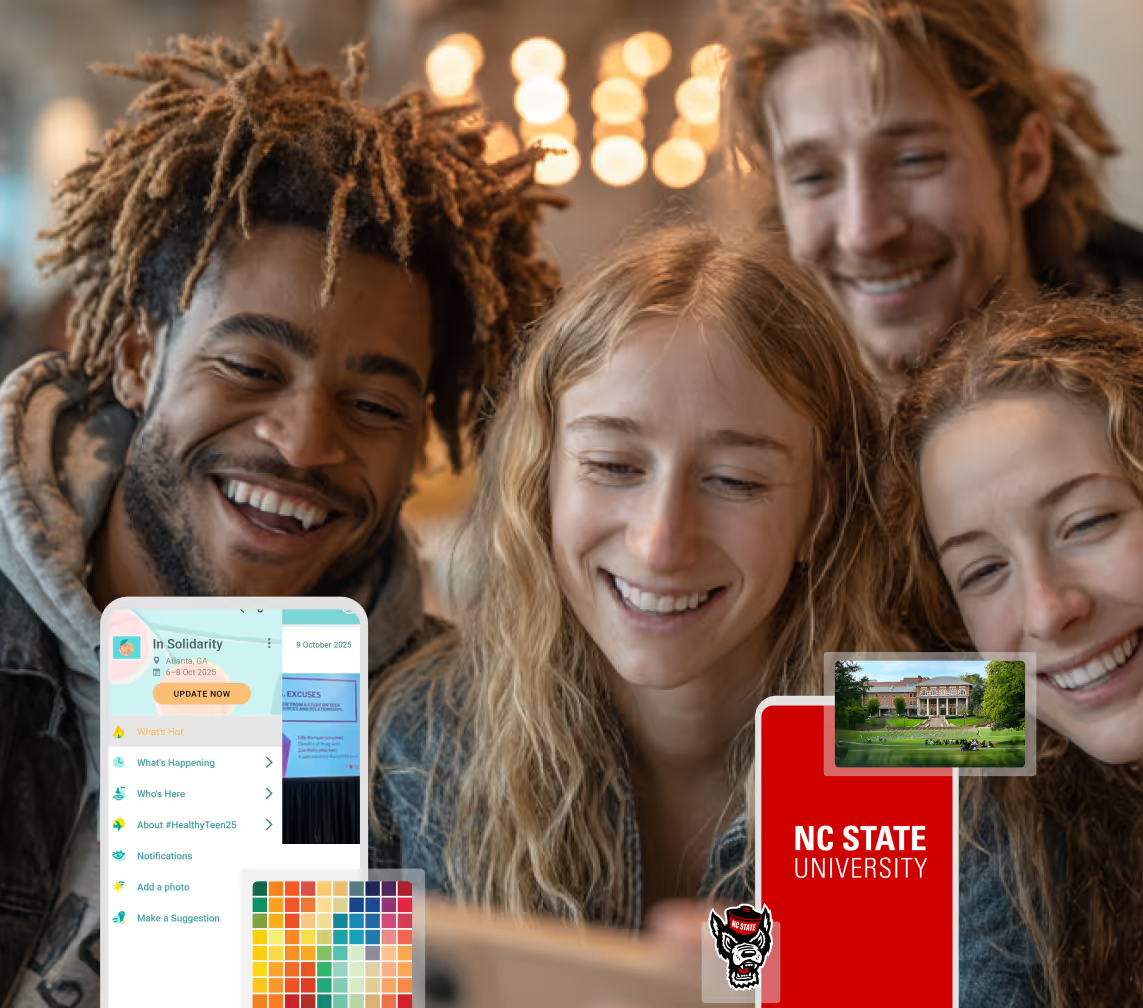
One hub for schedules, resources, and events that keeps students connected throughout the academic year.
Boost Student Engagement
One hub for schedules, resources, and events that keeps students connected throughout the academic year.
Planning Orientation?
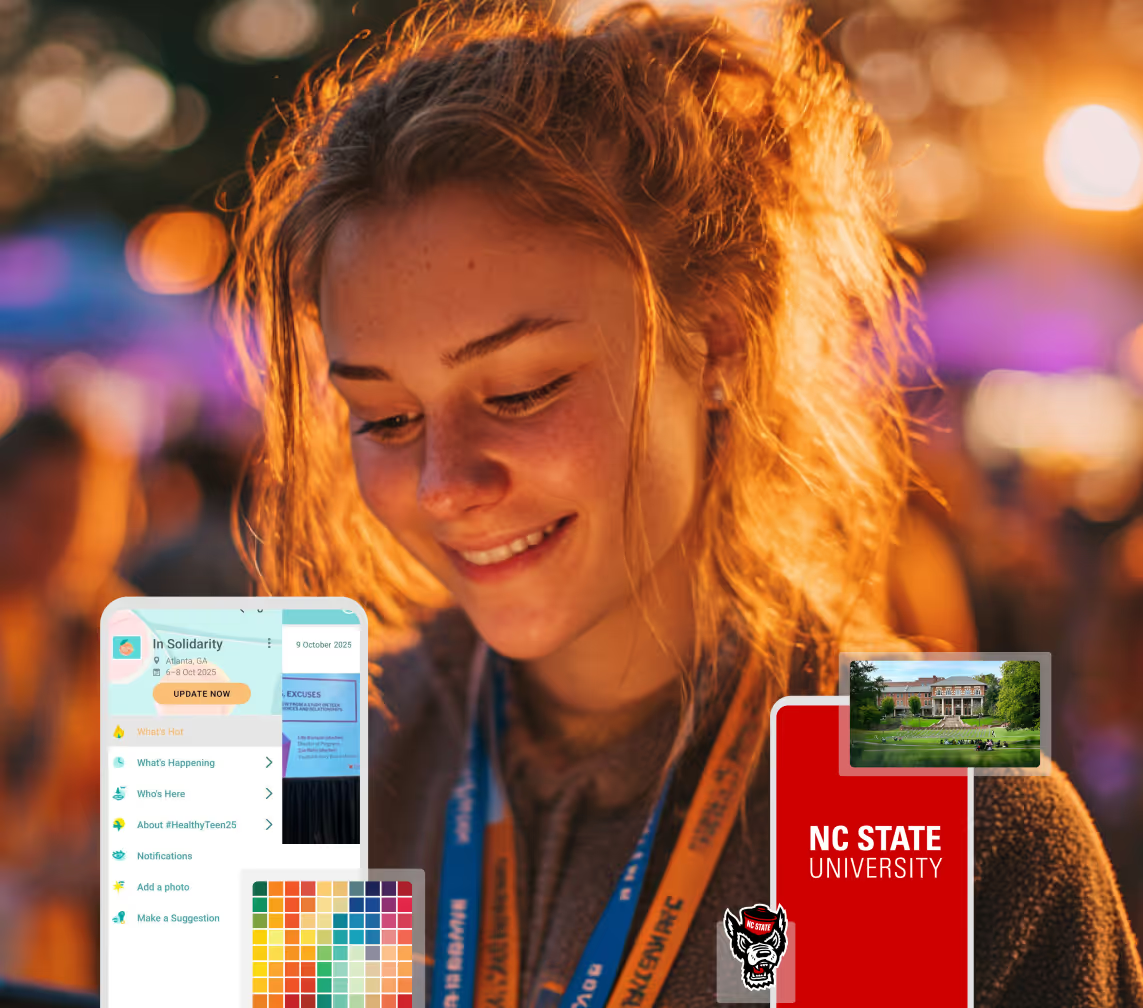
Help new students feel prepared from day one with schedules, campus resources, and real-time updates in one app.
Planning Orientation?
Help new students feel prepared from day one with schedules, campus resources, and real-time updates in one app.
Running Admissions Events?
Manage open houses, tours, and yield events with a branded app that saves time and engages prospective students.

Running Admissions Events?
Manage open houses, tours, and yield events with a branded app that saves time and engages prospective students.
Get a custom Sponsorship Package Template
Stop starting from scratch. Grab free templates that helWe'll build a tailored sponsorship package with suggested pricing, tiers, and benefits..for your specific event.p you build professional sponsorship packages and close deals faster.
Get a custom Sponsorship Package Template
Stop starting from scratch. Grab free templates that helWe'll build a tailored sponsorship package with suggested pricing, tiers, and benefits..for your specific event.p you build professional sponsorship packages and close deals faster.
Plan Your Next Event Without Missing a Beat.
From venue selection to post-event wrap-up, this free checklist walks you through every step (so nothing falls through the cracks).
.avif)
Plan Your Next Event Without Missing a Beat.
From venue selection to post-event wrap-up, this free checklist walks you through every step (so nothing falls through the cracks).
Real Results From Real Events
100,000+ organizations trust Guidebook. See exactly how universities, associations, enterprises, and more put it to work.

Real Results From Real Events
100,000+ organizations trust Guidebook. See exactly how universities, associations, enterprises, and more put it to work.
Flexible pricing for every event size
Find the perfect plan for your needs, from intimate gatherings to large-scale conferences.

Flexible pricing for every event size
Find the perfect plan for your needs, from intimate gatherings to large-scale conferences.
Join our event experts
Watch on-demand webinars and join live sessions with industry leaders sharing best practices for event success.
.avif)
Join our event experts
Watch on-demand webinars and join live sessions with industry leaders sharing best practices for event success.
Guidebook in Action
Book a personalized walkthrough and discover how we help event teams create better attendee experiences.
Guidebook in Action
Book a personalized walkthrough and discover how we help event teams create better attendee experiences.
But... WHY Are You Planning a Conference?





But... WHY Are You Planning a Conference?
You're looking to generate revenue or raise funds

Tickets sold/revenue from tickets
Ticket sales are a reflection of your success making your conference desirable and marketing it effectively to the right people.Sponsorships
To meet this goal you must find relevant sponsors and sell them relevant, creative advertising opportunities.Auctions, sweepstakes, contests, tournaments
You’ll succeed if you make the prizes worth it and market effectively to your attendees. How much should you charge for tickets? The best way to inform an appropriate ticket price: research the conference landscape. Consider factors like event length, session size, the perceived value of the keynotes and sessions, catering quality and quantity, and the venue and location. Will attendees have to travel? Will you be offering discounts? Finally, keep in mind that for many conferences, important connections and partnerships are made. Sometimes an attendee can make back her ticket investment many times over. Discounts? Will you be giving away free tickets to press and luminaries? Will you offer deeply discounted tickets for early bird registrants? If the answers are yes, work through the expectations for free and discounted tickets and include this in your revenue goal. Once again, you can use a survey tool in your information-gathering phase to find out what people would reasonably be willing to pay and what they expect from a conference like the one yours.Your conference goal is to increase awareness
[caption id="attachment_565" align="alignnone" width="768"] Ideally, your attendees won't need to resort to tattooing their conference memories all over their bodies. Image source: Summit Entertainment.[/caption] Awareness goals can be hard to pin down. It’s not always easy to accurately measure how a large group of people “feels” about something, or how well they remember it. But if you are planning a conference to raise awareness, it's still important. Measure what you can, set a baseline ahead of time, and keep track of your success. What does “increasing awareness” really mean?
- Getting the right message to the people at your conference
- Encouraging your attendees to share the message using social media and other amplification methods
- Making sure the conversation keeps going even after you’ve closed the doors of the conference itself
Message awareness
Did you get the message across? Use a post-conference survey tool, and quiz your attendees on your event’s main takeaways. You’ll get insight into how attendees synthesized the information shared.Amplification
You can set goals for Twitter hashtag mentions, social media followers and blog post shares.Message lifetime
How long after your conference are people are still talking about the event, your message, or your cause? You can extend your conference's lifetime by engaging with your attendees and universe, having two-way discussions on social media, sharing valuable follow-up content through email, and bringing your brand to new conferences. Lifetime goals could be measured as post-event Twitter hashtag mentions, email response, and brand recognition over time.You're planning a conference to connect with specific targets
[caption id="attachment_549" align="alignnone" width="324"] Image source: wetwear.com[/caption] This is just as James Bond-y as it sounds. Do you have specific deals you’d like to close, relationships you need to build, or introductions you want to make? Put on your wetsuit-over-your-tuxedo and get ready to network. Here are some sample goals: If you have 20 tier-one potential partners attending your conference, make it your goal to have meaningful conversations with 15 of them, and book follow-up interactions within a week. If you hope to close three deals at your conference, make it your goal to close two during the conference's timeline, and the third deal within two weeks’ time. It's a good idea to give yourself some timeline leeway, because you can’t always count on the other parties to be in sync with your planned timeline. Your ability to make connections will be time-bound, and it’s at the mercy of unforeseen circumstances: what if the partner you hope to close can’t make the conference at all due to a snowstorm? There are many more types of high-level goals you can consider when planning a conference. Building an audience? Launching a product? Please share your experiences with us!
Get the Mobile App Playbook
A short guide to running the whole student journey in one app. No fluff, just what works.
for higher ed
Campus
Playbook
A practical guide to building a connected campus experience.
Free playbook
The Mobile App Playbook for Universities
Students decide if they belong long before they set foot on campus. This playbook shows how to win them over from the first visit through graduation.
- Grow enrollment and boost recruitment
- Increase belonging and retention
- Run every event from one branded app
By submitting, you agree to our Privacy Policy.
You're in.
.png)

.avif)