Send app engagement back to Slate
For students who opt in, downloads, schedule adds, views, and form responses land on their event registration every hour.
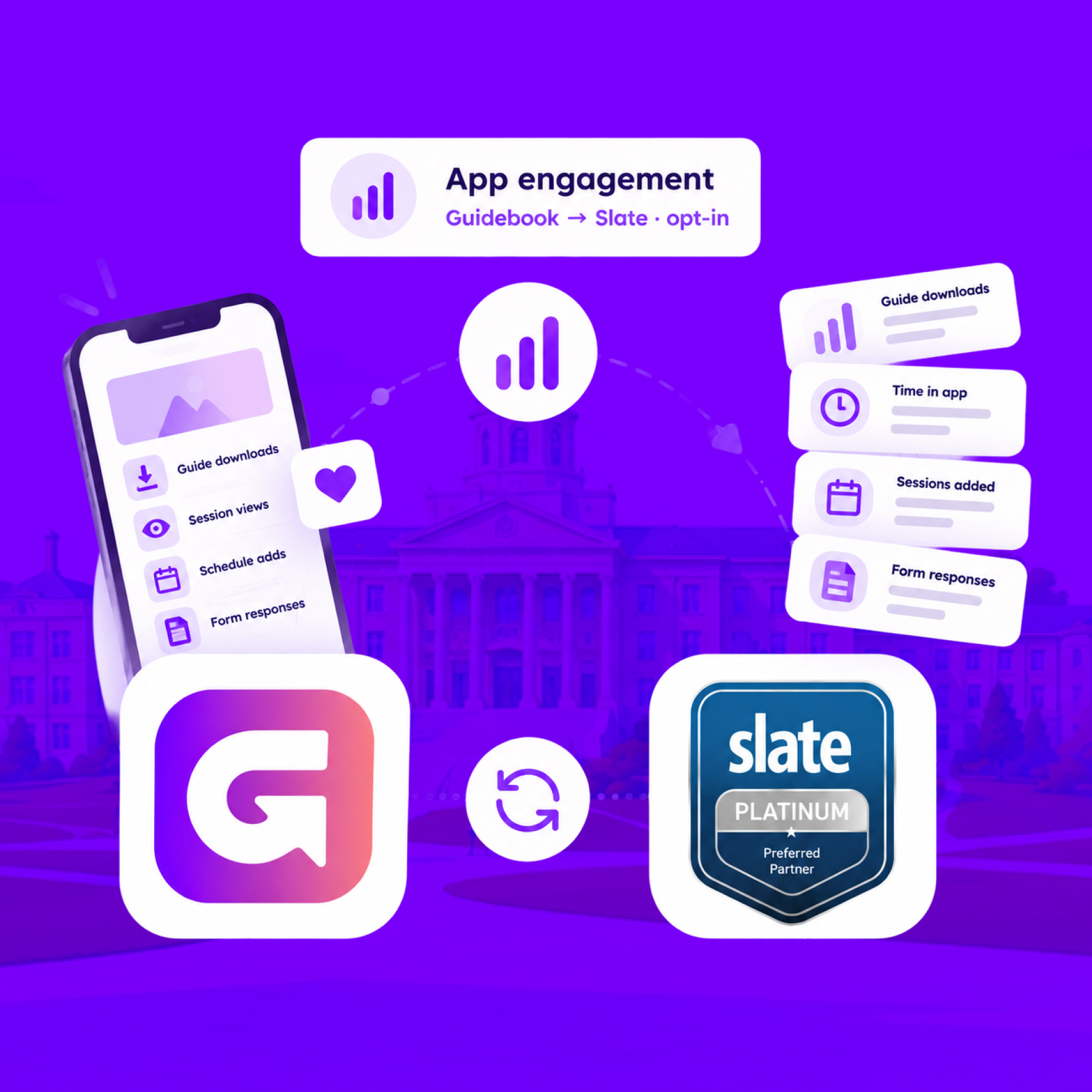
Send app engagement back to Slate
For students who opt in, downloads, schedule adds, views, and form responses land on their event registration every hour.
Build the campus event once in Slate
Link a Slate folder to a guide. Every event becomes a session, and registrants are added automatically.
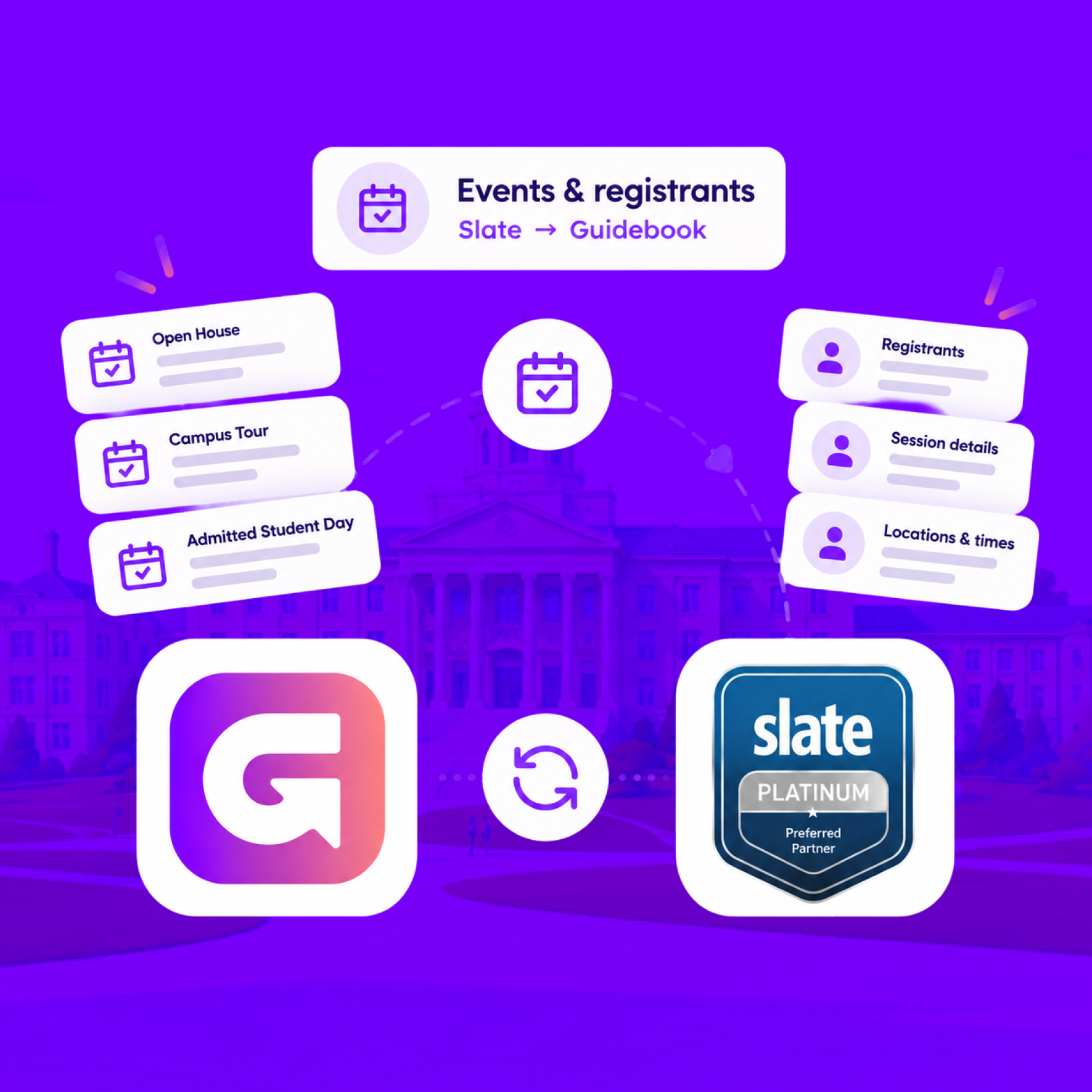
Build the campus event once in Slate
Link a Slate folder to a guide. Every event becomes a session, and registrants are added automatically.
Slate profiles, in the campus app
Match each student's Slate record to their Guidebook account, so college, major, and orientation details stay current on every sync.
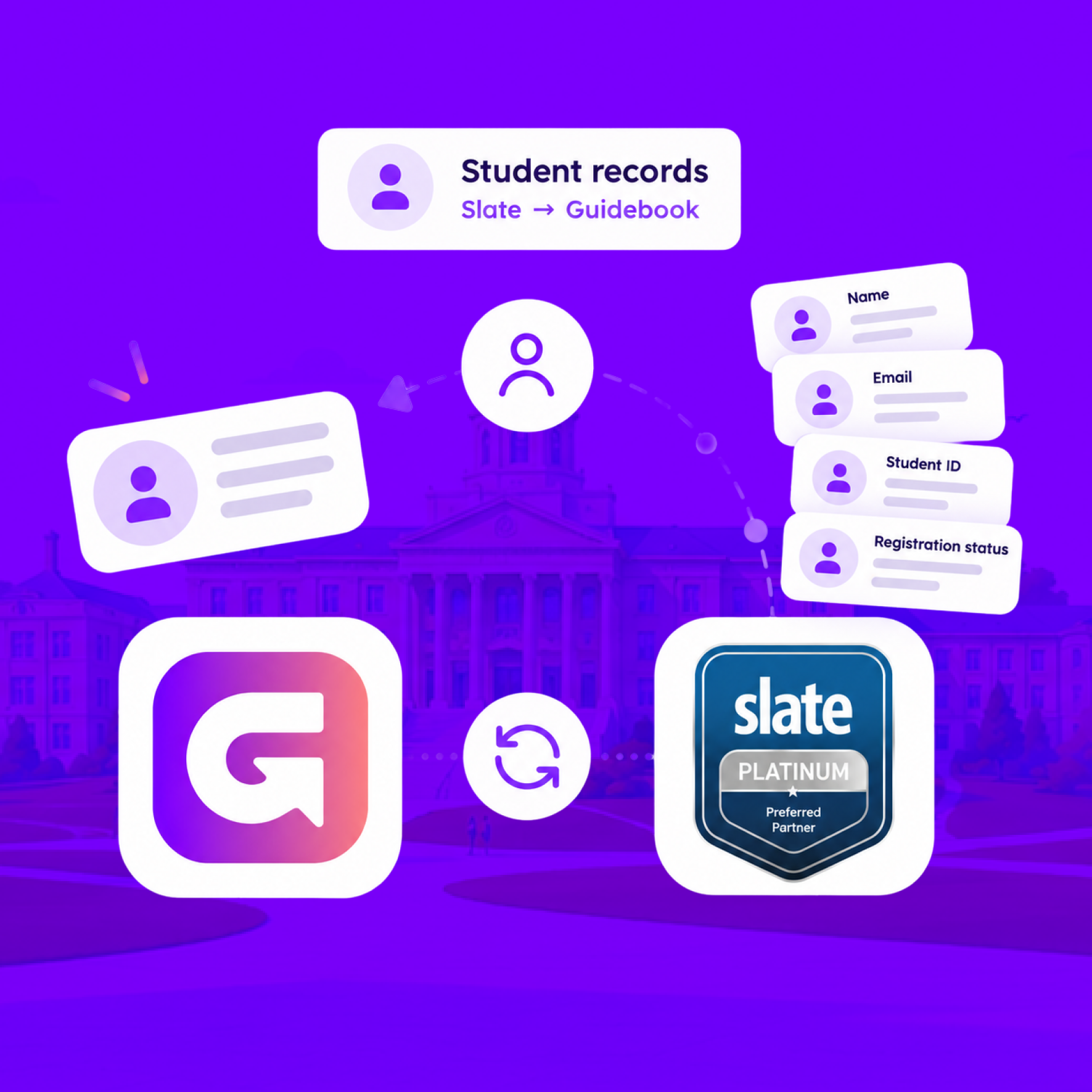
Slate profiles, in the campus app
Match each student's Slate record to their Guidebook account, so college, major, and orientation details stay current on every sync.
Campus apps by department
Admissions, orientation, student life, and more — one campus app that works across departments.

Campus apps by department
Admissions, orientation, student life, and more — one campus app that works across departments.
Build unlimited event apps on one license
One partnership for unlimited campus events — orientation, tours, student life, and everything in between.
Build unlimited event apps on one license
One partnership for unlimited campus events — orientation, tours, student life, and everything in between.
Compare event app platforms
See how Guidebook stacks up against other event app and registration platforms.
Compare event app platforms
See how Guidebook stacks up against other event app and registration platforms.
Event apps for nonprofit and community programs
Give members, volunteers, and donors one branded app for conferences, fundraisers, and year-round community.
Event apps for nonprofit and community programs
Give members, volunteers, and donors one branded app for conferences, fundraisers, and year-round community.
Campus integrations and an open API
Connect Guidebook with the campus systems, APIs, and tools your team already uses.
Campus integrations and an open API
Connect Guidebook with the campus systems, APIs, and tools your team already uses.
Event apps for corporate and enterprise teams
Internal meetings, offsites, and large-scale corporate events — with the branding and control enterprise teams need.
Event apps for corporate and enterprise teams
Internal meetings, offsites, and large-scale corporate events — with the branding and control enterprise teams need.
Create a branded event app with no coding
Put schedules, maps, resources, and updates in every attendee's pocket — built for campus events and programs.
Create a branded event app with no coding
Put schedules, maps, resources, and updates in every attendee's pocket — built for campus events and programs.
Launch a branded, white-label event app
A white-label event app with your branding, your content, and your attendee experience — no coding required.
Launch a branded, white-label event app
A white-label event app with your branding, your content, and your attendee experience — no coding required.
Everything in the Guidebook platform
Explore the features event teams use to engage attendees before, during, and after the event.
Everything in the Guidebook platform
Explore the features event teams use to engage attendees before, during, and after the event.
One app for in-person and virtual attendees
The same schedule, networking, and updates whether people are in the room or joining remotely.
One app for in-person and virtual attendees
The same schedule, networking, and updates whether people are in the room or joining remotely.
Event apps built for associations
Annual meetings, chapter events, and member engagement — without rebuilding a new app every year.
Event apps built for associations
Annual meetings, chapter events, and member engagement — without rebuilding a new app every year.
A branded event website that matches the app
Promote the event, collect interest, and keep branding consistent from the first click to check-in.
A branded event website that matches the app
Promote the event, collect interest, and keep branding consistent from the first click to check-in.
Plan, run, and measure events on one platform
App, registration, badges, and websites in one workflow — so planning isn't a pile of disconnected tools.
Plan, run, and measure events on one platform
App, registration, badges, and websites in one workflow — so planning isn't a pile of disconnected tools.
Keep members engaged between events
One branded app for the conference and everything that happens the other 51 weeks of the year.
Keep members engaged between events
One branded app for the conference and everything that happens the other 51 weeks of the year.
The conference app attendees actually use
Schedules, maps, networking, and live updates for annual meetings, summits, and multi-day conferences.
The conference app attendees actually use
Schedules, maps, networking, and live updates for annual meetings, summits, and multi-day conferences.
Registration that feeds your app and badges
Collect registrations, payments, and attendee data in the same platform as your event app.
Registration that feeds your app and badges
Collect registrations, payments, and attendee data in the same platform as your event app.
Design and print event badges in one place
Custom badges, QR check-in, and on-site printing — without a separate badge vendor.
Design and print event badges in one place
Custom badges, QR check-in, and on-site printing — without a separate badge vendor.
A Smaller School?
Deliver a polished, branded event experience without a large team or a big budget.
A Smaller School?
Deliver a polished, branded event experience without a large team or a big budget.
Running Family Programs?
Give families everything they need, from schedules and maps to real-time updates, all in one place.
Running Family Programs?
Give families everything they need, from schedules and maps to real-time updates, all in one place.
Coordinating Move-In Day?
Share updates, manage events, and keep students informed from move-in through the academic year.

Coordinating Move-In Day?
Share updates, manage events, and keep students informed from move-in through the academic year.
Offering Campus Tours?
Deliver branded, self-guided tour experiences with interactive maps and rich media, available 24/7.

Offering Campus Tours?
Deliver branded, self-guided tour experiences with interactive maps and rich media, available 24/7.
Organising a Career Fair?
Simplify logistics for students, employers, and Career Services staff with one easy-to-use app.
Organising a Career Fair?
Simplify logistics for students, employers, and Career Services staff with one easy-to-use app.
Managing Alumni Events?
Plan reunions, regional events, and fundraising campaigns with an app built for alumni engagement.

Managing Alumni Events?
Plan reunions, regional events, and fundraising campaigns with an app built for alumni engagement.
Boost Student Engagement
One hub for schedules, resources, and events that keeps students connected throughout the academic year.
Boost Student Engagement
One hub for schedules, resources, and events that keeps students connected throughout the academic year.
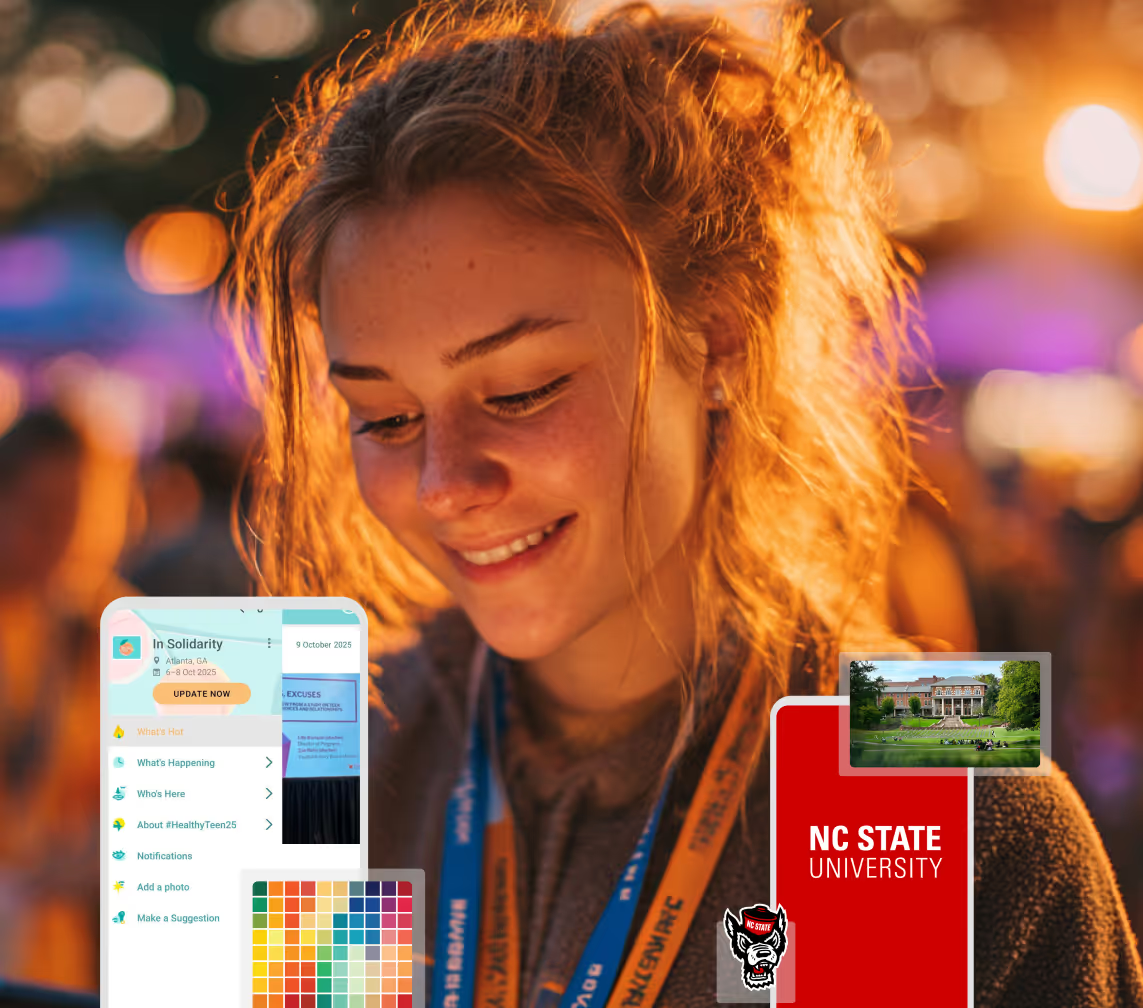
Planning Orientation?
Help new students feel prepared from day one with schedules, campus resources, and real-time updates in one app.
Planning Orientation?
Help new students feel prepared from day one with schedules, campus resources, and real-time updates in one app.
Running Admissions Events?
Manage open houses, tours, and yield events with a branded app that saves time and engages prospective students.

Running Admissions Events?
Manage open houses, tours, and yield events with a branded app that saves time and engages prospective students.
Get a custom Sponsorship Package Template
Stop starting from scratch. Grab free templates that helWe'll build a tailored sponsorship package with suggested pricing, tiers, and benefits..for your specific event.p you build professional sponsorship packages and close deals faster.
Get a custom Sponsorship Package Template
Stop starting from scratch. Grab free templates that helWe'll build a tailored sponsorship package with suggested pricing, tiers, and benefits..for your specific event.p you build professional sponsorship packages and close deals faster.
Plan Your Next Event Without Missing a Beat.
From venue selection to post-event wrap-up, this free checklist walks you through every step (so nothing falls through the cracks).
.avif)
Plan Your Next Event Without Missing a Beat.
From venue selection to post-event wrap-up, this free checklist walks you through every step (so nothing falls through the cracks).
Real Results From Real Events
100,000+ organizations trust Guidebook. See exactly how universities, associations, enterprises, and more put it to work.

Real Results From Real Events
100,000+ organizations trust Guidebook. See exactly how universities, associations, enterprises, and more put it to work.
Flexible pricing for every event size
Find the perfect plan for your needs, from intimate gatherings to large-scale conferences.

Flexible pricing for every event size
Find the perfect plan for your needs, from intimate gatherings to large-scale conferences.
Join our event experts
Watch on-demand webinars and join live sessions with industry leaders sharing best practices for event success.
.avif)
Join our event experts
Watch on-demand webinars and join live sessions with industry leaders sharing best practices for event success.
Guidebook in Action
Book a personalized walkthrough and discover how we help event teams create better attendee experiences.
Guidebook in Action
Book a personalized walkthrough and discover how we help event teams create better attendee experiences.
Indiana Tech: Three years after they doubled yield, what's still working




Indiana Tech: Three years after they doubled yield, what's still working
- Indiana Tech went from 40% yield to 82% on Admitted Students Day after implementing Guidebook, a 105% increase that held across multiple cycles.
- Admitted Students Day attendees grew from 14% to 32% of total enrollment, doubling their influence on the incoming class.
- The team cut from 5 staff and 400 hours of event prep down to 2 staff and 25 hours.
- The results didn't fade. Three years on, the same fundamentals are still driving yield.
- What made it work: clarity on arrival day, not a reinvented admissions strategy.
Yield season has a way of making everything feel urgent. The emails, the deposit deadlines, the Admitted Students Day logistics that somehow get more complicated every spring. Most admissions teams are running hard just to keep the event together. Indiana Tech decided to change one thing, and their yield numbers have looked different ever since.
Here's what they did, what held up, and what Andrea Crilly would tell a peer who's still on the fence.
The before state: what Admitted Students Day actually looked like
Before 2020, Indiana Tech's Admitted Students Day ran the way most of these events do. Five staff members. Around 400 hours of preparation. Roughly $4,350 in printing costs per event. Admitted students arrived with paper schedules and a campus map that made sense to the people who'd worked there for years.
The yield rate from those attendees sat at 40%. Nearly two-thirds of the students who showed up, spent a day on campus, and went home chose somewhere else.
That number isn't unusual. It's the number a lot of admissions teams quietly accept because changing it feels like changing everything. Indiana Tech found out it didn't have to.
The moment they decided
The problem Andrea Crilly and her team were solving wasn't abstract. It was logistical. Admitted students were arriving at an event designed to make them feel welcome, and spending too much of it confused. Hunting for sessions. Unsure where to be. Getting a first impression of the institution through the lens of a frustrating experience rather than an exciting one.
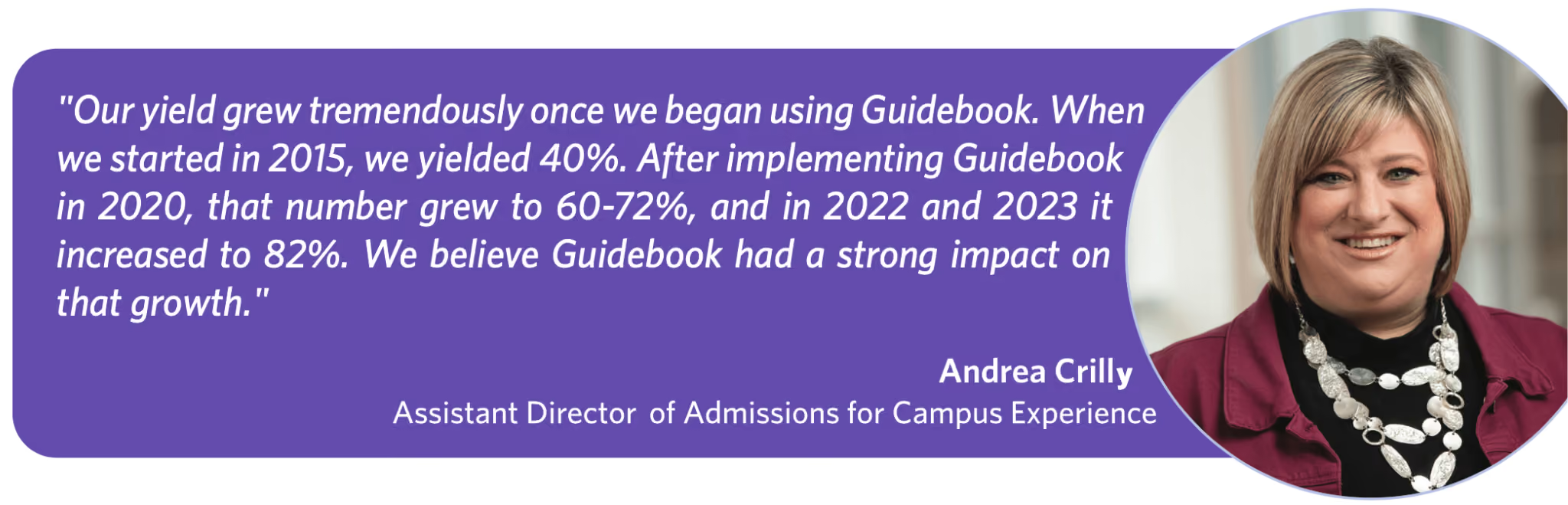
"Our yield grew tremendously once we began using Guidebook," said Andrea Crilly, Assistant Director of Admissions for Campus Experience at Indiana Tech. "When we started in 2015, we yielded 40%. After implementing Guidebook in 2020, that number grew to 60-72%, and in 2022 and 2023 it increased to 82%. We believe Guidebook had a strong impact on that growth."
That progression matters. This wasn't a single strong year. It was a consistent climb across multiple admissions cycles, each one building on the last.
What they tried first, and what actually worked
The shift wasn't an admissions strategy overhaul. Indiana Tech didn't rebuild their recruitment funnel or redesign their entire campus visit program. They changed what Admitted Students Day felt like on the ground.
With Guidebook, admitted students had everything they needed on their phones before they arrived: personalized schedules, session locations, maps that worked offline, real-time updates if anything changed. Staff weren't fielding "where do I go for the engineering session?" for three hours. The day felt intentional. Students could focus on picturing themselves at Indiana Tech because the logistics weren't getting in the way.
That's what admissions and enrollment teams often miss when they think about yield improvement. The experience of the day is the pitch. Confusion is a competitor.
Guidebook's bet is that admitted students deserve one app for every moment that matters: a single connected experience, not five separate logins. Indiana Tech's numbers are what happens when that design lands.
The numbers, three years on
The results that followed weren't a one-year anomaly. Here's where Indiana Tech landed:
- Yield rate: 40% before Guidebook, 82% after (a 105% increase)
- Staff required: down from 5 to 2
- Preparation hours: down from 400 to 25 per event (375 hours saved annually)
- Printing costs: from $4,350 per event to minimal
- Overall cost reduction: 29%
- Enrollment influence: Admitted Students Day attendees went from representing 14% of total enrollment to 32%, a 128% increase in the event's contribution to the incoming class
That last number is the one worth sitting with. Indiana Tech didn't just yield more of the students who came. They changed the composition of their class. The event became a more powerful engine for enrollment, not just a better-run day.
What is admissions yield improvement?
Admissions yield improvement refers to increasing the percentage of admitted students who go on to enroll at an institution. Yield is calculated by dividing the number of enrolled students by the number of admitted students. Improving yield typically involves strengthening the admitted student experience, reducing friction in the decision process, and giving prospective students clear, compelling reasons to choose your institution over alternatives. Even a modest yield improvement (5 to 10 percentage points) can significantly impact enrollment targets and tuition revenue.
What they'd tell a peer considering it
Three years on, the fundamentals that drove Indiana Tech's results are still in place. The team is smaller. The event is less expensive to run. And the yield numbers have held.
Crilly's advice to a peer who's still weighing it comes down to something straightforward: don't overthink the change. The tool handles the logistics. Your team handles the relationships. When admitted students can find their session, read the schedule on their phone, and navigate campus without asking three people for help, they spend the day feeling capable and welcome rather than lost.
That feeling is what drives the deposit.
Less confusion. More yield.
Ready to see the full story? Read the Indiana Tech case study and see how the numbers have held across every cycle since 2020.
[faq]
Q: What does admissions yield mean in higher education?
A: Admissions yield is the percentage of admitted students who choose to enroll at an institution. It's calculated by dividing enrolled students by admitted students. A yield rate of 40% means that for every 100 students admitted, 40 enrolled. Yield is one of the most closely watched metrics in enrollment management because it directly determines class size, tuition revenue, and whether an institution hits its enrollment targets each year.
Q: How did Indiana Tech improve its admissions yield rate?
A: Indiana Tech improved their yield rate by changing the on-the-ground experience of their Admitted Students Day. Before Guidebook, admitted students navigated the event with paper schedules and printed maps, which created confusion and a poor first impression. After implementing a mobile app through Guidebook, students had personalized schedules, offline maps, and real-time updates on their phones. The day felt intentional rather than chaotic, and yield from Admitted Students Day attendees climbed from 40% to 82% over three admissions cycles.
Q: How long does it take to see yield improvement after implementing an Admitted Students Day app?
A: Indiana Tech saw meaningful improvement within their first full admissions cycle after implementing Guidebook. Yield from Admitted Students Day attendees rose from 40% to between 60% and 72% in the first years of use, then climbed to 82% by 2022 and 2023. Results compounded over time as the team refined the experience each year. Most institutions can expect to see measurable change within one to two cycles.
Q: What's a realistic yield rate for Admitted Students Day attendees?
A: Yield rates for Admitted Students Day attendees vary significantly by institution type, selectivity, and event quality, but attendees typically yield at higher rates than the general admitted pool because they've made the effort to visit. Indiana Tech's experience, moving from 40% to 82%, reflects what's possible when the event experience is smooth, personalized, and memorable. Many institutions start in the 40% to 60% range for event attendees, with room to improve through better communication, personalization, and on-the-day logistics.
Q: How much does running an Admitted Students Day app cost compared to printed materials?
A: Indiana Tech was spending $4,350 per event on printing before switching to Guidebook. After implementation, printing costs dropped to minimal. Beyond direct print savings, the team reduced preparation staff from 5 to 2 and cut event prep time from 400 hours to 25 hours annually, a total of 375 staff hours saved each year. The overall cost reduction across the program came to 29%. For most institutions, the app pays for itself within one or two event cycles when staff time and print costs are both factored in.
Q: Does a mobile app actually affect whether admitted students enroll?
A: The evidence from Indiana Tech suggests yes, meaningfully. Their yield rate more than doubled over three cycles after implementing Guidebook, and Admitted Students Day attendees grew from representing 14% of their total enrollment to 32%. The mechanism isn't magic: a well-run app removes the friction and confusion that make a campus visit feel disorganized. When admitted students can find where they're going, follow a personalized schedule, and experience the day as seamless and welcoming, they leave with a stronger impression of the institution, and that impression drives deposits.
[/faq]

Get the Mobile App Playbook
A short guide to running the whole student journey in one app. No fluff, just what works.
for higher ed
Campus
Playbook
A practical guide to building a connected campus experience.
Free playbook
The Mobile App Playbook for Universities
Students decide if they belong long before they set foot on campus. This playbook shows how to win them over from the first visit through graduation.
- Grow enrollment and boost recruitment
- Increase belonging and retention
- Run every event from one branded app
By submitting, you agree to our Privacy Policy.
You're in.
.png)


.avif)