Campus apps by department
Admissions, orientation, student life, and more — one campus app that works across departments.

Campus apps by department
Admissions, orientation, student life, and more — one campus app that works across departments.
Build unlimited event apps on one license
One partnership for unlimited campus events — orientation, tours, student life, and everything in between.
Build unlimited event apps on one license
One partnership for unlimited campus events — orientation, tours, student life, and everything in between.
Compare event app platforms
See how Guidebook stacks up against other event app and registration platforms.
Compare event app platforms
See how Guidebook stacks up against other event app and registration platforms.
Event apps for nonprofit and community programs
Give members, volunteers, and donors one branded app for conferences, fundraisers, and year-round community.
Event apps for nonprofit and community programs
Give members, volunteers, and donors one branded app for conferences, fundraisers, and year-round community.
Campus integrations and an open API
Connect Guidebook with the campus systems, APIs, and tools your team already uses.
Campus integrations and an open API
Connect Guidebook with the campus systems, APIs, and tools your team already uses.
Event apps for corporate and enterprise teams
Internal meetings, offsites, and large-scale corporate events — with the branding and control enterprise teams need.
Event apps for corporate and enterprise teams
Internal meetings, offsites, and large-scale corporate events — with the branding and control enterprise teams need.
Create a branded event app with no coding
Put schedules, maps, resources, and updates in every attendee's pocket — built for campus events and programs.
Create a branded event app with no coding
Put schedules, maps, resources, and updates in every attendee's pocket — built for campus events and programs.
Launch a branded, white-label event app
A white-label event app with your branding, your content, and your attendee experience — no coding required.
Launch a branded, white-label event app
A white-label event app with your branding, your content, and your attendee experience — no coding required.
Everything in the Guidebook platform
Explore the features event teams use to engage attendees before, during, and after the event.
Everything in the Guidebook platform
Explore the features event teams use to engage attendees before, during, and after the event.
One app for in-person and virtual attendees
The same schedule, networking, and updates whether people are in the room or joining remotely.
One app for in-person and virtual attendees
The same schedule, networking, and updates whether people are in the room or joining remotely.
Event apps built for associations
Annual meetings, chapter events, and member engagement — without rebuilding a new app every year.
Event apps built for associations
Annual meetings, chapter events, and member engagement — without rebuilding a new app every year.
A branded event website that matches the app
Promote the event, collect interest, and keep branding consistent from the first click to check-in.
A branded event website that matches the app
Promote the event, collect interest, and keep branding consistent from the first click to check-in.
Plan, run, and measure events on one platform
App, registration, badges, and websites in one workflow — so planning isn't a pile of disconnected tools.
Plan, run, and measure events on one platform
App, registration, badges, and websites in one workflow — so planning isn't a pile of disconnected tools.
Keep members engaged between events
One branded app for the conference and everything that happens the other 51 weeks of the year.
Keep members engaged between events
One branded app for the conference and everything that happens the other 51 weeks of the year.
The conference app attendees actually use
Schedules, maps, networking, and live updates for annual meetings, summits, and multi-day conferences.
The conference app attendees actually use
Schedules, maps, networking, and live updates for annual meetings, summits, and multi-day conferences.
Registration that feeds your app and badges
Collect registrations, payments, and attendee data in the same platform as your event app.
Registration that feeds your app and badges
Collect registrations, payments, and attendee data in the same platform as your event app.
Design and print event badges in one place
Custom badges, QR check-in, and on-site printing — without a separate badge vendor.
Design and print event badges in one place
Custom badges, QR check-in, and on-site printing — without a separate badge vendor.
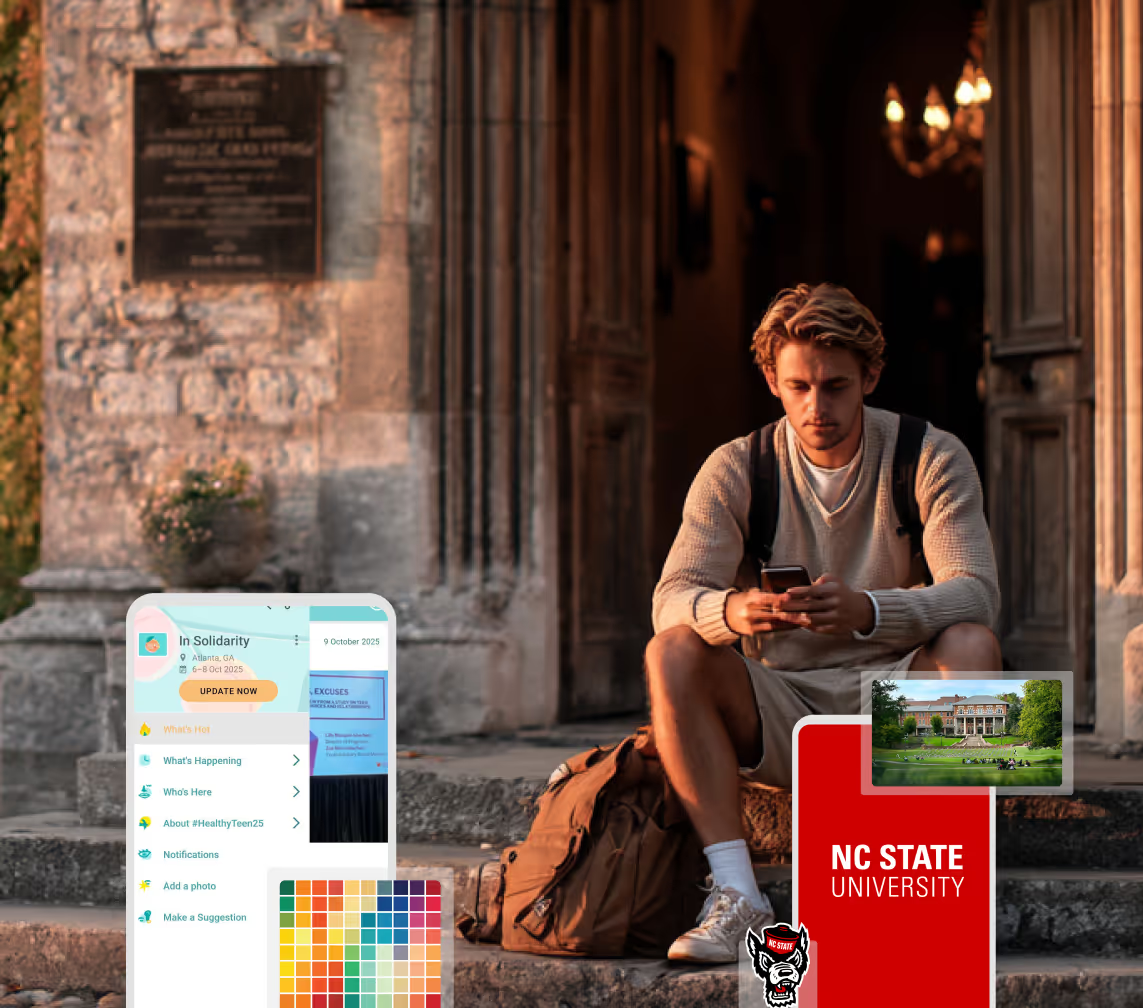
A Smaller School?
Deliver a polished, branded event experience without a large team or a big budget.
A Smaller School?
Deliver a polished, branded event experience without a large team or a big budget.
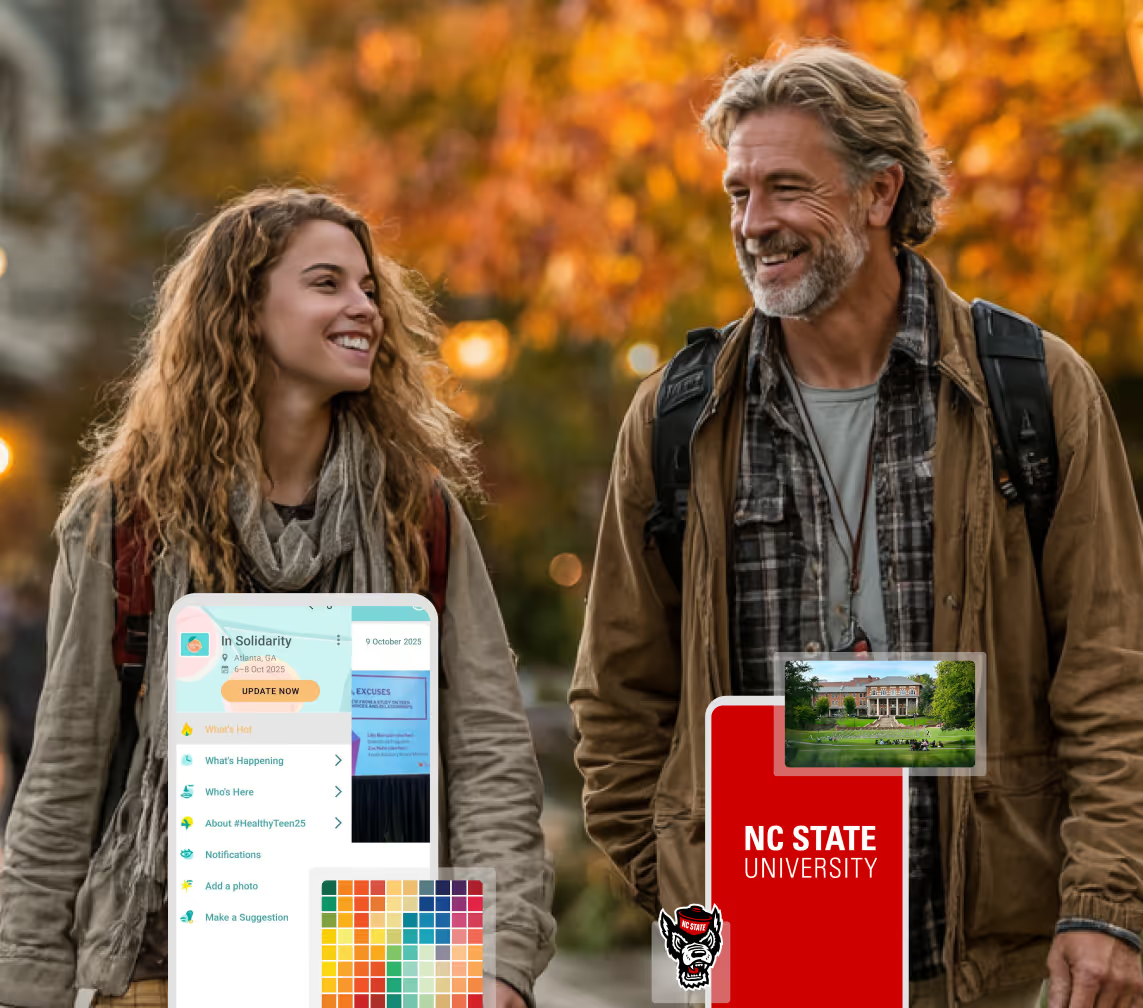
Running Family Programs?
Give families everything they need, from schedules and maps to real-time updates, all in one place.
Running Family Programs?
Give families everything they need, from schedules and maps to real-time updates, all in one place.
Coordinating Move-In Day?
Share updates, manage events, and keep students informed from move-in through the academic year.

Coordinating Move-In Day?
Share updates, manage events, and keep students informed from move-in through the academic year.
Offering Campus Tours?
Deliver branded, self-guided tour experiences with interactive maps and rich media, available 24/7.

Offering Campus Tours?
Deliver branded, self-guided tour experiences with interactive maps and rich media, available 24/7.
Organising a Career Fair?
Simplify logistics for students, employers, and Career Services staff with one easy-to-use app.
Organising a Career Fair?
Simplify logistics for students, employers, and Career Services staff with one easy-to-use app.
Managing Alumni Events?
Plan reunions, regional events, and fundraising campaigns with an app built for alumni engagement.
Managing Alumni Events?
Plan reunions, regional events, and fundraising campaigns with an app built for alumni engagement.
Boost Student Engagement
One hub for schedules, resources, and events that keeps students connected throughout the academic year.
Boost Student Engagement
One hub for schedules, resources, and events that keeps students connected throughout the academic year.
Planning Orientation?
Help new students feel prepared from day one with schedules, campus resources, and real-time updates in one app.
Planning Orientation?
Help new students feel prepared from day one with schedules, campus resources, and real-time updates in one app.
Running Admissions Events?
Manage open houses, tours, and yield events with a branded app that saves time and engages prospective students.

Running Admissions Events?
Manage open houses, tours, and yield events with a branded app that saves time and engages prospective students.
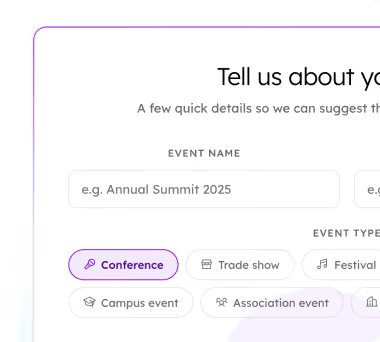
Get a custom Sponsorship Package Template
Stop starting from scratch. Grab free templates that helWe'll build a tailored sponsorship package with suggested pricing, tiers, and benefits..for your specific event.p you build professional sponsorship packages and close deals faster.
Get a custom Sponsorship Package Template
Stop starting from scratch. Grab free templates that helWe'll build a tailored sponsorship package with suggested pricing, tiers, and benefits..for your specific event.p you build professional sponsorship packages and close deals faster.
Plan Your Next Event Without Missing a Beat.
From venue selection to post-event wrap-up, this free checklist walks you through every step (so nothing falls through the cracks).
.avif)
Plan Your Next Event Without Missing a Beat.
From venue selection to post-event wrap-up, this free checklist walks you through every step (so nothing falls through the cracks).
Real Results From Real Events
100,000+ organizations trust Guidebook. See exactly how universities, associations, enterprises, and more put it to work.

Real Results From Real Events
100,000+ organizations trust Guidebook. See exactly how universities, associations, enterprises, and more put it to work.
Flexible pricing for every event size
Find the perfect plan for your needs, from intimate gatherings to large-scale conferences.

Flexible pricing for every event size
Find the perfect plan for your needs, from intimate gatherings to large-scale conferences.
Join our event experts
Watch on-demand webinars and join live sessions with industry leaders sharing best practices for event success.
.avif)
Join our event experts
Watch on-demand webinars and join live sessions with industry leaders sharing best practices for event success.
Guidebook in Action
Book a personalized walkthrough and discover how we help event teams create better attendee experiences.
Guidebook in Action
Book a personalized walkthrough and discover how we help event teams create better attendee experiences.
How to Choose a Campus Event App: A Buyer's Guide for Higher Education
.avif)





How to Choose a Campus Event App: A Buyer's Guide for Higher Education
Students already have everything they need on their phones. The question is whether your campus event information is there too.
When schedules live in email threads, maps get buried on department websites, and handouts end up on the floor of a residence hall, students tune out. Plus, your team spends event day answering questions the app should be answering for them.
Sound familiar?
A campus event app brings everything into one place, and when it's done right, it's the thing that makes your event feel effortless for everyone (students and staff).
In this article we’re going to cover:
- What a campus event app actually is (and what to expect from a good one)
- The key features that matter most for campuses
- How to evaluate vendors and ask the right questions
- Common mistakes to avoid before you commit
- How to drive student adoption once the app is live
Let’s get to it!
What is a campus event app?
A campus event app is a mobile application that helps colleges and universities organize, communicate, and engage attendees across campus programming. Think orientation, homecoming, academic conferences, and student organization activities all in one place.
Unlike a general calendar or website buried three clicks deep, a campus event app puts schedules, maps, notifications, and interactive features directly in students' pockets.
The whole point is giving everyone a single source of truth so they know:
- What's happening.
- Where to go.
- What to do next.
You might hear different names for this type of tool, including "university event app," "student engagement app," or "campus mobile app."
While the terminology can vary, the function and purpose stay the same.
Why your campus events benefit from a dedicated app
Students live on their phones. If your event information is scattered across email threads, department websites, and printed packets that get lost in dorm rooms, you're competing for attention you won't win.
A dedicated app allows you to meet students where they already are, cutting down on the repetitive questions your staff fields during check-in ("Where is this building?" "What time does registration open?").
In addition, a campus app gives attendees confidence they have the latest information.
But that’s not all; there's also a practical benefit for your team: when schedules change (and they always do!) you can update the app instantly and send a push notification.
No reprinting, no mass email chains, no hoping students check their inbox in time.
The institutions that see the highest engagement treat their app as the only place to get event details.
When students know the app is the single source of truth, they use it.
Key features to look for in a campus event app
Not all event apps offer the same capabilities. Here's what matters most for campus environments.
Personalized schedules and session tracks
Students, families, transfer students, and graduate students often attend the same event but have different needs. An app that lets you create audience-specific tracks means each person sees only what's relevant to them.
The ability for attendees to build their own personal schedule, saving sessions and setting reminders, makes the experience feel tailored rather than generic.
Interactive campus maps
For students who've never set foot on your campus, finding the right building on day one is genuinely stressful. An interactive map with pinned locations, searchable buildings, and walking directions removes that friction.
Go beyond buildings. Pin dining halls, parking lots, health services, and student life offices so everything feels discoverable rather than buried.
Push notifications and real-time updates
When a session location changes or a keynote runs late, you can't rely on students checking their email. Push notifications reach them instantly.
Effective uses include:
- Welcome messages: Greet students when they arrive on campus
- Location changes: Alert everyone when a session moves
- Reminders: Prompt attendance before high-priority events
- Logistics updates: Share shuttle timing, dining hours, or check-in line status
Offline functionality
Campus WiFi is notoriously unreliable, especially during large events when hundreds of devices compete for bandwidth. If your app requires a constant internet connection, students will hit dead ends at the worst moments.
True native apps can store data directly on the device so attendees can access what they need even when connectivity drops. This detail separates reliable apps from frustrating ones.
Engagement tools
The best campus event apps go beyond information delivery by providing features that encourage interaction and participation. Some key features to look for:
- Activity feeds: A social-style stream where students see updates, share photos, and participate in discussions
- Polls and surveys: Collect real-time feedback during or after sessions
- Direct messaging: Reach individual students with personalized follow-ups
- Photo sharing: A shared album drives repeat engagement and gives your team authentic content
Branding and customization
Your app is part of your institution’s first impression. A polished, branded experience with your colors, logo, and visual identity signals professionalism and investment in the student experience.
Look for platforms that let you customize icons, navigation, and imagery without needing a developer.
How to evaluate campus event app platforms
With dozens of event app platforms on the market, you need a clear framework to narrow down your choices. Here's what to assess:
Evaluation Criteria
What to Look For
Native vs. web app
True native apps (iOS and Android) offer better performance, offline access, and reliability. Web apps wrapped to look like mobile apps often struggle with speed and connectivity.
Ease of use for your team
Can non-technical staff build and update the app without developer support? A drag-and-drop builder saves time and reduces bottlenecks.
Student-friendliness
Is the interface intuitive for students who've never used it? Ask for a demo and evaluate it from an attendee's perspective.
Support quality
Do you get a dedicated account manager? Is support available during your events, not just business hours?
Pricing transparency
Are all features included, or will you pay extra for push notifications, integrations, or support? Flat-fee pricing avoids surprises.
Track record in higher ed
Does the vendor have experience with campus events specifically? Ask for references from similar institutions.
Tip: Request a trial or sandbox environment. Building a test event yourself reveals usability issues that demos don't.
Questions to ask vendors before you commit
Before signing a contract, get clear answers to the following:
- Is this a native app or a web app? The difference affects performance, offline capability, and user experience.
- What's included in the price? Ask specifically about push notifications, integrations, support, and the number of events or attendees covered.
- Who handles support, and when? If your orientation runs on a Saturday and something breaks, can you reach someone?
- How do updates work? Can your team make real-time changes, or do you submit requests and wait?
- What integrations are available? If you use registration tools like Eventbrite or Cvent, confirm compatibility.
- Can we manage multiple events in one app? For institutions running orientation sessions, homecoming, and ongoing programming, a single app with multiple guides simplifies the student experience.
Common mistakes to avoid when choosing an app
Even well-intentioned teams make avoidable errors. Here are the most common.
Choosing based on features you won't use
A long feature list looks impressive, but complexity often backfires. If your team doesn't have time to set up gamification or advanced analytics, those features just add clutter. Focus on what you'll actually use.
Underestimating the importance of offline access
It's easy to assume WiFi will be fine. It usually isn't. Test your app in airplane mode before committing. If core functionality breaks without a connection, students will abandon it when they need it most.
Ignoring the attendee experience
Your team's admin experience matters, but the student experience matters more. An app that's easy to build but confusing to navigate defeats the purpose. Always evaluate from the attendee's perspective.
Treating the app as a supplement rather than the source
If you're also printing schedules, sending parallel email updates, and posting to a website, students won't prioritize the app. The institutions with the highest adoption make the app the only place to get event information.
How to drive student adoption of your campus event app
Building a great app is half the work. Getting students to download and use it is the other half.
Start early. The schools with the highest adoption rates promote their app weeks before the event, not the day students arrive. Give students time to download and explore before they need it in a stressful moment.
Use multiple channels. A single email won't cut it. Promote the app in acceptance letters, orientation registration confirmations, social media, and pre-arrival materials. A short video showing what the app looks like drives downloads more than text alone.
Make it the only source. If students can get the same information elsewhere, they have less reason to download. Treat the app as the single source of truth and communicate that clearly.
Catch stragglers at check-in. Have orientation leaders ask every arriving student: "Have you downloaded the app?" Station someone nearby to help those who haven't.
Don't forget families. Parents and family members are just as eager to stay informed. Marketing the app to them doubles your reach, and they often encourage students to download it too.
Schedule a demo to see how institutions like Purdue, Princeton, and Stanford use Guidebook to power campus events.
Choose an app that supports the experience you want to create
The right campus event app removes confusion so students can focus on the experience itself rather than searching for information. It gives your team confidence that everyone has what they need, even when plans change.
Guidebook powers campus events at 75% of the top 50 U.S. colleges and universities. With true native apps, offline functionality, flat-fee pricing, and dedicated support, it's built for the realities of campus life.
Book a demo to see how Guidebook can support your next campus event.
Frequently asked questions
[faq]
Q: What's the difference between a campus event app and a student engagement platform?
A: A campus event app focuses on specific events like orientation, homecoming, and conferences with schedules, maps, and notifications. A student engagement platform typically covers broader, ongoing involvement like clubs, organizations, and co-curricular tracking. Some platforms serve both purposes by hosting multiple guides within a single app.
Q: Can one app support multiple events throughout the year?
A: Yes. Look for platforms that let you create separate guides or spaces within a single app. Students download once and access orientation, homecoming, and ongoing programming without switching between apps.
Q: How long does it take to build a campus event app?
A: With a no-code builder, most teams can create a functional app in a few days. Plan to have your app ready four to six weeks before your event to allow time for promotion and student downloads.
Q: Do students have to pay to download the app?
A: No. Campus event apps are free for students to download. The institution pays for the platform, and students access it at no cost through the App Store or Google Play.
Q: How do we measure whether the app is working?
A: Most platforms provide analytics on downloads, active users, session views, and notification engagement. Track these metrics against your goals, whether that's reducing staff questions, increasing session attendance, or improving post-event survey completion.
[/faq]

Get the Mobile App Playbook
A short guide to running the whole student journey in one app. No fluff, just what works.
for higher ed
Campus
Playbook
A practical guide to building a connected campus experience.
Free playbook
The Mobile App Playbook for Universities
Students decide if they belong long before they set foot on campus. This playbook shows how to win them over from the first visit through graduation.
- Grow enrollment and boost recruitment
- Increase belonging and retention
- Run every event from one branded app
By submitting, you agree to our Privacy Policy.
You're in.
.png)

%20(1).avif)