Campus apps by department
Admissions, orientation, student life, and more — one campus app that works across departments.

Campus apps by department
Admissions, orientation, student life, and more — one campus app that works across departments.
Build unlimited event apps on one license
One partnership for unlimited campus events — orientation, tours, student life, and everything in between.
Build unlimited event apps on one license
One partnership for unlimited campus events — orientation, tours, student life, and everything in between.
Compare event app platforms
See how Guidebook stacks up against other event app and registration platforms.
Compare event app platforms
See how Guidebook stacks up against other event app and registration platforms.
Event apps for nonprofit and community programs
Give members, volunteers, and donors one branded app for conferences, fundraisers, and year-round community.
Event apps for nonprofit and community programs
Give members, volunteers, and donors one branded app for conferences, fundraisers, and year-round community.
Campus integrations and an open API
Connect Guidebook with the campus systems, APIs, and tools your team already uses.
Campus integrations and an open API
Connect Guidebook with the campus systems, APIs, and tools your team already uses.
Event apps for corporate and enterprise teams
Internal meetings, offsites, and large-scale corporate events — with the branding and control enterprise teams need.
Event apps for corporate and enterprise teams
Internal meetings, offsites, and large-scale corporate events — with the branding and control enterprise teams need.
Create a branded event app with no coding
Put schedules, maps, resources, and updates in every attendee's pocket — built for campus events and programs.
Create a branded event app with no coding
Put schedules, maps, resources, and updates in every attendee's pocket — built for campus events and programs.
Launch a branded, white-label event app
A white-label event app with your branding, your content, and your attendee experience — no coding required.
Launch a branded, white-label event app
A white-label event app with your branding, your content, and your attendee experience — no coding required.
Everything in the Guidebook platform
Explore the features event teams use to engage attendees before, during, and after the event.
Everything in the Guidebook platform
Explore the features event teams use to engage attendees before, during, and after the event.
One app for in-person and virtual attendees
The same schedule, networking, and updates whether people are in the room or joining remotely.
One app for in-person and virtual attendees
The same schedule, networking, and updates whether people are in the room or joining remotely.
Event apps built for associations
Annual meetings, chapter events, and member engagement — without rebuilding a new app every year.
Event apps built for associations
Annual meetings, chapter events, and member engagement — without rebuilding a new app every year.
A branded event website that matches the app
Promote the event, collect interest, and keep branding consistent from the first click to check-in.
A branded event website that matches the app
Promote the event, collect interest, and keep branding consistent from the first click to check-in.
Plan, run, and measure events on one platform
App, registration, badges, and websites in one workflow — so planning isn't a pile of disconnected tools.
Plan, run, and measure events on one platform
App, registration, badges, and websites in one workflow — so planning isn't a pile of disconnected tools.
Keep members engaged between events
One branded app for the conference and everything that happens the other 51 weeks of the year.
Keep members engaged between events
One branded app for the conference and everything that happens the other 51 weeks of the year.
The conference app attendees actually use
Schedules, maps, networking, and live updates for annual meetings, summits, and multi-day conferences.
The conference app attendees actually use
Schedules, maps, networking, and live updates for annual meetings, summits, and multi-day conferences.
Registration that feeds your app and badges
Collect registrations, payments, and attendee data in the same platform as your event app.
Registration that feeds your app and badges
Collect registrations, payments, and attendee data in the same platform as your event app.
Design and print event badges in one place
Custom badges, QR check-in, and on-site printing — without a separate badge vendor.
Design and print event badges in one place
Custom badges, QR check-in, and on-site printing — without a separate badge vendor.
A Smaller School?
Deliver a polished, branded event experience without a large team or a big budget.
A Smaller School?
Deliver a polished, branded event experience without a large team or a big budget.
Running Family Programs?
Give families everything they need, from schedules and maps to real-time updates, all in one place.
Running Family Programs?
Give families everything they need, from schedules and maps to real-time updates, all in one place.
Coordinating Move-In Day?
Share updates, manage events, and keep students informed from move-in through the academic year.

Coordinating Move-In Day?
Share updates, manage events, and keep students informed from move-in through the academic year.
Offering Campus Tours?
Deliver branded, self-guided tour experiences with interactive maps and rich media, available 24/7.

Offering Campus Tours?
Deliver branded, self-guided tour experiences with interactive maps and rich media, available 24/7.
Organising a Career Fair?
Simplify logistics for students, employers, and Career Services staff with one easy-to-use app.
Organising a Career Fair?
Simplify logistics for students, employers, and Career Services staff with one easy-to-use app.
Managing Alumni Events?
Plan reunions, regional events, and fundraising campaigns with an app built for alumni engagement.
Managing Alumni Events?
Plan reunions, regional events, and fundraising campaigns with an app built for alumni engagement.
Boost Student Engagement
One hub for schedules, resources, and events that keeps students connected throughout the academic year.
Boost Student Engagement
One hub for schedules, resources, and events that keeps students connected throughout the academic year.
Planning Orientation?
Help new students feel prepared from day one with schedules, campus resources, and real-time updates in one app.
Planning Orientation?
Help new students feel prepared from day one with schedules, campus resources, and real-time updates in one app.
Running Admissions Events?
Manage open houses, tours, and yield events with a branded app that saves time and engages prospective students.

Running Admissions Events?
Manage open houses, tours, and yield events with a branded app that saves time and engages prospective students.
Get a custom Sponsorship Package Template
Stop starting from scratch. Grab free templates that helWe'll build a tailored sponsorship package with suggested pricing, tiers, and benefits..for your specific event.p you build professional sponsorship packages and close deals faster.
Get a custom Sponsorship Package Template
Stop starting from scratch. Grab free templates that helWe'll build a tailored sponsorship package with suggested pricing, tiers, and benefits..for your specific event.p you build professional sponsorship packages and close deals faster.
Plan Your Next Event Without Missing a Beat.
From venue selection to post-event wrap-up, this free checklist walks you through every step (so nothing falls through the cracks).
.avif)
Plan Your Next Event Without Missing a Beat.
From venue selection to post-event wrap-up, this free checklist walks you through every step (so nothing falls through the cracks).
Real Results From Real Events
100,000+ organizations trust Guidebook. See exactly how universities, associations, enterprises, and more put it to work.

Real Results From Real Events
100,000+ organizations trust Guidebook. See exactly how universities, associations, enterprises, and more put it to work.
Flexible pricing for every event size
Find the perfect plan for your needs, from intimate gatherings to large-scale conferences.

Flexible pricing for every event size
Find the perfect plan for your needs, from intimate gatherings to large-scale conferences.
Join our event experts
Watch on-demand webinars and join live sessions with industry leaders sharing best practices for event success.
.avif)
Join our event experts
Watch on-demand webinars and join live sessions with industry leaders sharing best practices for event success.
Guidebook in Action
Book a personalized walkthrough and discover how we help event teams create better attendee experiences.
Guidebook in Action
Book a personalized walkthrough and discover how we help event teams create better attendee experiences.
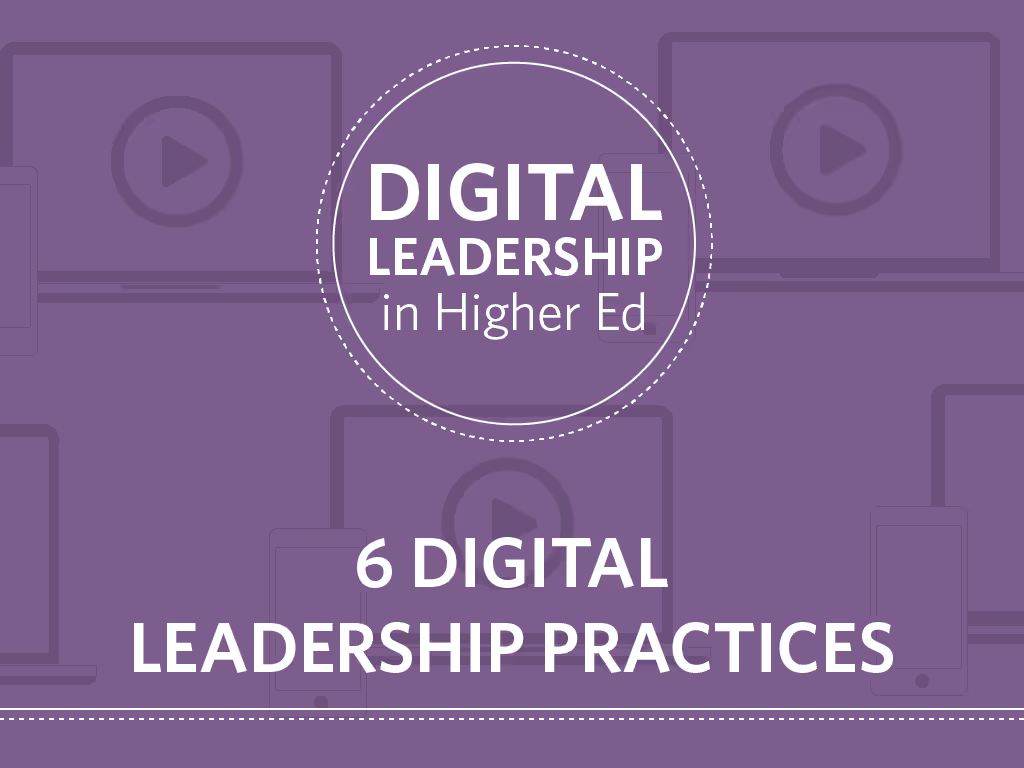
6 Digital Leadership Practices in Higher Ed





6 Digital Leadership Practices in Higher Ed
Focuses on the use of digital tools, resources, and technologies for the advancement of student learning, development, and success as well as the improved performance of student affairs professionals.
In the professional competencies, growth is documented through foundational, intermediate and advanced levels. I have previously blogged in greater detail about the tech competency, as well as tools for foundational level professionals. This post will focus on the advanced level of the Tech competency and tap into a bigger call for Digital Leadership in Higher Education. With 14 outcomes, becoming a higher education administrator displaying advanced levels of the Tech competencies is no easy task. No matter the specific tech-related outcome, the core of advanced skills in tech is leadership. This goes beyond just being a user, adopter or educator on tools. It is about building relationships, partnerships and spreading empowerment grounded in technology.This is Digital Leadership.
I recently released my definition of higher education digital leadership on my blog that is based in personalizing technology through human operations and relationships. A leader can be aware of and implement technology tools, but a digital leader needs to tap into a new tool and skill beyond software and hardware. This tool I call heartware.“Heartware is your internal operating system as a whole person in the digital age - with core values, life mission, and passion.”We need conversations about technology in higher education to be based around building stronger communities and connecting people (not users) in all places and spaces. To this aim, digital leaders must bring the super fans and the Luddites of tech to the table and the ‘tablet’ to find a common purpose. This means digital leaders must be steadfast role models in their own tech use. My research is especially drawn to this type of leadership. To operationalize specific methods to tap into Digital Leadership, I offer six digital leadership practices, backed up with some outcomes of the advanced level tech competency.
1) Prioritize Relationships and Partnerships.
Students First. Develop organic relationships that will turn into strategic partnerships with students. From interacting with them on Twitter and Instagram to hosting organized focus groups to seek out feedback – students should be your number one priority not only in producing campus services, but also including in technology related decisions. Your new BFF: Campus IT. Get to know your campus IT Department. This office is more than just submitting work orders or calling to say you want an app developed. Review the organizational chart and find out if there is one member assigned specifically to student affairs. Sometime in the next two months, offer to take this person for coffee to learn more about them and their role on campus. Build a strong partnership so when opportunities arise for innovation, there is social capital built up. Embrace Edtech partnerships. The reality is that a majority of campuses will not have the means, time or talent to keep up with the daily changes of tech or create their own in-house tools. However, there are tech companies that dedicate their entire operations to meeting much technology related needs you have. While spending money on a vendor may not feel like an equal partnership, this series aims to provide you empowering tools for exploring vendors as well as understanding the value add for products that will meet learning outcomes, university mission, and student engagement. Advanced Outcomes of Tech Competency- Collaborate with and support faculty by developing holistic educational and co-curricular opportunities for students in online and hybrid programs promoting the relevance and vision of what student affairs practice in new educational delivery formats.
- Provide leadership for the seamless integration of social media and other digital communications with broader educational, customer service, marketing, and community engagement efforts that communicate and develop dialogue and community around shared common institutional values.
2) Post Expertise within Personal Learning Networks (PLNs).
We need experienced and credible leaders active in digital spaces, sharing original content, and providing feedback to younger professionals. These PLNs can be found on just about every online community. Advanced Outcomes of the Tech Competency- Contribute to, partner with, and/or provide leadership for local, state/provincial, national, and global digital professional learning communities and personal learning networks in promoting the use of technology for educational purposes.
3) Fill the Newest Campus Role: CEO (Chief Experiment Officer).
Displaying the ability to adapt, but also embrace change, is a skill required in all professions. Where this skill is taken to the next level as a digital leader is to be a trendsetter and trend spotter. This can be accomplished by empowering others in your division/department, as well as committing time to explore and experiment with tools. Can you set up an environment that experiment (and maybe even failing) is supported by technology? Advanced Outcomes of the Tech Competency- Anticipate technological change and allocate personal, departmental, and/or institutional resources to foster in others dispositions of adaptability, flexibility, and openness to technological innovation.
- Contribute to the generation of research, trend analyses, and needs assessments related to digital technologies that inform efforts to meet the technological needs of students, colleagues, and educational stakeholders.
4) Create Spaces and Places for Tech Education & Evaluation.
Building from the experimentation with technology, digital leaders need to establish time for themselves and others to share intentional digital education, as well as documented evaluation. Education can be implemented via local campus resources, outside experts, and even free online tools/tutorials from YouTube, bloggers, and association webinars. As in any other campus effort, assessment must be a priority. This data can come from social media analytics, qualitative student engagement data and usage statistics. Advanced Outcomes of Tech Competency- Provide training and instruction for the use, adoption, and evaluation of digital strategies for enhancing educational interventions with multimedia, interactive tools, and creativity enhancing technologies by students, colleagues, and other educational stakeholders.
- Provide leadership for the proactive creation, use, and empirical evaluation of technological tools and digital spaces for students including those drawing on social media and other digital communication and collaboration tools.
5) Strengthen your Heartware.
As noted earlier in this post, heartware makes technology personal – digital leaders must infuse core values and even life calling into use of technology, especially social media. This is where having a digital leadership philosophy is key, one including ethical decision making, student engagement and innovation. In my research, heartware was seen in senior vice presidents who were drawn to tools like Twitter to connect with students and found that by being personable these relationships (and accounts) flourished. How can you bring your heartware into your leadership presence online? Advanced Outcomes of Tech Competency- Provide leadership that demands digital information and technologies be used in a manner that is ethical and in full compliance with national and state/province laws as well as with institutional policies.
6) Digital Role Models & Mentors.
Digital leaders embrace influence on-campus and online. Being a digital role model includes formal conversations with colleagues, staff and students, but also the knowledge that how that digital leader uses technology is being passively observed - from when they use their iPhone in a meeting, to what they post on Facebook. A digital leader also needs mentors. You can have a number of digital mentors, both formal (those you ask questions) and informal (those whose technology and social media use you simply monitor). This could be a younger professional more tapped into new technologies, or someone at a level you aspire to in learning how they integrate tech into their professional practices. Advanced Outcomes of Tech Competency- Provide leadership and ongoing training to colleagues and students for the cultivation of a genuine digital identity, presence, and reputation that models appropriate online behavior and enable open access and engagement with virtual communities as appropriate.
Click the infographic to enlarge it! Tweet about it!

Share this infographic on Twitter!
Want to stay updated on Digital Leadership in Higher Education research and practice? Subscribe to my newsletter, follow me on Twitter @josieahlquist and on my blog at www.josieahlquist.com. Now read the next article in this series: Building Relationships with Students Using Mobile Technology
Get the Mobile App Playbook
A short guide to running the whole student journey in one app. No fluff, just what works.
for higher ed
Campus
Playbook
A practical guide to building a connected campus experience.
Free playbook
The Mobile App Playbook for Universities
Students decide if they belong long before they set foot on campus. This playbook shows how to win them over from the first visit through graduation.
- Grow enrollment and boost recruitment
- Increase belonging and retention
- Run every event from one branded app
By submitting, you agree to our Privacy Policy.
You're in.
.png)

%20(1).avif)