
Campus apps by department
Admissions, orientation, student life, and more — one campus app that works across departments.

Campus apps by department
Admissions, orientation, student life, and more — one campus app that works across departments.
Build unlimited event apps on one license
One partnership for unlimited campus events — orientation, tours, student life, and everything in between.
Build unlimited event apps on one license
One partnership for unlimited campus events — orientation, tours, student life, and everything in between.
Compare event app platforms
See how Guidebook stacks up against other event app and registration platforms.
Compare event app platforms
See how Guidebook stacks up against other event app and registration platforms.
Event apps for nonprofit and community programs
Give members, volunteers, and donors one branded app for conferences, fundraisers, and year-round community.
Event apps for nonprofit and community programs
Give members, volunteers, and donors one branded app for conferences, fundraisers, and year-round community.
Campus integrations and an open API
Connect Guidebook with the campus systems, APIs, and tools your team already uses.
Campus integrations and an open API
Connect Guidebook with the campus systems, APIs, and tools your team already uses.
Event apps for corporate and enterprise teams
Internal meetings, offsites, and large-scale corporate events — with the branding and control enterprise teams need.
Event apps for corporate and enterprise teams
Internal meetings, offsites, and large-scale corporate events — with the branding and control enterprise teams need.
Create a branded event app with no coding
Put schedules, maps, resources, and updates in every attendee's pocket — built for campus events and programs.
Create a branded event app with no coding
Put schedules, maps, resources, and updates in every attendee's pocket — built for campus events and programs.
Launch a branded, white-label event app
A white-label event app with your branding, your content, and your attendee experience — no coding required.
Launch a branded, white-label event app
A white-label event app with your branding, your content, and your attendee experience — no coding required.
Everything in the Guidebook platform
Explore the features event teams use to engage attendees before, during, and after the event.
Everything in the Guidebook platform
Explore the features event teams use to engage attendees before, during, and after the event.
One app for in-person and virtual attendees
The same schedule, networking, and updates whether people are in the room or joining remotely.
One app for in-person and virtual attendees
The same schedule, networking, and updates whether people are in the room or joining remotely.
Event apps built for associations
Annual meetings, chapter events, and member engagement — without rebuilding a new app every year.
Event apps built for associations
Annual meetings, chapter events, and member engagement — without rebuilding a new app every year.
A branded event website that matches the app
Promote the event, collect interest, and keep branding consistent from the first click to check-in.
A branded event website that matches the app
Promote the event, collect interest, and keep branding consistent from the first click to check-in.
Plan, run, and measure events on one platform
App, registration, badges, and websites in one workflow — so planning isn't a pile of disconnected tools.
Plan, run, and measure events on one platform
App, registration, badges, and websites in one workflow — so planning isn't a pile of disconnected tools.
Keep members engaged between events
One branded app for the conference and everything that happens the other 51 weeks of the year.
Keep members engaged between events
One branded app for the conference and everything that happens the other 51 weeks of the year.
The conference app attendees actually use
Schedules, maps, networking, and live updates for annual meetings, summits, and multi-day conferences.
The conference app attendees actually use
Schedules, maps, networking, and live updates for annual meetings, summits, and multi-day conferences.
Registration that feeds your app and badges
Collect registrations, payments, and attendee data in the same platform as your event app.
Registration that feeds your app and badges
Collect registrations, payments, and attendee data in the same platform as your event app.
Design and print event badges in one place
Custom badges, QR check-in, and on-site printing — without a separate badge vendor.
Design and print event badges in one place
Custom badges, QR check-in, and on-site printing — without a separate badge vendor.
A Smaller School?
Deliver a polished, branded event experience without a large team or a big budget.
A Smaller School?
Deliver a polished, branded event experience without a large team or a big budget.
Running Family Programs?
Give families everything they need, from schedules and maps to real-time updates, all in one place.
Running Family Programs?
Give families everything they need, from schedules and maps to real-time updates, all in one place.
Coordinating Move-In Day?
Share updates, manage events, and keep students informed from move-in through the academic year.

Coordinating Move-In Day?
Share updates, manage events, and keep students informed from move-in through the academic year.
Offering Campus Tours?
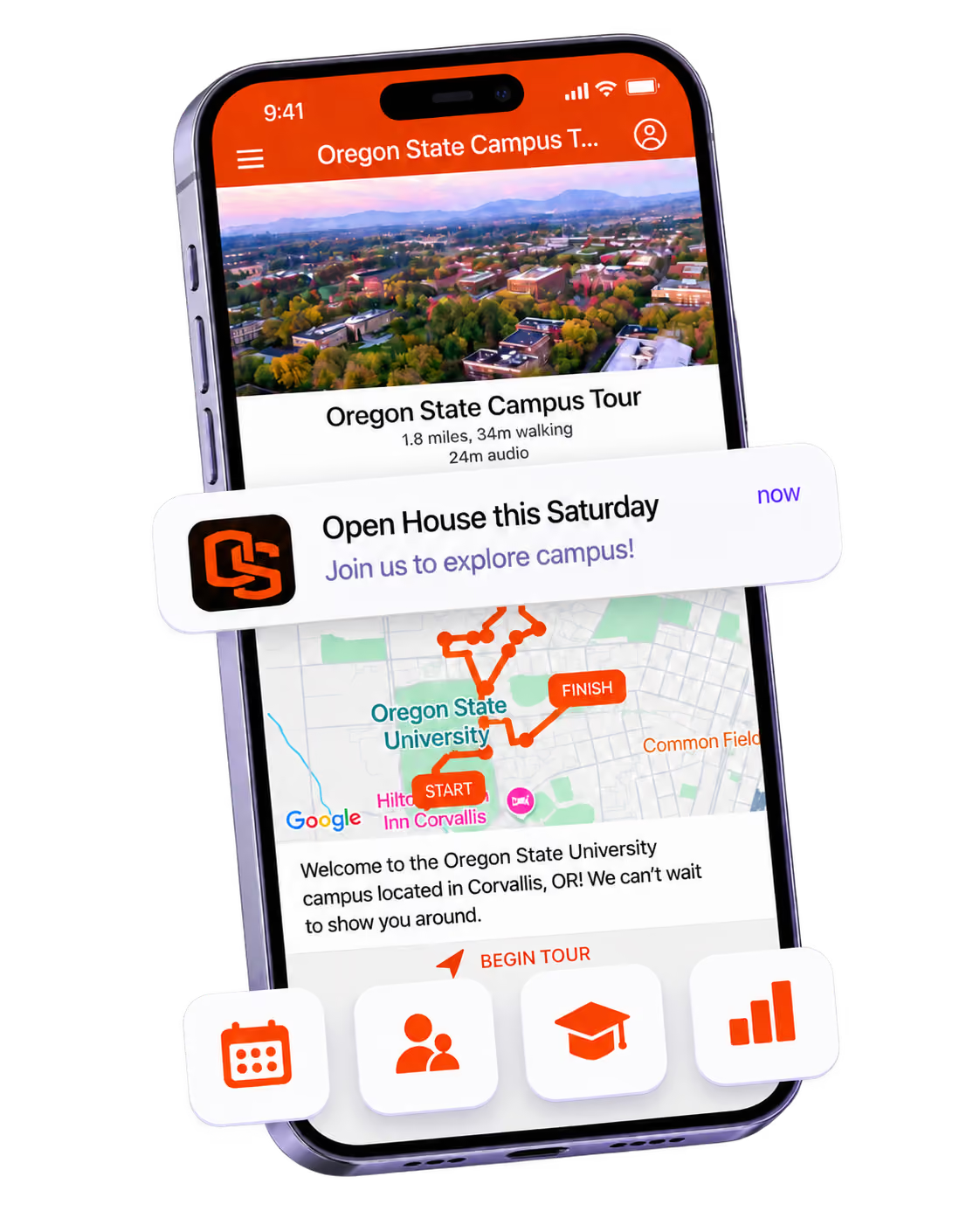
Deliver branded, self-guided tour experiences with interactive maps and rich media, available 24/7.

Offering Campus Tours?
Deliver branded, self-guided tour experiences with interactive maps and rich media, available 24/7.
Organising a Career Fair?
Simplify logistics for students, employers, and Career Services staff with one easy-to-use app.
Organising a Career Fair?
Simplify logistics for students, employers, and Career Services staff with one easy-to-use app.
Managing Alumni Events?
Plan reunions, regional events, and fundraising campaigns with an app built for alumni engagement.
Managing Alumni Events?
Plan reunions, regional events, and fundraising campaigns with an app built for alumni engagement.
Boost Student Engagement
One hub for schedules, resources, and events that keeps students connected throughout the academic year.
Boost Student Engagement
One hub for schedules, resources, and events that keeps students connected throughout the academic year.
Planning Orientation?
Help new students feel prepared from day one with schedules, campus resources, and real-time updates in one app.
Planning Orientation?
Help new students feel prepared from day one with schedules, campus resources, and real-time updates in one app.
Running Admissions Events?
Manage open houses, tours, and yield events with a branded app that saves time and engages prospective students.

Running Admissions Events?
Manage open houses, tours, and yield events with a branded app that saves time and engages prospective students.
Get a custom Sponsorship Package Template
Stop starting from scratch. Grab free templates that helWe'll build a tailored sponsorship package with suggested pricing, tiers, and benefits..for your specific event.p you build professional sponsorship packages and close deals faster.
Get a custom Sponsorship Package Template
Stop starting from scratch. Grab free templates that helWe'll build a tailored sponsorship package with suggested pricing, tiers, and benefits..for your specific event.p you build professional sponsorship packages and close deals faster.
Plan Your Next Event Without Missing a Beat.
From venue selection to post-event wrap-up, this free checklist walks you through every step (so nothing falls through the cracks).
.avif)
Plan Your Next Event Without Missing a Beat.
From venue selection to post-event wrap-up, this free checklist walks you through every step (so nothing falls through the cracks).
Real Results From Real Events
100,000+ organizations trust Guidebook. See exactly how universities, associations, enterprises, and more put it to work.

Real Results From Real Events
100,000+ organizations trust Guidebook. See exactly how universities, associations, enterprises, and more put it to work.
Flexible pricing for every event size
Find the perfect plan for your needs, from intimate gatherings to large-scale conferences.
Flexible pricing for every event size
Find the perfect plan for your needs, from intimate gatherings to large-scale conferences.
Join our event experts
Watch on-demand webinars and join live sessions with industry leaders sharing best practices for event success.
.avif)
Join our event experts
Watch on-demand webinars and join live sessions with industry leaders sharing best practices for event success.
Guidebook in Action
Book a personalized walkthrough and discover how we help event teams create better attendee experiences.
Guidebook in Action
Book a personalized walkthrough and discover how we help event teams create better attendee experiences.
What elements make up a strong conference communication strategy?
Discover the key elements of a strong conference communication strategy. Learn about messaging frameworks, audience segmentation, channel selection, and engagement tactics for impactful events.
Conference Communication Strategy is the master plan that guides every message, channel, and touchpoint you use to connect with attendees before, during, and after your event. It covers everything from pre-event emails to live session announcements to post-conference follow-ups. A solid strategy turns scattered messages into a cohesive experience that drives attendance, engagement, and lasting impact.
Here's the thing: most event planners communicate constantly but rarely strategically. They blast emails, post on social media, and hope something sticks. A true conference communication strategy is different. It maps out who needs to hear what, when they need to hear it, and through which channel. It's the difference between shouting into a crowd and having a conversation.
Key Characteristics of Conference Communication Strategy
- Audience-Centric Design: Every message targets specific attendee segments—speakers, sponsors, first-timers, or returning guests—with content that matters to them.
- Multi-Channel Coordination: Messages flow across email, social media, mobile apps, and on-site signage in a unified voice and consistent timing.
- Timeline-Driven Execution: Communications follow a planned schedule that builds momentum from announcement through post-event engagement.
- Two-Way Engagement: The strategy includes feedback loops, Q&A opportunities, and ways for attendees to respond—not just receive information.
- Measurable Outcomes: Clear metrics track open rates, click-throughs, app downloads, and engagement to prove what's working.
- Crisis-Ready Flexibility: Built-in protocols handle last-minute changes, weather delays, or speaker cancellations without chaos.
- Brand Consistency: Every touchpoint reinforces your conference identity through tone, visuals, and messaging themes.
Conference Communication Strategy vs. Related Approaches
Event Marketing Strategy
- Scope: Focuses primarily on attracting and converting potential attendees
- Focus: Promotional messaging and value propositions
- Timeline: Heaviest activity before registration closes
- Channels: Paid ads, social media, email campaigns, PR
- Goal: Drive registrations and ticket sales
Attendee Engagement Plan
- Scope: Centers on interactions during the live event experience
- Focus: Session participation, networking, and real-time activities
- Timeline: Primarily event days with some pre-event prep
- Channels: Event apps, live polling, on-site displays
- Goal: Maximize attendee satisfaction and participation
Conference Communication Strategy
- Scope: Encompasses all messaging across the entire event lifecycle
- Focus: Information delivery, relationship building, and experience coordination
- Timeline: Pre-event through post-event follow-up
- Channels: All available touchpoints working together
- Goal: Create seamless, informed attendee experience
Think of it this way: event marketing gets people in the door. Engagement keeps them active once inside. Conference communication strategy ties everything together into one coherent journey.
Essential Conference Communication Channels
Email Campaigns That Actually Get Opened
Email remains your workhorse channel. But 47% of recipients decide whether to open based on subject line alone. Keep them short, specific, and action-oriented.
Segment your lists ruthlessly. First-time attendees need different information than returning veterans. Speakers need logistics details. Sponsors want visibility updates.
Mobile Apps for Real-Time Updates
A conference app puts your communication strategy in every attendee's pocket. Push notifications cut through inbox clutter. Personalized schedules reduce confusion.
The best apps become the single source of truth. When sessions change or rooms shift, one update reaches everyone instantly. No more printed errata sheets.
Social Media for Community Building
Social channels extend your reach beyond registered attendees. They create FOMO that drives future registrations. They also give attendees a voice.
- Create a unique, memorable event hashtag
- Share behind-the-scenes content to build anticipation
- Highlight speakers and sessions with shareable graphics
- Encourage user-generated content during the event
- Monitor mentions for real-time engagement opportunities
On-Site Signage and Displays
Digital signage handles last-minute changes that printed materials can't. Strategically placed screens guide traffic flow and highlight upcoming sessions.
Don't forget the basics: clear wayfinding, room identifiers, and schedule boards. Sometimes low-tech solutions work best for high-traffic areas.
Direct Messaging for VIP Communications
Speakers, sponsors, and VIP guests deserve personalized attention. Direct channels—whether text, WhatsApp, or in-app messaging—make them feel valued.
Assign dedicated contacts for high-priority stakeholders. Quick responses to their questions prevent small issues from becoming big problems.
Building Your Communication Timeline
Pre-Event Phase: 12-8 Weeks Out
This is your foundation-building period. Focus on awareness and early registration momentum.
- Launch announcement campaigns across all channels
- Release speaker lineup and session previews
- Open early-bird registration with clear deadlines
- Begin advertising your event to target audiences
- Reach out to potential sponsors with sponsorship packages
Mid-Funnel Phase: 8-4 Weeks Out
Shift from awareness to conversion. Address objections and provide practical details.
- Share testimonials from past attendees
- Release detailed agenda and session descriptions
- Highlight networking opportunities and special events
- Send reminder emails to incomplete registrations
- Promote your event app for early downloads
Final Countdown: 4-1 Weeks Out
Now it's all about logistics and excitement. Make attending feel easy and unmissable.
- Send venue details, parking info, and travel tips
- Share what to expect and what to bring
- Introduce networking features and icebreakers
- Create urgency with last-chance messaging
- Confirm all speaker and sponsor communications
Event Days: Real-Time Communication
Speed matters most during live events. Your strategy should enable instant updates without bottlenecks.
Designate a communication lead with authority to send messages. Pre-approve templates for common scenarios. Test all systems before doors open.
Post-Event Phase: 1-4 Weeks After
The conversation doesn't end when attendees leave. Post-event communication shapes their memory and future decisions.
- Send thank-you messages within 24 hours
- Share session recordings and presentation slides
- Request feedback through surveys
- Highlight key moments and attendee achievements
- Tease next year's event with early announcements
Why Conference Communication Strategy Matters
For Event Success:
- Higher Attendance Rates: Clear, consistent messaging reduces no-shows by keeping your event top-of-mind and removing friction from the attendance decision.
- Better Session Participation: When attendees know what's happening and why it matters, they show up prepared and engaged.
- Smoother Operations: Proactive communication prevents the chaos of confused attendees asking staff the same questions repeatedly.
- Stronger Community Building: Strategic messaging creates shared experiences and inside references that bond attendees together.
- Improved Crisis Management: When problems arise, established communication channels let you respond quickly and maintain trust.
For Business Objectives:
- Increased Event ROI: Better communication drives higher engagement, which translates to stronger sponsor value and attendee satisfaction.
- Enhanced Brand Perception: Professional, coordinated messaging positions your organization as competent and attendee-focused.
- Valuable Data Collection: Strategic touchpoints create opportunities to gather insights about attendee preferences and behaviors.
- Stronger Sponsor Relationships: Demonstrating communication reach and engagement helps justify sponsor investments and renewals.
- Year-Round Engagement: A communication strategy extends beyond single events to maintain community connections throughout the year.
Conference Communication Strategy Best Practices
- Map Your Audience Segments First: Before writing a single message, identify every stakeholder group and their unique information needs. Speakers need different details than sponsors or first-time attendees.
- Create a Master Communication Calendar: Plot every message across every channel on one visual timeline. This prevents overlap, gaps, and the dreaded "we forgot to tell them" moments.
- Write Once, Adapt Many Times: Develop core messages that can be tailored for different channels. Your email announcement and social post should share DNA but fit their platforms.
- Test Everything Before Launch: Send test emails to multiple devices. Check push notifications on both iOS and Android. Verify links actually work. Small glitches undermine big messages.
- Build in Response Mechanisms: Every communication should make it easy for recipients to take action or ask questions. Include clear CTAs and contact information.
- Establish Approval Workflows: Define who can send what and when. This prevents rogue messages while enabling quick responses when needed.
- Monitor and Adjust in Real-Time: Track open rates, click-throughs, and engagement. If something isn't working, change it mid-campaign rather than waiting for the post-mortem.
- Document Everything for Next Time: Keep records of what you sent, when, and how it performed. Your future self will thank you during next year's planning process.
- Coordinate with All Stakeholders: Ensure speakers, sponsors, and partners know your communication timeline. Their messages should complement, not compete with, yours.
- Plan for Silence Too: Sometimes the best communication strategy includes knowing when not to send another email. Respect inbox fatigue.
Common Conference Communication Strategy Mistakes
Treating All Attendees the Same: Sending identical messages to everyone ignores that a CEO sponsor and a student attendee have completely different needs. This lazy approach leads to irrelevant content that gets ignored or, worse, unsubscribed.
Starting Too Late: Waiting until four weeks before your event to begin strategic communication leaves no time to build momentum. By then, calendars are set and budgets are spent. Start your communication strategy when you start your event planning.
Over-Communicating Pre-Event, Under-Communicating During: Many planners bombard registrants with emails, then go silent during the actual conference. Attendees need real-time guidance most when they're navigating your event live.
Ignoring Mobile-First Reality: If your emails aren't mobile-optimized and you're not using a conference app, you're missing where attendees actually consume information. Over 60% of event-related emails are opened on mobile devices.
No Contingency Plans: When a keynote cancels or weather delays the schedule, scrambling to communicate changes creates chaos. Pre-written templates and established emergency channels prevent panic.
Forgetting Post-Event Follow-Up: The conference ends and communication stops. This wastes the momentum you've built and misses opportunities to gather feedback, share content, and promote future events.
Measuring the Wrong Things: Tracking email sends instead of opens, or app downloads instead of engagement, gives you vanity metrics. Focus on actions that indicate real attendee value.
Final Thoughts
Conference communication strategy isn't just about sending messages. It's about creating a coherent experience that guides attendees from first awareness through lasting memory. When done well, it feels effortless to attendees—even though you know the planning behind it.
The events industry continues to evolve toward more personalized, real-time communication. Attendees expect the same instant, relevant messaging they get from their favorite apps and brands. Meeting these expectations requires both strategic thinking and the right tools.
The good news? You don't have to figure this out alone. Whether you're planning a virtual event, a hybrid conference, or a massive in-person gathering, the fundamentals remain the same. Know your audience. Plan your timeline. Choose your channels. Measure your results.
Ready to level up your conference communication? Guidebook's platform brings together mobile apps, push notifications, and real-time updates in one place. Check out our case studies to see how other event planners have transformed their communication strategies. Or explore our templates to get started faster. Because great events deserve great communication—and your attendees deserve to feel informed, not overwhelmed.
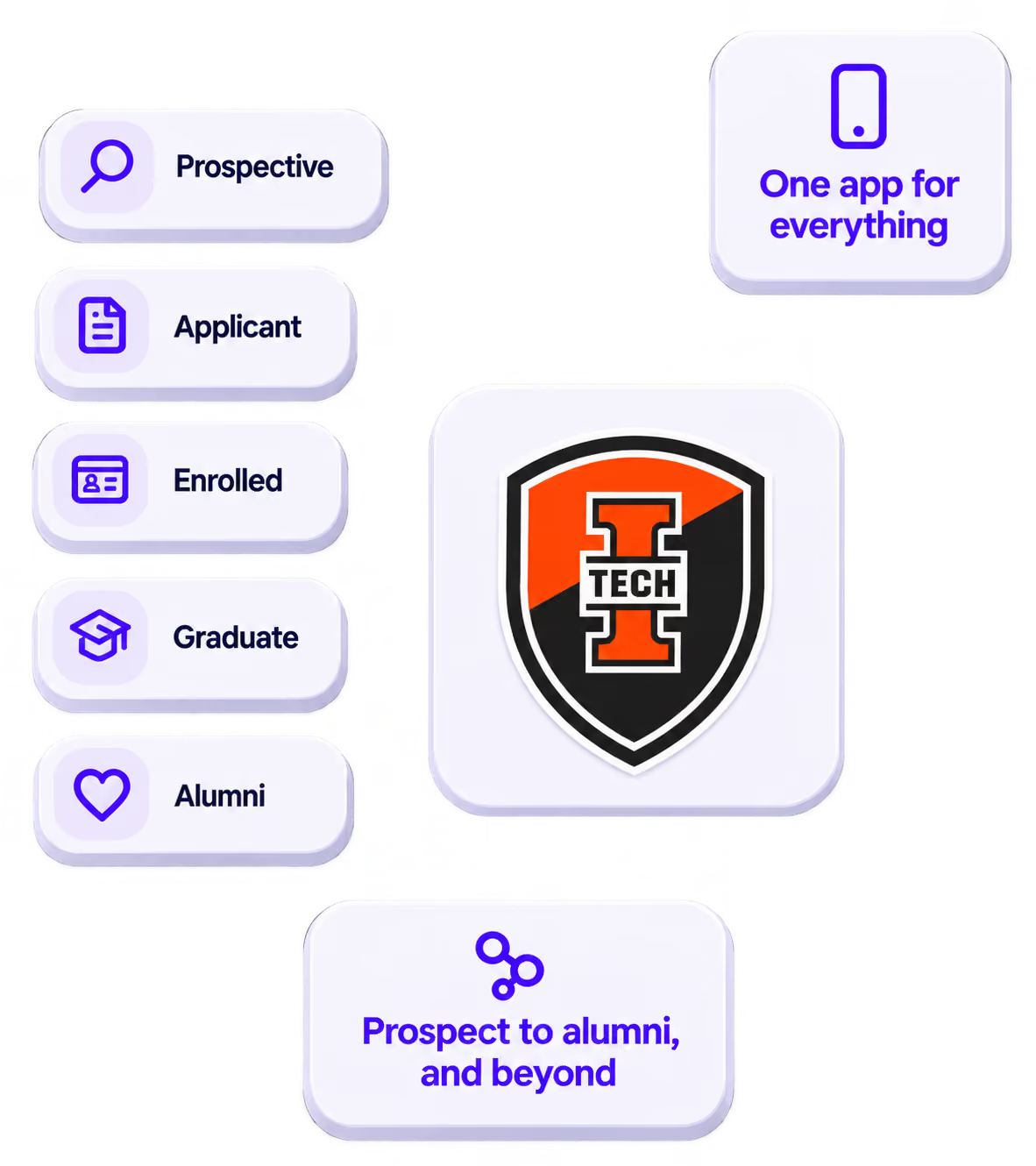
The power of your brand in your app, from first visit to alumni.
Build trust
Attendees download your app, not ours. Your name, colors, and crest in the stores.
.avif)
One place for the whole event
Schedules, maps, registration, and updates in one branded hub - not five tools.
Stand out
A branded app is what people keep on their phone after the printed program is in the recycling.

Get the Mobile App Playbook
A short guide to running the whole student journey in one app. No fluff, just what works.
for higher ed
Campus
Playbook
A practical guide to building a connected campus experience.
Free playbook
The Mobile App Playbook for Universities
Students decide if they belong long before they set foot on campus. This playbook shows how to win them over from the first visit through graduation.
- Grow enrollment and boost recruitment
- Increase belonging and retention
- Run every event from one branded app
By submitting, you agree to our Privacy Policy.
You're in.
.png)