
Campus apps by department
Admissions, orientation, student life, and more — one campus app that works across departments.

Campus apps by department
Admissions, orientation, student life, and more — one campus app that works across departments.
Build unlimited event apps on one license
One partnership for unlimited campus events — orientation, tours, student life, and everything in between.
Build unlimited event apps on one license
One partnership for unlimited campus events — orientation, tours, student life, and everything in between.
Compare event app platforms
See how Guidebook stacks up against other event app and registration platforms.
Compare event app platforms
See how Guidebook stacks up against other event app and registration platforms.
Event apps for nonprofit and community programs
Give members, volunteers, and donors one branded app for conferences, fundraisers, and year-round community.
Event apps for nonprofit and community programs
Give members, volunteers, and donors one branded app for conferences, fundraisers, and year-round community.
Campus integrations and an open API
Connect Guidebook with the campus systems, APIs, and tools your team already uses.
Campus integrations and an open API
Connect Guidebook with the campus systems, APIs, and tools your team already uses.
Event apps for corporate and enterprise teams
Internal meetings, offsites, and large-scale corporate events — with the branding and control enterprise teams need.
Event apps for corporate and enterprise teams
Internal meetings, offsites, and large-scale corporate events — with the branding and control enterprise teams need.
Create a branded event app with no coding
Put schedules, maps, resources, and updates in every attendee's pocket — built for campus events and programs.
Create a branded event app with no coding
Put schedules, maps, resources, and updates in every attendee's pocket — built for campus events and programs.
Launch a branded, white-label event app
A white-label event app with your branding, your content, and your attendee experience — no coding required.
Launch a branded, white-label event app
A white-label event app with your branding, your content, and your attendee experience — no coding required.
Everything in the Guidebook platform
Explore the features event teams use to engage attendees before, during, and after the event.
Everything in the Guidebook platform
Explore the features event teams use to engage attendees before, during, and after the event.
One app for in-person and virtual attendees
The same schedule, networking, and updates whether people are in the room or joining remotely.
One app for in-person and virtual attendees
The same schedule, networking, and updates whether people are in the room or joining remotely.
Event apps built for associations
Annual meetings, chapter events, and member engagement — without rebuilding a new app every year.
Event apps built for associations
Annual meetings, chapter events, and member engagement — without rebuilding a new app every year.
A branded event website that matches the app
Promote the event, collect interest, and keep branding consistent from the first click to check-in.
A branded event website that matches the app
Promote the event, collect interest, and keep branding consistent from the first click to check-in.
Plan, run, and measure events on one platform
App, registration, badges, and websites in one workflow — so planning isn't a pile of disconnected tools.
Plan, run, and measure events on one platform
App, registration, badges, and websites in one workflow — so planning isn't a pile of disconnected tools.
Keep members engaged between events
One branded app for the conference and everything that happens the other 51 weeks of the year.
Keep members engaged between events
One branded app for the conference and everything that happens the other 51 weeks of the year.
The conference app attendees actually use
Schedules, maps, networking, and live updates for annual meetings, summits, and multi-day conferences.
The conference app attendees actually use
Schedules, maps, networking, and live updates for annual meetings, summits, and multi-day conferences.
Registration that feeds your app and badges
Collect registrations, payments, and attendee data in the same platform as your event app.
Registration that feeds your app and badges
Collect registrations, payments, and attendee data in the same platform as your event app.
Design and print event badges in one place
Custom badges, QR check-in, and on-site printing — without a separate badge vendor.
Design and print event badges in one place
Custom badges, QR check-in, and on-site printing — without a separate badge vendor.
A Smaller School?
Deliver a polished, branded event experience without a large team or a big budget.
A Smaller School?
Deliver a polished, branded event experience without a large team or a big budget.
Running Family Programs?
Give families everything they need, from schedules and maps to real-time updates, all in one place.
Running Family Programs?
Give families everything they need, from schedules and maps to real-time updates, all in one place.
Coordinating Move-In Day?
Share updates, manage events, and keep students informed from move-in through the academic year.

Coordinating Move-In Day?
Share updates, manage events, and keep students informed from move-in through the academic year.
Offering Campus Tours?
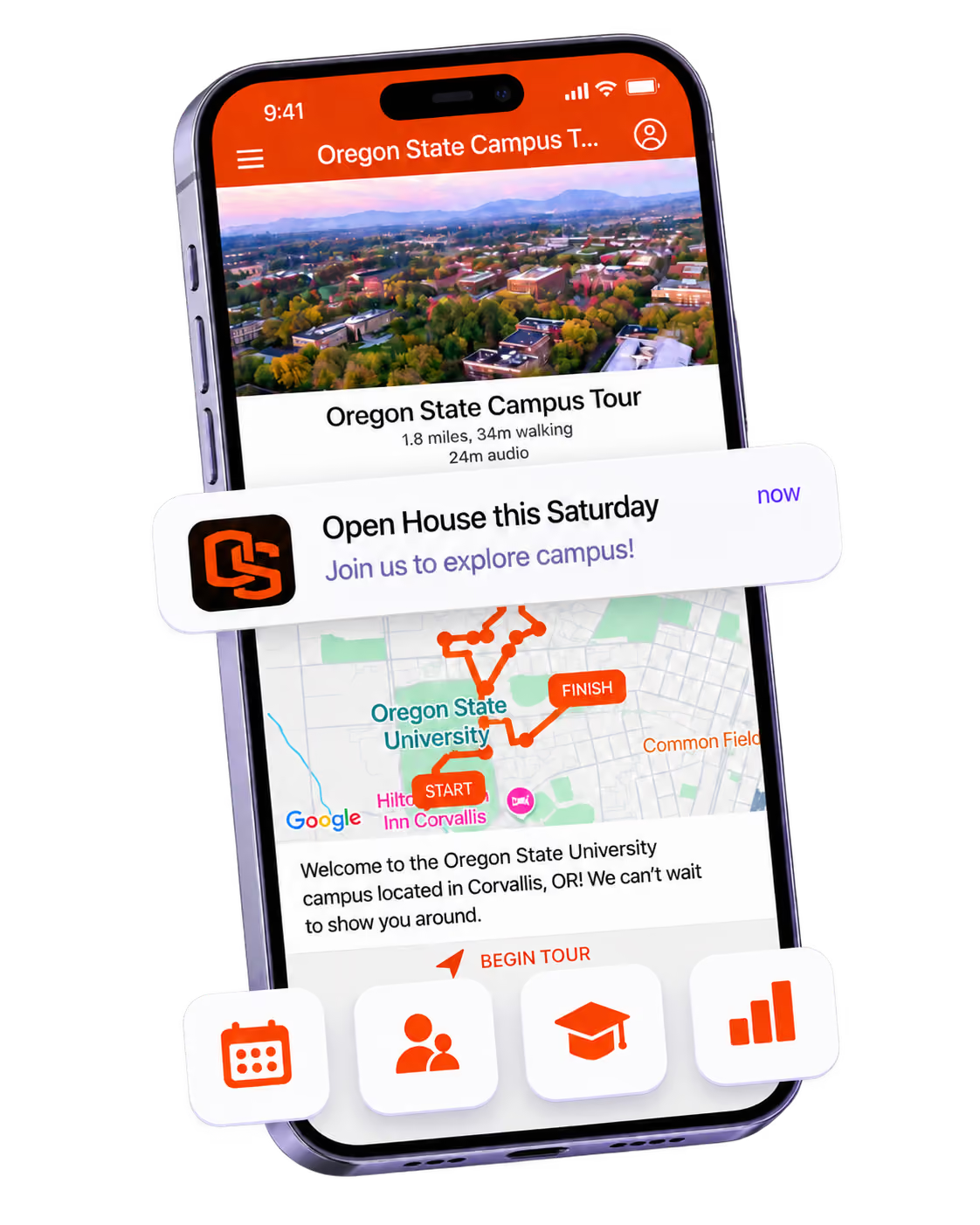
Deliver branded, self-guided tour experiences with interactive maps and rich media, available 24/7.

Offering Campus Tours?
Deliver branded, self-guided tour experiences with interactive maps and rich media, available 24/7.
Organising a Career Fair?
Simplify logistics for students, employers, and Career Services staff with one easy-to-use app.
Organising a Career Fair?
Simplify logistics for students, employers, and Career Services staff with one easy-to-use app.
Managing Alumni Events?
Plan reunions, regional events, and fundraising campaigns with an app built for alumni engagement.
Managing Alumni Events?
Plan reunions, regional events, and fundraising campaigns with an app built for alumni engagement.
Boost Student Engagement
One hub for schedules, resources, and events that keeps students connected throughout the academic year.
Boost Student Engagement
One hub for schedules, resources, and events that keeps students connected throughout the academic year.
Planning Orientation?
Help new students feel prepared from day one with schedules, campus resources, and real-time updates in one app.
Planning Orientation?
Help new students feel prepared from day one with schedules, campus resources, and real-time updates in one app.
Running Admissions Events?
Manage open houses, tours, and yield events with a branded app that saves time and engages prospective students.

Running Admissions Events?
Manage open houses, tours, and yield events with a branded app that saves time and engages prospective students.
Get a custom Sponsorship Package Template
Stop starting from scratch. Grab free templates that helWe'll build a tailored sponsorship package with suggested pricing, tiers, and benefits..for your specific event.p you build professional sponsorship packages and close deals faster.
Get a custom Sponsorship Package Template
Stop starting from scratch. Grab free templates that helWe'll build a tailored sponsorship package with suggested pricing, tiers, and benefits..for your specific event.p you build professional sponsorship packages and close deals faster.
Plan Your Next Event Without Missing a Beat.
From venue selection to post-event wrap-up, this free checklist walks you through every step (so nothing falls through the cracks).
.avif)
Plan Your Next Event Without Missing a Beat.
From venue selection to post-event wrap-up, this free checklist walks you through every step (so nothing falls through the cracks).
Real Results From Real Events
100,000+ organizations trust Guidebook. See exactly how universities, associations, enterprises, and more put it to work.

Real Results From Real Events
100,000+ organizations trust Guidebook. See exactly how universities, associations, enterprises, and more put it to work.
Flexible pricing for every event size
Find the perfect plan for your needs, from intimate gatherings to large-scale conferences.

Flexible pricing for every event size
Find the perfect plan for your needs, from intimate gatherings to large-scale conferences.
Join our event experts
Watch on-demand webinars and join live sessions with industry leaders sharing best practices for event success.
.avif)
Join our event experts
Watch on-demand webinars and join live sessions with industry leaders sharing best practices for event success.
Guidebook in Action
Book a personalized walkthrough and discover how we help event teams create better attendee experiences.
Guidebook in Action
Book a personalized walkthrough and discover how we help event teams create better attendee experiences.

Engagement strategy vs engagement tactics: what’s the difference?
Understand the difference between engagement strategy and engagement tactics. Learn how to build a strong strategy, choose effective tactics, and boost audience interaction.

Engagement Strategy vs Engagement Tactics is the essential distinction between your long-term vision for attendee connection and the specific actions you take to make it happen. Strategy sets the direction. Tactics execute the plan. Understanding both transforms good events into unforgettable experiences.
Here's the thing: most event planners jump straight to tactics. They pick an app, plan a networking game, or set up a photo booth. But without a strategy guiding those choices, you're just throwing ideas at the wall. A solid engagement strategy tells you why you're doing something. Tactics tell you how.
Key Characteristics of Engagement Strategy vs Engagement Tactics
- Scope Difference: Strategy covers your entire event vision. Tactics focus on individual activities or touchpoints.
- Timeline Variation: Strategies span months or years. Tactics happen in moments, hours, or single sessions.
- Decision Level: Strategy involves leadership and stakeholders. Tactics get handled by your execution team.
- Measurement Approach: Strategy tracks big-picture metrics like retention and satisfaction. Tactics measure specific actions like app downloads or session attendance.
- Flexibility Factor: Strategy stays consistent. Tactics adapt quickly based on real-time feedback.
- Resource Allocation: Strategy determines your budget priorities. Tactics work within those boundaries.
- Goal Orientation: Strategy answers "what do we want to achieve?" Tactics answer "what do we do next?"
Engagement Strategy vs Engagement Tactics Comparison
Engagement Strategy
- Scope: Covers the full attendee journey from registration to post-event follow-up
- Focus: Building lasting relationships and brand loyalty
- Timeline: Developed months before the event, guides all planning decisions
- Channels: Determines which platforms and touchpoints matter most
- Goal: Create meaningful connections that drive business outcomes
Engagement Tactics
- Scope: Individual activities, features, or interactions
- Focus: Driving immediate participation and response
- Timeline: Implemented during specific event moments
- Channels: Uses specific tools like event check-in software or mobile apps
- Goal: Generate measurable actions like clicks, downloads, or sign-ups
Think of it this way: your strategy is the map. Your tactics are the individual steps you take on the journey. You need both to reach your destination. A brilliant tactic without strategy is just noise. A strategy without tactics is just a dream.
Building Your Engagement Strategy Framework
Define Your Engagement Goals First
Start with the end in mind. What does success look like for your event? Maybe it's 90% attendee satisfaction. Perhaps it's 50 qualified leads for your sales team.
Write down 3-5 specific, measurable goals. These become your north star. Every tactic you choose should connect back to at least one of these goals. If it doesn't, skip it.
Know Your Audience Inside Out
Generic engagement doesn't work anymore. Your attendees expect personalized experiences. That means you need to understand:
- What problems they're trying to solve
- How they prefer to communicate
- What motivates them to participate
- Their comfort level with technology
Survey past attendees. Check social media conversations. Talk to your sales team. The more you know, the better your strategy.
Map the Attendee Journey
Engagement doesn't start when someone walks through the door. It begins the moment they hear about your event. Map every touchpoint:
- Pre-event: Registration, emails, social media
- During event: Sessions, networking, activities
- Post-event: Follow-up, surveys, community building
Your event planning process should include engagement opportunities at each stage.
Choose Your Strategic Pillars
Pick 3-4 themes that guide all your engagement decisions. These might include:
- Community building
- Education and skill development
- Networking and relationship building
- Entertainment and memorable moments
Every tactic you deploy should support at least one pillar. This keeps your event focused and cohesive.
Tactical Execution That Delivers Results
Pre-Event Engagement Tactics
Build excitement before day one. Send personalized welcome emails. Create a private social media group. Share speaker previews and agenda highlights.
Use your event digital marketing to drive early engagement. Encourage attendees to download your event app before they arrive. Purdue University sees 600,000+ app sessions during orientation week because they promote their app everywhere—even on stadium scoreboards.
On-Site Engagement Tactics
This is where tactics shine. Consider these proven approaches:
- Live polling during sessions
- Gamification with points and leaderboards
- Networking matchmaking through your app
- Photo opportunities with branded backdrops
- Interactive Q&A with speakers
The key? Don't overwhelm attendees. Pick tactics that align with your strategy and execute them well.
Post-Event Engagement Tactics
The event ends. Engagement shouldn't. Send thank-you messages within 24 hours. Share session recordings and key takeaways. Ask for feedback through quick surveys.
Create opportunities for ongoing connection. A team building event follow-up or virtual reunion keeps the community alive. This turns one-time attendees into loyal fans.
Technology-Driven Tactics
Modern engagement runs on tech. An event management platform centralizes everything. Attendees get personalized schedules. You get real-time data.
Mobile apps have become essential. They replace printed materials, enable instant updates, and create a single source of truth. When done right, they boost engagement without adding complexity.
Why Engagement Strategy vs Engagement Tactics Matters
For Event Success:
- Higher Attendance Rates: Strategic engagement builds anticipation that drives registrations and reduces no-shows.
- Better Attendee Satisfaction: When tactics align with strategy, every interaction feels intentional and valuable.
- Increased Participation: Clear engagement goals help you design activities people actually want to join.
- Stronger Community Building: Strategy-driven engagement creates connections that last beyond the event.
- Improved Event ROI: Focused tactics deliver measurable results instead of scattered efforts.
For Business Objectives:
- Lead Generation: Strategic engagement identifies and nurtures potential customers throughout the event.
- Brand Awareness: Consistent engagement tactics reinforce your message and values.
- Customer Retention: Meaningful experiences turn attendees into advocates.
- Data Collection: Tactical touchpoints gather insights that inform future decisions.
- Revenue Growth: Engaged attendees spend more, return more often, and refer others.
Engagement Strategy vs Engagement Tactics Best Practices
- Start With Strategy, Always: Resist the urge to pick tactics first. Define your goals, know your audience, then choose activities that fit.
- Document Everything: Write down your strategy. Create a tactical playbook. This keeps your team aligned and makes future planning easier.
- Test Tactics Before Going Big: Try new engagement ideas at smaller events first. Learn what works before scaling up.
- Measure What Matters: Track metrics that connect to your strategic goals. App downloads mean nothing if they don't drive engagement.
- Stay Flexible With Tactics: Your strategy stays firm. Your tactics adapt. If something isn't working, pivot quickly.
- Communicate the Strategy to Your Team: Everyone involved should understand the "why" behind each tactic. This creates consistency.
- Learn From Event Trends: Stay current on what's working in the industry. Adapt proven tactics to fit your strategy.
- Use Technology Wisely: Tech should simplify, not complicate. Choose tools that support your strategy without overwhelming attendees.
- Gather Feedback Continuously: Use an event debrief template to capture lessons learned. Apply insights to future events.
- Balance Innovation and Reliability: Mix proven tactics with fresh ideas. Too much novelty confuses. Too little bores.
Common Engagement Strategy vs Engagement Tactics Mistakes
Skipping Strategy Entirely: Jumping straight to tactics feels productive but leads to scattered results. Without a strategy, you're just guessing. Take time to define your goals before choosing activities.
Copying Competitors Blindly: What works for another event might flop at yours. Your audience is unique. Adapt tactics to fit your specific strategy and attendee needs.
Overloading With Tactics: More isn't better. Too many engagement activities overwhelm attendees and dilute impact. Pick fewer tactics and execute them brilliantly.
Ignoring Data: If you're not measuring, you're not learning. Track engagement metrics and use them to refine both strategy and tactics for future events.
Forgetting Pre and Post-Event: Engagement isn't just about event day. Neglecting the before and after leaves value on the table. Build touchpoints across the entire journey.
Misaligning Tactics and Strategy: A networking-focused strategy needs networking tactics. Sounds obvious, but many planners choose activities that don't support their goals. Check every tactic against your strategic pillars.
Treating All Attendees the Same: Different segments want different things. First-timers need orientation. Veterans want advanced content. Personalize your tactical approach based on audience segments.
Final Thoughts
Understanding the difference between engagement strategy and tactics isn't just academic. It's the foundation of events that actually work. Strategy gives you direction. Tactics give you action. Together, they create experiences people remember.
The best event planners master both. They think big-picture while sweating the details. They know when to stay the course and when to adapt. This balance separates forgettable events from transformative ones.
Your next event deserves more than random activities strung together. It deserves a clear strategy brought to life through intentional tactics. Start with your goals. Know your audience. Choose tactics that fit. Then execute with confidence.
Ready to put strategy and tactics into action? Explore Guidebook's event management platform to see how the right tools make execution easier. Check out our case studies for real-world inspiration. Or book a demo to see how we can support your next event. Because great engagement doesn't happen by accident—it happens by design.
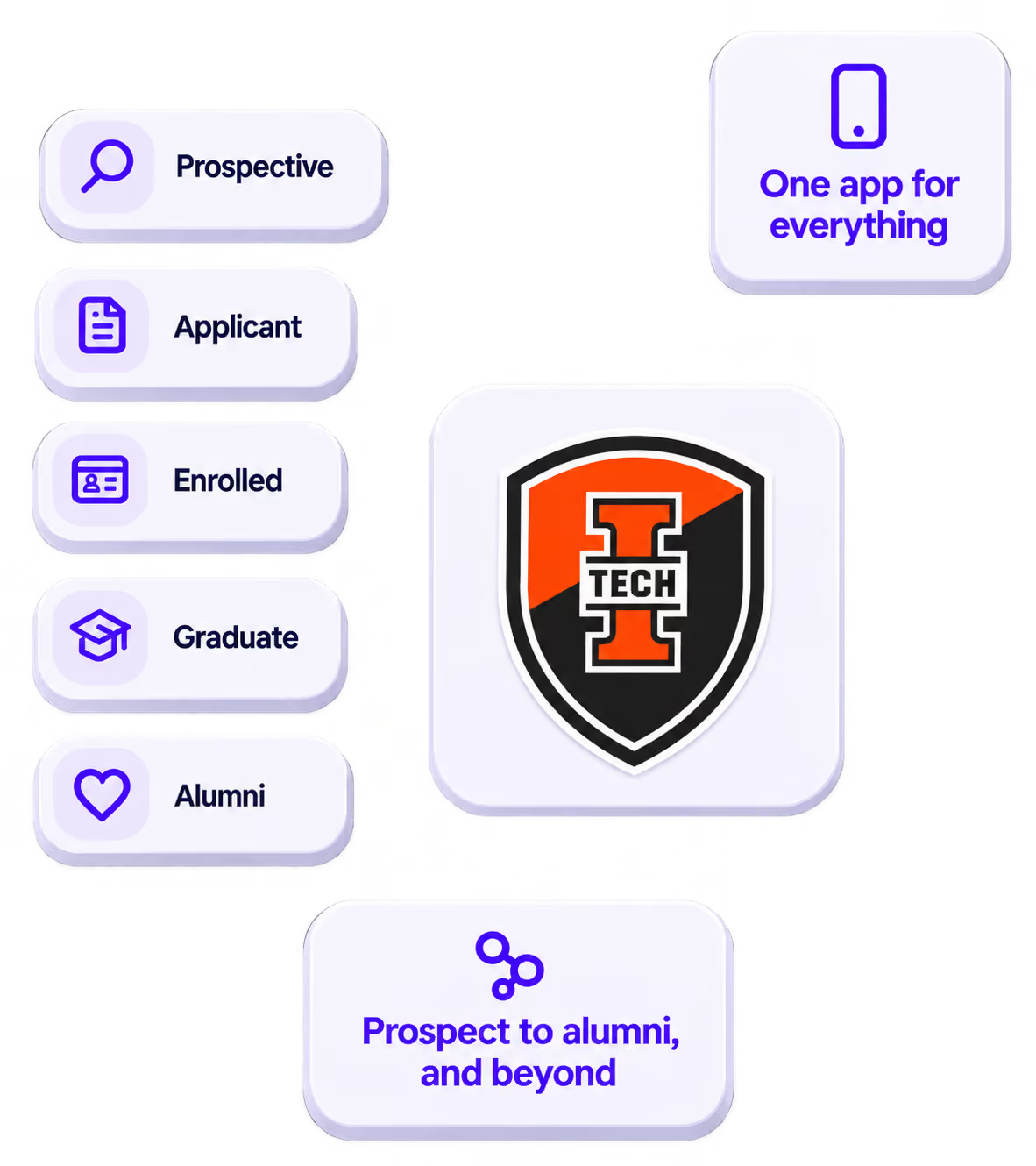
The power of your brand in your app, from first visit to alumni.
Build trust
Attendees download your app, not ours. Your name, colors, and crest in the stores.
.avif)
One place for the whole event
Schedules, maps, registration, and updates in one branded hub - not five tools.
Stand out
A branded app is what people keep on their phone after the printed program is in the recycling.

Get the Mobile App Playbook
A short guide to running the whole student journey in one app. No fluff, just what works.
for higher ed
Campus
Playbook
A practical guide to building a connected campus experience.
Free playbook
The Mobile App Playbook for Universities
Students decide if they belong long before they set foot on campus. This playbook shows how to win them over from the first visit through graduation.
- Grow enrollment and boost recruitment
- Increase belonging and retention
- Run every event from one branded app
By submitting, you agree to our Privacy Policy.
You're in.
.png)