The Mobile App Playbook for Universities
Every university is competing for the same thing: students who enroll, stay, and feel like they belong. The moments that decide all three, the campus visit, the admitted student day, orientation, welcome week, the first uncertain months of year one, are the moments this playbook is about. It is written for the admissions and orientation teams who run them, and it shows how one connected mobile experience turns each moment into an outcome you can measure.
Section 1: The Student Journey Is Mobile First
Today's students met the internet before they met their kindergarten teacher. They expect to research your campus, register for a visit, find their orientation schedule, and message a counselor from the same device, in minutes, without hunting. When your mobile experience is a website squeezed onto a phone or a PDF they have to pinch to read, you are invisible at the exact moment a student is forming a first impression. Mobile is not a nice-to-have channel anymore. It is where the enrollment relationship begins.
This section maps the full student lifecycle, from the first campus visit through graduation, and names the single connection moment that matters most at each stage. It gives your team a shared picture of where students engage, where they get lost, and where a mobile experience changes the outcome.
Section 2: Recruitment and Yield
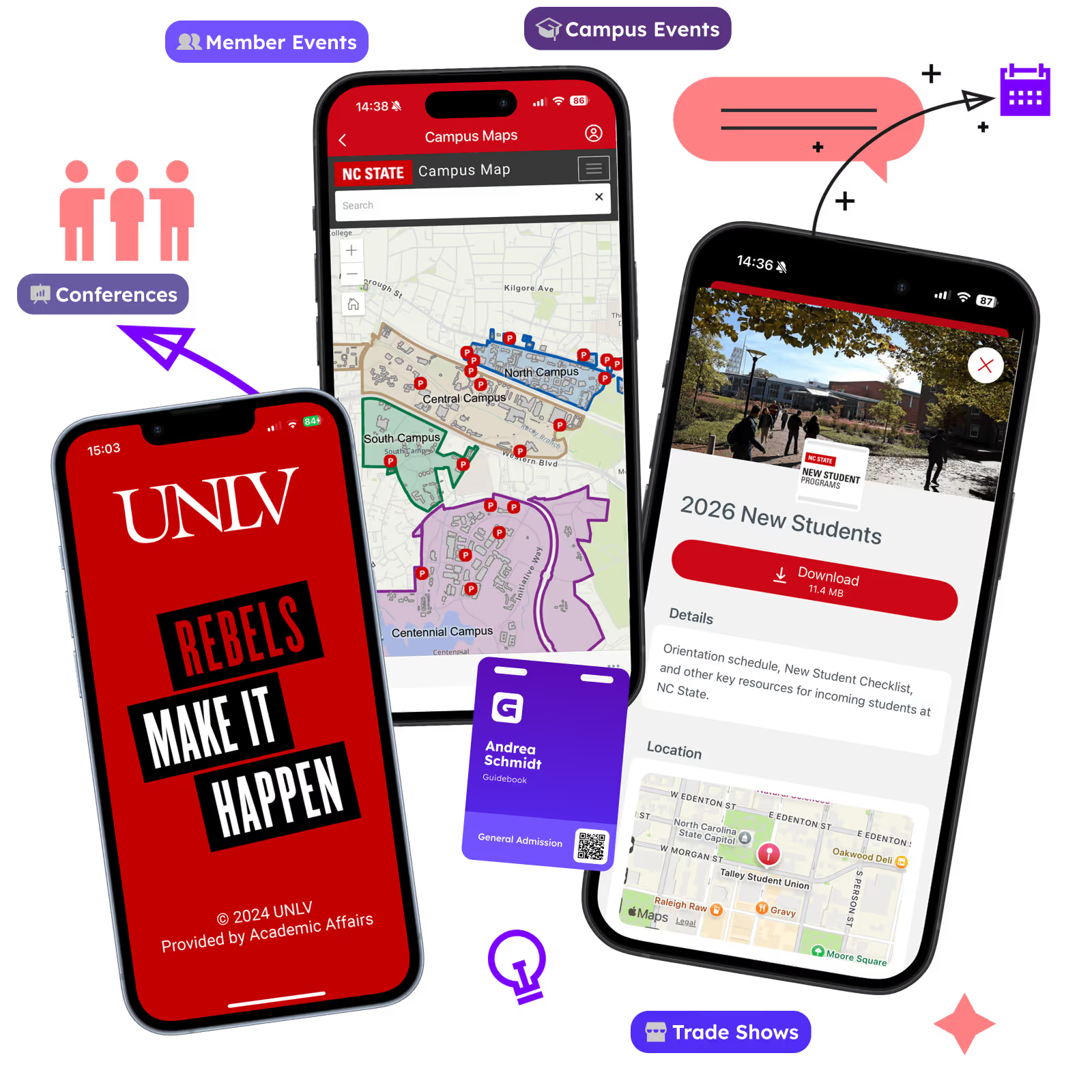
A campus visit is your highest-intent moment. A student who visits is telling you they are seriously considering you, and what happens next decides whether that interest becomes a deposit. Yet many visits still run on a printed schedule and a hope that families find the right building. A branded visit app gives every attendee a personalized schedule, a campus map that works offline, the sessions for their intended major highlighted, and a direct line to admissions.
Indiana Tech rebuilt Admitted Students Day around a Guidebook app. Their yield went from 40 percent to 82 percent, admitted-day attendees grew from 14 percent to 32 percent of total enrollment, and the team did it with fewer staff and far less printing. This section shows the visit-day structure behind results like that, and how to run multi-track admitted student days without anyone getting lost.
Section 3: Orientation and Belonging
Orientation is where a student decides, often in the first hours, whether this place is for them. It is also where information overload hits hardest, and where the students with the least built-in support, first-generation and international students, are most likely to fall through the cracks. A mobile orientation app puts the schedule, the map, the safety info, and the how-to-get-involved guide in every student's pocket, and lets your team update it in real time.
When an international student arrives and finds everything they need in one branded app, that is not just logistics. That is belonging from hour one, and belonging is what makes a student stay. This section covers how to design an orientation experience that reduces staff scramble and builds connection at the same time.
Section 4: Retention and the First Year
One in three first-year students nationally do not return for sophomore year (Hanover Research, 2024). The strongest predictor of who stays is not academic; it is whether a student feels connected. Belonging interventions have been shown to lift retention for underrepresented students by around 10 percent (IHEP, 2025), and at the scale of a full class that is millions of tuition dollars and hundreds of students who get to keep going.
The problem is that connection fades after move-in. The app that guided a student through welcome week can keep guiding them: to the club that fits, the career fair, the office hours, the event that turns a campus into a community. This section lays out the year-round engagement habits that keep first-year students connected past the point most of them disengage.
Section 5: Your Team, Your Timeline
The best mobile strategy fails if it depends on a six-month IT project. Guidebook is built so admissions, orientation, and student life teams build and update their own apps, with no coding and no waiting in a development queue. Indiana Tech built their first app in about eight hours, less time than it takes to design a printed program. One platform runs unlimited events across every department, so the whole campus speaks to students in one branded voice instead of six disconnected tools.
This section gives you the ownership model: who runs what, how updates happen in seconds, and how to bring departments onto one platform without a turf war.
Run It All From One Place
Every moment in this playbook, the visit, the admitted day, orientation, welcome week, the whole first year, can live in one branded app your students already trust and your team fully controls. That is the difference between a student who feels lost and a student who feels like they belong.
See How Guidebook Works →