Campus apps by department
Admissions, orientation, student life, and more — one campus app that works across departments.

Campus apps by department
Admissions, orientation, student life, and more — one campus app that works across departments.
Build unlimited event apps on one license
One partnership for unlimited campus events — orientation, tours, student life, and everything in between.
Build unlimited event apps on one license
One partnership for unlimited campus events — orientation, tours, student life, and everything in between.
Compare event app platforms
See how Guidebook stacks up against other event app and registration platforms.
Compare event app platforms
See how Guidebook stacks up against other event app and registration platforms.
Event apps for nonprofit and community programs
Give members, volunteers, and donors one branded app for conferences, fundraisers, and year-round community.
Event apps for nonprofit and community programs
Give members, volunteers, and donors one branded app for conferences, fundraisers, and year-round community.
Campus integrations and an open API
Connect Guidebook with the campus systems, APIs, and tools your team already uses.
Campus integrations and an open API
Connect Guidebook with the campus systems, APIs, and tools your team already uses.
Event apps for corporate and enterprise teams
Internal meetings, offsites, and large-scale corporate events — with the branding and control enterprise teams need.
Event apps for corporate and enterprise teams
Internal meetings, offsites, and large-scale corporate events — with the branding and control enterprise teams need.
Create a branded event app with no coding
Put schedules, maps, resources, and updates in every attendee's pocket — built for campus events and programs.
Create a branded event app with no coding
Put schedules, maps, resources, and updates in every attendee's pocket — built for campus events and programs.
Launch a branded, white-label event app
A white-label event app with your branding, your content, and your attendee experience — no coding required.
Launch a branded, white-label event app
A white-label event app with your branding, your content, and your attendee experience — no coding required.
Everything in the Guidebook platform
Explore the features event teams use to engage attendees before, during, and after the event.
Everything in the Guidebook platform
Explore the features event teams use to engage attendees before, during, and after the event.
One app for in-person and virtual attendees
The same schedule, networking, and updates whether people are in the room or joining remotely.
One app for in-person and virtual attendees
The same schedule, networking, and updates whether people are in the room or joining remotely.
Event apps built for associations
Annual meetings, chapter events, and member engagement — without rebuilding a new app every year.
Event apps built for associations
Annual meetings, chapter events, and member engagement — without rebuilding a new app every year.
A branded event website that matches the app
Promote the event, collect interest, and keep branding consistent from the first click to check-in.
A branded event website that matches the app
Promote the event, collect interest, and keep branding consistent from the first click to check-in.
Plan, run, and measure events on one platform
App, registration, badges, and websites in one workflow — so planning isn't a pile of disconnected tools.
Plan, run, and measure events on one platform
App, registration, badges, and websites in one workflow — so planning isn't a pile of disconnected tools.
Keep members engaged between events
One branded app for the conference and everything that happens the other 51 weeks of the year.
Keep members engaged between events
One branded app for the conference and everything that happens the other 51 weeks of the year.
The conference app attendees actually use
Schedules, maps, networking, and live updates for annual meetings, summits, and multi-day conferences.
The conference app attendees actually use
Schedules, maps, networking, and live updates for annual meetings, summits, and multi-day conferences.
Registration that feeds your app and badges
Collect registrations, payments, and attendee data in the same platform as your event app.
Registration that feeds your app and badges
Collect registrations, payments, and attendee data in the same platform as your event app.
Design and print event badges in one place
Custom badges, QR check-in, and on-site printing — without a separate badge vendor.
Design and print event badges in one place
Custom badges, QR check-in, and on-site printing — without a separate badge vendor.
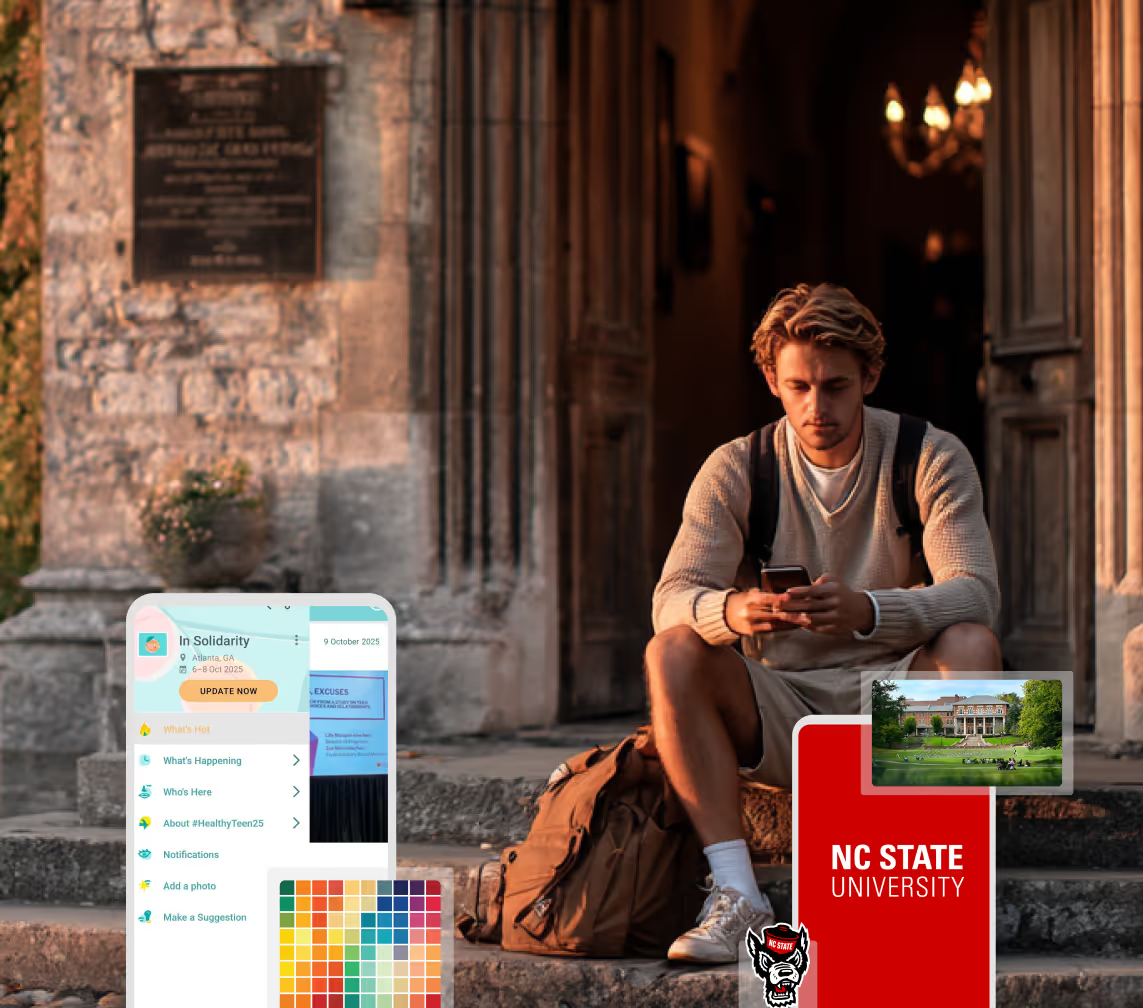
A Smaller School?
Deliver a polished, branded event experience without a large team or a big budget.
A Smaller School?
Deliver a polished, branded event experience without a large team or a big budget.
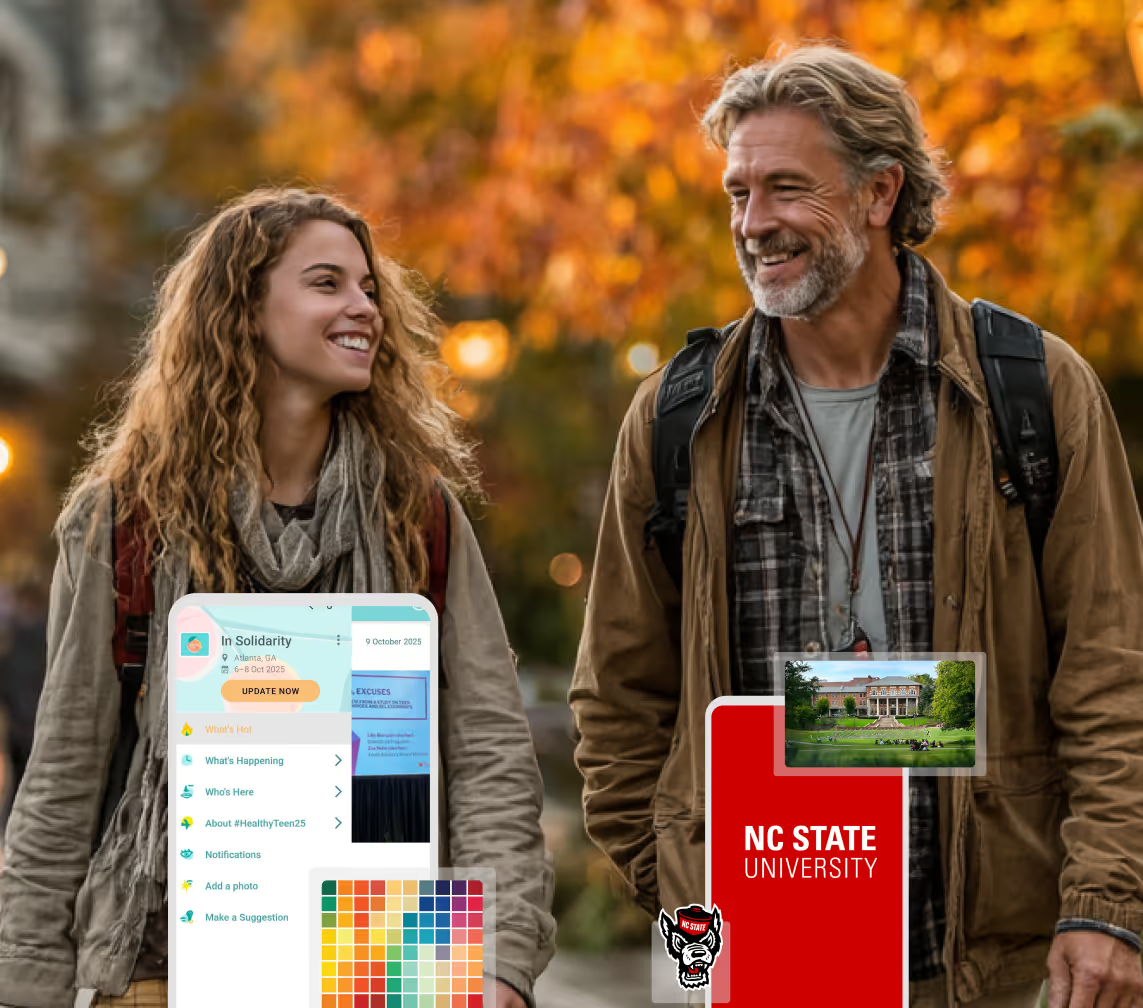
Running Family Programs?
Give families everything they need, from schedules and maps to real-time updates, all in one place.
Running Family Programs?
Give families everything they need, from schedules and maps to real-time updates, all in one place.
Coordinating Move-In Day?
Share updates, manage events, and keep students informed from move-in through the academic year.

Coordinating Move-In Day?
Share updates, manage events, and keep students informed from move-in through the academic year.
Offering Campus Tours?
Deliver branded, self-guided tour experiences with interactive maps and rich media, available 24/7.

Offering Campus Tours?
Deliver branded, self-guided tour experiences with interactive maps and rich media, available 24/7.
Organising a Career Fair?
Simplify logistics for students, employers, and Career Services staff with one easy-to-use app.
Organising a Career Fair?
Simplify logistics for students, employers, and Career Services staff with one easy-to-use app.
Managing Alumni Events?
Plan reunions, regional events, and fundraising campaigns with an app built for alumni engagement.
Managing Alumni Events?
Plan reunions, regional events, and fundraising campaigns with an app built for alumni engagement.
Boost Student Engagement
One hub for schedules, resources, and events that keeps students connected throughout the academic year.
Boost Student Engagement
One hub for schedules, resources, and events that keeps students connected throughout the academic year.
Planning Orientation?
Help new students feel prepared from day one with schedules, campus resources, and real-time updates in one app.
Planning Orientation?
Help new students feel prepared from day one with schedules, campus resources, and real-time updates in one app.
Running Admissions Events?
Manage open houses, tours, and yield events with a branded app that saves time and engages prospective students.

Running Admissions Events?
Manage open houses, tours, and yield events with a branded app that saves time and engages prospective students.
Get a custom Sponsorship Package Template
Stop starting from scratch. Grab free templates that helWe'll build a tailored sponsorship package with suggested pricing, tiers, and benefits..for your specific event.p you build professional sponsorship packages and close deals faster.
Get a custom Sponsorship Package Template
Stop starting from scratch. Grab free templates that helWe'll build a tailored sponsorship package with suggested pricing, tiers, and benefits..for your specific event.p you build professional sponsorship packages and close deals faster.
Plan Your Next Event Without Missing a Beat.
From venue selection to post-event wrap-up, this free checklist walks you through every step (so nothing falls through the cracks).
.avif)
Plan Your Next Event Without Missing a Beat.
From venue selection to post-event wrap-up, this free checklist walks you through every step (so nothing falls through the cracks).
Real Results From Real Events
100,000+ organizations trust Guidebook. See exactly how universities, associations, enterprises, and more put it to work.

Real Results From Real Events
100,000+ organizations trust Guidebook. See exactly how universities, associations, enterprises, and more put it to work.
Flexible pricing for every event size
Find the perfect plan for your needs, from intimate gatherings to large-scale conferences.

Flexible pricing for every event size
Find the perfect plan for your needs, from intimate gatherings to large-scale conferences.
Join our event experts
Watch on-demand webinars and join live sessions with industry leaders sharing best practices for event success.
.avif)
Join our event experts
Watch on-demand webinars and join live sessions with industry leaders sharing best practices for event success.
Guidebook in Action
Book a personalized walkthrough and discover how we help event teams create better attendee experiences.
Guidebook in Action
Book a personalized walkthrough and discover how we help event teams create better attendee experiences.
NC A&T Rebuilt Their College Orientation App. Here's the Playbook.
.avif)





NC A&T Rebuilt Their College Orientation App. Here's the Playbook.
When Brittany Jackson stepped into the role of Director of Orientation and New Student Programs at North Carolina A&T State University, she inherited a Guidebook account with a bunch of mobile guides that had been inactive since 2017.
Two years later, NC A&T now runs seven events through Guidebook, with a fully branded app, tailored experiences for every attendee, and engagement numbers that keep climbing.
All with a small team. So how’d they do it?
In this case study, you'll learn how:
- Brittany turned a dormant implementation into a thriving cross-departmental program.
- Why a branded app made students feel like NC A&T built something just for them.
- How schedule tracks allowed her to serve freshmen, transfers, and families simultaneously.
- What it took to get leadership on board (and keep them there).
Note: This case study is based on a Guidebook Meets session we did with Brittany Jackson in January 2026. You can watch the full conversation below:
What Brittany Inherited and What She Did About It
When Brittany arrived at NC A&T in early 2024, their Guidebook account was just sitting there. Largely untouched, with a collection of old mobile guides that had been live at some point but never fully built out.
“So, I got into the system and I'm looking at all these old guides, right? And they were there and, you know, they were live at some point in time. But they just really weren't informative in the way I think students and their families needed to see them and to receive them.” Brittany shared.
Her first instinct wasn't to replace the platform; it was to take ownership of it. She:
- Audited what existed.
- Asked what her specific student population actually needed.
- Rebuilt the guides with intentionality.
That reframe — from "the tool isn't working" to "the tool hasn't been owned" — is one of the most important mindset shifts in this entire story.
It's also one of the most common situations orientation professionals find themselves in. A platform gets adopted, the original champion moves on, and the tool quietly fades into the background while the team reverts to printed packets and email blasts.
Brittany's experience is proof that a dormant implementation isn't a failed one; it just needs someone willing to start over with a clear strategy.
Why the Branded App Was a Non-Negotiable
One of Brittany's earliest decisions was to move away from the Guidebook container app and invest in a fully branded app for NC A&T's orientation.
For a university where Aggie Pride is a genuine cultural value, this wasn't just a design preference. It was a strategic call about how students would experience the institution from day one.
The difference in reception was immediate. When attendees opened the app and saw something built specifically for NC A&T the response shifted.
"When people realized the guide was an A&T orientation admissions app, it was like, 'Oh, you all made this for me,' " Brittany said.
That sense of belonging matters because for many incoming students, orientation is the first time they experience the institution as a place that's for them specifically.
A branded app extends that feeling, while also reducing friction (since students can download it directly from the app stores).
For institutions with strong brand identities, this framing resonates deeply. The app becomes less of a logistics tool and more of a welcome signal.
Serving Students and Families at the Same Time
NC A&T's orientation serves three distinct audiences simultaneously: first-time freshmen, transfer students, and parents and guests.
Each group has different schedules, different informational priorities, and a different relationship with technology. Trying to serve all three with a single, undifferentiated guide is a recipe for confusion because typically, students want to know where to go and what to do, while parents want context, reassurance, and detail.
Brittany solves this with Guidebook's schedule tracks feature, which lets her design separate experiences within a single guide, each with its own events, content, and language.
The specificity she brings to this is worth noting. It's not just about separating schedules. It's about tailoring the framing of every piece of content to match how each audience will receive it.
"I'm going to describe lunch very differently for our students than I describe it for our parents and guests," she explained.
The Bulk Import Lesson Every Orientation Team Needs to Hear
Brittany made a decision in her first orientation cycle that she openly calls a mistake: she bulk imported all registered students into the app on the morning of orientation.
Students were already managing parking, check-in, new surroundings, and a packed schedule. And then they were asked to navigate an unfamiliar app at the same time.
The friction was clear in hindsight. In year 2, she moved the import window to one week before orientation. The difference in engagement was measurable, and the day-of chaos dropped significantly.
We saw much more usage of it this second summer because we were giving the opportunity to not have to manage it two hours before orientation started."
The logic is straightforward: when students have the app in their hands before they arrive on campus, they can explore it at their own pace. They show up already familiar with the schedule, the campus map, and the resources available to them.
That familiarity reduces anxiety, as well as the volume of inbound questions staff has to field on event day.
Brittany is already planning to extend that window further in year 3. The earlier you can get the app into attendees' hands, the more time it has to do its job before the event even starts.
Going Paperless and Bringing Campus Partners With You
Eliminating physical packets was a firm decision for Brittany, not a gradual transition. Campus partners who had been distributing printed one-pagers for a decade were told, simply, that things were changing.
Whenever a campus partner said "I’ve put this paper in a folder for orientation for the last 10 years” her response was “Well, you're not doing it this year. You can put it on a PDF. I'll upload it to the app if you want me to, but that's how we're going to do it," she said.
The approach was firm but supportive: digitize the materials and she'd handle the upload.
That offer made the transition easier for partners who weren't sure how to make the shift themselves. And the benefits landed quickly for attendees, for partners, and even for custodial staff who no longer spent post-orientation cleaning paper off gym floors.
Beyond the operational cleanup, going paperless gave Brittany something paper never could: engagement data.
She can now see which resources attendees actually access, how long after the event they continue engaging with content, and which pages are being ignored.
That data becomes a feedback loop for improving the guide and a proof point for leadership conversations about whether the investment in a campus event app is working.
Using Feedback as a Product Roadmap
Brittany's approach to criticism is refreshing in that she doesn't treat negative feedback as a problem to manage. She treats it as the most useful information she has.
I think negative feedback is my best resource because you are in a real-time experience, something that wasn't a good experience for you. So, I want you to tell it to me so I can be intentional to make it a better experience for you and the next person and maybe didn't get to share that with me.
That philosophy has driven concrete changes across two cycles. For example:
- Students who said content was too wordy got Canva graphics instead of paragraphs.
- Families who expressed frustration at being asked to download an app the morning of orientation got a one-week advance notice the following year.
- On-site registrants who hadn't been bulk imported got QR codes displayed on screens during the opening session so they could access the guide in real time.
Each of those changes came directly from someone telling her something wasn't working. The feedback loop isn't just a nice cultural value; it's how the guide gets better each time.
Building the Internal Case With Student Voices
Getting leadership to continue investing in a digital platform requires more than a usage report. Brittany figured out early that the most persuasive evidence she could bring to a leadership conversation wasn't a spreadsheet; it was video.
She built a student media team whose on-site role during orientation naturally generated footage of students and families in their actual experience.
When multiple attendees independently mentioned the Guidebook app by name in testimonials, that footage became an advocacy asset she could use in presentations without any additional effort.
"Get a student with a camera because they love to take pictures and record all the time. You're building their portfolio. Put it into a video and show it. It's going to play itself and market itself forever because that's real-life experience and real-life testimonials from real people," she said.
This approach works for a few reasons:
- First, authentic peer voices carry more weight than institutional claims.
- Second, the footage is self-sustaining: you create it once and it continues to make the case.
- Third, it gives student staff a meaningful role that builds their own skills while serving the program's goals.
If you're trying to justify continued investment in your orientation app, start capturing testimonials at your next event. You may already have the proof you need; you just haven't collected it yet.
Scaling From One Event to Seven
When Brittany arrived at NC A&T, there were zero active Guidebook guides. Today, the school runs seven events through the platform, spanning her office and the Admissions team (which manages Open House, Admitted Student Day, and the Aggie Scholar Showcase).
That expansion didn't happen by accident. It happened because Brittany built a strategic case for each addition and created a structural logic that connects the events together.
Guides across teams are designed to mirror each other so that students and families who encounter the app at an admissions event already know how to navigate it by the time they reach orientation.
That progressive familiarity is a meaningful advantage. By the time a student arrives at orientation, the app isn't a new thing they have to figure out.
By the Numbers
Here's a quick look at the scale and scope of what Brittany's team and NC A&T has built:
- 7 events now running through Guidebook, up from zero active guides when Brittany arrived in early 2024.
- Approximately 4,000 incoming students per semester supported by a team she describes as "very small" relative to that volume.
- 100+ student staff members trained on the app and serving as peer support for attendees.
- 3 tracks per guide (First-Time Freshman, Transfer Student, and Parent/Guest) each with tailored content and event descriptions.
- Multiple unprompted testimonials citing Guidebook by name, captured by the student media team and used in leadership presentations.
- "Aggie Essentials" webinar series launching in early 2026, with one session dedicated entirely to orienting students and families to the branded app before orientation begins.
What to Do When a Student Has No One Else
One moment from Brittany's conversation stands out as a reminder of why all of this matters beyond the operational benefits.
Not every student arrives at orientation with a family member by their side. Some come alone: no support network, no familiar faces, no one to ask when they're not sure what to do next.
You also have students who are coming alone and they do not have any support, and they do not have any relationships that they've formed here. And all they have is this app. All they have is this guide [...] So it is literally their pocket tool for the entire time they're with us.
This is a strong reminder that a well-built orientation app isn't just a logistics tool. For some students, it's the thing that makes a new and overwhelming environment feel accessible.
Takeaways You Can Apply Right Now
Whether you're rebuilding a dormant app or launching your first orientation guide, here's what Brittany's experience translates into for your team:
Audit before you rebuild
If your institution already has a Guidebook account, start by reviewing what exists. The platform may not have failed; it may just need intentional ownership and a clear strategy.
Invest in the branded app
A branded app removes friction and communicates institutional care, especially at universities where brand identity is a cultural value.
Import attendees at least one week out
Give students and families time to explore the app before they're standing in a parking lot trying to find the right building. Early app access measurably increases engagement and reduces day-of confusion.
Use Tracks to serve every audience
If your orientation serves both students and family members, build separate tracks with tailored language and content priorities for each group. A single undifferentiated guide is a missed opportunity.
Replace paper with in-app resources and track what gets used
Ask campus partners to digitize their materials and upload them to the app. Add presentation decks after sessions close. Then use the engagement data to demonstrate ROI and improve the guide for the next cycle.
Build a student media team and capture testimonials
Authentic peer voices will make your case to leadership more effectively than any metric. Create the footage at your next event and let it advocate for your program over time.
You Don't Need a Big Team. You Need a Clear Strategy.
Two years ago, NC A&T had a Guidebook license and nothing much to show for it.
Today, they have a branded orientation app serving thousands of students and families across seven events. In addition, they have a student media team capturing testimonials, a feedback loop that drives real iteration, and a cross-departmental strategy that's teaching incoming students how to use the tool before they even arrive at orientation.
None of that required a massive team or a complete technology overhaul.
It required one person who was willing to take ownership, rebuild with intention, and treat every piece of feedback as useful information.
If you're looking to build a scalable, low-paper orientation experience that works for students and families we'd love to help. You can start building your app or book a demo with one of our product experts.
Frequently Asked Questions
[faq]
Q: How do I create a college orientation app that works for both students and parents?
A: The most effective approach is to use a platform with audience segmentation built in so you can configure separate experiences for students and family members within a single guide.
Tailor not just the schedule but the language and framing of every piece of content to match how each audience will receive it. Students want speed and clarity; parents want context and reassurance.
Q: What's the best way to get students to actually use an orientation app?
A: Bulk import attendees in advance — at least one week before the event — rather than asking them to find and download the app on the day of orientation.
Pair that with a branded app (not a generic container) so the experience feels made for them specifically. When students feel a sense of ownership over the tool, they're far more likely to engage with it.
Q: How do universities go paperless for orientation?
A: Start by telling campus partners that printed materials are no longer part of the plan, and offer to upload their content as PDFs to the app. That offer makes the transition easier for partners who aren't sure how to digitize their materials.
Add presentation decks and presenter contact information after sessions close so attendees have a resource they can return to days later.
Q: How do I justify the cost of an event app to university leadership?
A: Combine engagement metrics with authentic student testimonials. Guidebook's usage data can show which resources attendees access and how long after the event they continue engaging with content.
But the most persuasive tool Brittany found was video footage of students and families independently citing the app as helpful. Peer voices carry more weight than institutional data in a leadership presentation.
[/faq]

Get the Mobile App Playbook
A short guide to running the whole student journey in one app. No fluff, just what works.
for higher ed
Campus
Playbook
A practical guide to building a connected campus experience.
Free playbook
The Mobile App Playbook for Universities
Students decide if they belong long before they set foot on campus. This playbook shows how to win them over from the first visit through graduation.
- Grow enrollment and boost recruitment
- Increase belonging and retention
- Run every event from one branded app
By submitting, you agree to our Privacy Policy.
You're in.
.png)

%20(1).avif)