Campus apps by department
Admissions, orientation, student life, and more — one campus app that works across departments.

Campus apps by department
Admissions, orientation, student life, and more — one campus app that works across departments.
Build unlimited event apps on one license
One partnership for unlimited campus events — orientation, tours, student life, and everything in between.
Build unlimited event apps on one license
One partnership for unlimited campus events — orientation, tours, student life, and everything in between.
Compare event app platforms
See how Guidebook stacks up against other event app and registration platforms.
Compare event app platforms
See how Guidebook stacks up against other event app and registration platforms.
Event apps for nonprofit and community programs
Give members, volunteers, and donors one branded app for conferences, fundraisers, and year-round community.
Event apps for nonprofit and community programs
Give members, volunteers, and donors one branded app for conferences, fundraisers, and year-round community.
Campus integrations and an open API
Connect Guidebook with the campus systems, APIs, and tools your team already uses.
Campus integrations and an open API
Connect Guidebook with the campus systems, APIs, and tools your team already uses.
Event apps for corporate and enterprise teams
Internal meetings, offsites, and large-scale corporate events — with the branding and control enterprise teams need.
Event apps for corporate and enterprise teams
Internal meetings, offsites, and large-scale corporate events — with the branding and control enterprise teams need.
Create a branded event app with no coding
Put schedules, maps, resources, and updates in every attendee's pocket — built for campus events and programs.
Create a branded event app with no coding
Put schedules, maps, resources, and updates in every attendee's pocket — built for campus events and programs.
Launch a branded, white-label event app
A white-label event app with your branding, your content, and your attendee experience — no coding required.
Launch a branded, white-label event app
A white-label event app with your branding, your content, and your attendee experience — no coding required.
Everything in the Guidebook platform
Explore the features event teams use to engage attendees before, during, and after the event.
Everything in the Guidebook platform
Explore the features event teams use to engage attendees before, during, and after the event.
One app for in-person and virtual attendees
The same schedule, networking, and updates whether people are in the room or joining remotely.
One app for in-person and virtual attendees
The same schedule, networking, and updates whether people are in the room or joining remotely.
Event apps built for associations
Annual meetings, chapter events, and member engagement — without rebuilding a new app every year.
Event apps built for associations
Annual meetings, chapter events, and member engagement — without rebuilding a new app every year.
A branded event website that matches the app
Promote the event, collect interest, and keep branding consistent from the first click to check-in.
A branded event website that matches the app
Promote the event, collect interest, and keep branding consistent from the first click to check-in.
Plan, run, and measure events on one platform
App, registration, badges, and websites in one workflow — so planning isn't a pile of disconnected tools.
Plan, run, and measure events on one platform
App, registration, badges, and websites in one workflow — so planning isn't a pile of disconnected tools.
Keep members engaged between events
One branded app for the conference and everything that happens the other 51 weeks of the year.
Keep members engaged between events
One branded app for the conference and everything that happens the other 51 weeks of the year.
The conference app attendees actually use
Schedules, maps, networking, and live updates for annual meetings, summits, and multi-day conferences.
The conference app attendees actually use
Schedules, maps, networking, and live updates for annual meetings, summits, and multi-day conferences.
Registration that feeds your app and badges
Collect registrations, payments, and attendee data in the same platform as your event app.
Registration that feeds your app and badges
Collect registrations, payments, and attendee data in the same platform as your event app.
Design and print event badges in one place
Custom badges, QR check-in, and on-site printing — without a separate badge vendor.
Design and print event badges in one place
Custom badges, QR check-in, and on-site printing — without a separate badge vendor.
A Smaller School?
Deliver a polished, branded event experience without a large team or a big budget.
A Smaller School?
Deliver a polished, branded event experience without a large team or a big budget.
Running Family Programs?
Give families everything they need, from schedules and maps to real-time updates, all in one place.
Running Family Programs?
Give families everything they need, from schedules and maps to real-time updates, all in one place.
Coordinating Move-In Day?
Share updates, manage events, and keep students informed from move-in through the academic year.

Coordinating Move-In Day?
Share updates, manage events, and keep students informed from move-in through the academic year.
Offering Campus Tours?
Deliver branded, self-guided tour experiences with interactive maps and rich media, available 24/7.

Offering Campus Tours?
Deliver branded, self-guided tour experiences with interactive maps and rich media, available 24/7.
Organising a Career Fair?
Simplify logistics for students, employers, and Career Services staff with one easy-to-use app.
Organising a Career Fair?
Simplify logistics for students, employers, and Career Services staff with one easy-to-use app.
Managing Alumni Events?
Plan reunions, regional events, and fundraising campaigns with an app built for alumni engagement.
Managing Alumni Events?
Plan reunions, regional events, and fundraising campaigns with an app built for alumni engagement.
Boost Student Engagement
One hub for schedules, resources, and events that keeps students connected throughout the academic year.
Boost Student Engagement
One hub for schedules, resources, and events that keeps students connected throughout the academic year.
Planning Orientation?
Help new students feel prepared from day one with schedules, campus resources, and real-time updates in one app.
Planning Orientation?
Help new students feel prepared from day one with schedules, campus resources, and real-time updates in one app.
Running Admissions Events?
Manage open houses, tours, and yield events with a branded app that saves time and engages prospective students.

Running Admissions Events?
Manage open houses, tours, and yield events with a branded app that saves time and engages prospective students.
Get a custom Sponsorship Package Template
Stop starting from scratch. Grab free templates that helWe'll build a tailored sponsorship package with suggested pricing, tiers, and benefits..for your specific event.p you build professional sponsorship packages and close deals faster.
Get a custom Sponsorship Package Template
Stop starting from scratch. Grab free templates that helWe'll build a tailored sponsorship package with suggested pricing, tiers, and benefits..for your specific event.p you build professional sponsorship packages and close deals faster.
Plan Your Next Event Without Missing a Beat.
From venue selection to post-event wrap-up, this free checklist walks you through every step (so nothing falls through the cracks).
.avif)
Plan Your Next Event Without Missing a Beat.
From venue selection to post-event wrap-up, this free checklist walks you through every step (so nothing falls through the cracks).
Real Results From Real Events
100,000+ organizations trust Guidebook. See exactly how universities, associations, enterprises, and more put it to work.

Real Results From Real Events
100,000+ organizations trust Guidebook. See exactly how universities, associations, enterprises, and more put it to work.
Flexible pricing for every event size
Find the perfect plan for your needs, from intimate gatherings to large-scale conferences.

Flexible pricing for every event size
Find the perfect plan for your needs, from intimate gatherings to large-scale conferences.
Join our event experts
Watch on-demand webinars and join live sessions with industry leaders sharing best practices for event success.
.avif)
Join our event experts
Watch on-demand webinars and join live sessions with industry leaders sharing best practices for event success.
Guidebook in Action
Book a personalized walkthrough and discover how we help event teams create better attendee experiences.
Guidebook in Action
Book a personalized walkthrough and discover how we help event teams create better attendee experiences.
Sustainable Events - How Event Apps Reduce Environmental Impact





Sustainable Events - How Event Apps Reduce Environmental Impact
Sustainable events are becoming much more common because many are becoming more conscious of environmental impact. In 2019, National Geographic reported that since the first global outlook had been prepared in 1997, the Earth’s health has experienced a serious decline. It called for urgent and carefully considered steps to ensure that it’s restored to a sustainable condition.
As Joyce Msuya, acting executive director of U.N. Environment at the time said, “The Earth’s ailments are treatable, but not for a lot longer if people don’t make fundamental changes in what they consume, how they create energy, dispose of waste, and generally decrease the human footprint that is degrading air, water, and land.”
Over the years, the Earth has endured countless human activities that have negatively impacted its health. Including, perhaps surprisingly, organizing events. Although events are an integral part of human society as they foster unity, lead to growth and development, and improve social interaction, accompanying these benefits are some negative impacts that have made traditional event planning a threat to our planet.
Traditional event planning results in increased waste, greenhouse gas emissions (such as carbon dioxide and ammonia), and high consumption of natural resources. This contributes to resource depletion and various disasters that threaten our survival. Therefore, the events industry needs to adopt sustainable practices.
These practices help us move toward a greener future by reducing toxic emissions and conserving natural resources. Rather than eliminating social gatherings, sustainable practices seek to find environmentally friendly ways to host events without harming the planet.
In this article, we will explore the key environmental impact of events, how event apps are a solution to reduce such impact, and the story of events that promoted event sustainability using event apps.

Key Environmental Impacts of Events
The level of environmental impact caused by an event depends on the event’s size . However, some effects, despite looking insignificant at the moment, can accumulate in the biosystem and cause serious problems in the future. The event industry generates 1.2 billion tons of greenhouse gas emissions yearly as a result of different activities during preparing and attending the events. Let’s take a closer look at the three main environmental impacts of events.
Paper waste from printed materials
Research shows that paper makes up 26% of total waste at landfills. Printed materials are important to any event as they convey information about the event to the attendees, but they become useless after the event has been concluded resulting in disposing of the material, creating paper waste.
This waste can cause water pollution and landfill waste which adds to the production of methane, a potent greenhouse gas that contributes to global warming. The production of paper has a significant environmental impact, leading to deforestation, which in turn causes loss of biodiversity, air pollution, soil erosion, and climate change. These issues negatively affect our health and economic growth.
Energy consumption from travel and on-site activities
Energy can take various forms, including mechanical, electrical, and thermal. Each type of energy leaves behind residual effects. For instance, during transportation to an event, a vehicle’s engine converts fuel into mechanical energy to power the car. This combustion process releases gases such as CO2, which contribute to air pollution and global warming, leading to climate change. Additionally, these emissions increase the acidity of aquatic ecosystems, putting the lives of aquatic organisms at risk.
According to Headbox, the event industry uses an estimated 380m liters of diesel every year which translates to 1.2bn kilograms of CO2 emission yearly. Can you possibly imagine the adverse effect that alone will have on the sustainability of our planet?
Food waste and single-use plastics
The event industry produces a staggering amount of food waste yearly. Organizers, in the bid to not run out of food, tend to prepare excess which always results in wastage. Statistics have shown that an average event wastes 15%-20% of the food catered.
Event Apps as a Solution to Reduce Environmental Impact
Considering the effect of traditional event planning on the environment, the best way event industries can contribute towards creating a sustainable planet is by adapting to event apps.
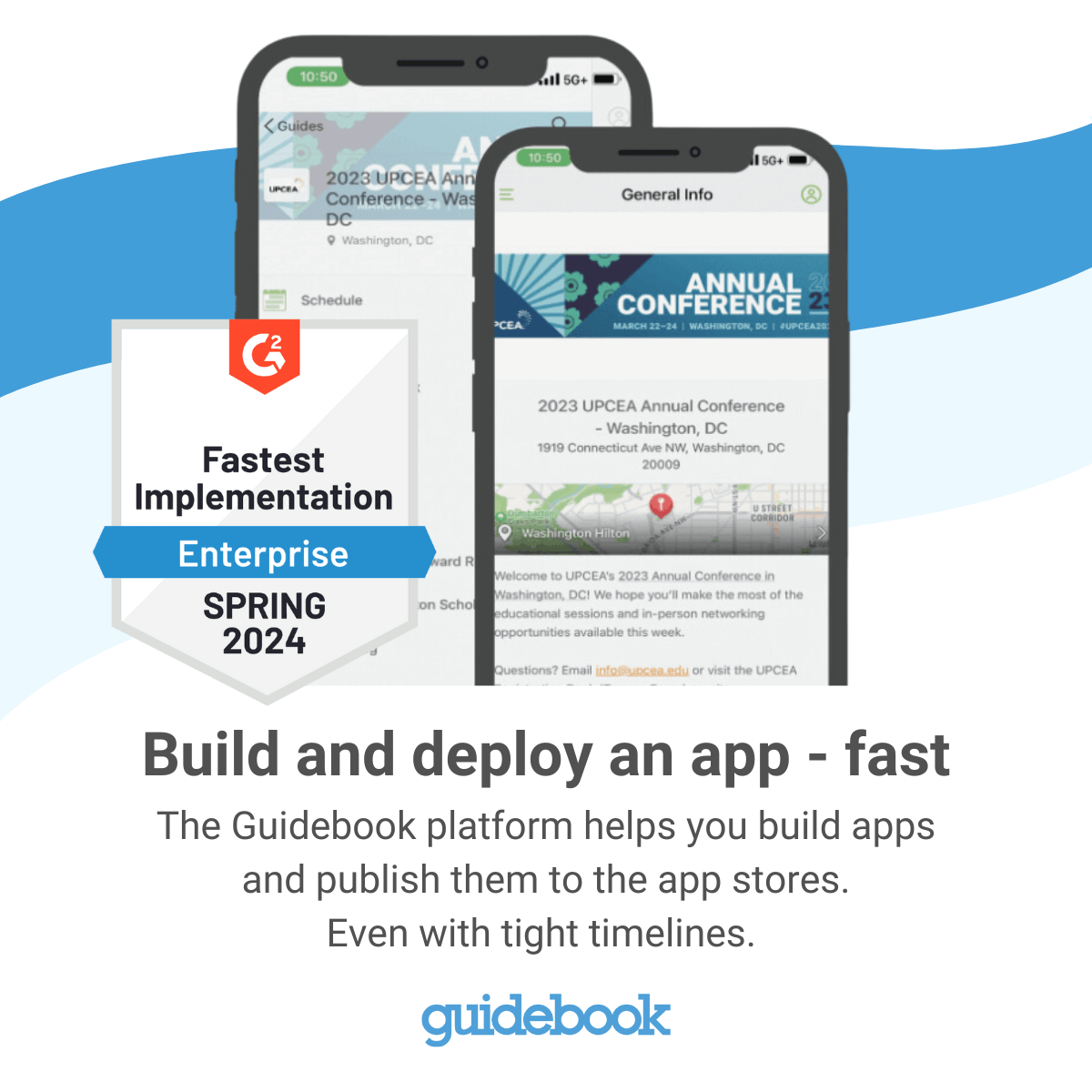
Event apps are software that help event organizers effectively manage and host their virtual events. Event apps are eco-friendly. They help to beat down costs, conserve energy, reduce the emission of greenhouse gasses and waste by digitizing event materials to reduce the production of paper and paper waste. They also reduce the emission of greenhouse gasses by allowing the host to organize events virtually. This conserves energy resources and eliminates excessive food waste.
Green event apps not only promote sustainability but also enhance social interaction, community management, and a sense of belonging. They allow individuals to participate in events from anywhere in the world. No need for travel or high transportation costs. Additionally, these apps help organizers reduce event costs, communicate details to attendees without using printed materials, set reminders, and measure engagement levels effectively.
An example of these apps is Guidebook. This particular app also allows you to print event badges and guides you through necessary event app metrics you need to know.
Success Stories of Brands That Used Event Apps
If you’re still contemplating whether to go green with event apps, here are a few success stories that could change your mind:
- Global Industrie is a perfect case study of a brand that switched to digital events. With the help of an event app platform, it gathered 2,500 exhibitors and 45,000+ attendees. The platform provided them with tools that could support multiple languages. It also allowed exhibitors to showcase their items, and have an engaging streaming tool for attendees.
- Another brand that went fully digital for its event is Apple. In 2020, Apple’s Worldwide Developers Conference (WWDC) went fully digital due to the pandemic. Apple’s WWDC App was used to confer with speakers, watch livestream sessions and access the event’s resources. The conference was considered a success. It pulled a high degree of involvement and participation from developers worldwide—more than 4 million visits.
- In 2021, the Consumer Electronics Show (CES), the world’s largest technology trade show, hosted its first digital show in history on the CES app. The app allowed participants to watch live keynotes, explore exhibitor booths, and attend virtual networking events. Over 80,000 participants were in attendance and the event was recorded as a success.

The Future of Sustainable Events
Every event organizer should consider shifting towards green events rather than traditional ones to help build a sustainable environment for both the younger generation and ourselves.
One of our clients said, “In the past, Orientation has printed over 2000 schedule books (they are on glossy paper, look like a magazine, about 20-25 pages each). Once orientation was over, most of the time, the students would just toss them or maybe recycle them, leading to a lot of waste.
Our university has a mission to be more green by 2030 which in turn leads to the LEED certification. Our goal for Orientation is to be all digital 2025, Guidebook is providing us that platform to do that. It will also give our incoming students the ability to create their schedules.
All of the student affairs departments have been tasked with 'how can we move towards programming that is green' so we are looking at the items we give out for orientation and how to communicate with our incoming students. Hopefully Guidebook will start to be used in other areas of student affairs once we roll it out moving forward."

Get the Mobile App Playbook
A short guide to running the whole student journey in one app. No fluff, just what works.
for higher ed
Campus
Playbook
A practical guide to building a connected campus experience.
Free playbook
The Mobile App Playbook for Universities
Students decide if they belong long before they set foot on campus. This playbook shows how to win them over from the first visit through graduation.
- Grow enrollment and boost recruitment
- Increase belonging and retention
- Run every event from one branded app
By submitting, you agree to our Privacy Policy.
You're in.
.png)

%20(1).avif)

.avif)