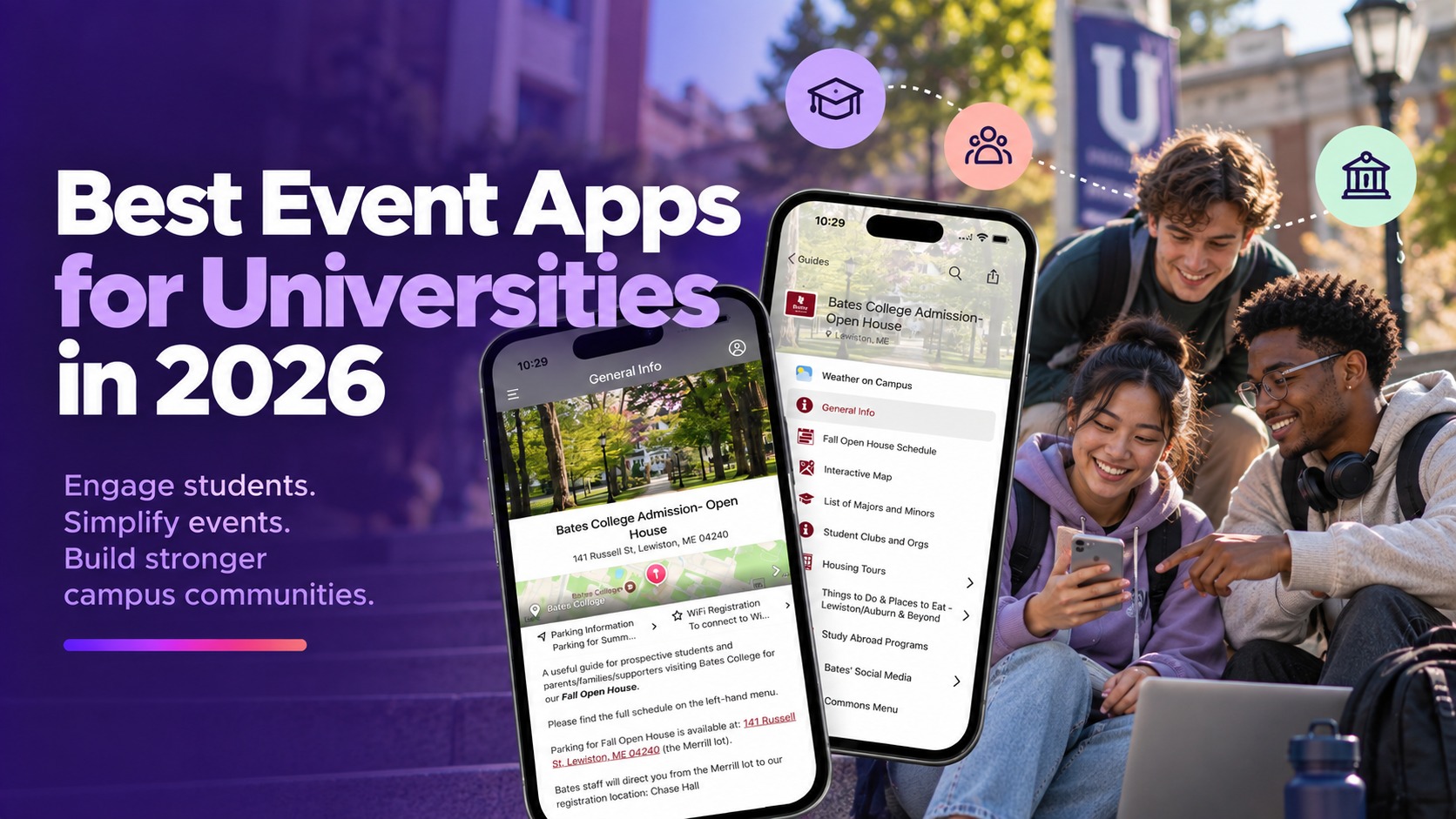
Campus apps by department
Admissions, orientation, student life, and more — one campus app that works across departments.

Campus apps by department
Admissions, orientation, student life, and more — one campus app that works across departments.
Build unlimited event apps on one license
One partnership for unlimited campus events — orientation, tours, student life, and everything in between.
Build unlimited event apps on one license
One partnership for unlimited campus events — orientation, tours, student life, and everything in between.
Compare event app platforms
See how Guidebook stacks up against other event app and registration platforms.
Compare event app platforms
See how Guidebook stacks up against other event app and registration platforms.
Event apps for nonprofit and community programs
Give members, volunteers, and donors one branded app for conferences, fundraisers, and year-round community.
Event apps for nonprofit and community programs
Give members, volunteers, and donors one branded app for conferences, fundraisers, and year-round community.
Campus integrations and an open API
Connect Guidebook with the campus systems, APIs, and tools your team already uses.
Campus integrations and an open API
Connect Guidebook with the campus systems, APIs, and tools your team already uses.
Event apps for corporate and enterprise teams
Internal meetings, offsites, and large-scale corporate events — with the branding and control enterprise teams need.
Event apps for corporate and enterprise teams
Internal meetings, offsites, and large-scale corporate events — with the branding and control enterprise teams need.
Create a branded event app with no coding
Put schedules, maps, resources, and updates in every attendee's pocket — built for campus events and programs.
Create a branded event app with no coding
Put schedules, maps, resources, and updates in every attendee's pocket — built for campus events and programs.
Launch a branded, white-label event app
A white-label event app with your branding, your content, and your attendee experience — no coding required.
Launch a branded, white-label event app
A white-label event app with your branding, your content, and your attendee experience — no coding required.
Everything in the Guidebook platform
Explore the features event teams use to engage attendees before, during, and after the event.
Everything in the Guidebook platform
Explore the features event teams use to engage attendees before, during, and after the event.
One app for in-person and virtual attendees
The same schedule, networking, and updates whether people are in the room or joining remotely.
One app for in-person and virtual attendees
The same schedule, networking, and updates whether people are in the room or joining remotely.
Event apps built for associations
Annual meetings, chapter events, and member engagement — without rebuilding a new app every year.
Event apps built for associations
Annual meetings, chapter events, and member engagement — without rebuilding a new app every year.
A branded event website that matches the app
Promote the event, collect interest, and keep branding consistent from the first click to check-in.
A branded event website that matches the app
Promote the event, collect interest, and keep branding consistent from the first click to check-in.
Plan, run, and measure events on one platform
App, registration, badges, and websites in one workflow — so planning isn't a pile of disconnected tools.
Plan, run, and measure events on one platform
App, registration, badges, and websites in one workflow — so planning isn't a pile of disconnected tools.
Keep members engaged between events
One branded app for the conference and everything that happens the other 51 weeks of the year.
Keep members engaged between events
One branded app for the conference and everything that happens the other 51 weeks of the year.
The conference app attendees actually use
Schedules, maps, networking, and live updates for annual meetings, summits, and multi-day conferences.
The conference app attendees actually use
Schedules, maps, networking, and live updates for annual meetings, summits, and multi-day conferences.
Registration that feeds your app and badges
Collect registrations, payments, and attendee data in the same platform as your event app.
Registration that feeds your app and badges
Collect registrations, payments, and attendee data in the same platform as your event app.
Design and print event badges in one place
Custom badges, QR check-in, and on-site printing — without a separate badge vendor.
Design and print event badges in one place
Custom badges, QR check-in, and on-site printing — without a separate badge vendor.
A Smaller School?
Deliver a polished, branded event experience without a large team or a big budget.
A Smaller School?
Deliver a polished, branded event experience without a large team or a big budget.
Running Family Programs?
Give families everything they need, from schedules and maps to real-time updates, all in one place.
Running Family Programs?
Give families everything they need, from schedules and maps to real-time updates, all in one place.
Coordinating Move-In Day?
Share updates, manage events, and keep students informed from move-in through the academic year.

Coordinating Move-In Day?
Share updates, manage events, and keep students informed from move-in through the academic year.
Offering Campus Tours?
Deliver branded, self-guided tour experiences with interactive maps and rich media, available 24/7.

Offering Campus Tours?
Deliver branded, self-guided tour experiences with interactive maps and rich media, available 24/7.
Organising a Career Fair?
Simplify logistics for students, employers, and Career Services staff with one easy-to-use app.
Organising a Career Fair?
Simplify logistics for students, employers, and Career Services staff with one easy-to-use app.
Managing Alumni Events?
Plan reunions, regional events, and fundraising campaigns with an app built for alumni engagement.
Managing Alumni Events?
Plan reunions, regional events, and fundraising campaigns with an app built for alumni engagement.
Boost Student Engagement
One hub for schedules, resources, and events that keeps students connected throughout the academic year.
Boost Student Engagement
One hub for schedules, resources, and events that keeps students connected throughout the academic year.
Planning Orientation?
Help new students feel prepared from day one with schedules, campus resources, and real-time updates in one app.
Planning Orientation?
Help new students feel prepared from day one with schedules, campus resources, and real-time updates in one app.
Running Admissions Events?
Manage open houses, tours, and yield events with a branded app that saves time and engages prospective students.

Running Admissions Events?
Manage open houses, tours, and yield events with a branded app that saves time and engages prospective students.
Get a custom Sponsorship Package Template
Stop starting from scratch. Grab free templates that helWe'll build a tailored sponsorship package with suggested pricing, tiers, and benefits..for your specific event.p you build professional sponsorship packages and close deals faster.
Get a custom Sponsorship Package Template
Stop starting from scratch. Grab free templates that helWe'll build a tailored sponsorship package with suggested pricing, tiers, and benefits..for your specific event.p you build professional sponsorship packages and close deals faster.
Plan Your Next Event Without Missing a Beat.
From venue selection to post-event wrap-up, this free checklist walks you through every step (so nothing falls through the cracks).
.avif)
Plan Your Next Event Without Missing a Beat.
From venue selection to post-event wrap-up, this free checklist walks you through every step (so nothing falls through the cracks).
Real Results From Real Events
100,000+ organizations trust Guidebook. See exactly how universities, associations, enterprises, and more put it to work.

Real Results From Real Events
100,000+ organizations trust Guidebook. See exactly how universities, associations, enterprises, and more put it to work.
Flexible pricing for every event size
Find the perfect plan for your needs, from intimate gatherings to large-scale conferences.

Flexible pricing for every event size
Find the perfect plan for your needs, from intimate gatherings to large-scale conferences.
Join our event experts
Watch on-demand webinars and join live sessions with industry leaders sharing best practices for event success.
.avif)
Join our event experts
Watch on-demand webinars and join live sessions with industry leaders sharing best practices for event success.
Guidebook in Action
Book a personalized walkthrough and discover how we help event teams create better attendee experiences.
Guidebook in Action
Book a personalized walkthrough and discover how we help event teams create better attendee experiences.
Reducing Waste for LEED Certification on a College Campus





Reducing Waste for LEED Certification on a College Campus
A LEED certification is a major win for campuses looking to reduce their environmental footprint and boost their green credentials. LEED (Leadership in Energy and Environmental Design) is a globally recognized certification system developed by the United States Green Building Council (USGBC) that promotes sustainable building practices. The LEED certification acknowledges buildings and campuses that meet the standards for sustainability based on categories like energy use, water efficiency, indoor environment quality, and waste management.
This certification is awarded to campuses that reduce waste and improve environmental practices. Managing waste on a busy college campus can be daunting due to the large and diverse operations. However, doing so is an essential part of meeting these sustainability goals.
This article will explore the effective strategies for waste reduction on college campuses and highlight the role of technology in improving these efforts.

Importance of Waste Reduction in Achieving LEED Certification
LEED certification proves that a building or campus meets high environmental performance standards. The certification evaluates various aspects of sustainability, including energy consumption, water conservation, and, most importantly, waste management. Waste reduction is significant because it directly affects a campus' overall environmental impression.
Encompass Onsite reports that having high scores in the "Material and Resources" category can contribute to a campus' LEED certification status. This category assesses ongoing purchase practices, waste policies, and solid waste management.
Key Areas for Waste Reduction
1. Sustainable Procurement and Material Selection
One of the first steps in reducing campus waste is choosing eco-friendly materials. This means buying products made from recycled or biodegradable materials, avoiding single-use plastics, and looking for or using materials that slightly impact the environment. Also, when renovating or building new spaces, it is best to use materials that have a high chance of being recycled or sustainably sourced materials. These changes can make a big difference.
These same principles can also be applied to everyday purchases like foodstuffs and groceries, office supplies, and more.
2. Recycling Programs and Waste Diversion Strategies
Recycling programs that work are essential. These programs and strategies use clear signage and well-placed bins to encourage proper waste sorting. In addition to recycling, composting organic waste like food scraps can help to cut back on landfills. Regular waste audits can also be carried out to help spot areas for improvement and ensure that recycling and composting programs are working as intended.
These waste management strategies will assist campuses to actively manage their waste and move closer to LEED certification goals.
3. Composting and Food Waste Reduction Initiatives
Food waste is a significant problem on most campuses because of the large quantities of meals produced daily. Composting food scraps, leftovers, and organic waste can turn this problem into an opportunity for campus landscaping and gardening. Colleges can also reduce food waste by promoting portion control, using leftovers creatively, and educating staff and students on the importance of not wasting food.
Campuses can also introduce programs like zero-waste dining halls and food recovery initiatives to help manage food wastage.
4. Introducing Digital and Paperless Strategies
Going paperless on campus will drastically reduce waste, as the majority of the waste on campus is paper. The Assistant Director of Students' Success at Michigan Technology University, Dawn Corwin, stated that the schedule books given to students during Orientation are usually discarded all around campus as waste. Because of this, they plan to go fully digital by 2025. Instead of printing thousands of schedule books, students will use a digital platform to access all necessary information. This move will help with LEED certification and align perfectly with the university's green initiative. This move will be orchestrated with the help of Guidebook.
Digital tools can replace printed materials for many campus activities. Event apps and online platforms can manage schedules, invitations, and communication, reducing paper waste.

Engaging the Campus Community
Education and Campaign Awareness
Assigning a dedicated team to manage and reduce waste will advance the cause. However, the impact will be significantly greater if those generating the waste know the environmental harm they are causing. It is essential to engage both students and staff in event sustainability efforts. Involving everyone in waste reduction will include raising awareness and explaining why it's imperative. This can be achieved through educational campaigns that include workshops, posters, and social media updates.
Additionally, events like sustainability fairs can be held. Here, successful green events can be shared to inspire others to join the movement and adopt similar practices.
Incentives
Incentives can play a considerable role in the participation of students and staff in waste reduction programs. The idea that money or some equivalent is attached will make more people interested in being involved. There could be rewards for people who recycle the most, use digital tools instead of paper, and participate actively in composting. The rewards could be money, recognition, or a shout-out in the campus publication. This strategy will contribute substantially to building a community committed to environmental sustainability.

The Role of Mobile Apps in Waste Reduction
Waste Tracking and Reporting
Mobile apps offer a range of tools for tracking and managing waste. These apps can record data on the types and quantities of waste collected across campus, providing valuable insights for waste management. This information can enhance recycling programs and identify opportunities for improvement and upgrades.
Digital Tools for Organizing Events
It is easier to plan zero-waste activities with the help of mobile applications. Create an event app to manage specific parts of event planning, such as creating virtual schedules and digital tickets. This will also decrease the use of paper. The event app can also facilitate coordination with the event vendors and attendees to ensure all materials are eco-friendly.
Increase in Student Engagement
Mobile apps can be used to increase students' engagement in environmental sustainability. Campuses can recruit someone to build an app specifically for the school to help with waste reduction. These apps will help to increase students' engagement through the use of interactive challenges. For instance, the app can create sustainability challenges where students can earn rewards for reducing light and energy consumption, using recyclable products, active composting, and participating in recycling products. These can turn the heat up, making sustainability a more engaging and exciting experience while motivating more people to participate.
Real Campuses Making Changes
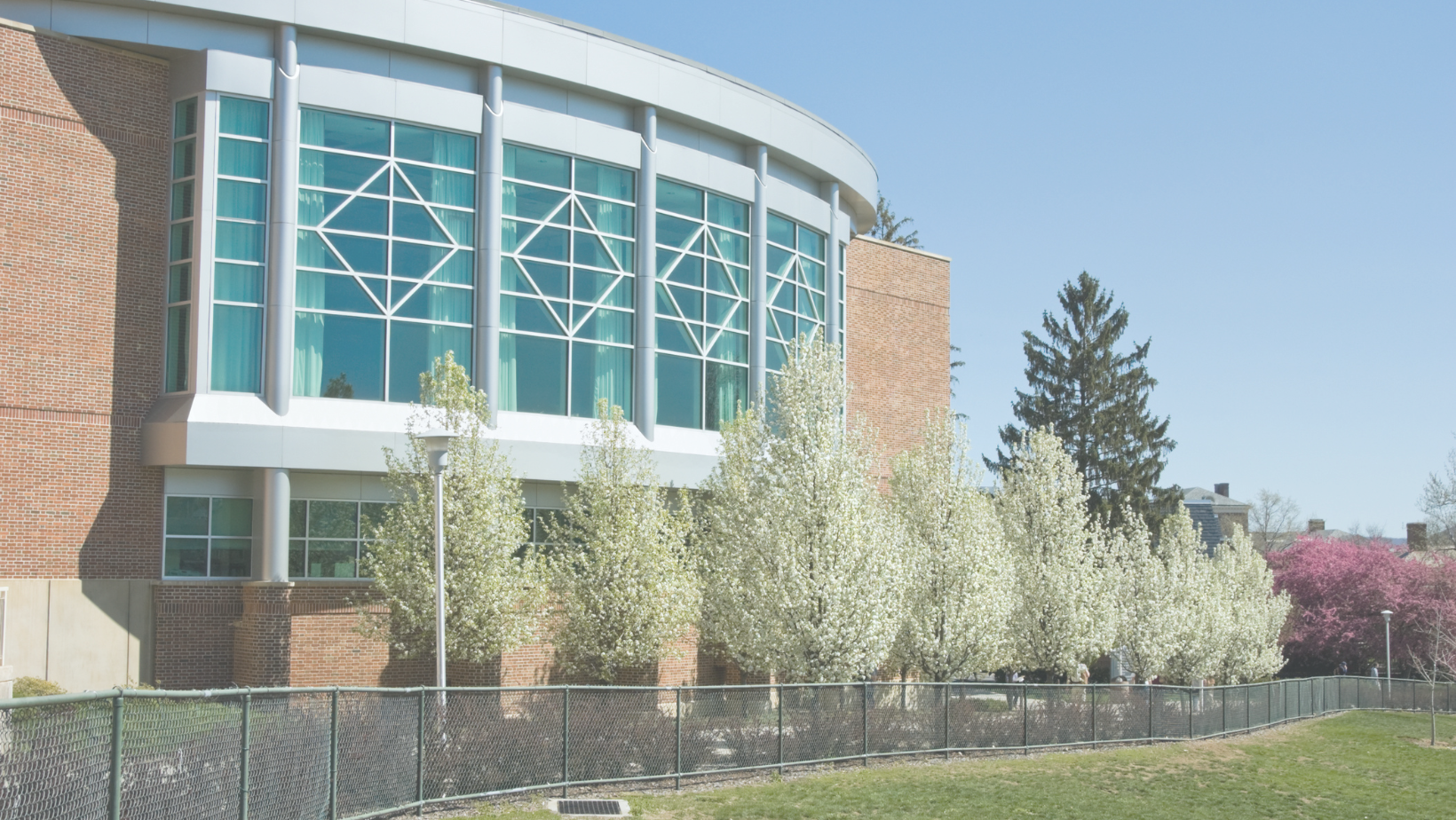
Some campuses have been actively involved in the activities and programs mentioned above to protect the environment. Some of these campuses have success stories of campus waste reduction. Many colleges have successfully implemented waste reduction strategies as part of their efforts to secure the LEED certification.
One instance is the University of California, Irvine (UCI). This school has achieved notable success with its zero-waste program, which includes comprehensive recycling, reusing, and composting strategies. This approach has not only helped them significantly reduce waste but has also contributed to their LEED certification.
Impact of Technology on Waste Management Efforts
Mobile technology has a transformational effect on campus waste management. Universities that have implemented technology like digital tools in sustainability have seen a remarkable improvement in their waste reduction efforts. This is because these technologies have made it much easier to monitor waste, coordinate sustainability programs, and achieve green goals more effectively.
Reduce Waste to Support Lead Certification
Reducing waste is essential for a campus that wants to earn LEED certification and practice environmental sustainability. By focusing on strategies like effective recycling processes, composting, and digital tools, campuses can track waste production and effectively manage the waste. Engaging the campus community through education, incentives, and mobile app interaction will simplify this task.
Colleges can achieve their environmental goals and contribute to a greener future if they embrace technology to track waste, organize zero-waste events, and motivate students. If you want to be a part of saving the environment and integrating healthy green practices, visit Guidebook.
"In the past, Orientation has printed over 2000 schedule books (they are on glossy paper, look like a magazine, about 20-25 pages each). Once orientation was over, most of the time, the students would just toss them or maybe recycle them, leading to a lot of waste.
Our university has a mission to be more green by 2030 which in turn leads to the LEED certification. Our goal for Orientation is to be all digital 2025, Guidebook is providing us that platform to do that. It will also give our incoming students the ability to create their schedules.
All of the student affairs departments have been tasked with 'how can we move towards programming that is green' so we are looking at the items we give out for orientation and how to communicate with our incoming students. Hopefully Guidebook will start to be used in other areas of student affairs once we roll it out moving forward."
- Dawn Corwin | Assistant Director of Student Success | Michigan Technology University

Get the Mobile App Playbook
A short guide to running the whole student journey in one app. No fluff, just what works.
for higher ed
Campus
Playbook
A practical guide to building a connected campus experience.
Free playbook
The Mobile App Playbook for Universities
Students decide if they belong long before they set foot on campus. This playbook shows how to win them over from the first visit through graduation.
- Grow enrollment and boost recruitment
- Increase belonging and retention
- Run every event from one branded app
By submitting, you agree to our Privacy Policy.
You're in.
.png)

%20(1).avif)