Campus apps by department
Admissions, orientation, student life, and more — one campus app that works across departments.

Campus apps by department
Admissions, orientation, student life, and more — one campus app that works across departments.
Build unlimited event apps on one license
One partnership for unlimited campus events — orientation, tours, student life, and everything in between.
Build unlimited event apps on one license
One partnership for unlimited campus events — orientation, tours, student life, and everything in between.
Compare event app platforms
See how Guidebook stacks up against other event app and registration platforms.
Compare event app platforms
See how Guidebook stacks up against other event app and registration platforms.
Event apps for nonprofit and community programs
Give members, volunteers, and donors one branded app for conferences, fundraisers, and year-round community.
Event apps for nonprofit and community programs
Give members, volunteers, and donors one branded app for conferences, fundraisers, and year-round community.
Campus integrations and an open API
Connect Guidebook with the campus systems, APIs, and tools your team already uses.
Campus integrations and an open API
Connect Guidebook with the campus systems, APIs, and tools your team already uses.
Event apps for corporate and enterprise teams
Internal meetings, offsites, and large-scale corporate events — with the branding and control enterprise teams need.
Event apps for corporate and enterprise teams
Internal meetings, offsites, and large-scale corporate events — with the branding and control enterprise teams need.
Create a branded event app with no coding
Put schedules, maps, resources, and updates in every attendee's pocket — built for campus events and programs.
Create a branded event app with no coding
Put schedules, maps, resources, and updates in every attendee's pocket — built for campus events and programs.
Launch a branded, white-label event app
A white-label event app with your branding, your content, and your attendee experience — no coding required.
Launch a branded, white-label event app
A white-label event app with your branding, your content, and your attendee experience — no coding required.
Everything in the Guidebook platform
Explore the features event teams use to engage attendees before, during, and after the event.
Everything in the Guidebook platform
Explore the features event teams use to engage attendees before, during, and after the event.
One app for in-person and virtual attendees
The same schedule, networking, and updates whether people are in the room or joining remotely.
One app for in-person and virtual attendees
The same schedule, networking, and updates whether people are in the room or joining remotely.
Event apps built for associations
Annual meetings, chapter events, and member engagement — without rebuilding a new app every year.
Event apps built for associations
Annual meetings, chapter events, and member engagement — without rebuilding a new app every year.
A branded event website that matches the app
Promote the event, collect interest, and keep branding consistent from the first click to check-in.
A branded event website that matches the app
Promote the event, collect interest, and keep branding consistent from the first click to check-in.
Plan, run, and measure events on one platform
App, registration, badges, and websites in one workflow — so planning isn't a pile of disconnected tools.
Plan, run, and measure events on one platform
App, registration, badges, and websites in one workflow — so planning isn't a pile of disconnected tools.
Keep members engaged between events
One branded app for the conference and everything that happens the other 51 weeks of the year.
Keep members engaged between events
One branded app for the conference and everything that happens the other 51 weeks of the year.
The conference app attendees actually use
Schedules, maps, networking, and live updates for annual meetings, summits, and multi-day conferences.
The conference app attendees actually use
Schedules, maps, networking, and live updates for annual meetings, summits, and multi-day conferences.
Registration that feeds your app and badges
Collect registrations, payments, and attendee data in the same platform as your event app.
Registration that feeds your app and badges
Collect registrations, payments, and attendee data in the same platform as your event app.
Design and print event badges in one place
Custom badges, QR check-in, and on-site printing — without a separate badge vendor.
Design and print event badges in one place
Custom badges, QR check-in, and on-site printing — without a separate badge vendor.
A Smaller School?
Deliver a polished, branded event experience without a large team or a big budget.
A Smaller School?
Deliver a polished, branded event experience without a large team or a big budget.
Running Family Programs?
Give families everything they need, from schedules and maps to real-time updates, all in one place.
Running Family Programs?
Give families everything they need, from schedules and maps to real-time updates, all in one place.
Coordinating Move-In Day?
Share updates, manage events, and keep students informed from move-in through the academic year.

Coordinating Move-In Day?
Share updates, manage events, and keep students informed from move-in through the academic year.
Offering Campus Tours?
Deliver branded, self-guided tour experiences with interactive maps and rich media, available 24/7.

Offering Campus Tours?
Deliver branded, self-guided tour experiences with interactive maps and rich media, available 24/7.
Organising a Career Fair?
Simplify logistics for students, employers, and Career Services staff with one easy-to-use app.
Organising a Career Fair?
Simplify logistics for students, employers, and Career Services staff with one easy-to-use app.
Managing Alumni Events?
Plan reunions, regional events, and fundraising campaigns with an app built for alumni engagement.
Managing Alumni Events?
Plan reunions, regional events, and fundraising campaigns with an app built for alumni engagement.
Boost Student Engagement
One hub for schedules, resources, and events that keeps students connected throughout the academic year.
Boost Student Engagement
One hub for schedules, resources, and events that keeps students connected throughout the academic year.
Planning Orientation?
Help new students feel prepared from day one with schedules, campus resources, and real-time updates in one app.
Planning Orientation?
Help new students feel prepared from day one with schedules, campus resources, and real-time updates in one app.
Running Admissions Events?
Manage open houses, tours, and yield events with a branded app that saves time and engages prospective students.

Running Admissions Events?
Manage open houses, tours, and yield events with a branded app that saves time and engages prospective students.
Get a custom Sponsorship Package Template
Stop starting from scratch. Grab free templates that helWe'll build a tailored sponsorship package with suggested pricing, tiers, and benefits..for your specific event.p you build professional sponsorship packages and close deals faster.
Get a custom Sponsorship Package Template
Stop starting from scratch. Grab free templates that helWe'll build a tailored sponsorship package with suggested pricing, tiers, and benefits..for your specific event.p you build professional sponsorship packages and close deals faster.
Plan Your Next Event Without Missing a Beat.
From venue selection to post-event wrap-up, this free checklist walks you through every step (so nothing falls through the cracks).
.avif)
Plan Your Next Event Without Missing a Beat.
From venue selection to post-event wrap-up, this free checklist walks you through every step (so nothing falls through the cracks).
Real Results From Real Events
100,000+ organizations trust Guidebook. See exactly how universities, associations, enterprises, and more put it to work.

Real Results From Real Events
100,000+ organizations trust Guidebook. See exactly how universities, associations, enterprises, and more put it to work.
Flexible pricing for every event size
Find the perfect plan for your needs, from intimate gatherings to large-scale conferences.

Flexible pricing for every event size
Find the perfect plan for your needs, from intimate gatherings to large-scale conferences.
Join our event experts
Watch on-demand webinars and join live sessions with industry leaders sharing best practices for event success.
.avif)
Join our event experts
Watch on-demand webinars and join live sessions with industry leaders sharing best practices for event success.
Guidebook in Action
Book a personalized walkthrough and discover how we help event teams create better attendee experiences.
Guidebook in Action
Book a personalized walkthrough and discover how we help event teams create better attendee experiences.
How to Choose the Right Event Marketing Website for Your Needs





How to Choose the Right Event Marketing Website for Your Needs

Understanding Your Event's Needs
Before diving into the specifics, it's essential to understand your event's unique needs. This foundational step ensures that every decision you make aligns with your event's objectives and audience expectations.Identify Your Audience
Understanding your audience is crucial for tailoring your event marketing strategy effectively. Start by asking these questions:- Who are they? Determine the demographics of your target audience. Are they professionals, students, industry experts, or the general public? Understanding who they are helps in crafting messages that resonate.
- What are their expectations? Knowing what your audience expects from the event can guide your planning. Are they looking for educational content, networking opportunities, entertainment, or a mix of these? Conduct surveys or research past events to gather insights into their preferences and expectations.
- Where do they spend their time? Identify the platforms and channels your audience frequents. Are they active on social media, professional networks, forums, or email newsletters? This will help you choose the right channels for promotion and engagement.
Define Your Event Goals
Clearly defining your event goals is another critical step. Your goals will guide your entire event planning and marketing strategy. Here are some common goals to consider:- Brand Awareness: If your primary goal is to increase brand visibility, focus on strategies that maximize exposure. This could include social media campaigns, partnerships with influencers, and extensive media coverage.
- Engagement: If engaging your audience is a priority, consider incorporating interactive elements such as live polls, Q&A sessions, and networking opportunities. Engaged attendees are more likely to have a positive experience and become repeat participants.
- Revenue Generation: For revenue-driven events, such as paid conferences or fundraising events, concentrate on strategies that maximize ticket sales and sponsorships. This includes offering early bird discounts, tiered ticket pricing, and attractive sponsorship packages.
- Lead Generation: If generating leads for your business is a goal, ensure your event marketing website includes features that capture attendee information, such as registration forms, surveys, and follow-up emails.
Budget Considerations
Budgeting is an essential part of planning your event. Here’s how to approach it:- Assess Your Budget Constraints: Start by outlining your total budget. This includes funds allocated for marketing, venue, speakers, technology, and other logistics. Understanding your budget limits helps you prioritize spending.
- Determine ROI Expectations: Consider what returns you expect from your investment. This could be in terms of ticket sales, new customer leads, or brand exposure. Having clear ROI expectations helps you justify spending on various aspects of the event.
- Balance Features with Costs: While it's tempting to go for platforms with all the bells and whistles, it's crucial to balance features with costs. List down the must-have features for your event marketing website, such as registration, ticketing, and analytics. Compare platforms based on these features and their pricing to find the best fit for your budget.
- Plan for Contingencies: Always allocate a portion of your budget for unforeseen expenses. This could include last-minute marketing pushes, additional technological support, or unexpected venue costs.
Key Features to Look For in Event Marketing Websites
Regardless of the type of event, certain features are universally beneficial: Customizable Templates Your website's visual appeal and branding are crucial. Look for platforms that offer customizable templates to match your event’s theme. User-Friendly Interface A user-friendly interface ensures ease of use for both organizers and attendees. Integration Capabilities Ensure the platform integrates with social media, email marketing tools, and payment gateways to streamline your event promotion and operations. Analytics and Reporting Tracking performance and attendee engagement is essential. Look for robust analytics and reporting features. Customer Support High-quality customer support can save you a lot of headaches. Ensure the platform offers reliable and accessible support services.
Tailoring Your Choice to Different Types of Events
Corporate Event Marketing Website
For corporate events, a professional appearance is paramount. Look for platforms that offer:- Professional Appearance: Ensure the platform provides a polished, corporate look.
- Networking Features: Attendee directories and networking tools are essential.
- Sponsorship Opportunities: Options for branding and visibility for sponsors.
- Examples of Suitable Websites: Consider platforms like Bizzabo or Cvent.
Annual Conference Marketing Website
Annual conferences require comprehensive agenda management and mobile accessibility:- Comprehensive Agenda Management: Features for session scheduling and speaker profiles.
- Ticketing and Registration: Support for various ticket types and a smooth registration process.
- Mobile Accessibility: Ensure the website is mobile-friendly.
- Examples of Suitable Websites: Consider platforms like Eventbrite or Whova.
College Welcome Weeks Marketing Site
Engagement and a student-friendly design are key for college welcome weeks:- Engagement Tools: Social media integration and interactive elements like polls and quizzes.
- Student-Friendly Design: Vibrant, youthful design.
- Community Building: Forums and discussion boards to foster community.
- Examples of Suitable Websites: Consider platforms like CampusGroups or Guidebook’s campus apps.
Large Events (e.g., Music Festivals)
Large events need scalability and real-time updates:- Scalability: The ability to handle large volumes of traffic and registrations.
- Multimedia Capabilities: High-quality video and audio support.
- Real-Time Updates: Dynamic content updates like schedule changes and announcements.
- Examples of Suitable Websites: Consider platforms like Eventbrite or Ticketmaster.
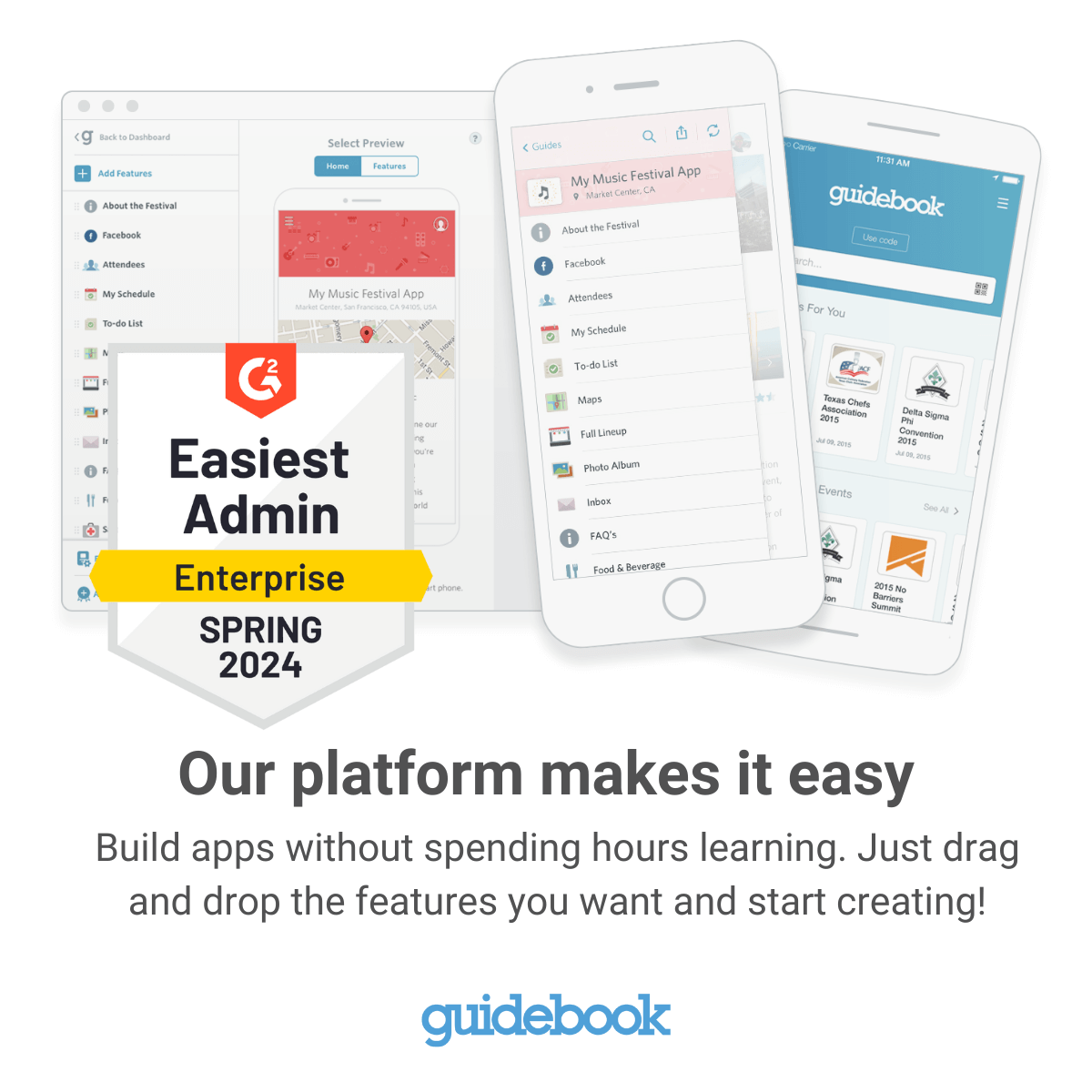
Building an Event App and Event Marketing Website with Guidebook
If you’re looking for a seamless way to create both an event app and a website, Guidebook is an excellent option. Guidebook provides a comprehensive platform to build mobile apps and websites that cater to all your event needs.- Event Apps: Tailored to enhance attendee engagement and provide real-time updates. Learn more about event apps.
- Campus Apps: Perfect for college welcome weeks and other campus events. Discover campus apps.
- Association Apps: Ideal for associations looking to manage conferences and meetings. Check out association apps.
Making the Final Decision
When it comes to making your final decision, consider the following:- Comparative Analysis: Create a comparison chart of shortlisted websites to evaluate features side by side.
- Demo and Trial Periods: Testing websites before committing is crucial. Most platforms offer demo or trial periods.
- Feedback and Reviews: Seek feedback from peers and read online reviews to gain insights into each platform's performance and user experience.
Event Success with a Marketing Site
Choosing the right event marketing website tailored to your specific event type can significantly impact your event's success. Align your choice with your event goals, audience needs, and budget. For an all-in-one solution, consider Guidebook’s comprehensive platform to build both an event app and website. Request a demo today to see how Guidebook can elevate your event planning and promotion efforts.
Get the Mobile App Playbook
A short guide to running the whole student journey in one app. No fluff, just what works.
for higher ed
Campus
Playbook
A practical guide to building a connected campus experience.
Free playbook
The Mobile App Playbook for Universities
Students decide if they belong long before they set foot on campus. This playbook shows how to win them over from the first visit through graduation.
- Grow enrollment and boost recruitment
- Increase belonging and retention
- Run every event from one branded app
By submitting, you agree to our Privacy Policy.
You're in.
.png)

%20(1).avif)
.avif)